Icons hit different when you walk up close. This private Historical Center tour turns a string of landmarks into a clear story you can actually remember. You’ll see Mexico City’s Old Town through a local’s eyes, with an easy walking route designed to help you get your bearings fast for the rest of your trip.
What I like most is how much you cover without feeling rushed. You get a personal experience (just your group), and the stops include free-entry sights like Catedral Metropolitana, Templo Mayor ruins, and the area around Palacio de Bellas Artes. I also love the guide style—clear English narration and strong answers, the kind that connect architecture, culture, and what’s going on today.
The main thing to consider is that this is still a walking tour in the center, so plan for moderate walking time and crowded sidewalks. Also, like many historic districts, some interiors and details can depend on the day’s access, and you’ll want good weather since the operator notes weather matters.
In This Review
- Key highlights you’ll feel on the street
- A practical 4-hour loop: where the story starts and ends
- Catedral Metropolitana: the Catholic mega-landmark in plain terms
- Museo del Templo Mayor: the Mexica layer under the modern city
- Gran Hotel and the House of Tiles: two visual shocks, one timeline
- Palacio Postal: when a city shows its reach
- Palacio de Bellas Artes: the icon you end with
- Guides matter: Alejandro and Tlilal-style clarity
- Price and value: what $98 covers in the real world
- Timing and weather: what to plan for before you meet
- Who this tour suits best (and who might want a different plan)
- Should you book the Mexico City Historical Center Icons tour?
- FAQ
- How long is the Mexico City Historical Center Icons tour?
- How much does it cost per person?
- Is this a private tour?
- What language is the tour offered in?
- What’s included in the price?
- Are there admission fees for the stops?
- Where do you meet and where does the tour end?
Key highlights you’ll feel on the street
- Private, small-group feel with a local guide who can tailor the pace to your questions
- Free-entry stops at major icons, so you spend your money on meals, not tickets
- A timeline you can follow, from the Mexica layer up through 19th- and 20th-century buildings
- Great English explanations, including architecture and how the city changed over time
- Flexibility when something is closed, with a guide ready to adjust so the tour still flows
A practical 4-hour loop: where the story starts and ends
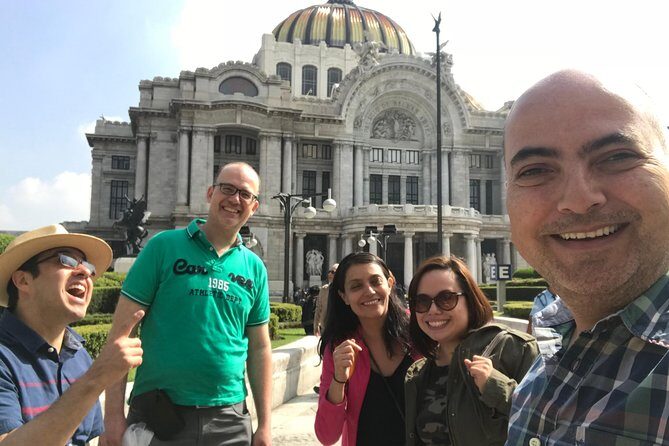
This tour is built for your first day—or any day you want a strong mental map of the Historic Center. You meet in the Centro Histórico area at Pza de la Constitución 803 and finish at the Palacio de Bellas Artes square. That matters because the ending point is a natural hub: you can keep walking afterward, grab lunch nearby, or connect to transit without needing to backtrack.
The total time is about 4 hours, and the stop plan is broken into short chunks—typically around 30 minutes for the big-ticket locations and 15 minutes for the quick hits. That rhythm helps because you’re not stuck in one room for too long. You get movement, viewpoints, and explanations that change as the buildings change.
You’ll also get bottled water. That’s a small inclusion, but in Mexico City’s center, it genuinely helps you keep going instead of cutting the tour short. The rest—snacks and anything you drink beyond water—is on you, so I’d plan on stopping for food later.
Finally, this is offered with a mobile ticket and English support. It’s also listed as private, so you’re not sharing the day with random strangers from five different countries. That’s one of the reasons people love this format: the guide can answer your questions without repeating themselves for a crowd.
You can also read our reviews of more city tours in Mexico City


Catedral Metropolitana: the Catholic mega-landmark in plain terms
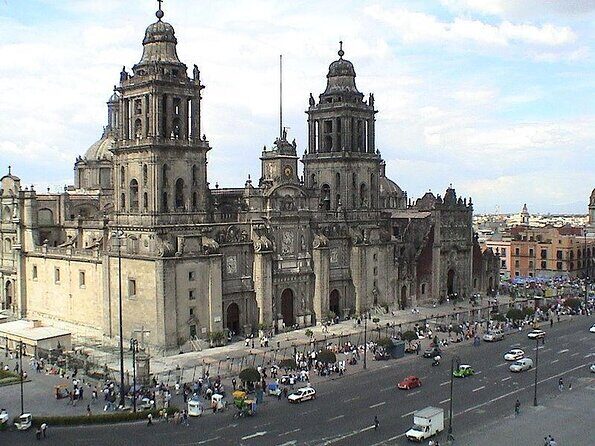
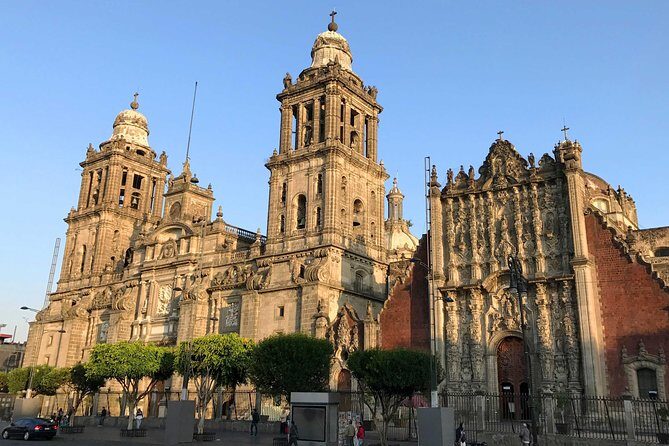
Your first stop is Catedral Metropolitana de la Ciudad de México, the monumental cathedral that sits at the heart of Mexico’s Catholic tradition. This is one of those places that can feel intimidating at first—big scale, big meaning, and lots of detail. What makes it useful on a tour is the way the guide frames what you’re seeing and why it matters.
You’ll spend about 30 minutes here, and the tour focuses on the cathedral’s history rather than just pointing out features. The cathedral isn’t only about religion; it’s also about how power and identity were expressed in architecture. In a city like Mexico City, where layers of history overlap, it’s helpful to start with a site that everyone recognizes so you can anchor the rest of the walk in context.
Even if you’re not a church architecture person, you’ll likely leave with a better sense of how Mexico City became what it is. The guide approach is what makes the cathedral click: you don’t just see stone; you understand the story behind the stone.
One practical note: the cathedral area can be active and busy. If you’re sensitive to crowds or noise, go into it expecting a lively public space. Keep your eyes open for the guide’s cues on what to focus on first—because there’s a lot to see.
Museo del Templo Mayor: the Mexica layer under the modern city
Next up is the Museo del Templo Mayor, where you step into the Mexica (Aztec) presence in a very direct way. This stop is also around 30 minutes, and it’s focused on the pre-Columbian ruins of the city that existed before the colonial period.
What I like here is that it breaks the “modern city only” thinking. You start to realize Mexico City isn’t one history—it’s multiple histories stacked. Even if you’ve seen photos of Templo Mayor before, seeing it on a guided walk connects it to what you’ll see next: the shifts in architecture, worldview, and urban life.
Also, it’s the kind of stop that helps your future exploring. After Templo Mayor, you’ll notice more patterns—why certain streets and buildings sit where they do, and how different eras claimed space. That’s what makes the tour useful beyond those exact buildings.
There’s one more reason this is a strong stop: it slows you down just enough to let the timeline make sense. Catedral tells you one chapter. Templo Mayor reminds you that there were earlier chapters with their own logic and brilliance.
Gran Hotel and the House of Tiles: two visual shocks, one timeline
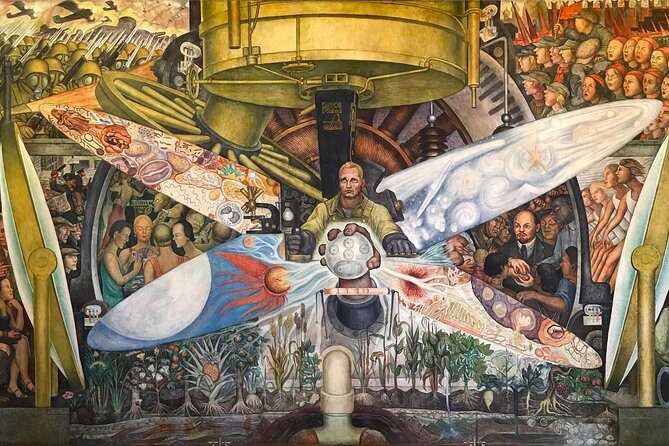
After the ruins, the tour pivots toward what people often miss when they rush through the center: the architectural “in-between” that shows changing tastes.
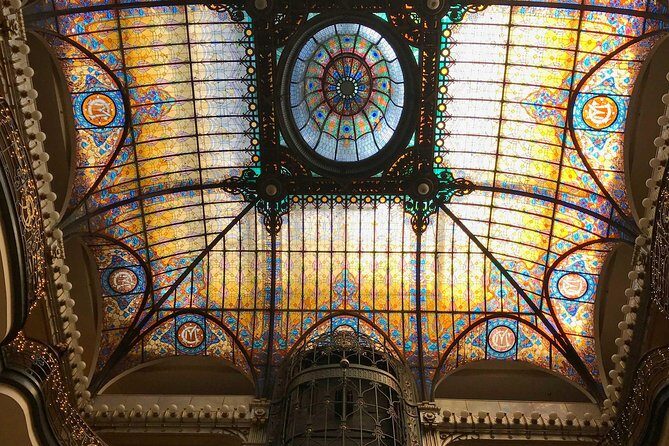
You’ll visit Gran Hotel Ciudad de Mexico, an impressive art nouveau building from the transition between the 19th and 20th centuries. Expect about 15 minutes—short, but not meaningless. The goal isn’t a full architectural lecture. It’s to give you enough context so you can recognize the style and understand why it fits that era’s ambitions.
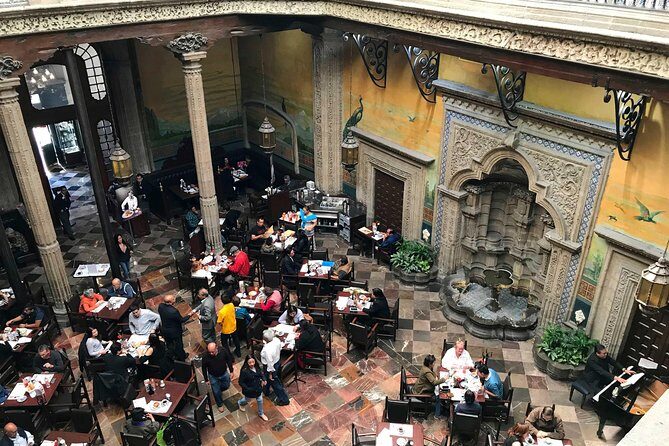
Then comes the House of Tiles (Casa de los Azulejos), an 18th-century building known for its stunning tiled exterior and overall look. You’ll spend about 30 minutes here, and this is a stop where the guide’s storytelling style really helps. Tiles, design choices, and the way a building presents itself are never random. They’re part of how a city displays wealth, identity, and influence.
What I love about pairing these two stops is the contrast. One is art nouveau and late-era swagger. The other is older elegance with a face that’s almost too photogenic. Together, they stop you from thinking of “historic” as one uniform look.
If you like architecture and you want to be able to name what you’re looking at later, this pair does that job.
Palacio Postal: when a city shows its reach
The tour continues with Palacio Postal, admired as an outstanding post office from the early 20th century. You’ll spend about 15 minutes admiring it.
This building matters because it’s not just pretty. A post office is a practical system—and in a fast-growing city, it becomes a symbol of connected life: communication, business, and administration. When a guide ties that function to the building’s design, the place stops being just a photo stop.
Even in a short visit, it’s worth paying attention to how big, formal civic buildings were meant to look. The center has many monuments, but a post office can feel surprisingly powerful. You’ll come away seeing it as infrastructure with status.
If you’re the type who usually skips buildings that are not “famous museums,” this is your nudge not to. This stop gives you a different kind of landmark—one that shows how the city worked.
You can also read our reviews of more historical tours in Mexico City






Palacio de Bellas Artes: the icon you end with
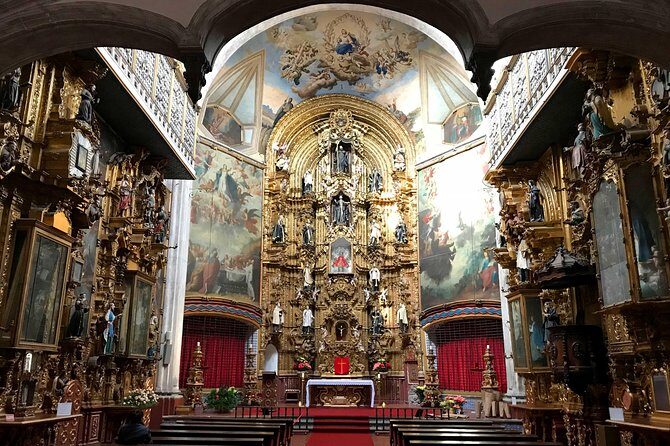
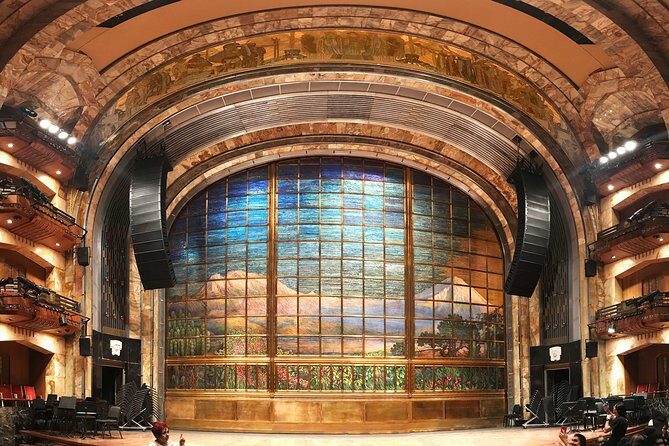
Your last stop is Palacio de Bellas Artes, one of the most famous theaters in the Historical Center. You’ll spend about 30 minutes here, and it’s positioned as the natural ending point for a reason.
By the time you arrive, you’ve already visited:
- a major Catholic anchor,
- Mexica ruins under the colonial/modern layers,
- later-era architecture and decorative landmarks,
- and civic infrastructure.
So Bellas Artes isn’t just an ending. It’s a payoff: a monumental cultural statement that makes sense once you’ve seen multiple eras in one walk.
The guide helps you understand why this theater became such a symbol—how cultural identity gets built into stone and design. It’s a fitting finish because the area around Bellas Artes is also easy to use as a base afterward. You can turn the last stop into lunch plans, museum plans, or evening stroll plans without needing to change zones.
Guides matter: Alejandro and Tlilal-style clarity
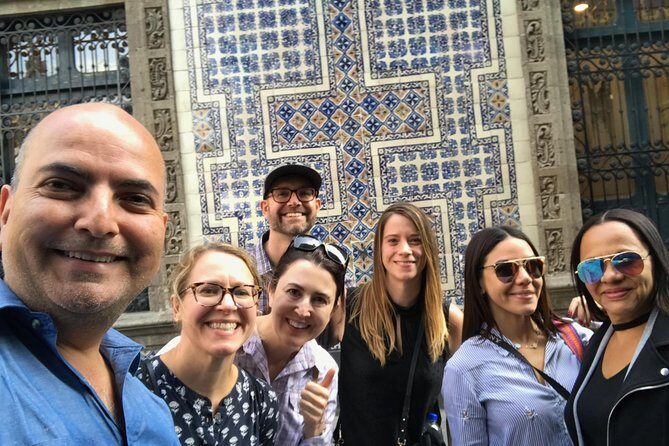
A huge part of this tour’s strength is the guide delivery. In the feedback, Alejandro gets repeatedly singled out for passion and breadth. People mention how his chronological telling makes Mexico City’s richness easier to understand—from the 1500s through the mid-1900s. That’s a big deal on a short, walking-focused tour. Without that timeline structure, the landmarks can blur together.
There’s also Tlilal, who stands out for friendly, strong explanations. The key here isn’t just information. It’s the way the guide connects the physical site to what it meant in its moment.
One more practical note from real experience: when a nearby plan is impacted by access changes, a good guide doesn’t freeze. The route can adjust so your day still feels complete. In one instance, a mural viewing disappointment was handled by swapping to another spot to keep the theme going. That ability to pivot is a quality you’ll appreciate when you’re on a tight schedule.
Price and value: what $98 covers in the real world
At $98 per person for about 4 hours, this isn’t a budget throwaway. But it can be good value because you’re paying for:
- a private guide experience (just your group),
- bottled water,
- an organized route through top-center icons,
- and multiple stops that are listed with free admission.
That last part matters. In a city where ticket prices can add up fast, built-in free-entry stops help your day stay predictable. And even when entrances aren’t about “paying less,” they help you spend more time looking and less time figuring out where to stand, what to ask, and what’s worth your attention.
There’s no private transportation included. That’s not a negative if you’re already planning to walk and use public transit, because the Historical Center is compact in spirit, even if distances can surprise you. The tour is designed as a walking experience, so budgeting for transit and snacks outside the tour is smart.
My advice: treat the $98 as paying for a guided orientation. If you do this early, you’ll likely get more out of your remaining days because you’ll know how the eras connect.
Timing and weather: what to plan for before you meet
This is weather-dependent. If conditions are poor, the operator notes you’ll either get a different date or a full refund. That’s rare enough that it’s worth taking seriously: Mexico City weather can change quickly, and comfort affects how much you enjoy a walking day.
The listed opening hours show Saturday–Sunday, 10:00 AM–2:00 PM in the date range provided. So if you’re traveling midweek, you might find different schedules depending on what’s being offered at the time. When you book, check the exact available times for your date.
Physical fitness is listed as moderate. That means you should be comfortable walking continuously at city pace, standing for short periods, and moving between stops without expecting long rests. If you’re unsure, wear supportive shoes and plan bathroom breaks around transit stops rather than waiting until you’re at the far end of the route.
Also, since this finishes around Palacio de Bellas Artes, you can plan a simple post-tour meal nearby. If you like structure, that’s an advantage—you don’t need to immediately think about the next move.
Who this tour suits best (and who might want a different plan)
You’ll likely love this tour if:
- it’s your first time in Mexico City and you want a strong mental map,
- you care about how a city evolves across centuries,
- you want a private, English-speaking guide who can answer questions,
- you prefer walking tours that mix major icons with context.
You might want a different option if you:
- hate walking or you can’t comfortably stand for short periods,
- are only interested in one specific era or one museum experience,
- need full wheelchair-level accommodation (moderate fitness is stated, but details beyond that aren’t provided here).
If you’re on the fence, consider using this as an orientation tool. You’ll feel the benefit later when you return to the center on your own.
Should you book the Mexico City Historical Center Icons tour?
If you want a guided walk that connects big landmarks into one clear timeline, this one is a strong choice. The combination of private pacing, free-entry major stops, and consistently strong guide performance—especially names like Alejandro and Tlilal—is the reason this tour earns top marks.
My call: book it if you’re planning to spend time in Centro Histórico and you want to understand what you’re seeing, not just where it is. If you’re short on time or you want an easy way to start, this is the kind of tour that makes the rest of your Mexico City days easier.
FAQ
How long is the Mexico City Historical Center Icons tour?
The tour lasts about 4 hours.
How much does it cost per person?
The price is $98.00 per person.
Is this a private tour?
Yes. It’s listed as a private tour/activity, with only your group participating.
What language is the tour offered in?
The tour is offered in English.
What’s included in the price?
Bottled water is included.
Are there admission fees for the stops?
The listed stops (Catedral Metropolitana, Museo del Templo Mayor, Gran Hotel Ciudad de Mexico, House of Tiles, Palacio Postal, and Palacio de Bellas Artes) are shown as admission ticket free. Entrance fees for museums not specified are not included.
Where do you meet and where does the tour end?
You start at Pza de la Constitución 803 in Centro Histórico and finish at the Palacio de Bellas Artes square (Av. Juarez S/N, Centro Histórico).