REVIEW · MEXICO CITY
Historic Downtown Walking Tour
Book on Viator →Operated by Mexico a Pie Walking Tours · Bookable on Viator
You can read Mexico City by walking. This 3-hour Centro Histórico stroll ties together the Zócalo, Templo Mayor area ruins, the Metropolitan Cathedral, and the grand theaters and buildings around Bellas Artes. I love that it’s small (capped at 15, with a max of 25) so you’re not yelling to be heard, and I love how the route gives real context behind what you’re looking at. One thing to consider: the pace can feel fast, so if you want lots of slow photo stops, build in your own time before or after.
The route is practical for first-timers because it lands you in the political, religious, and artistic heart of the city without getting lost in “maybe we’ll see it” planning. You’ll also get free entry at each listed stop, plus a certified local guide who explains what you’re seeing and answers questions while you walk.
If you’re worried about communication, the good news is that past guides have been praised for clear English and strong voice projection. I’d still keep a little flexibility in your expectations if a guide speaks quickly or the group gets loud in major plazas.
In This Review
- Key Things I’d Latch Onto Before You Go
- A 3-Hour Walking Loop Through Mexico City’s Most Important Squares
- Zócalo And The Templo Mayor Area: Mexico City’s Power Center, Then And Now
- Going Inside Mexico City Metropolitan Cathedral: The Heart Of Catholic Mexico
- Plaza Manuel Tolsá, Palacio Postal, Bellas Artes: Architecture With Different Personalities
- Guides That Set The Tone: Estefania, Emilio, Daniela, Mar, Nadia, And Emiliano
- Price And Value: What $26.53 Buys You In Real Terms
- Best Way To Use This Tour Day: Plan Your Follow-Up Right
- Should You Book This Historic Downtown Walking Tour?
- FAQ
- How long is the Historic Downtown Walking Tour?
- Is the tour offered in English?
- Are there entrance fees for the stops?
- How big are the groups?
- Where does the tour start and end?
- Is the tour difficult to walk?
- Can I cancel for a full refund?
Key Things I’d Latch Onto Before You Go
- Small-group focus: capped at 15 for an intimate feel (with up to 25 max).
- Certified local guide: you’ll get context, not just directions.
- Major landmarks in 3 hours: the Zócalo, Cathedral, Palacio Postal, and Bellas Artes.
- Free entry at every listed stop: helps you control costs on day one.
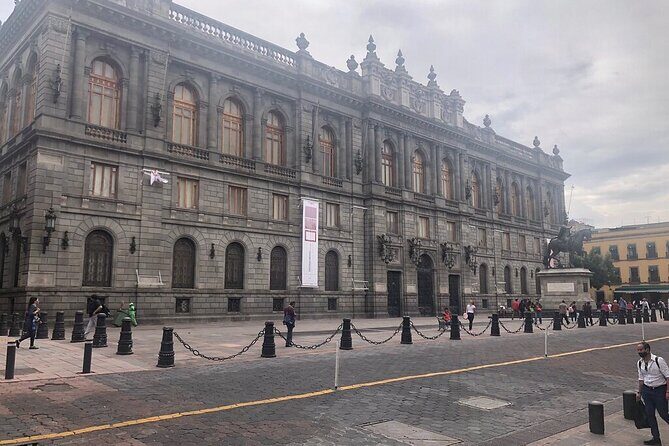
- Your tour ends near El Caballito: convenient for continuing on foot.
A 3-Hour Walking Loop Through Mexico City’s Most Important Squares
This is a classic “get your bearings fast” tour, but done in a smart way. You’re not just hopping between random sights; you’re moving through the places that shaped Mexico City as it shifted from ancient power to colonial faith to modern culture.
With a total time of about 3 hours, you’ll cover a lot of ground, and it’s designed to keep momentum. That’s part of the value: you leave with a mental map of the Centro Histórico and enough background to make other stops feel clearer later in your trip.
The group size is key. When a group stays small, your guide can actually work with the pace of real humans—questions, photo moments, and crowd flow—without the tour turning into a human conveyor belt. Still, it’s a busy downtown area, and you should expect noise and crowd pressure in the plazas.
You can also read our reviews of more walking tours in Mexico City



Zócalo And The Templo Mayor Area: Mexico City’s Power Center, Then And Now

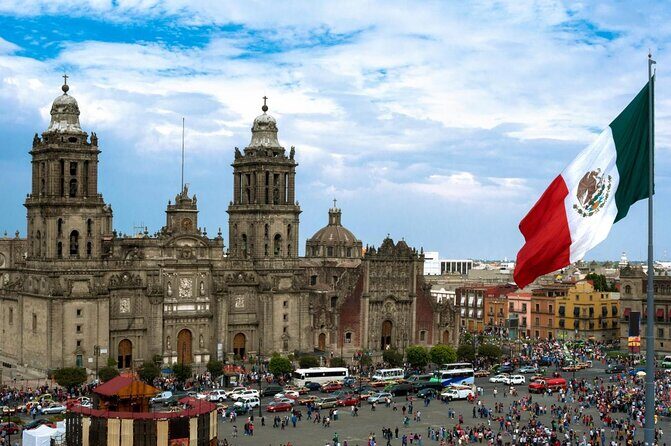
Stop 1 is the Zócalo, the country’s main square and the heart of Mexico in the most literal sense. Here, your guide typically sets the foundation: why this square matters, how the city’s role changed across eras, and how you can start reading the architecture and layout as “story.” The Zócalo is also where you’ll notice Mexico City’s mix of public life—people gather, street energy builds, and historic space stays alive.
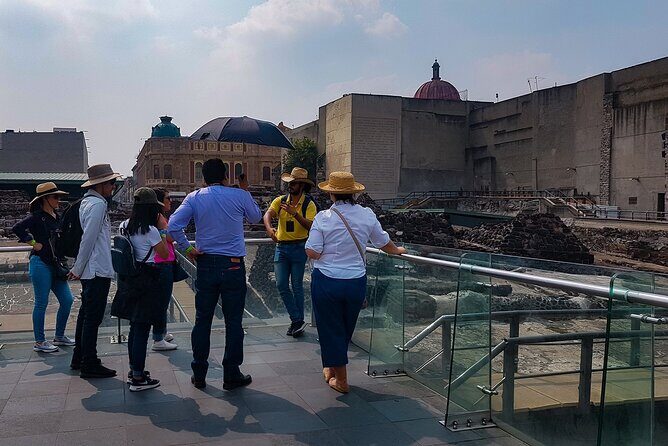
Stop 2 takes you to Plaza Manuel Gamio, where you’ll see the ruins area connected to the ancient Aztec city and the Templo Mayor. This is one of the most meaningful moments on the walk because it anchors your tour in the deep timeline of the city, not just the colonial and modern layers.
Time here is about 30 minutes, and that matters. You’ll get a solid orientation to what you’re looking at, but you won’t linger long enough to turn it into a museum visit. If the Templo Mayor area really hooks you, plan a return visit later—your guide’s framing will help you understand what you’re seeing when you go back for a longer look.
Practical note: plazas can get crowded, and this area can be busy. If you’re traveling with slower walkers or you want to pause frequently for photos, agree on a meetup point and watch for the group moving forward.
Going Inside Mexico City Metropolitan Cathedral: The Heart Of Catholic Mexico
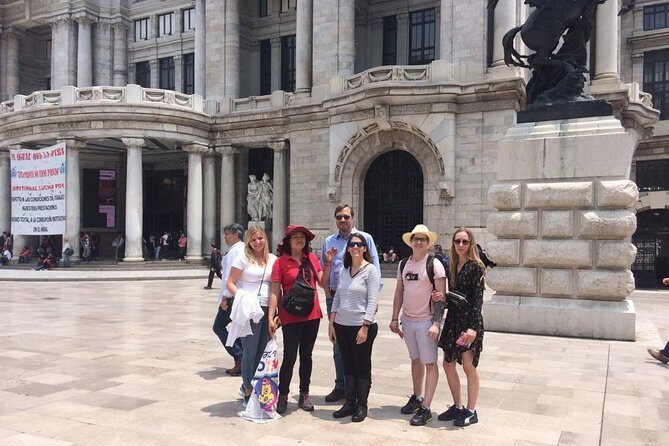
Stop 3 is the Mexico City Metropolitan Cathedral, and the standout detail is that you go inside, not just around the outside. With about 30 minutes, you get enough time to walk the space and take in the scale and symbolism, while your guide explains what you’re seeing and why it mattered.
This stop is valuable because it gives you the religious and political “glue” that held much of downtown life together for centuries. You’ll likely hear how the city’s identity shifted after the Aztec period, and how Catholic power became a central part of the public story.
Also, inside means lighting and crowd flow matter. Go at a pace that lets you look without rushing. If you’re the type who likes architecture details, this is one of your best chances on the tour.
If you’re sensitive to crowds, treat this stop like a peak-time location: it can feel busy. The upside is that the guide can point out what to notice so you don’t just feel swallowed by scale.
Plaza Manuel Tolsá, Palacio Postal, Bellas Artes: Architecture With Different Personalities
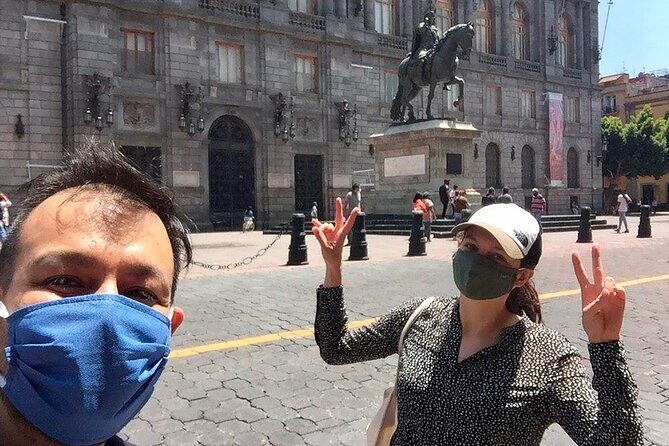
After the Cathedral, the tour moves into the “look at this, notice that” phase. These stops are shorter, but they’re packed with architectural character—each one with a different vibe.
Stop 4 is Plaza Manuel Tolsá, where you’ll visit a beautiful square centered on one of Mexico City’s emblematic statues. This is brief (about 10 minutes), but it works as a palette cleanser after the Cathedral. You’re shifting from sacred interior space to an outdoor landmark meant for public viewing and civic identity.
Stop 5 is the Palacio Postal—and yes, it’s famous for being showy. You’ll go inside for about 15 minutes. This is the kind of place that makes you slow down for a minute because the building feels designed to impress, not just function. It’s a reminder that downtown history wasn’t only about politics and religion. It was also about institutions, craftsmanship, and the public face of modern services.
Stop 6 is the Palacio de Bellas Artes, the art nouveau landmark tied to the 20th-century cultural story of Mexico City. You’ll get about 15 minutes here, which is just enough to understand why this building is so photographed and why it became a symbol of art and national identity.
Because these last three stops are shorter, your guide’s explanations matter more. If you tend to skip spoken context and just look around, you’ll want to ask a quick question or two. That’s how you turn short stops into real understanding.
Guides That Set The Tone: Estefania, Emilio, Daniela, Mar, Nadia, And Emiliano
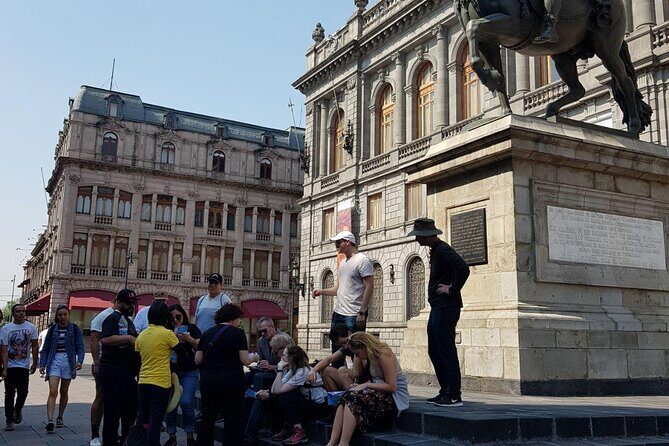
The strongest theme in the feedback is how much the guide affects the experience. The best runs sound clear, organized, and easy to follow even in noisy plazas.
You’ll see names pop up repeatedly, including Estefania (sometimes written Stefania), Emilio, Daniela, Mar, Nadia, and Emiliano. People praise them for strong English and for making complex changes—Aztec to colonial to modern Mexico—feel logical instead of like a pile of dates.
One helpful detail from the comments: guides often adjust pacing to the group, and they tend to offer practical suggestions beyond the tour. Food recommendations come up a lot, and guides also share ideas for what to do next so you’re not stuck staring at a map later.
The flip side is that pacing can vary. Some groups describe the talk as fast, and one or two felt the guide moved a bit quickly through crowded sections. That doesn’t ruin the tour for most people, but if you know you walk slower, build your own extra time and stay close.
If you get a guide who speaks quickly and you need clarity, it’s totally reasonable to ask for repetition or a slower explanation on the next stop. A small-group tour is built for interaction.
You can also read our reviews of more historical tours in Mexico City






Price And Value: What $26.53 Buys You In Real Terms
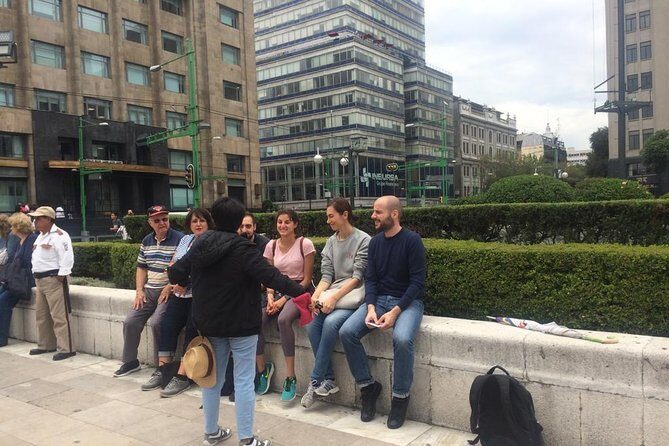
At about $26.53 per person for roughly 3 hours, this is priced like a budget-friendly orientation. The value comes from what you get inside that time window:
- You see major downtown landmarks in one coordinated route.
- You don’t spend extra money on entrance fees for the listed stops.
- You get a professional local guide who provides context while you’re already standing in front of the buildings.
The free-entry aspect is a big deal. When your ticket costs are low, you can spend on the things you’ll actually want to revisit later—meals, museum time, and longer stops where you control your pace.
One more value point: the tour ends near El Caballito, in front of the National Museum of Art area. That’s convenient, because you’re not ending in some random edge of the Centro Histórico where you have to backtrack.
If you’re only in Mexico City for a short trip, this tour can help you decide what to prioritize later. It’s not a museum day. It’s a “set the framework so the rest of your trip makes sense” day.
Best Way To Use This Tour Day: Plan Your Follow-Up Right
This is the kind of tour I’d schedule early in your trip. The reason is simple: it gives you a baseline for understanding what you’re looking at on subsequent visits. More than once, the comments mention that it helps people connect the dots for later museums and walking.
After the tour, I’d do two things:
First, decide quickly whether you want a longer visit to the Templo Mayor area/museum side of the story. The walk only covers outdoor ruins time, so if that era grabs you, you’ll want more depth later.
Second, use the guide’s food and next-day suggestions as a starting point. Comments repeatedly mention that guides give solid recommendations, and that makes your next meal plan feel less like a guessing game.
Even if you don’t follow every suggestion, you’ll leave with enough local context to ask better questions and spot details you would otherwise miss.
Should You Book This Historic Downtown Walking Tour?
Book it if you want a fast, high-impact introduction to Mexico City’s Centro Histórico, with a small group and a guide who explains what you’re seeing. It’s also a strong choice if you like organized walking routes that keep you from wasting your first day trying to “figure out where everything is.”
Skip it or adjust your expectations if you strongly prefer slow-paced sightseeing, lots of downtime, or a very quiet experience. In big downtown plazas, noise is normal, and your comfort level with crowds and brisk movement will matter.
If you do book, go with a simple mindset: stay with the guide, ask one or two questions at the stops that interest you most, and leave time after the tour to keep exploring around El Caballito.
FAQ
How long is the Historic Downtown Walking Tour?
It runs for about 3 hours on average, with time allocated at each stop along the route.
Is the tour offered in English?
Yes. The tour is offered in English (and also in Spanish).
Are there entrance fees for the stops?
The tour lists free admission at each of the stops. Entrance tickets to any museum are described as included.
How big are the groups?
It’s designed as a small-group tour, with group sizes capped at 15 for an intimate experience, and a maximum of 25 travelers.
Where does the tour start and end?
It starts at C. de Monte de Piedad 11, Centro Histórico de la Cdad. de México, Centro, Cuauhtémoc, 06000 Ciudad de México, CDMX, Mexico. It ends at C. de Tacuba 8, Centro Histórico de la Cdad. de México, Cuauhtémoc, 06010 Ciudad de México, CDMX, Mexico, near El Caballito in front of the National Museum of Art.
Is the tour difficult to walk?
The tour notes a moderate physical fitness level. It involves walking through central areas for about 3 hours.
Can I cancel for a full refund?
Yes. Free cancellation is available up to 24 hours in advance for a full refund. If you cancel less than 24 hours before the start time, the amount paid is not refunded.