REVIEW · MEXICO CITY
Walking Tour in Mexico City for Exploring their Cultural Heritage
Book on Viator →Operated by Estación México · Bookable on Viator
Start your Mexico City story at Zócalo. This 2–3 hour walk strings together the city’s political heart, Aztec roots, and mural culture, guided in English with plenty of Q and A. I especially like how it keeps moving so you get a true sense of the Historic Center’s layout, and I love the way guides bring the places to life—names you might hear include Sofía (who’s been known to share amole and field lots of questions) and Jesus, who mixes history with energy.
The main drawback is simple: it’s still a walking tour, and most stops are timed tightly (think 20 to 30 minutes). If you want to linger for hours in museums or take lots of photos without moving along, you’ll likely feel the clock.
In This Review
- Key things I’d circle before you go
- Zócalo as Your Orientation Point (Politics, Traditions, and Power)
- Seeing Templo Mayor Ruins in One Stop (Aztec and Mexica Context)
- Plaza de Santo Domingo and the Muralist Connection
- Museo Nacional de Arte: When 20th-Century Architecture Takes Over
- The Tiled Palace Moment and Why the Tour Ends at Bellas Artes
- Price Value: Getting a Lot of Landmarks for $25
- The Walking Reality: What 2–3 Hours Feels Like
- Guides and the Q&A Factor (What Makes This Tour Feel Personal)
- Who Should Book This Tour (And Who Might Want Something Else)
- Tips to Make the Most of Your Walk
- Should You Book This Mexico City Historic Center Walking Tour?
- FAQ
- How long is the walking tour?
- Is the tour offered in English?
- Where does the tour start and end?
- What time does the tour begin?
- How much walking should I expect?
- How large is the group?
- What is included in the price?
- Are admission tickets required?
- Are food and drinks included?
- Can I bring a service animal?
- What’s the cancellation policy?
Key things I’d circle before you go
- Zócalo orientation fast: origin of the city plus how politics, traditions, and public life play out there
- Templo Mayor ruins: quick access to the ancient Mexica religious core of Tenochtitlan
- Santo Domingo’s art link: where Spanish-era influence meets the origin of the Mexican muralist movement
- Museo Nacional de Arte: a shift into 20th-century architecture styles in the middle of the Historic Center
- The finale at Palacio de Bellas Artes: a classic end point that’s closely tied to mural culture
- Small group cap (up to 20): enough people to feel lively, not so many that questions get swallowed
Zócalo as Your Orientation Point (Politics, Traditions, and Power)
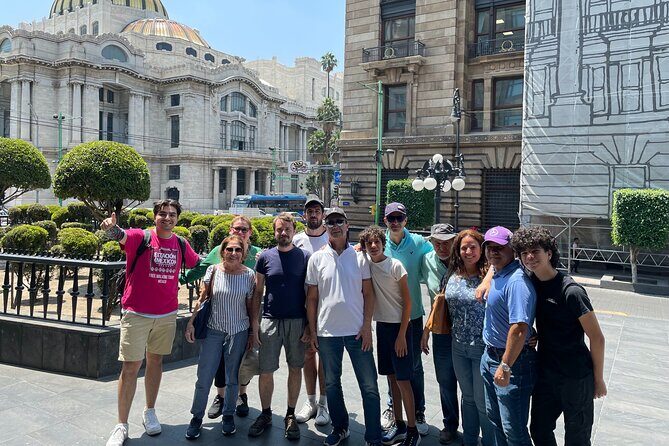
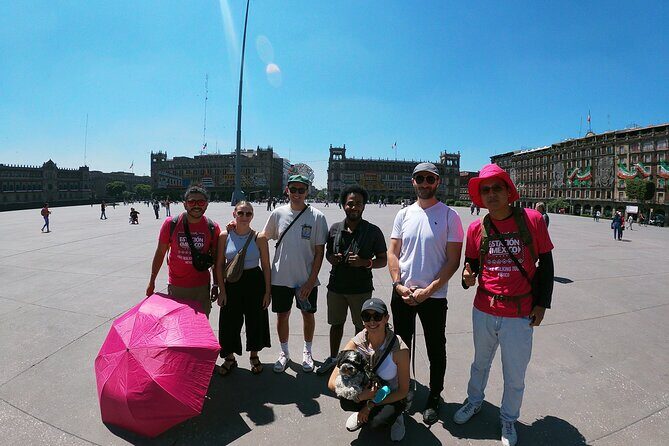
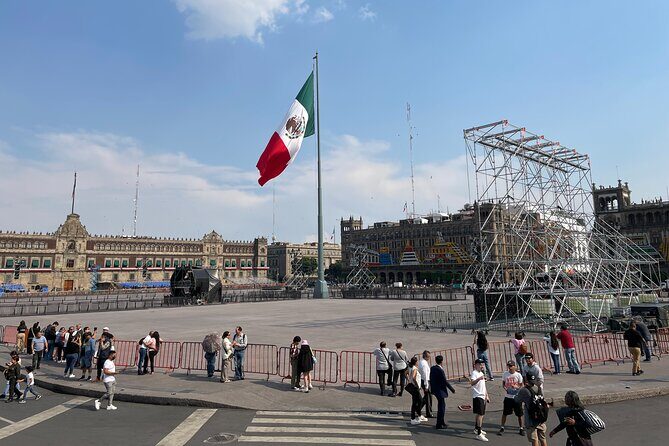
Zócalo is where Mexico City starts making sense. The guide’s approach is practical: you’re not just looking at pretty buildings. You’re learning why this square matters for day-to-day life—politics, social movements, traditions, and big public events.
You’ll also get a clear visual lesson on how Catholic Mexico City grew over older layers. At the plaza, you’ll see the biggest cathedral in the continent, plus the key federal government offices that signal who runs what in modern Mexico. Even if you’re not into architecture, this stop helps you understand the “why” behind the streets you’ll walk later.
My tip: arrive with one question ready, like How did this area change over time? The Zócalo segment is set up for that kind of curiosity.
You can also read our reviews of more walking tours in Mexico City



Seeing Templo Mayor Ruins in One Stop (Aztec and Mexica Context)
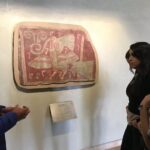
Then you head to Museo del Templo Mayor, where the past isn’t just in books. You’re looking at ruins tied to the ancient city of Tenochtitlan and the major temple central to Mexica religious life.
This stop is short—about 20 minutes—but it’s the right kind of short. It gives you context fast: who the Aztecs and Mexica were, why the temple mattered, and how the city’s spiritual center shaped where people lived and built.
A practical way to think about this stop: it’s your “anchor.” After you’ve seen it, other buildings around the Historic Center stop looking random. You begin to notice layers—history on top of history.
Plaza de Santo Domingo and the Muralist Connection
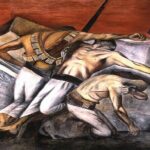
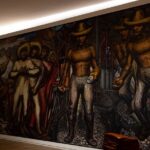
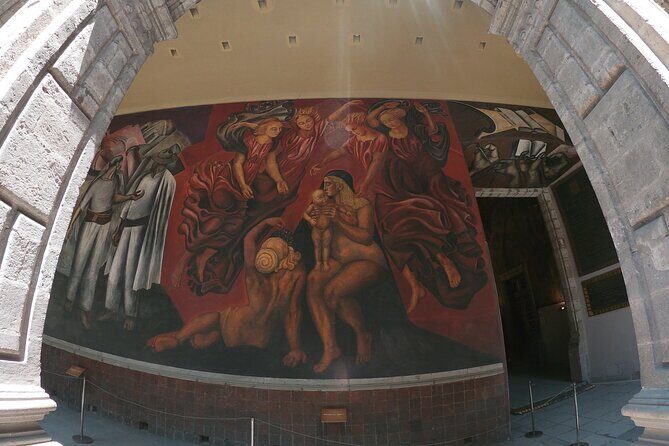
Next comes Plaza de Santo Domingo, and it’s a clever pivot. You’ll get a contrast between Spain’s past in Mexico and the origin of the Mexican muralist movement. That means you’re not just traveling through time; you’re also seeing how art turned into a public language.
If you care about culture beyond monuments, this is one of the best stops for you. Mural art in Mexico isn’t decoration. It’s storytelling, politics, identity, and memory on walls in public spaces.
This stop also pairs well with what you’ll see later at major art-and-ceremony architecture. In other words, it sets you up to understand why murals show up at the tour’s end.
Museo Nacional de Arte: When 20th-Century Architecture Takes Over
After the mural origin conversation, you’ll switch gears at Museo Nacional de Arte. Here, the focus is the modern architecture of the 20th century—an intentional change from the older streetscape you’ve been walking.
This is a nice moment for first-timers. You can feel the city doing what it always does: layering different eras into the same small radius. One block you’re thinking about ancient Tenochtitlan. Next you’re watching modern design influence the skyline.
Even if you don’t go deep into art theory, you’ll leave with a better sense of how Mexico City expresses itself in different periods—through religion, through government, and through modern cultural institutions.
The Tiled Palace Moment and Why the Tour Ends at Bellas Artes
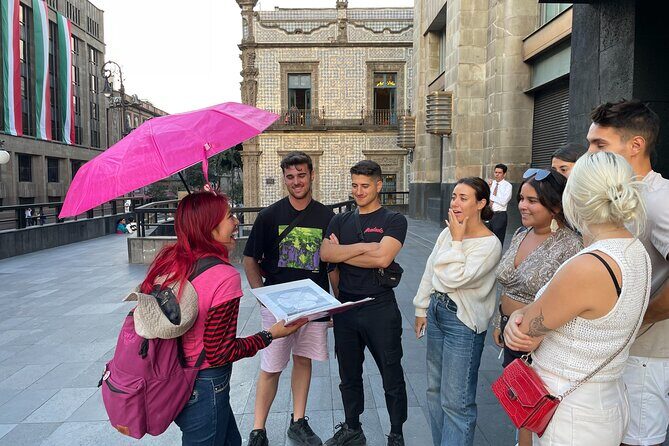
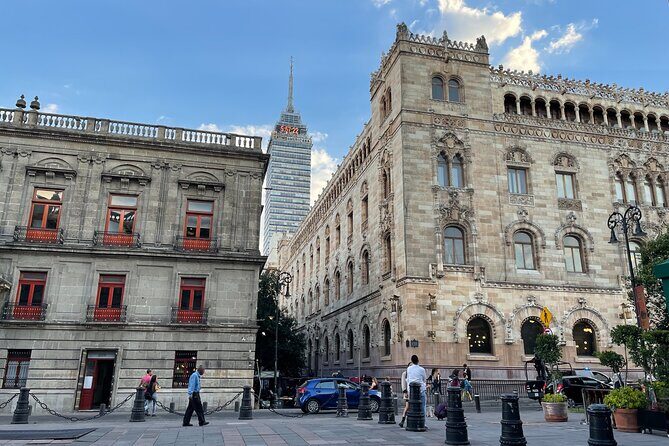
You’ll also make a stop for a beautiful palace known by its tiles. The name isn’t the point so much as the effect: this is classic Mexico City visual culture. Details like tilework are how the city turns stone and structure into personality.
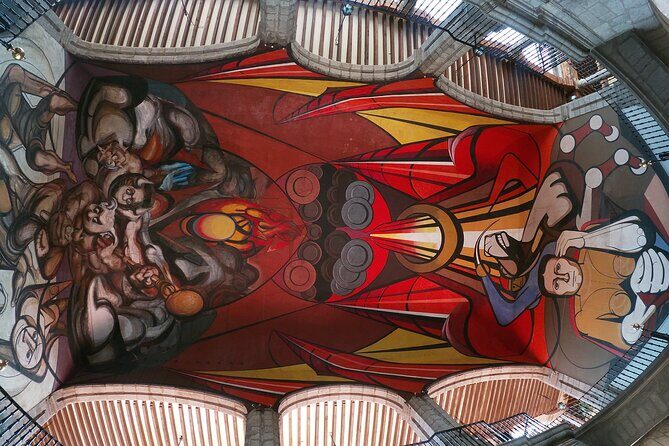
Then the tour finishes near Palacio de Bellas Artes, widely recognized as an icon of Mexico City. This is a smart landing spot because it’s easy to continue your day after the tour. You’re ending in a major landmark zone, not somewhere obscure.
If murals are your thing, this is where the tour’s art thread comes together. For example, guides like Diana have been noted for explaining the way art and history overlap at Bellas Artes, which helps you notice more on your own after the walk.
Practical note: it’s a good idea to have comfortable shoes in your bag, even if you think you packed them already.
You can also read our reviews of more city tours in Mexico City



Price Value: Getting a Lot of Landmarks for $25
At $25 per person, this tour is built for value. You’re paying for:
- an English-speaking guide to connect the dots between sites
- a timed route across major Historic Center landmarks
- and visits that list free admission tickets at multiple stops
For a first visit, that matters. Mexico City’s center can feel huge and confusing. This tour gives you a fast, structured way to see key locations without having to design your own route from scratch.
The tour also doesn’t try to upsell you into expensive add-ons. The one clear item not included is food and drinks, so you can budget around your own pace—grab snacks afterward, or pack a light bite if that’s your style.
The Walking Reality: What 2–3 Hours Feels Like
This is a walking tour designed for people who can walk about 3 hours. The total duration is listed as 2 to 3 hours, and the itinerary uses frequent short stops, which keeps things from turning into one long grind.
Group size is capped at 20 travelers, which generally helps with timing and the ability to ask questions without waiting forever.
You’ll start at Plaza de la Constitución, 463, Centro Histórico and finish around Av. Juárez 39, close to Bellas Artes. Since it’s near public transportation, you’re not stuck far from transit if you need to hop back to your hotel later.
My caution: plan your day around this. It’s best as your “morning anchor” or a first-day orientation. Trying to stack multiple museum-heavy plans right after can leave you tired and less likely to absorb everything.
Guides and the Q&A Factor (What Makes This Tour Feel Personal)
One pattern shows up in the guide experiences: the tour works when the guide is interactive. People have highlighted guides such as Carmina for being enthusiastic and strong at answering questions, Ulysses for being polite and friendly, and David for presenting a lot of information in an exciting, interactive way.
Even when the route stays tight, the guides seem to create room for curiosity. That’s what turns a list of landmarks into a real mental map of Mexico City.
If you want to maximize that benefit:
- Ask about what changed over time at Zócalo
- Ask how the temple ruins connect to the Mexica worldview
- Ask what mural art was trying to say in public spaces
Those are exactly the kinds of questions the tour’s structure encourages.
Who Should Book This Tour (And Who Might Want Something Else)
This one is a great fit for:
- first-timers who want an overview of the Historic Center quickly
- history and culture lovers who like clear connections between sites
- travelers who enjoy walking routes with a guide steering the context
It’s also a solid pick for couples and families that want a high-value start to the trip, as long as everyone is comfortable walking and okay with time limits per stop.
You might choose a different option if:
- you need long museum time at each venue
- you dislike moving through crowded central streets
- you want a super slow, photo-first pace
Tips to Make the Most of Your Walk
A few small moves make a big difference on tours like this:
- Wear shoes you trust. The Historic Center is walkable, but not always gentle.
- Bring water. Food and drinks aren’t included.
- Keep one phone battery ready for quick captures of tilework and architectural details.
- If you’re an art fan, pay attention at Bellas Artes and Santo Domingo. The tour’s art thread is intentional.
Also, if you’re traveling with questions—about politics, murals, or Aztec history—this tour is set up to answer them during the walk. That’s a big part of the appeal.
Should You Book This Mexico City Historic Center Walking Tour?
If you want a structured first visit that links Zócalo, Templo Mayor, mural culture, and Bellas Artes into one coherent morning or afternoon, I think this is a strong choice. The $25 price is fair for an English guide route through major landmarks, and the fact that several stops list free admission tickets makes it easy to justify.
I’d book it if you’re the kind of traveler who likes context more than time spent alone in one room. But if you crave long, slow museum immersion, you may feel slightly rushed.
If you want my simple decision rule: book this tour when it’s early in your trip, then plan to return later to the stops that grabbed you most.
FAQ
How long is the walking tour?
The tour lasts about 2 to 3 hours.
Is the tour offered in English?
Yes, it is offered in English.
Where does the tour start and end?
It starts at Pza de la Constitución 463, Centro Histórico de la Cdad. de México and ends near Av. Juarez 39, Colonia Centro, close to Palacio de Fine Arts.
What time does the tour begin?
The start time is listed as 9:00 am.
How much walking should I expect?
The tour is a walking route and you should be able to walk about 3 hours.
How large is the group?
The tour has a maximum of 20 travelers.
What is included in the price?
A tour guide is included throughout the experience, and you’ll visit a place with murals during the activity.
Are admission tickets required?
The itinerary notes free admission tickets for the listed stops.
Are food and drinks included?
No. Food and drinks are not included.
Can I bring a service animal?
Yes, service animals are allowed.
What’s the cancellation policy?
You can cancel for a full refund up to 24 hours in advance. If you cancel within 24 hours of the start time, the amount paid is not refunded.