REVIEW · MEXICO CITY
Gay Side of History through Plazas & Temples
Book on Viator →Operated by Mex at Max · Bookable on Viator
If you like history with a pulse, this fits. The Gay Side of History through Plazas & Temples tour threads LGBTQ themes through Mexico City’s most important landmarks—so you’re not just looking at stones, you’re learning why they matter. It’s built for a small group pace and uses a Digital LGBT+ map to keep the story organized as you walk.
I especially like the way the tour blends big-name sights with specific LGBTQ context, including the uncomfortable parts of the past without turning the day into a lecture. I also love the practical extras: coffee or tea, bottled water, and downloadable materials you can keep using after the walk.
One consideration: you’ll hear references to persecution connected to the Spanish Inquisition (between 1521 and 1821), so the theme includes darker material. Also, with any small operator, there’s a small chance of last-minute disruption—so don’t schedule anything razor-thin right before or after if you can avoid it.
In This Review
- Key highlights worth showing up for
- Why this walk through Mexico City’s center feels different
- Meeting near Plaza de Santo Domingo: how the route sets you up
- Stop 1 at Librería Porrúa: the rooftop views that make everything click
- Templo Mayor and the cathedral zone: two belief systems in one tight area
- Zócalo and the National Palace: power where everyone can see it
- Centro Cultural de España: a restored mansion behind the cathedral
- Santo Domingo Plaza and the Old Customs Building: commerce, trade, and safe spaces
- Portal de Evangelistas and the Church of Santo Domingo: where small details carry big meaning
- The Spanish Inquisition theme: uncomfortable facts, handled with context
- Digital map, downloadable PDFs, and small-group pacing: practical value, not fluff
- Price and value: is $99 worth it?
- Who should book this tour (and who might skip it)
- Make it work smoothly: timing, walking comfort, and what to bring
- Should you book Gay Side of History through Plazas & Temples?
- FAQ
- How long is the Gay Side of History through Plazas & Temples tour?
- What language is the tour offered in?
- What’s the group size?
- Is there walking, and what fitness level do I need?
- What’s included in the price?
- Can I get a refund if my plans change?
Key highlights worth showing up for
- LGBTQ-focused mapping: a digital Historic Center map plus extra resources to orient you fast
- Max 10 people: you get a more personal pace and more time for questions
- Carlos as a storyteller-guide: history framed with LGBTQ perspective, not just facts
- Rooftop start at Librería Porrúa: views over Templo Mayor ruins before you head into the streets
- Free entry stops mixed in: you still get major sights without paying at every turn
Why this walk through Mexico City’s center feels different
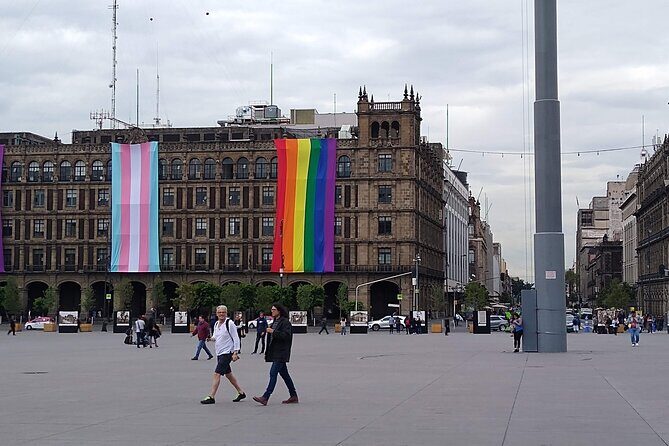
Mexico City’s Historic Center can swallow you. You see grand facades, you take photos, and then you end up with a bunch of disconnected stops.
This tour tries to prevent that. You move through the Zócalo area, the cathedral zone, and the Santo Domingo side, but the guide ties each place to a human story—how power worked, how faith shaped daily life, and where LGBTQ people fit into the city’s long timeline. You’re learning to read the map in your head, not just collecting stamps.
The best part for me is the tone. The day stays serious about history, but it doesn’t feel stiff. When the guide—Carlos—talks, he keeps the flow moving, and he’s the kind of person who can answer your follow-up questions without making you feel like you’re derailing the group.
You can also read our reviews of more historical tours in Mexico City

Meeting near Plaza de Santo Domingo: how the route sets you up
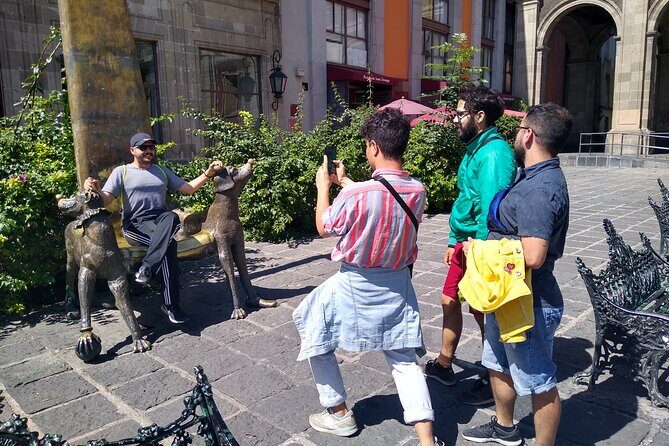
You start at República de Argentina 15 in the Historic Center, and the tour ends near the Antiguo Palacio de la Santa Inquisición area. The route is compact, aimed at giving you a tight loop of the older core without the slog of a full-day crossing the city.
The day is about 3 hours 30 minutes total and includes roughly 1 mile of walking in that time. That’s not a lot, but it does add up because you’ll stop often—listening, looking, and checking details as you go. You’ll want shoes that handle uneven sidewalks and occasional crowding around major plazas.
The tour also runs in all weather, so bring a light rain layer or sun protection. Mexico City weather loves to change its mind.
Stop 1 at Librería Porrúa: the rooftop views that make everything click
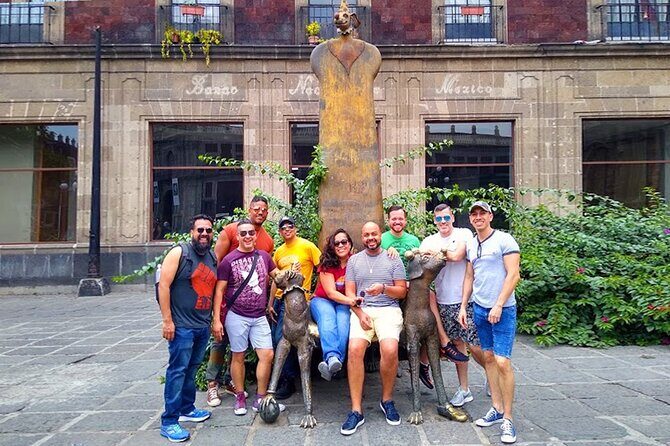
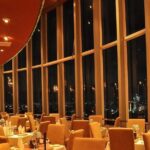
The tour begins at Librería Porrúa, where you get access to a rooftop balcony view. From up there, you’re not guessing where things are—you can actually see the spatial relationships between key spots: the Palace of the Royal Duty, the Frida Kahlo Hideaway Rooms area, and the Great Aztec Temple’s ruins (Templo Mayor).
This is the smart setup move. When you later walk the ground-level streets, you’ll recognize what you saw above. I find it turns a “history tour” into a “geography tour,” which is way easier to remember.
You’ll also get a ticket included for this first stage, and the guide uses that vantage point to set the timeline—so you understand what you’re about to see before you’re surrounded by it.
Templo Mayor and the cathedral zone: two belief systems in one tight area
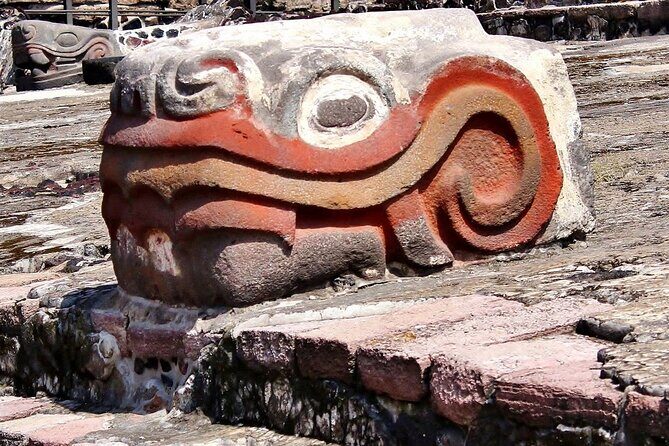
After the rooftop, the tour focuses on the Templo Mayor, the main temple of the Mexica (often described as the Aztecs) in their capital. This stop matters because it’s not just about architecture. It’s about how public space and religion shaped the city’s center—where people gathered, where authority was displayed, and how history got rewritten after the Spanish conquest.
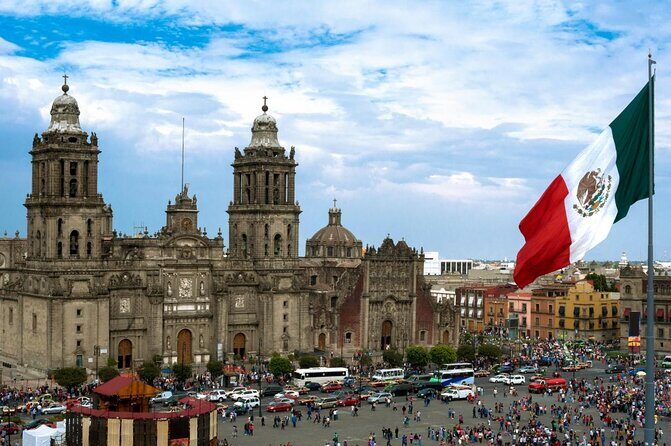
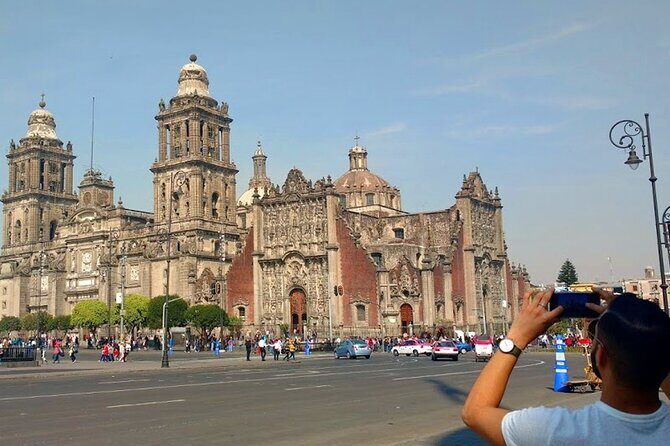
Then you head into the Metropolitan Cathedral of the Assumption of the Most Blessed Virgin Mary into Heaven. The cathedral is an absolute heavyweight landmark in the center, and it helps you understand the shift from Indigenous spiritual power to Catholic institutional power. The guide’s LGBTQ lens helps here, because you’re seeing how later institutions influenced social life, not just worship practices.
A practical note: the cathedral area can be busy. You’ll want patience for foot traffic and the occasional pause while the group regroups.
Zócalo and the National Palace: power where everyone can see it
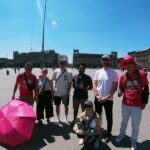
Next comes Zócalo, Mexico City’s central plaza. You’ll recognize it instantly on arrival: it’s the heart of the city and the place where people have met for centuries since the 16th century. On this tour, Zócalo isn’t treated like a postcard stop. The guide connects what happens in plazas—public gathering, public messages—to who held power at different points in time.
From there you move to the National Palace (Palacio Nacional), the seat of the federal executive. Since 2018 it also serves as the official residence for the President of Mexico, so the building sits at the intersection of history and modern governance.
This is one of the reasons I like this tour: it makes you notice how politics and religion shaped how society policed identities. You’re seeing that framework in stone, walls, and central access points—not just hearing abstract history.


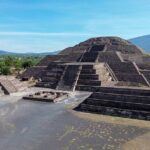

Centro Cultural de España: a restored mansion behind the cathedral
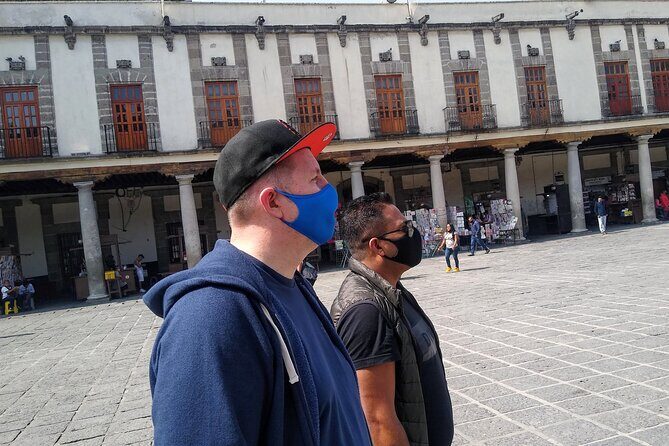
You then walk to Centro Cultural Espana en Mexico, located at 18 Guatemala Street behind the cathedral zone. This stop has a built-in story of change: the property was once in ruins in the late 1990s, and restoration turned it into a functioning cultural center, inaugurated in 2002.
What I like about this part is that it’s a reminder that cities don’t just preserve. They repair, reuse, and repurpose. A mansion turned into a cultural center tells you something about how Mexico City handles memory—what it keeps, what it restores, and what it repackages for new audiences.
This stop is listed as free entry, which is nice because it keeps the day moving without adding extra cost at every turn.
Santo Domingo Plaza and the Old Customs Building: commerce, trade, and safe spaces
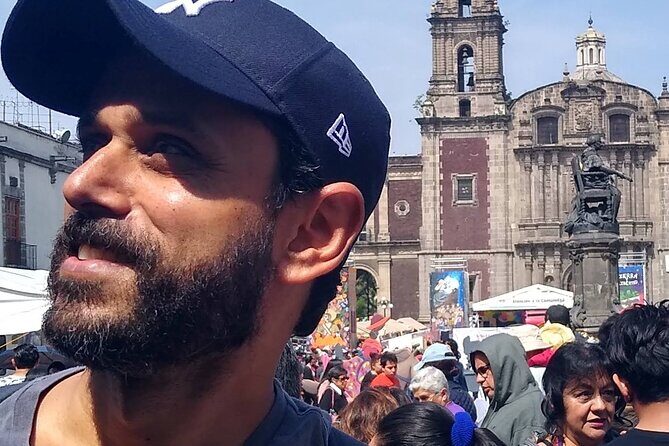
The tour continues toward Plaza de Santo Domingo, which sits in a quieter pocket than the Zócalo but still feels loaded with old-world energy. The plaza is flanked by the Portal de Evangelistas, a Tuscan colonnade with round arches where you can find scribes working with typewriters and antique printing machines.
That’s not just a cool visual. It gives you a “how information moved” moment. Trade, printing, and record-keeping mattered for anyone living at the margins, including LGBTQ people whose lives were often shaped by what institutions recorded (or punished).
Nearby is the Old Customs Building, on the east side of Santo Domingo Plaza. Customs implies movement of goods, people, and influence—so even when you’re standing in a small area, you’re really watching the city’s role as a hub.
Portal de Evangelistas and the Church of Santo Domingo: where small details carry big meaning
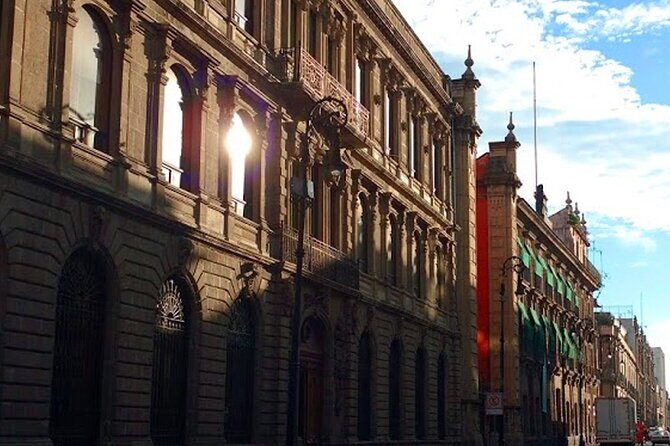
In this section, the tour leans into atmosphere as evidence. The Portal de Evangelistas is a physical reminder of a time when printed documents helped shape what people believed and how authorities tracked behavior.
Then you reach the Church of Santo Domingo, which faces Santo Domingo plaza. This is where the tour’s LGBTQ historical framing becomes very specific. The guide connects the area with El Camino Real, described here as a route from Old Mexico to New Mexico, a trading route and a safe haven for gay male couples.
That phrasing is important. It’s not only about big punishments in history; it also points to survival strategies—how people found community and relative safety even when society wasn’t openly accepting.
The Spanish Inquisition theme: uncomfortable facts, handled with context
One of the most serious parts of the tour is the reference to the Spanish Inquisition as the civilian institution in charge of executing convicted homosexuals between 1521 and 1821. You’ll carry that knowledge with you as the route ends near the Antiguo Palacio de la Santa Inquisición area.
I appreciate that the tour doesn’t hide the heavy material. Still, it’s not presented in a way that feels like sensational shock. It’s treated as part of the historical machinery that shaped public life—and that makes the rest of the tour’s LGBTQ mapping feel grounded, not just symbolic.
If you’re sensitive to topics around persecution, plan for it. Bring some emotional bandwidth and remember this is a history walk in a real city with real institutions behind the walls.
Digital map, downloadable PDFs, and small-group pacing: practical value, not fluff
The tour includes a digital LGBT+ map of the Historic Center plus extra resources. This is one of those “small” inclusions that actually improves your trip. Once you’ve walked the route, the map helps you keep context when you’re back on your own—so you don’t just remember where you stood; you remember what you learned there.
You also get downloadable PDF copies of RAINBOW MEXICO. I like that because it gives you reading material you can revisit at night, when the streets quiet down and your brain has time to sort the timeline.
And then there’s the group size. With a maximum of 10 people, the guide can adjust to interests. Carlos has a reputation for asking personal interests and folding them into the storytelling, which is exactly what you want from a history tour with a specific theme.
Price and value: is $99 worth it?
At $99 per person for about 3.5 hours, the price looks reasonable when you factor in what’s included: a local guide, coffee and/or tea, bottled water, a digital LGBT+ map, and a downloadable PDF e-book.
But the real value is more than the add-ons. You’re paying for a guide who can connect major monuments—Templo Mayor, the cathedral zone, Zócalo, the National Palace, and the Santo Domingo area—to LGBTQ narratives that you won’t pick up from casual sightseeing.
If you’re the type who likes your travel with a clear theme and you don’t want to waste time guessing which stories go with which places, this is a good spend.
Who should book this tour (and who might skip it)
This tour fits best if you:
- want LGBTQ-focused history in Mexico City’s Historic Center, not just general sightseeing
- like small-group pacing and Q&A (especially with a guide who answers follow-ups)
- enjoy learning from views and context—rooftop first, then grounded walking
You might want to skip if:
- you’re not interested in how religion, politics, and persecution shaped social life
- you prefer totally light, upbeat sightseeing only
It also works for allies. Carlos’s style is built to inform and explain, and the tour is offered in English, which helps if you want clarity without translation apps.
Make it work smoothly: timing, walking comfort, and what to bring
The tour starts at 10:00 am. Plan to arrive a bit early so you can locate the meeting point and settle in without rushing. Since it operates in all weather, bring what you need for sun, wind, or rain.
Because the total walking is about 1 mile over roughly 3 hours, you don’t need hiking gear. You do want comfortable shoes with grip and a water-ready mindset. Bottled water is included, but I still suggest bringing a small layer (cool mornings can happen) and sunglasses if it’s bright.
Also, if this is your first day in the center, this tour helps you orient quickly. You’ll come away with a mental map that makes later wandering easier.
Should you book Gay Side of History through Plazas & Temples?
I think you should book it if you want Mexico City’s Historic Center with a point of view—and you want that point of view tied to real places, not vague themes. The rooftop start at Librería Porrúa, the focus on Templo Mayor and the cathedral zone, and the ending near the old Inquisition palace create a clear arc from past to present.
Book soon if you can. This one tends to get reserved about 15 days in advance on average, and it keeps a maximum group size of 10. That combination usually means you’ll have fewer chances to grab your preferred day.
If you like history that’s serious but not dry, and you want LGBTQ context woven into major landmarks, this tour is a strong yes.
FAQ
How long is the Gay Side of History through Plazas & Temples tour?
It runs about 3 hours 30 minutes.
What language is the tour offered in?
The tour is offered in English.
What’s the group size?
The tour has a maximum of 10 travelers.
Is there walking, and what fitness level do I need?
You’ll walk about 1 mile during the experience, and the tour notes a moderate physical fitness level.
What’s included in the price?
Coffee and/or tea, bottled water, a local guide, a digital LGBT+ map with extra resources, and a downloadable PDF copy of the e-book RAINBOW MEXICO.
Can I get a refund if my plans change?
Free cancellation is available up to 24 hours in advance for a full refund.