REVIEW · MEXICO CITY
Private Historical Tour in San Miguel de Allende and Guanajuato
Book on Viator →Operated by Daniel Mendívil Olvera · Bookable on Viator
History hits different when it comes with a ride.
On this private 2-day tour, I love how your English-speaking guide, Daniel Mendívil Olvera, turns iconic stops in San Miguel de Allende and Guanajuato into clear stories you can actually picture. I also like the comfort of private transportation, so you spend less time wrangling logistics and more time looking up at architecture (where the best details live).
The main thing to consider: not every site is included in the price, so you’ll likely pay admissions for a couple of stops while others are free.
If you care about how places got built—socially and economically—this works. You’ll see colonial churches and civic buildings side by side with the silver-mining and Catholic influence that shaped both towns. And Daniel keeps the pace human, adjusting as you go, including when family members need slower explanations or translation.
In This Review
- Key things I’d highlight before you go
- Why San Miguel de Allende and Guanajuato connect
- Price and logistics: what your $350 per group really buys
- One more cost reality check
- Day 1 in San Miguel de Allende: from convent life to civic power
- Stop 1: Templo y ex-convento de la Santa Cruz de los Milagros
- Stop 2: Palacio de Gobierno Casa de la Corregidora
- Stop 3: Plaza de la Soledad
- Stop 4: Jardin Allende and the stories behind the skyline
- Day 2 in Guanajuato: Rivera’s house, El Pipila’s view, and mining everywhere
- Stop 1: Museo Casa Diego Rivera
- Stop 2: Monumento Al Pipila
- Stop 3: The Alley of the Kiss (Callejón del Beso)
- Stop 4: Guanajuato School of Mines
- How to enjoy this pace without feeling rushed
- Daniel Mendívil Olvera: the guide factor that makes the tour
- Who this tour is best for
- Should you book this private historical tour from Mexico City?
- FAQ
- Is this tour private?
- How many people can be in the group?
- How long is the tour?
- What language is the tour offered in?
- Is pickup included?
- Are tickets to all sites included in the price?
- Does the tour include meals?
- Is the tour mostly walking or mostly driving?
- Will I get a mobile ticket?
- What is the cancellation policy?
- Is the tour accessible for most travelers?
Key things I’d highlight before you go
- Private group comfort: you travel together in your own vehicle, not with strangers and random drop-offs
- Daniel’s guided storytelling: you get the why behind the look, not just a photo stop
- San Miguel’s historic core: convent, government palace, plazas, and a Gothic-style cathedral complex in one day
- Guanajuato’s mining + religion theme: the town’s layout makes sense once you learn the silver connections
- Free viewpoints and icons: spots like Monumento Al Pipila and El Callejón del Beso are included as free stops
- A realistic 2-day pace: it’s efficient, but it can feel like you’re moving—plan on comfortable shoes and a relaxed mindset
Why San Miguel de Allende and Guanajuato connect
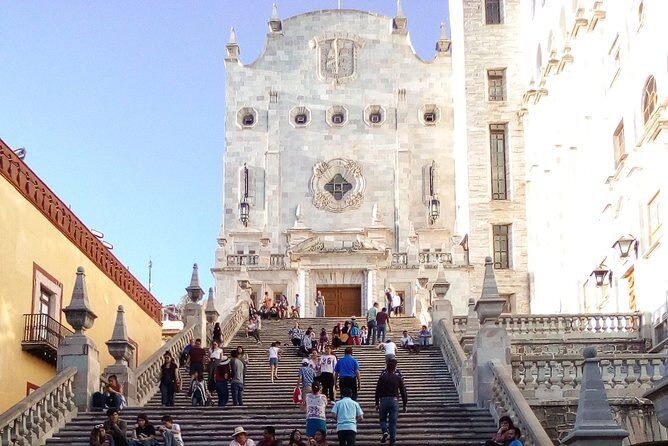
These two cities look different at street level, but they share a big storyline: wealth and power moved through mining, and religion gave it structure. In San Miguel de Allende, you’ll run into Catholic influence in convents, plazas linked to church life, and civic buildings tied to elite landowners and officials. In Guanajuato, silver mining is the engine, and you see it in the town’s institutions and dramatic viewpoints over the city.
What I like about pairing them is that the shapes of the places start to make sense. You’re not just seeing pretty streets. You’re seeing why they were built the way they were built—around authority, money, and faith.
You can also read our reviews of more private tours in Mexico City

Price and logistics: what your $350 per group really buys
At $350 per group (up to 5 people), this tour is priced like you’re paying for time and a guide who can explain the time. You get private transportation across the region and an organized, two-day plan that saves you from figuring out routes, parking headaches, and which streets to walk first.
Because it’s a small group and not a shared shuttle, you also gain something underrated: you can pause for photos, ask questions, or slow down when a building detail catches your eye. That sounds minor until you’re standing in front of something like a colonial facade where the good stuff is in the carvings and proportions, not the big poster out front.
Pickup is part of the deal too, with airport pickup available. That matters when you’re arriving tired and want the first hours to be smooth.
One more cost reality check
The tour includes private transportation, but admission tickets are not included for some stops. In the written plan, tickets aren’t included for:
- Templo y ex-convento de la Santa Cruz de los Milagros (Day 1)
- Museo Casa Diego Rivera (Day 2)
Other listed stops are marked free, so part of your budgeting is simply planning for those paid entrances.
Day 1 in San Miguel de Allende: from convent life to civic power
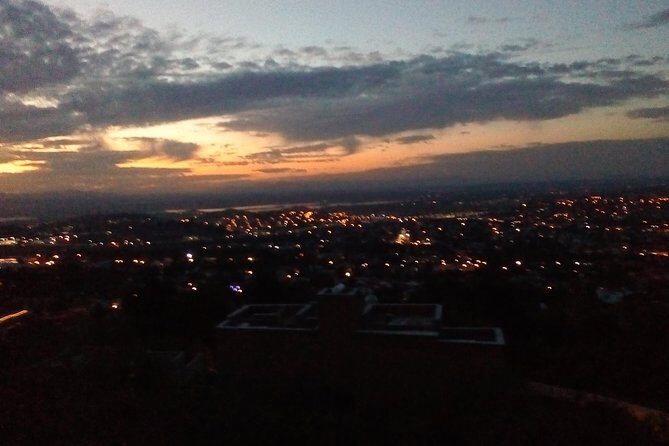
San Miguel is famous for its visual drama, but the real payoff of day one is how the stops connect. You go from religious space to government space to plazas that shaped daily life. The walking is focused, and the time at each stop is long enough to actually look.
Stop 1: Templo y ex-convento de la Santa Cruz de los Milagros
This is where the trip starts feeling historical fast. You’re looking at XVIth-century conventual facilities and the lifestyle that surrounded them. It’s not just a church door you pass through. You get time to absorb how convent complexes worked as community centers—spiritual life, social order, and daily rhythm all tied together.
What to do here: don’t rush. Spend a few minutes scanning the building for how space is organized. In places like this, the layout often tells you more than the biggest altar does.
Consideration: admission isn’t included here, so plan a little extra budget for the entry.
You can also read our reviews of more historical tours in Mexico City






Stop 2: Palacio de Gobierno Casa de la Corregidora
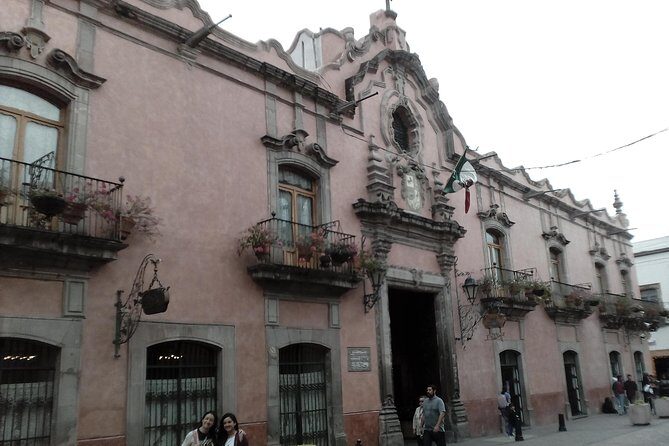
From religious space, you shift to civic space. This stop puts you in front of a colonial-era government and administrative building described as ranging across roles connected to administration, government, private miner and landowner property, and religion around a square with fountains.
If you’ve ever wondered why plazas in colonial towns feel like they’re designed for public power, this is a good anchor moment. Even if you’re not reading every plaque, the setting helps you connect the dots between money, governance, and the church.
This one is free, and it’s a smart stop because it’s not too tiring. You can enjoy the architecture without feeling like you’re sprinting from one landmark to the next.
Stop 3: Plaza de la Soledad
This plaza has a past rhythm. It’s described as the former city center area, enclosed by institutions tied to the clergy—former hospital, university-related buildings, and related religious spaces.
This stop is especially useful if you want the “human” side of history. How did people gather? Where did care happen? Where did learning happen? In many Mexican colonial towns, those answers cluster around clergy-run institutions. Here, you get a snapshot of that pattern.
Admission is free, and you should treat the plaza like a breather. Let your eyes rest between heavier stops.
Stop 4: Jardin Allende and the stories behind the skyline
Jardin Allende is where San Miguel starts feeling like a character in the story. You’ll cover several elements tied to architecture, independence history, and public art.
What’s included in this stop:
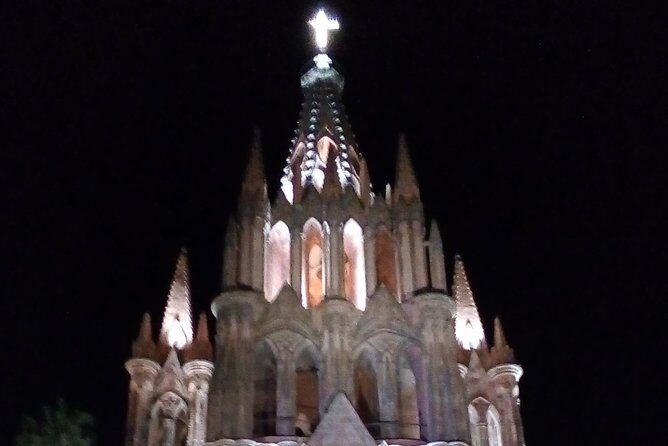
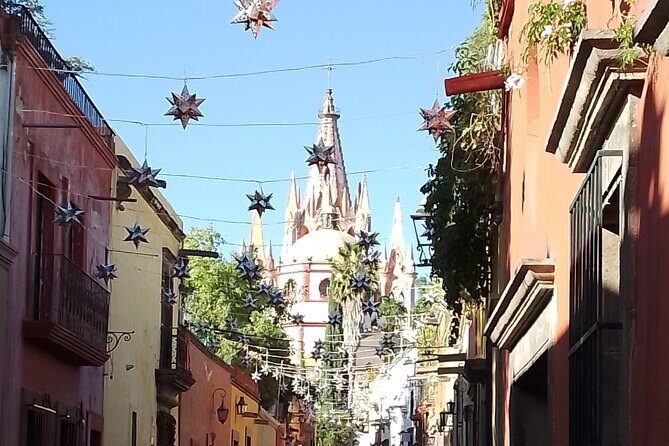
- SMA’s Mexican Gothic cathedral (noted as a curious example of indigenous understanding of western forms)
- Ignacio Allende independence military house museum
- Centro Cultural el Nigromante, with ornamentation including works by David Alfaro Siqueiros and other monuments and buildings
This is a big stop, but it’s not random. It connects three major themes in one pocket:
1) How western forms got adapted locally
2) How independence-era leadership is remembered
3) How art and public institutions give identity to a place
If you like taking photos, this is a good place to slow down and frame things. Don’t just aim at the prettiest angle. Aim at the mix: cathedral + museum + cultural center all in one zone is where you see how the town presents itself.
Day 2 in Guanajuato: Rivera’s house, El Pipila’s view, and mining everywhere
Day two keeps the energy but changes the mood. Guanajuato often feels like you’re climbing into history, because the terrain forces the town to layer itself.
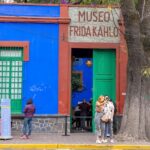
Stop 1: Museo Casa Diego Rivera
This one is timed as a shorter visit—about 30 minutes—but it gives you a strong start. It’s described as the house museum of Mexico’s art history main artist and birthplace.
Even if you don’t plan to read every label, the value here is context. Rivera isn’t floating in art-space. He comes from a place and a time, and museums like this help you see him as part of Mexico’s broader cultural story.
Consideration: admission isn’t included here, so you’ll want to budget for it if the museum entrance matters to you.
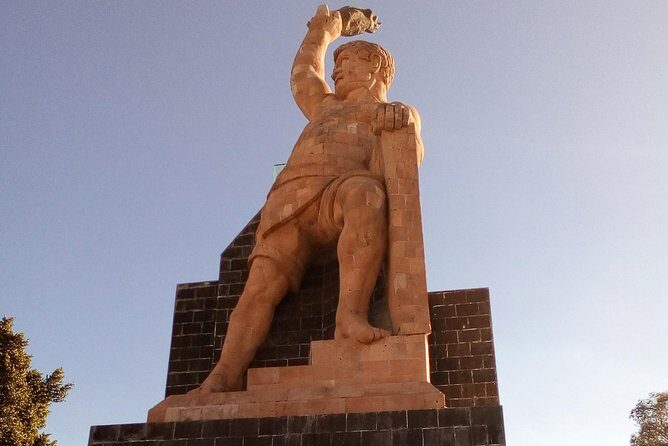
Stop 2: Monumento Al Pipila
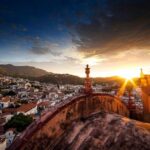
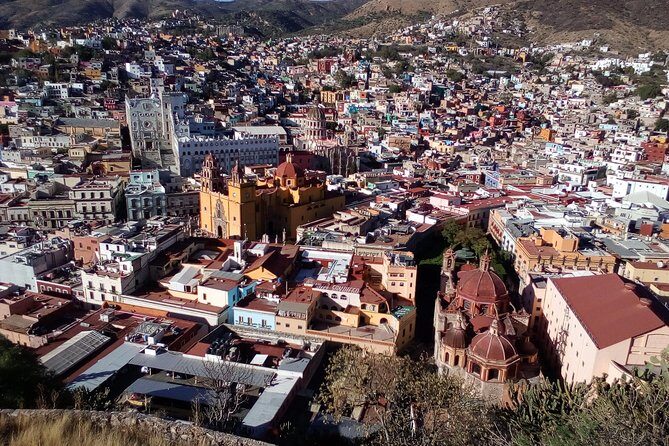
Next comes one of Guanajuato’s best “see the whole town” moments: Monumento Al Pipila. The stop is set as a mirador and is next to a funicular that connects it with the city center.
This viewpoint matters because Guanajuato’s streets and elevations can feel confusing until you see the map from above. From here, you can connect why the town looks the way it does—how neighborhoods climb and how the city layout makes sense.
Admission is free.
Stop 3: The Alley of the Kiss (Callejón del Beso)
Now you get the iconic quirky side. The description is specific: a narrow, archetypical alley where balconies approach each other, so people line up for a chance to kiss from one to the other.
It’s playful, and that’s the point. This stop helps you remember that history and culture are not only heavy topics. They’re also daily-life spaces with character.
Admission is free, and the visit is short—about 20 minutes—so it works well even if your feet are tired.
Stop 4: Guanajuato School of Mines
This final stop ties the whole day together thematically. The Guanajuato School of Mines is described as colonial life stirred around two worlds: silver mining and religion. It’s presented as a key example of the former, which is exactly what you want after seeing the views and the iconic alley.
What to look for here: how institutions reflect the economy. If mining created the wealth, the mines and their training/culture often shaped what the city valued. This stop gives you the “why” behind Guanajuato’s academic and architectural presence.
Admission is free, and it’s a good closer because it’s more than a photo. It’s a concept you can carry back to the streets.
How to enjoy this pace without feeling rushed
This tour is efficient. That’s a compliment, but it comes with an honest trade-off: it’s not a slow meander.
Here’s how to make it feel easy:
- Wear comfortable walking shoes. Even when stops are timed, Guanajuato and San Miguel both reward good footwear.
- Bring patience for photo moments. Daniel’s style, from what I’ve seen in real interactions, is to allow time for images and questions instead of treating each stop like a checklist.
- Do one thing at each stop besides photos: pick a detail and stick with it for a minute. A doorway carving, a plaza layout, or the way a building meets the square.
- Budget for a couple of paid entrances. The plan flags admission-not-included for two sites, so plan ahead and you won’t feel surprised halfway through day one or day two.
Daniel Mendívil Olvera: the guide factor that makes the tour
The biggest differentiator here is the way Daniel explains places. He’s described as helpful and knowledgeable about Mexico’s history, and what you’ll likely feel is that he doesn’t just point at landmarks—he points at meaning.
Several details stand out from real trip experiences with him:
- He’s very patient with different needs, including slower-paced translation when family members don’t speak English.
- He’s flexible with route and time when you want to adjust based on your interests.
- He encourages practical choices around food and local experience, including guidance on authentic dishes if you decide to eat with his recommendations.
Also, he tends to act like a professional in the best way: on time, respectful, and focused. You’re not getting pulled into awkward sales pitches or forced stops.
Who this tour is best for
This is a great fit if you:
- Want history + architecture more than shopping
- Like walking through towns with a story thread connecting each stop
- Prefer a private setup where you can ask questions and take breaks
It’s also a strong option for families and mixed-language groups. The ability to support non-English speakers matters, and the experience is designed as a private tour, so the guide can actually respond to your group.
If you’re the type who hates car time and loves doing everything on your own, then you might feel the schedule is tight. But if you’d rather be chauffeured and educated while you rest your brain, this format hits the sweet spot.
Should you book this private historical tour from Mexico City?
If you want a well-paced two-day plan that covers major San Miguel de Allende landmarks and the signature Guanajuato stops (including El Pipila and Callejón del Beso), this is a smart booking. The private transportation alone can be worth it once you factor in route planning and time savings.
Book it especially if:
- You’re traveling with up to four others and want shared savings vs. separate private bookings
- You care about understanding Mexico’s silver-mining and Catholic influence through the actual places
- You want a guide who can adapt, explain clearly in English, and slow down when needed
Pass if you only want free stops with no paid admissions, or if you prefer an ultra-slow, days-long wander without set timing. For most people visiting Mexico City and wanting two unforgettable nearby towns, this tour is a strong yes.
FAQ
Is this tour private?
Yes. It’s a private tour/activity, and only your group will participate.
How many people can be in the group?
The price is $350.00 per group, up to 5 people.
How long is the tour?
It runs for 2 days (approx.).
What language is the tour offered in?
It’s offered in English.
Is pickup included?
Yes. Pickup is offered, and airport pickup is also available.
Are tickets to all sites included in the price?
No. Admission tickets are not included for some sites listed in the plan, including Templo y ex-convento de la Santa Cruz de los Milagros and Museo Casa Diego Rivera. Other stops are listed as free.
Does the tour include meals?
No. Meals are not included.
Is the tour mostly walking or mostly driving?
It includes private transportation plus walking time at each stop. The duration per stop varies, and the schedule is designed to balance both.
Will I get a mobile ticket?
Yes. A mobile ticket is offered.
What is the cancellation policy?
Free cancellation is available. You can cancel up to 24 hours in advance for a full refund.
Is the tour accessible for most travelers?
The information provided says most travelers can participate.