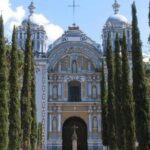
Oaxaca’s myths start in the church shadows. This small-group walk in Oaxaca City pairs colonial-era architecture with street-level stories, so you don’t just look at old buildings—you learn why people still talk about them. The guide’s style is big on narrative, and the pace keeps the tour moving without feeling rushed.
Two things I like a lot are the storytelling itself and the tight group size (max 8). You get room to ask questions, and the tour still covers major Centro landmarks in about 2 hours 30 minutes. You’ll also get an included break for traditional ice cream, which makes the whole thing feel like a real local evening plan rather than a checklist.
One thing to consider: each stop is time-limited. You’ll get quick, focused looks at façades and street-side details, but if you want long time inside churches or museums, you may need follow-up visits on your own.
In This Review
- Key things to know before you go
- Why this Oaxaca walk mixes churches with legend
- The 2.5-hour route that hits Santo Domingo, Soledad, and the Zócalo
- Stop 1: Templo de Santo Domingo de Guzmán (about 25 minutes)
- Stop 2: C. de Manuel García Vigil 205 (about 15 minutes)
- Stop 3: El Calvario 103 (about 10 minutes)
- Stop 4: Avenida de la Independencia plaza break (about 30 minutes, ice cream included)
- Stop 5: Basilica de Nuestra Señora de la Soledad (about 25 minutes, admission included)
- Stop 6: Zócalo (about 30 minutes)
- Church art isn’t just pretty: it’s a story system
- The urban mythology moments (without the fake certainty)
- Avenida de la Independencia: the included break that keeps it human
- Price and value: what $38.81 buys you in Oaxaca
- Practical tips so you’re not scrambling mid-tour
- Who should book this tour
- Should you book Oaxaca Urban Mythology and Colonial Art?
- FAQ
- How long is the tour?
- How much does it cost?
- Is the tour offered in English?
- Is admission included for the church stops?
- What food is included?
- How big is the group?
- Where do I meet and where does it end?
- What is the cancellation policy?
Key things to know before you go
- Colonial art + urban mythology: churches and façades connected to Oaxaca legends instead of dry dates and facts
- Small group (up to 8): easier to keep the conversation going and hear every detail
- Most admissions are free: you spend money on food and exploring, not entry fees
- Stop structure keeps energy up: short visits (10–30 minutes) across key Centro sites in 2.5 hours
- Ice cream break is included: a pleasant pause on Avenida de la Independencia
- You end near the Zócalo area: easy to continue wandering afterward on your own
Why this Oaxaca walk mixes churches with legend
Oaxaca City has a way of keeping the past close. On this tour, the colonial look of Centro—church façades, historic buildings, and old street lines—acts like a stage set for the stories people still repeat. That’s the hook: you see the art and architecture, then the guide ties it to folklore, relic lore, and 19th-century “you-won’t-believe-this” tales.
I also like the balance here. You’re not stuck in spooky mode the whole time, and you’re not trapped in facts-without-feeling either. The best moments come when you notice an architectural detail and suddenly understand how the story sticks to that exact corner of town.
If you like walking tours but hate when they feel like a race, this one fits better. It’s built around several stops with clear themes, so you know what you’re looking for as you move.
You can also read our reviews of more tours and experiences in Oaxaca City.


The 2.5-hour route that hits Santo Domingo, Soledad, and the Zócalo
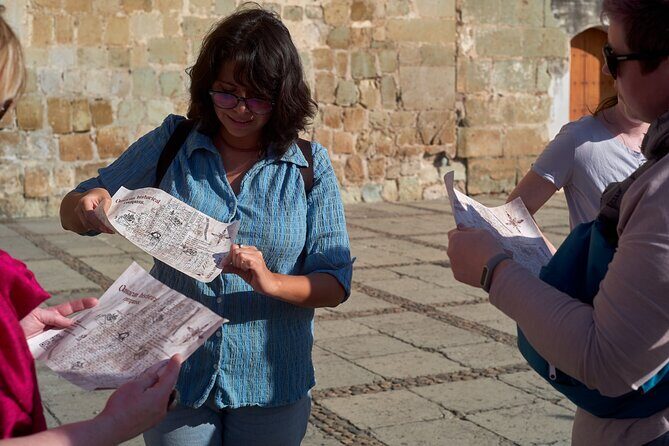
You start at the Templo de Santo Domingo de Guzmán area, and from there the tour moves through Centro in a way that’s practical and easy to follow. The time blocks are short enough to keep you fresh, but long enough that you don’t miss the “why this matters” part.
Stop 1: Templo de Santo Domingo de Guzmán (about 25 minutes)
This is where the colonial tone gets set. The guide points out churches and buildings in the colonial style around the area, helping you learn how the art and design language of that era shows up in real street space. Even if you’ve seen churches before, this kind of explanation makes you look at façades differently: symmetry, materials, and religious symbolism start to feel like clues.
Since admission is free at this stop, it’s also a low-pressure way to begin. You can focus on the story without wondering whether you’re paying to do the “right” thing.
Stop 2: C. de Manuel García Vigil 205 (about 15 minutes)
Next you’ll step toward a building with a history of multiple uses and a distinctive architectural style. This stop is great if you like the city as a living organism, not just as a museum. You’ll get a sense of how one structure can shift roles over time, while still leaving visible marks in its form.
This is also a good reminder that Oaxaca’s colonial character isn’t only inside churches. Some of the strongest hints are in the architecture people pass every day without thinking.
Stop 3: El Calvario 103 (about 10 minutes)
Then comes a darker, legend-driven moment. At El Calvario 103, the guide shares a popular paranormal story from the 19th century tied to a real street setting. The value here is not the attempt to prove anything. It’s the way the narrative helps you understand how locals store fear, meaning, and identity in specific places.
It’s a brief stop, so don’t expect a whole “movie scene.” Do expect a few details that make the street feel charged the next time you walk by.
Stop 4: Avenida de la Independencia plaza break (about 30 minutes, ice cream included)
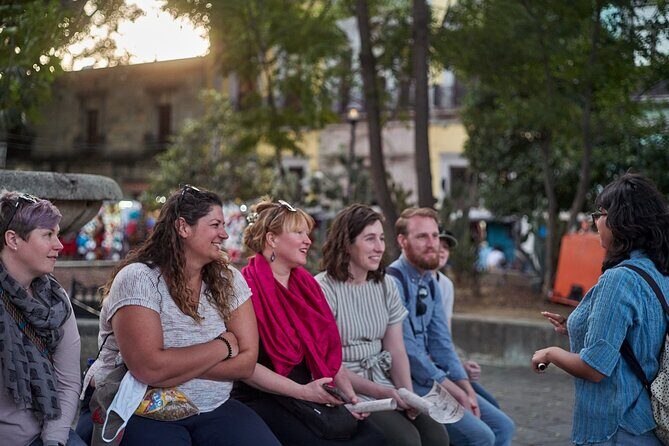
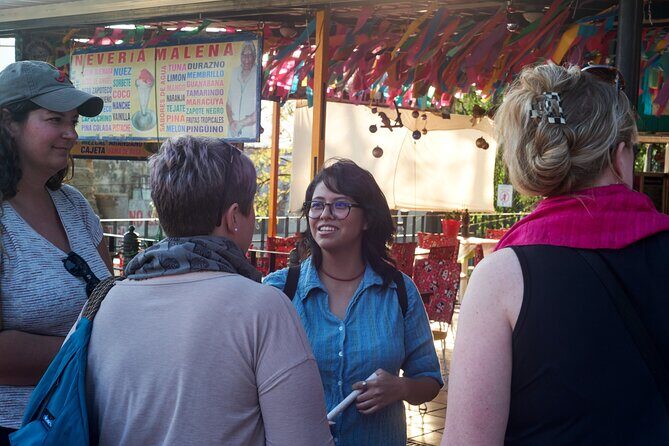
This is your reset button. The tour pauses in a small plaza on Avenida de la Independencia, where you may catch musicians playing Mexican songs and melodies. You’ll also have time for traditional ice cream, which is included, and it’s a nice example of how Oaxaca balances history with everyday pleasure.
If you’re trying to manage energy during a walking tour, this stop matters. It turns the afternoon from lecture mode into people mode.
Stop 5: Basilica de Nuestra Señora de la Soledad (about 25 minutes, admission included)
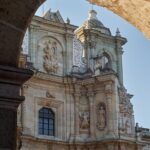
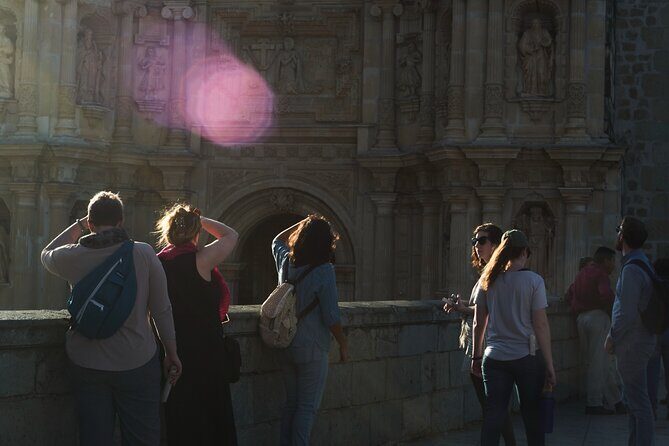
At the Basilica de Nuestra Señora de la Soledad, the focus shifts to the façade and church art, plus a relic connected to local legends. This is a strong stop for anyone who loves symbolism because you’re not only shown what’s decorative—you’re told what people have long believed those elements mean.
Admission is included here, which is helpful. It prevents the common walking-tour headache of figuring out what you can see without extra costs.
Stop 6: Zócalo (about 30 minutes)
You finish at the Zócalo, where the guide helps you read how the city was founded and how the earlier eras left clues in the layout. This is where the tour becomes more than “church plus legend.” You start seeing the geometry of Centro—how major buildings line up, how streets guide movement, and why the city plan keeps showing up in daily life.
The final point is about five blocks from the Zócalo, so you’ll be well positioned to keep exploring right after.
Church art isn’t just pretty: it’s a story system
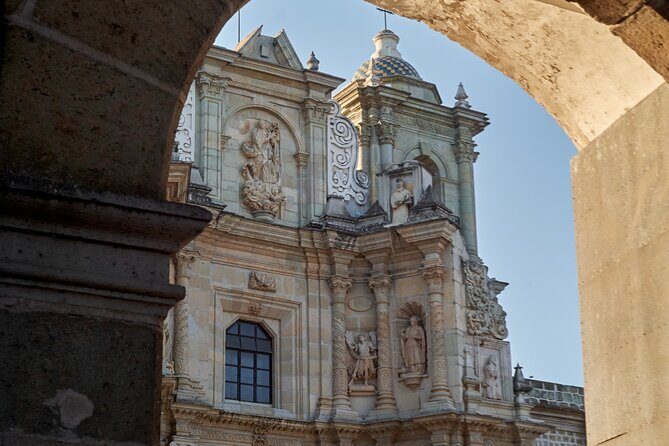
What makes this tour work is that the guide treats colonial art like a code you can learn. At the churches, you don’t just hear about centuries—you’re encouraged to notice façade choices and design patterns. That turns architecture from background decoration into something you can actually “read.”
I especially like when the guide links design to belief. For example, the basilica stop isn’t just framed as, “Here’s a pretty church.” It’s framed as, “Here’s why people associate this place with legends,” and that gives your photos and your memory a clearer point.
Even the quick exterior-focused stops have purpose. Short visits can feel limiting on some tours, but here they function like chapters. You don’t get lost in details, and you still come away with enough understanding to recognize what you’re seeing later.
The urban mythology moments (without the fake certainty)
The paranormal and legend portions are handled in a way that feels rooted in place. At El Calvario, you hear a 19th-century paranormal legend tied to that street corner. At Nuestra Señora de la Soledad, you hear about a relic that belongs to local legend.
Here’s the key: you’re not asked to treat these stories like court evidence. Instead, you learn how and why such tales stick to Oaxaca. A place gains power through repetition, and this tour shows you the locations where repetition keeps happening.
That’s what I find useful. Stories make the city memorable, but the architecture keeps those stories from floating around in generalities. You’re always connected back to a specific door, a specific façade, or a specific stretch of stone and street.
Avenida de la Independencia: the included break that keeps it human

A walking tour can get stuffy fast if every stop is “look, listen, stand still.” The Avenida de la Independencia plaza break changes the tone. Music, color, and a simple local treat make the tour feel like part of the city instead of an interruption.
You’ll have traditional ice cream included, and the timing—about 30 minutes—gives you enough space to reset. If you’re traveling with someone who gets tired easily during tours, this break is a real quality-of-life feature.
Some groups also reported a mezcal moment paired into the experience. Since it’s not listed as a guaranteed item for every version, I’d treat that as a bonus you might see rather than something to plan your whole day around.
Price and value: what $38.81 buys you in Oaxaca

At $38.81 per person for about 2 hours 30 minutes, this is priced in a way that feels fair for what you get: multiple major Centro stops, English narration, and an included ice cream break. The “value” part isn’t just the price tag—it’s the balance of free admissions and one included church admission where it counts.
You’ll also be with a maximum of 8 people, which matters. In bigger groups, you often lose half the details. In a small group, the guide’s storytelling style—plus your ability to ask questions—actually lands.
The fact that it’s typically booked about 29 days in advance is a good sign too. Popular doesn’t always mean best, but it does suggest the timing and route work for many people.
Practical tips so you’re not scrambling mid-tour
Start by arriving with your meeting point locked in your map app. The tour begins near Templo de Santo Domingo de Guzmán, and the address given for the start area is C. Macedonio Alcalá s/n, Centro, 68000 Oaxaca de Juárez.
For the end, plan to continue on foot afterward. The experience finishes at C. De Manuel Doblado 117, and it’s about five blocks from the Zócalo. That’s close enough to keep exploring, but far enough that you can also head toward nearby cafés and markets without backtracking.
Bring comfortable shoes. The tour is designed as a walk between several Centro landmarks in a short time window, and you’ll want your feet to feel good. Also, if you’re sensitive to heat, consider what time of day you go and pace yourself during stops.
Finally, if you’re the type who asks questions, do it. The guide has a reputation for being flexible and responsive, including accommodating schedules when needed. That kind of interaction makes the stories feel more personal than scripted.
Who should book this tour

This works best if you want a first serious orientation to Oaxaca City. It’s a solid match if you like history but hate long museum explanations that don’t connect to real streets. It’s also great for couples and solo visitors who enjoy walking and want a guided path through Centro.
It’s less ideal if you’re seeking deep time inside churches or you need long quiet moments. Each stop is brief by design, so you’ll see and understand a lot—but you won’t linger like you would on a self-guided day.
If you’re visiting Oaxaca for the first time, this is the kind of tour that gives you “what to look for” in future stops. You’ll leave with a mental map of where stories live, not just where monuments sit.
Should you book Oaxaca Urban Mythology and Colonial Art?
Yes, if you want a compact Oaxaca City experience that mixes colonial art with legends tied to real addresses. The pricing feels reasonable for the number of stops, the included ice cream break, and the small group size. And the overall rating is strong: a 5/5 average from 24 reviews, with praise focused on storytelling, pacing, and how much the guide helps you understand what you’re seeing.
Hold off if you need lots of time inside buildings, or if you prefer straight historical facts without the paranormal folklore angle. In that case, you may want a more museum-heavy plan.
If you’re torn, use this simple decision rule: if you like learning how people think and what they believe—while also appreciating old architecture—this is a great bet for your Oaxaca itinerary.
FAQ
How long is the tour?
The tour lasts about 2 hours 30 minutes.
How much does it cost?
The price is $38.81 per person.
Is the tour offered in English?
Yes, the tour is offered in English.
Is admission included for the church stops?
The tour notes free admission for some stops, and it also includes admission for Basilica de Nuestra Señora de la Soledad.
What food is included?
There is an included break for traditional ice cream on Avenida de la Independencia.
How big is the group?
The tour has a maximum of 8 travelers.
Where do I meet and where does it end?
The start is at Templo de Santo Domingo de Guzmán area (C. Macedonio Alcalá s/n, Centro). The final point is C. De Manuel Doblado 117, about five blocks from the Zócalo.
What is the cancellation policy?
You can cancel for a full refund if you do so at least 24 hours before the experience’s start time.