REVIEW · OAXACA CITY
Ruta mágica de las artesanías
Book on Viator →Operated by Oaxacatours · Bookable on Viator
Art starts outside Oaxaca City.
This day trip is interesting because it trades the city’s viewpoints for a hands-on look at how Oaxaca crafts are made across multiple communities, from carved wooden animals to barro negro pottery and embroidered cotton. I love that you’re pushed beyond souvenir shopping and into real workshops and market energy, plus the convenient hotel pickup and drop-off keeps the day from feeling like a logistical puzzle. One possible drawback: like many craft tours, time can shift toward browsing and sales, so if you want a lot of watching-and-explaining, keep an eye on how each stop is run and ask questions.
You’ll meet at 5 de Mayo 300 in Oaxaca’s Centro area for a 9:30 am start, and the whole loop takes about 8 hours. The tour is offered in English, but in practice you may still hear Spanish alongside it. I’ve heard names like guide Clemente and guide Moses, with driver Francisco, and that matters because a good guide is the difference between seeing craft and actually understanding the why behind it.
In This Review
- Key highlights you should care about
- A One-Day Craft Route From Central Oaxaca City
- Price and Value: What $53.73 Buys You
- Hotel Pickup, Timing, and the Pace That Shapes Your Experience
- Stop 1: San Martin Tilcajete and the Alebrijes Workshop Feel
- Stop 2: Santo Tomás Jalieza Textiles and Hand-Embroidery Details
- Stop 3: Ocotlán Friday Market and Buying With Context
- Stop 4: San Antonino Castillo Velasco and Finished Textiles Up Close
- Stop 5: San Bartolo Coyotepec and Black Pottery, Barro Negro Style
- Learning vs. Shopping: How to Get the Most From Each Stop
- What to Bring: Water, Snacks, Cash, and Smart Camera Etiquette
- Who This Tour Is Best For (and Who Should Pick a Different One)
- Should You Book Ruta mágica de las artesanías?
- FAQ
- How long is the Ruta mágica de las artesanías tour?
- What time does the tour start?
- Where do I meet the tour?
- What crafts and places does the tour include?
- Is the tour offered in English?
- Does the tour include admission tickets?
- Is hotel pickup and drop-off included?
- What should I bring since snacks and water are not included?
- How big is the group?
- What is the cancellation policy?
Key highlights you should care about
- Three craft towns, one efficient route with hotel pickup and drop-off
- Alebrijes workshop time where you can see carving and painting steps firsthand
- Cotton textile focus centered on embroidery and finished huipil and blouse work
- Black pottery stop tied to the famous barro negro tradition of San Bartolo Coyotepec
- Ocotlán Friday market energy for direct artist shopping, not a sterile stop
- Small group max 18 which usually makes it easier to ask questions and move at a human pace
A One-Day Craft Route From Central Oaxaca City
This is a straightforward “get out of town” craft tour. You start in central Oaxaca, then head to several nearby artisanal towns where people make work that Oaxaca is known for. The best part of the format is that it’s not one long lecture and it’s not one big shopping mall either. You get multiple craft styles in a single day, which is ideal if your schedule is tight and you want variety without hopping around on your own.
The route also makes sense geographically. Each stop is close enough to fit into an 8-hour day, but far enough to feel like you’ve changed your surroundings. Expect a mix of workshops, studio visits, and a market stop, with short stretches of walking inside each place.
One practical note: the tour is built for a moderate fitness level. That usually means you can handle uneven sidewalks and some walking, but you shouldn’t plan on a lot of stairs or long hikes.
You can also read our reviews of more tours and experiences in Oaxaca City.



Price and Value: What $53.73 Buys You
At $53.73 per person for about 8 hours, what you’re paying for is the guide plus the transport solution. You also get hotel pickup and drop-off, which in Oaxaca can be the difference between a calm day and a stressful one. Each stop lists admission ticket as free, so you’re not paying entry fees on top of the tour cost.
Is it “cheap” for what you get? Usually, yes, because you’re buying convenience plus expertise. A local guide can point out details most shoppers miss, like why certain patterns show up in textiles or why black pottery takes a different approach than typical clay work.
What you should plan for: this tour does not include snacks or bottled water. A lot of the day is spent moving from place to place, so pack smart and avoid getting hangry mid-afternoon.
Hotel Pickup, Timing, and the Pace That Shapes Your Experience
The day starts at 9:30 am, and it ends back at the meeting point. The stop times are fairly tight: roughly an hour at San Martin Tilcajete, about an hour at Santo Tomás Jalieza, about an hour at Ocotlán, around 1 hour 30 minutes at San Antonino Castillo Velasco, and about 40 minutes at San Bartolo Coyotepec.
That schedule is good news if you want a structured sampler of Oaxaca crafts. It’s a trade-off if you want very deep, slow studio time. In fact, some experiences like alebrije carving can be limited by what the studio is doing that day, so you may get a chance to see the process or you may get more of a finished-product view. If you care most about watching hands at work, ask early in each stop what’s being demonstrated right now.
Also, your group size is limited to a maximum of 18 travelers. That usually helps with flow and makes questions easier, especially in smaller workshops where crowds can feel awkward.
Stop 1: San Martin Tilcajete and the Alebrijes Workshop Feel

San Martin Tilcajete is where wood alebrijes shine. If Oaxaca has a “signature animal art” moment, it’s these carved figures painted in bold color. Here, the point isn’t just to see the finished pieces. You can usually observe how artisans bring the carving to life, from creating the form to applying the paint.
What to look for when you’re there:
- The carving style: different makers can have different details, even for similar animal shapes
- The paint approach: some artisans use stories and symbolism tied to the animal, and you might even hear background tied to cultural meaning
- The quality cues: crisp edges, clean brushwork, and balanced color placement often show up in the way the figure is finished
A strong guide can help you spot what makes one alebrije better than another. In some cases, artisans may add personal storytelling elements, like associating animals with spirit-animal ideas, so don’t be shy about asking how they explain their work.
Possible snag: if you’re hoping for a long, uninterrupted “watch me carve” session, keep expectations flexible. Some tours get less carving time depending on studio operations, and you may end up with more time inside shops than watching every step. The best move is simple: ask right away what stage visitors are seeing today.
Stop 2: Santo Tomás Jalieza Textiles and Hand-Embroidery Details

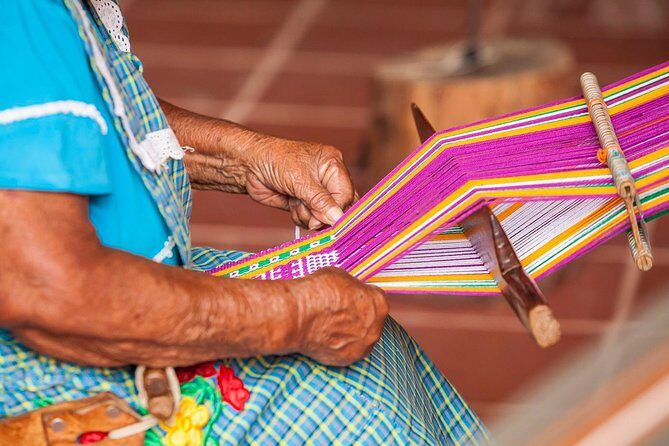
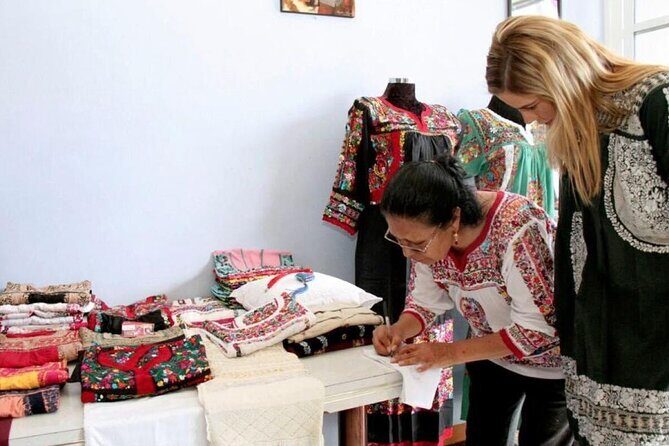
Next up is Santo Tomás Jalieza, famous for cotton textiles and the kind of embroidery you can’t fake with machine shortcuts. This stop centers on huipiles and embroidered blouses, plus the studios where artisans make these garments by hand.
This is the stop where you’ll likely slow down mentally. Textiles reward patience. You can see how the pattern is constructed, how color is chosen, and how the stitchwork builds the design.
What you should pay attention to:
- Stitch density: tighter work often takes longer and can feel more “structured” in the final look
- Pattern logic: designs tend to repeat or align in ways that suggest planning, not random decoration
- Fabric feel: cotton can have a distinct drape compared with synthetic blends
One thing I like about this stop on a craft route is that it’s not only about buying clothing. Even if you don’t plan to spend big, you can learn how artisans think about color and motif, and that makes any textile you see later in Oaxaca make more sense.
A consideration: some embroidery stops can feel more like galleries than learning studios depending on the day. If you want a live demonstration, ask whether artisans are actively working at that moment or just showing finished pieces.



Stop 3: Ocotlán Friday Market and Buying With Context

Ocotlán is the market-driven stop, known for its Friday market. This is where you can browse more widely: textiles, ceramics, and yes, sometimes alebrijes too. The best version of this stop feels like you’re in the real shopping layer of Oaxaca life rather than a curated showroom.
I like markets in a craft tour because you can compare styles quickly:
- Do you see similar motifs across different booths?
- Are prices consistent for comparable work?
- Do you notice quality differences in how pieces are finished?
There’s also a safety briefing that can take some time. If someone in your group gets nervous, it helps to know you’ll hear a warning about theft and crime in the area. You don’t want fear, but you do want practical awareness—markets get busy.
About paying: market shopping can be cash heavy. It’s smart to have cash ready, even if other stops accept card. Bring some small bills if you plan to buy.
Stop 4: San Antonino Castillo Velasco and Finished Textiles Up Close

San Antonino Castillo Velasco shifts the focus slightly. Instead of seeing all the making steps, you’ll spend time with textiles that are already finished. That can still be valuable. Finished work teaches you what the process ultimately produces, and it’s easier to judge the final quality when everything is complete.
This stop typically gives you time to examine garments closely and decide what fits your taste. You’ll see delicate embroidery and clothing construction that’s part of the local textile identity.
If you’re shopping, this is where you’ll want to compare sizes and fit. Textiles can vary by maker, and a garment that looks perfect on a hanger may sit differently on your body. Ask about fabric composition when possible, and check stitching and finishing details at seams and hems.
If your goal is education more than buying, treat this stop like a study hall. Look at how motifs are arranged. Then notice how the same style language shows up again at other textile shops later in Oaxaca.
Stop 5: San Bartolo Coyotepec and Black Pottery, Barro Negro Style
San Bartolo Coyotepec is all about black pottery—the famous barro negro tradition. This is often the craft stop with the most instant “wow” factor because the finished pieces look so striking.
You’ll likely see artisans working in the studio and understand the transformation from clay process to finished work. Whether you watch a woman or a man creating a pot in that moment, the key lesson is the method: black pottery isn’t just painted color. It’s a production approach that leads to the signature look.
What makes this stop worth your time:
- You can watch craftsmanship directly, not just see photos
- You get a sense of how utilitarian pottery and decorative pieces share a production culture
- The finished items are practical to take home: tableware, bowls, and sculptures are easier to pack than large textiles
Time here is shorter—about 40 minutes—so I’d use that window strategically. If you care about pottery-making, ask what stage you’re seeing and what happens between forming and final finish.
Learning vs. Shopping: How to Get the Most From Each Stop

Craft tours walk a thin line between education and sales. This one includes plenty of real craft work, but it also gives you shopping time and studio storefront opportunities at multiple stops. That’s not automatically bad. It can be how artisans earn income. The problem is when the balance tilts too far toward selling and not enough toward explaining.
Here’s how you keep control of the day:
- Ask for process details early in each stop, not at the end
- Decide your shopping budget up front so you don’t feel pressured mid-tour
- If a shop seems to have no demonstration, you can still learn by studying finished quality—then move on with clear eyes
I also suggest you protect your energy. Some days feel like a string of nice stops. Others feel like too much time inside shops. That depends on the guide, the studio staff, and what’s actively happening that day.
What to Bring: Water, Snacks, Cash, and Smart Camera Etiquette
This tour doesn’t include snacks or bottled water, so bring both if you can. Even in cooler Oaxaca mornings, you can get worn out by a full day of short walks and waiting.
Money tip: some stops may accept credit cards, but not all. Especially at market time (and sometimes at embroidery-related shops), cash can be the easiest option. Bring a mix: card plus some cash you’re comfortable spending.
Camera rules vary by studio. At least one embroidery stop can have restrictions and signs about photography. If you see a sign, follow it. No argument is worth it, and the quickest way to keep a good relationship with a workshop is to respect boundaries.
Who This Tour Is Best For (and Who Should Pick a Different One)
This tour is a great match if you want:
- A structured day trip that covers multiple Oaxaca craft traditions
- A guided route that makes studio visits easier than DIY
- Time outside the city so you see why Oaxaca craft culture lives in communities
It’s less ideal if you:
- Only want deep, hands-on demonstrations at every stop
- Get frustrated by bilingual communication or repeating explanations (some guides cover both English and Spanish even when the tour is marketed in English)
- Want guaranteed long viewing time at a single workshop
If you’re a buyer, this is also a strong fit. You can compare quality across formats: carved figures, embroidered textiles, ceramics, and market finds. Just go in with a plan so shopping stays enjoyable.
Should You Book Ruta mágica de las artesanías?
Book it if you want a high-value craft sampler with hotel pickup, small group size, and multiple stops tied to Oaxaca’s signature traditions. The mix of alebrijes, embroidered cotton work, Ocotlán market browsing, and black pottery is a smart way to spend a day if you’re only in Oaxaca for a short time.
Hold off or switch to a different format if your top priority is seeing one craft made in full detail for a long stretch. Because stop times are fixed, and because studio demonstration can vary by day, you might not get the exact level of “watch every step” you’re hoping for.
My advice: go in curious, ask questions, bring water and cash, and treat the day like a guided lesson in how Oaxaca turns creativity into daily life. If you do that, this route can feel genuinely worth every hour.
FAQ
How long is the Ruta mágica de las artesanías tour?
It runs about 8 hours (approx.).
What time does the tour start?
The start time is 9:30 am.
Where do I meet the tour?
The meeting point is 5 de Mayo 300, Ruta Independencia, Centro, Oaxaca de Juárez, Oax., Mexico.
What crafts and places does the tour include?
You’ll visit San Martin Tilcajete for wood alebrijes, Santo Tomás Jalieza for embroidered textiles, Ocotlán for the Friday market, San Antonino Castillo Velasco for textiles, and San Bartolo Coyotepec for black pottery.
Is the tour offered in English?
Yes, it is offered in English, with a local guide provided.
Does the tour include admission tickets?
Admission ticket is listed as free for the stops.
Is hotel pickup and drop-off included?
Yes. Hotel pickup and drop-off are included.
What should I bring since snacks and water are not included?
Bring snacks and bottled water, since those are not included.
How big is the group?
The maximum group size is 18 travelers.
What is the cancellation policy?
You can cancel for a full refund up to 24 hours before the experience’s start time.