REVIEW · OAXACA CITY
Explore Hierve el Agua, Mitla, Tule, Textile and Mezcal for a day
Book on Viator →Bookable on Viator
One long day, packed with Oaxaca outside the city. This route strings together Hierve el Agua’s mineral pools, the Zapotec ruins of Mitla, and hands-on culture stops that feel more like crafts you can see than souvenirs you just shop for. It’s built for people who want variety without needing to rent a car.
What I really like is how much is included for the money: entrance fees are covered, plus you get a guided component at key sites like Mitla and a guided look at wool textiles and mezcal production. Second, I love the pacing at the highlights—Hierve el Agua gets real time, including a walk and a chance to cool off in the pools.
One thing to consider: it’s a long day (about 11 hours) and the Hierve el Agua hike can be strenuous and hot, especially if you have knee issues or you’re not used to uneven ground.
In This Review
- Key highlights
- A value-packed Oaxaca circuit for a full 11 hours
- Teotitlán del Valle: pedal-loom wool rugs and natural dyes that actually matter
- Hierve el Agua petrified waterfalls: hike, then earn your mineral pool break
- Mitla’s Zapotec palaces: meaning, not just stone
- Textile stop: natural pigments, real hands-on weaving energy
- Santa María del Tule: the wide-trunk ahuehuete and its legends
- El Rey de Matatlán mezcal: from agave to fermentation to tasting
- Price and logistics: what’s covered, what you’ll likely pay extra
- Who should book this and who should pass
- Should you book this Oaxaca City day loop?
- FAQ
- What sites does this tour cover in one day?
- How long is the tour and what time does it start?
- Is lunch included in the price?
- Are entrance fees included?
- Is the tour offered in English?
- What should I bring for Hierve el Agua?
Key highlights
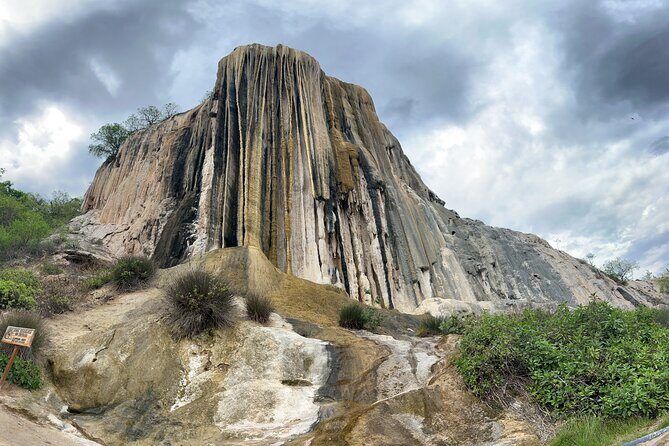
- Hierve el Agua: petrified waterfall views and mineral pools time for swimming or soaking
- Mitla with a certified bilingual guide: learn the Zapotec cosmovision with real context
- Teotitlán del Valle weaving: pedal-loom wool rugs with natural pigments like cochineal and indigo
- Santa María del Tule’s ahuehuete: legends and history tied to one famously wide tree
- El Rey de Matatlán mezcal: see production steps from agave cooking to distillation, then taste
A value-packed Oaxaca circuit for a full 11 hours
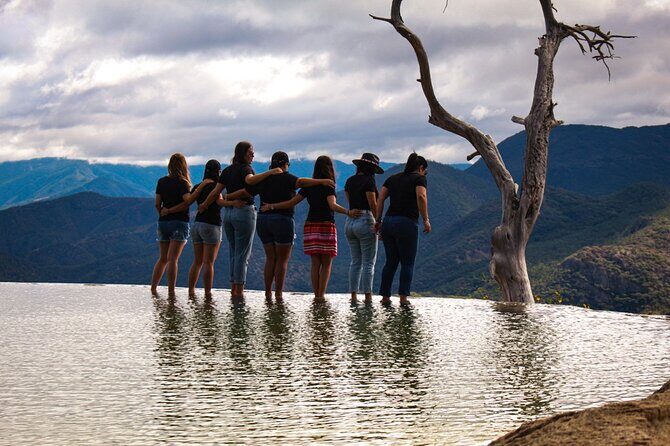
This is the kind of day trip that works best when you’re short on time in Oaxaca City but still want more than one “big” stop. The plan lines up nature, archaeology, traditional craft, and mezcal in a single loop—so you get a feel for Oaxaca beyond the central square and markets.
For the price point, the best value is what you don’t have to plan yourself. Entrance fees are included, you get air-conditioned transport, and bottled water is part of the day. Plus, mezcal tasting is included, which can easily cost extra if you try to cobble it together on your own.
The tradeoff is stamina. You’ll sit in the vehicle for a while, and the day’s rhythm depends on Hierve el Agua. If you go in expecting a gentle stroll, you’ll be surprised—your day will be more “workout + wow views + culture stops” than “easy sightseeing.”
You can also read our reviews of more tours and experiences in Oaxaca City.



Teotitlán del Valle: pedal-loom wool rugs and natural dyes that actually matter
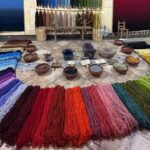
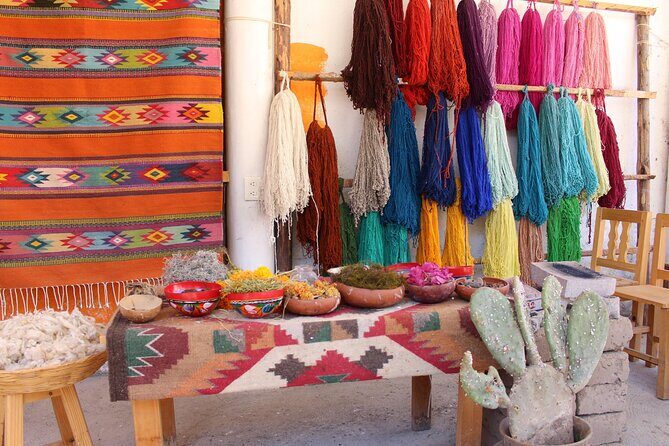
Your first cultural stop is Teotitlán del Valle, known for handmade wool rugs made on ancestral pedal looms. What makes this visit more than a quick show-and-tell is the emphasis on why the colors are different—natural pigments from local plants, minerals, and insects.
You’ll hear how dyes like cochineal (an insect-based red), pomegranate, and indigo contribute to the vivid tones Oaxacan rugs are famous for. That matters because it explains the craft beyond appearance. Natural dye processes are slower and more specific, and they tie the rug to local ecology and tradition rather than industrial shortcuts.
There’s also practical value if you’re thinking of buying. You’ll have time to look closely at the workmanship while a guide explains the process. Some buyers like being able to compare quality in person instead of guessing later back in your hotel.
Just be ready for one small reality: time spent at weaving-related stops can go hand-in-hand with shopping time. If you want to buy, this is a good stage to do it. If you don’t, stay focused on learning and keep moving at a comfortable pace.
Hierve el Agua petrified waterfalls: hike, then earn your mineral pool break

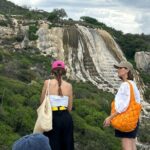
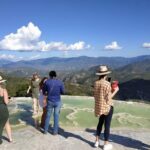
If you’re choosing this day for one reason, it’s Hierve el Agua. This is where you’ll see petrified waterfall formations—limestone “cascades” shaped by mineral-rich water over time. The views are the whole point, and you’ll have time to walk around before you head to the pools.
The schedule gives you about 3 hours here, including time for a hike and time to cool off. That mix is key. You can’t really appreciate Hierve el Agua by rushing the viewpoints, but you also don’t want to arrive only to admire stone from afar. The pools are what turn it into a real experience.
Plan for discomfort. The hike can be hot, with limited shade, and some sections involve stairs and uneven ground. Comfortable shoes are non-negotiable. Bring swimwear if you want the pool time, and pack an extra layer or clothes you can change into after.
A few timing and strategy tips help a lot:
- Go down to see the falls from below if you’re able—those base views are the payoff.
- Then come back up to the pools area for the mineral soak.
- Bring a towel, because you’ll want one once you’re done.
Also, if you like photos, you might encounter a local photo helper on-site. In the past, guests have been advised to carry a little small cash for these moments. It’s optional, but having some bills ready keeps things smooth.
Mitla’s Zapotec palaces: meaning, not just stone
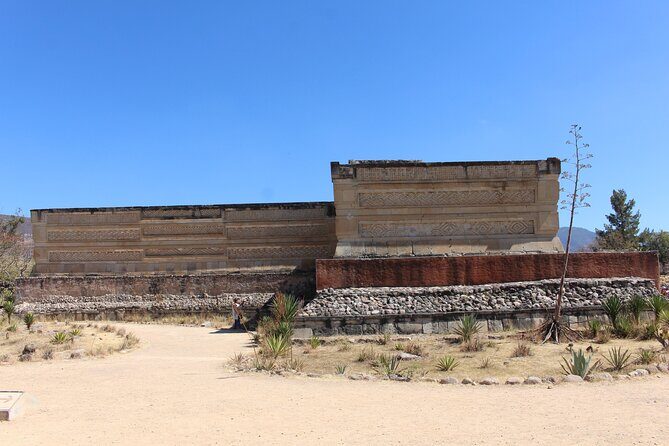
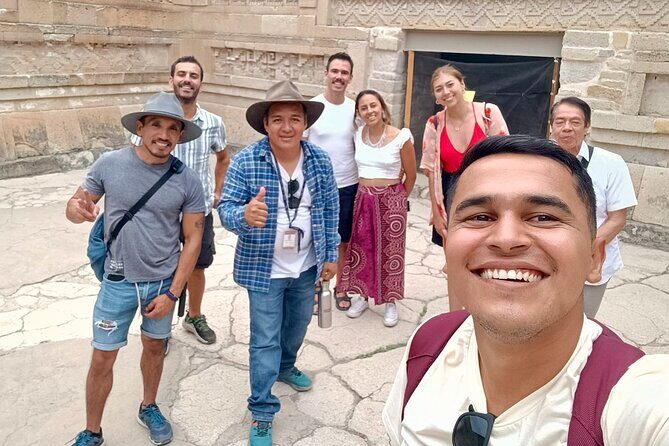
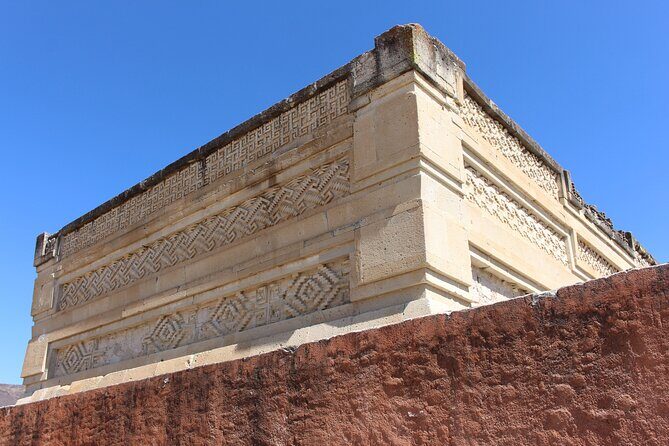
Next up is the archaeological site of Mitla, one of the most important Zapotec locations in the Oaxaca region. What elevates this stop is the guided component: you’ll tour with a guide working as a certified bilingual guide, so you’re not just looking at shapes and hoping they add up.
You’ll learn how Mitla ties to Zapotec cosmovision—how they understood the world through their culture and design. That context helps when you’re standing in front of palaces and stone patterns that can otherwise feel repetitive. With explanations in English, you can connect the details to a bigger story.
Time-wise, Mitla is shorter than Hierve el Agua (about 1 hour), but it’s long enough to walk, take photos, and understand the major points without feeling like you missed half the site. If you enjoy archaeology, this stop is the one where guided interpretation really pays off.
One practical note: Mitla is outdoors. Bring water habits from the start of your day—don’t wait until you feel thirsty, especially after Hierve el Agua.
Textile stop: natural pigments, real hands-on weaving energy

This day is also built around Oaxaca’s textile tradition—specifically wool rugs and their natural dye roots. Even if you’ve seen rugs before, this kind of textile visit is different because you’re watching the craft process and learning what goes into the colors.
You’ll hear how pigments come from sources like insects and plants. That includes cochineal and other natural ingredients described as part of the dyeing logic. The point isn’t to memorize ingredients—it’s to understand why Oaxacan rugs have color depth and why makers guard the methods.
You may get to see live weaving demonstrations and watch how the loom turns yarn into pattern. Some departures can feel busy here if multiple groups arrive at the same time, because the weaving spaces can be smaller. If your goal is to buy, the show-and-shop rhythm can be handy. If your goal is pure observation, keep your expectations realistic for sound and space.
Bottom line: treat this like a craft lesson, not a mall stop. Look at the edges, the repeat pattern alignment, and the density of the weave. Even if you don’t buy, you’ll leave with a better eye for what you’re looking at in Oaxaca markets.

Santa María del Tule: the wide-trunk ahuehuete and its legends
Then it’s time for something totally different—Santa María del Tule and the famous ahuehuete (also referred to as sabino in many descriptions). This tree is known for having the widest trunk in the world, and the guide will share historical data and legends tied to it.
This stop is short (about 40 minutes), which is smart because it keeps the day from bogging down. You’re not stuck in a long queue or forced into a long lecture. You get the story, you get the visual, and you move on.
What makes this tree worth your attention is the idea that it’s more than “a big tree.” Oaxaca’s traditions often explain natural landmarks through stories and long memory. If you like place-based legends, this is an easy win.
If you’re traveling with someone who enjoys nature breaks between heavier stops, Tule is the kind of moment that lets the day breathe for a bit.
El Rey de Matatlán mezcal: from agave to fermentation to tasting
The final culture hit is mezcal, centered on production and tasting. At El Rey de Matatlán, you’ll learn about the process and the agave varieties used for mezcal. The steps are the backbone: cooking, crushing, fermentation, and distillation.
Hearing those steps in order matters. Mezcal can look simple as a bottle on a bar menu, but the process explains why different batches taste different and why agave choice is a big deal. This stop is where Oaxaca’s agriculture becomes a story you can taste.
After the walkthrough, you get a tasting session with multiple mezcals, and the tasting is offered free of charge as part of the tour. That’s great value because tasting alone can add up if you’re paying separately.
One caution: mezcal stops can get crowded depending on how many buses arrive around the same time. If you’re the type who likes slow, quiet conversations with staff, keep your patience handy. Still, the production explanation and included tasting are the reasons this part belongs on your list.
Price and logistics: what’s covered, what you’ll likely pay extra

The tour price is listed at $75.12 per person, and the included value is real: entrance fees are part of the deal, you get air-conditioned transport, bottles of water during the day, and mezcal tasting is included.
Lunch is the main “plan ahead” item. The day includes a buffet restaurant, and it’s described as having local and seasonal dishes plus vegan options, but lunch itself is not included in the tour price. So budget for a meal on-site, and you’ll feel less stressed when the check arrives.
You should also plan for a couple of small extras tied to on-the-ground reality:
- If you decide to tip a local helper during the Hierve el Agua hike for photos, having small bills helps.
- If you want anything beyond water (like additional drinks with lunch), you’ll pay for that too.
The day starts at 8:00 am and ends back near the Zócalo area in central Oaxaca City. Since it’s roughly 11 hours, think of it as a full-day commitment. Wear clothes you can change in at Hierve el Agua, and bring an extra layer for comfort after swimming.
Also note the limit: the group size is capped at 20 travelers. That usually keeps the day from feeling like a herd, even if you cross paths with other tour groups at major stops.
Who should book this and who should pass
This tour is a strong fit if you want a guided, high-variety day without doing logistics yourself. You’ll get the craft side of Oaxaca (textiles and natural dyes), the archaeology side (Mitla), the nature spectacle (Hierve el Agua), and the mezcal culture with a tasting at the end. It’s also a good choice if you’re traveling as a solo adult and want an English-speaking guide and a shared itinerary.
You should think twice if:
- You have bad knees or mobility limits. The Hierve el Agua hike and stairs can be demanding, and the heat can be intense.
- You want a relaxed day with minimal walking. The day includes multiple stops plus one real hike segment.
- You hate groups that can get crowded at small craft or mezcal spaces. Depending on the day, you might feel some congestion at the weaving house or mezcal tasting area.
On the upside, this is one of those days where the guide matters. The experience is more enjoyable when explanations are clear and the pace feels organized, especially when you’re switching from ruins to swimming to craft demonstrations in the same morning-afternoon rhythm.
Should you book this Oaxaca City day loop?
Book it if you want an efficient sampler of Oaxaca’s big themes in one day: petrified waterfalls + Zapotec ruins + textile tradition + mezcal. The value comes from entrance fees being included, mezcal tasting being part of the day, and the fact that key stops are guided so you understand what you’re seeing.
Pass on it if you’re hoping for an easy day trip or you’re not comfortable with heat and stairs at Hierve el Agua. In that case, you’ll enjoy Oaxaca more with a slower plan that matches your pace.
If you do book, pack smart: shoes for rocky ground, swimwear, a towel, and an extra outfit for Hierve el Agua. Then keep your expectations aligned with a full day. Your calves may complain, but the views—and the Oaxaca culture you’ll learn along the way—are the point.
FAQ
What sites does this tour cover in one day?
This day trip from Oaxaca City includes Teotitlán del Valle (wool textiles), Hierve el Agua (petrified waterfalls and mineral pools), Mitla (archaeological site), a mezcal production and tasting stop at El Rey de Matatlán, and the Santa María del Tule tree visit.
How long is the tour and what time does it start?
The tour runs about 11 hours and starts at 8:00 am, ending back in central Oaxaca City near the Zócalo area.
Is lunch included in the price?
No. A buffet restaurant visit is part of the day, but lunch and beverages are not included in the tour price, so you should expect to pay for it.
Are entrance fees included?
Yes. The tour price includes entrance fees to the sites.
Is the tour offered in English?
Yes. The tour is offered in English, with guides and explanations for the key stops.
What should I bring for Hierve el Agua?
Wear comfortable clothing and footwear for the hike, and bring swimwear if you plan to use the natural pools. It’s also advised to bring an extra set of clothes for after your time at Hierve el Agua.