REVIEW · CHICHEN ITZA
Chichen Itza : Walking Tour with Expert Guide and Skip-the-Line Access!
Book on Viator →Operated by Experinciasyucatan · Bookable on Viator
Chichén Itzá has a way of feeling both ancient and oddly precise. This small-group walking tour helps you read what you’re seeing, from the sun-and-shadow logic at El Castillo to the ritual spaces tied to Maya astronomy and belief. It’s short enough to fit into a busy day, but structured enough that you don’t wander around confused.
What I like most is how tightly the route is paced for a 1.5-hour visit. You hit the big landmarks without running in circles, and you get real context for each one, including the “why” behind the shapes, carvings, and sacred sites. I also appreciate the practical extras: photos during the tour and lockers so you’re not juggling bags while trying to look up at temples.
One drawback to plan around: you’ll still need to budget for the official Chichén Itzá admission ticket on top of the tour price. The history covered here includes human sacrifice themes too, so it’s not a “cute Instagram ruins” stop—go in ready to handle the darker parts with respect.
In This Review
- Key highlights you’ll care about
- What you’re really buying: tour price plus park entry
- Meeting up smoothly inside a busy archaeological park
- Stop 1: El Castillo—calendar temple, astronomy, and acoustics
- Stop 2: Temple of the Warriors—engraved columns and a brutal theme
- Stop 3: Sacred Cenote—offerings, the underworld, and what “sacred” means
- Stop 4: Gran Juego de Pelota—Mesoamerica’s largest ball court and a sun ritual
- Why the guided pace works in real life
- The guide quality: what clarity looks like on the ground
- Price and value: is it worth paying more than DIY?
- Who this tour suits best (and who might want to rethink)
- Should you book this Chichén Itzá walking tour?
- FAQ
- How long is the tour?
- What language is the tour offered in?
- Is this a small group?
- Is the tour price the same as the Chichén Itzá admission ticket?
- What’s included in the tour?
- What’s the walking route during the tour?
- Where does the tour start?
- Where do you redeem tickets?
- Do I get time for photos after the tour?
- What’s the cancellation policy?
Key highlights you’ll care about
- Skip-the-line access to help you start seeing things sooner
- Maximum 12 travelers, so the guide can keep the group moving and answer questions
- Photos during the tour plus extra time inside the park after the guide finishes
- Four focused stops that explain the site’s astronomy, ritual meaning, and carvings
- Lockers included, helpful if you arrive with day-bag stuff
- English-speaking expert guide, good if you want clarity without translating
What you’re really buying: tour price plus park entry
The tour itself runs about 1 hour 30 minutes and costs $31.06 per person. That price is for the guiding, the structured route, and the included perks like photos and lockers. What it does not cover are the official park admission fees.
For the Chichén Itzá tickets, you’ll pay separately:
- Foreign ticket: MX$696.00 per person
- National ticket (with INE): MX$315.00 per person
So think of this as two layers: you pay for the experience and organization, then you pay for entry to the archaeological zone itself. If you’re visiting during a busy time (and Chichén Itzá usually is), that organization matters.
You can also read our reviews of more walking tours in Chichen Itza

Meeting up smoothly inside a busy archaeological park
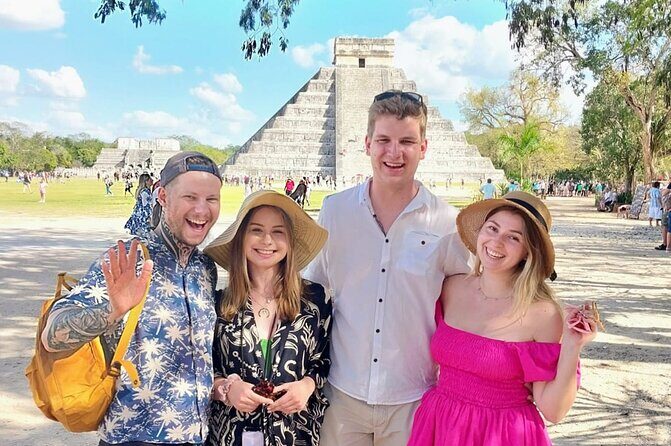
You’ll start and end at 97751 Chichén-Itzá, Yucatán, Mexico, with ticket redemption at Guías Oficiales Chichén Itzá Certificados, Zona Arqueológica Chichen Itzá Piste, 97751 Chichén Itzá. The practical win here is that you’re not trying to figure out where to join while crowds are already forming.
The tour is offered in English, and it’s designed so most people can participate. Group size is capped at 12, which is a big deal at a site like this—smaller groups move faster and you waste less time waiting at viewpoints.
One more timing tip from the experience style: traffic on the approach can be heavy. If you don’t show up early, you might get squeezed and risk losing your place. Plan to arrive with a comfortable buffer so you’re calm before the first stop.
Stop 1: El Castillo—calendar temple, astronomy, and acoustics
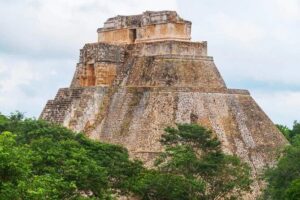
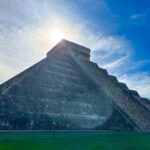
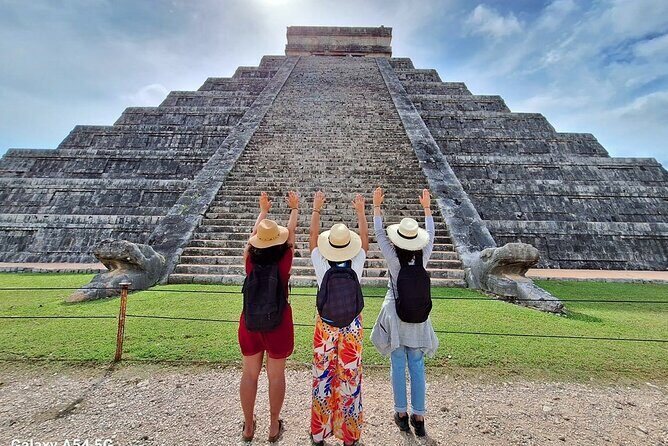
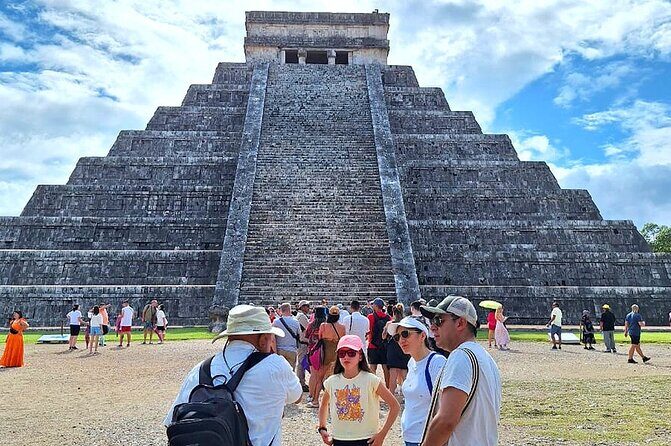
El Castillo is the headline. This is the three-dimensional calendar temple and the one most people come to see first. Expect about 30 minutes here, and expect the guide to help you look past the “pretty pyramid” factor and into what the design was meant to do.
This is also the spot where the astronomy and acoustics angle comes in. Instead of just telling you dates, a good guide connects the architecture to how the Maya observed and interpreted the sky. Even if you don’t know the names of every movement, you’ll start seeing patterns: the way the structure is aligned, how light and angles matter, and why certain features get attention.
Why it’s worth the time: El Castillo is where your brain should start making sense of the rest of Chichén Itzá. If you rush it, the later stops can feel like separate monuments instead of parts of one worldview.
Potential downside: it’s popular. You’ll want to keep your expectations realistic—this is not a quiet, empty-temple moment.
Stop 2: Temple of the Warriors—engraved columns and a brutal theme
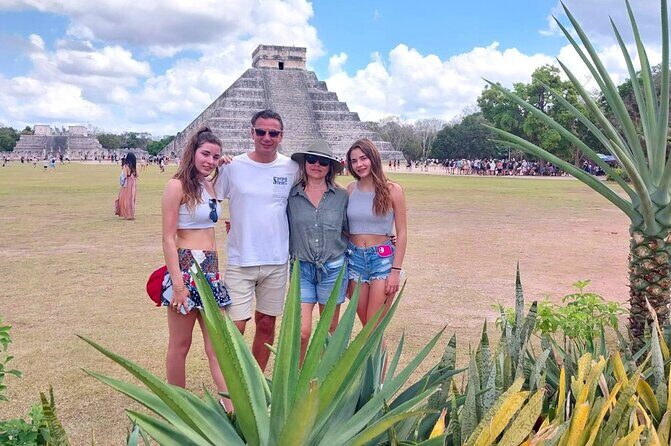
Next is the Temple of the Warriors, with about 20 minutes on the site. This temple is strongly linked to military activity and, importantly, human sacrifices. The guide’s job isn’t to shock you; it’s to explain what the carvings were communicating and how the symbolism worked in Maya society.
The key visual feature you’ll focus on is the engraved warriors on the square columns. With a guide, these aren’t random figures. You’ll understand them as part of a larger narrative tied to power, ritual, and social order.
The respectful takeaway: this is where you should slow down and read with care. If you tend to skip over darker cultural context, don’t. This is part of the story the site is trying to tell.
Stop 3: Sacred Cenote—offerings, the underworld, and what “sacred” means
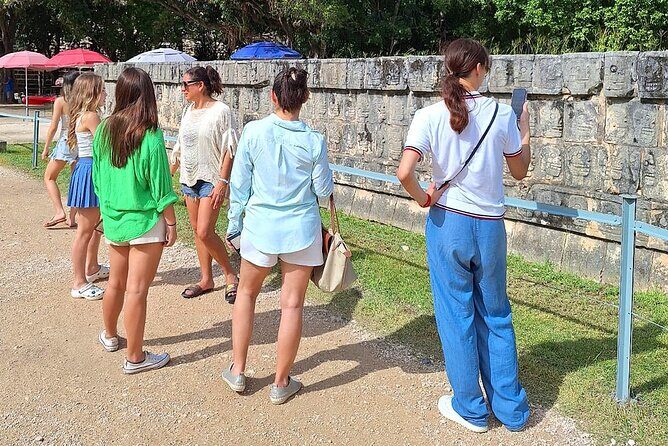
Then you reach the Sacred Cenote, another 20-minute stop. For the Maya, the cenote was seen as an entrance to the underworld, not just a natural hole in the ground. The guide explains how offerings were deposited there to nourish or support the gods tied to that underworld realm.
You’ll hear about what those offerings included—ceramics and precious stones—and why that matters. Cenotes weren’t just water sources. They were spiritual gateways with a strong ritual role.
What makes this stop valuable: cenotes are harder to “read” than a big pyramid. A guide helps you connect the landscape feature to belief systems, so it feels meaningful rather than just odd.
A consideration: cenotes can be visually striking, but you won’t get time for extended wandering. The point is understanding, not exploring.
You can also read our reviews of more guided tours in Chichen Itza
Stop 4: Gran Juego de Pelota—Mesoamerica’s largest ball court and a sun ritual
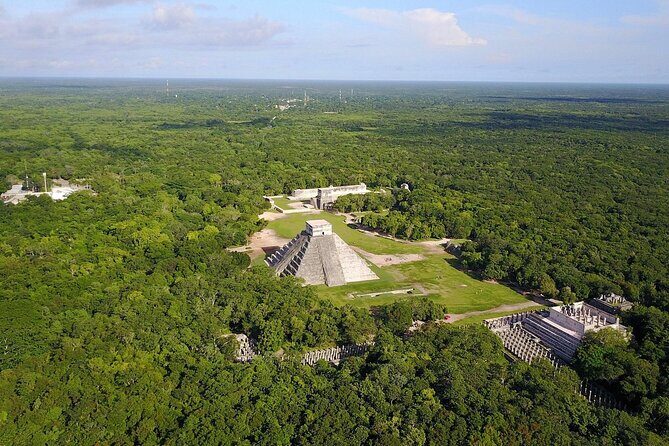
The final stop is the Gran Juego de Pelota, the largest ball field in Mesoamerica. You’ll spend about 20 minutes here.
This place is tied to a ritual connected to the sun. The story associated with the game includes a grim ending—after the ritual, it’s believed that the winning captain beheaded the losing captain as part of their beliefs in reincarnation, and that the winner was honored to offer life for the sun.
That’s a lot to take in, and it’s exactly why a guided stop is useful. Without context, it can feel like random mythology attached to sports ruins. With context, you start to see the logic: ritual, cosmology, and public ceremony linked together.
Practical value: this is where you finish with a deeper sense of how Chichén Itzá was not only built for worship, but for repeated ritual events. It shifts how you see the whole site.
Why the guided pace works in real life
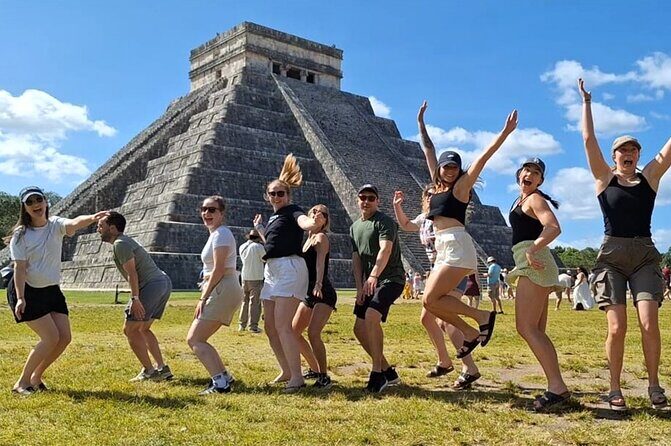
At just 90 minutes, the tour fits into the kind of day most people plan around Chichén Itzá: you want the key monuments, but you also want time to breathe, take photos, and not feel whipped.
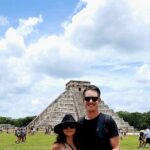
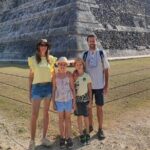
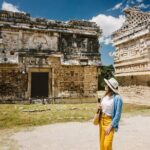
A smart detail here is that it includes photos during the tour. That helps a lot if you’re traveling as a couple or family and you don’t want to constantly find strangers to take shots. Then you also get something important at the end: after the tour, you stay inside the park to take more photos and enjoy time alone.
That post-tour freedom is underrated. Even when a guide does a great job, you’ll inevitably spot something you want to look at longer—an engraving, a perspective angle, a texture on stone. Having time after the structured stops gives you that chance without slowing down the group.
One logistics note: lockers are included. That’s useful for keeping your hands free while you move between locations and keep camera work easy.
The guide quality: what clarity looks like on the ground
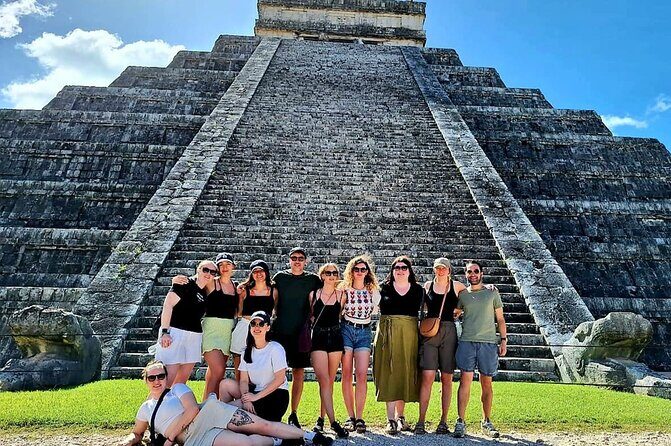
The biggest compliment in the experience style is how well the guide explains what you’re seeing. I’d take this seriously: Chichén Itzá is easy to misunderstand if you only get a “name and date” version.
In at least one instance, the guide used a large iPad with videos and images to show what things may have looked like in the day. That’s not just fun tech. It helps you imagine the carvings in fuller context, when stone would have been more visually “complete.” It’s also a way to answer questions when lighting is harsh or details are hard to see from where you’re standing.
If you care about understanding astronomy alignments, symbolism on columns, and ritual meaning, this tour format is built for that.
Price and value: is it worth paying more than DIY?
Here’s the honest math logic. You pay $31.06 for the guiding and included extras, then you pay the official admission ticket (MX$696 or MX$315 depending on your status).
If you DIY, you might save on the guide. But what you often lose is the ability to connect the dots quickly. Chichén Itzá has repeating themes—cosmology, ritual purpose, and architecture designed to do more than sit there. A guide gives you those connections fast, which is a big value for a short visit.
You’re also buying time efficiency. With a group capped at 12, you’re less likely to stand around waiting for someone to catch up at the exact moment the light or the best viewing angle shows up.
If your travel style is “I want to understand what I’m looking at, not just check a box,” this tends to feel like good value even with the extra ticket costs.
Who this tour suits best (and who might want to rethink)
This is a great match for you if:
- you want a clear English explanation without doing homework first
- you prefer structured stops over wandering
- you care about meaning behind the monuments, including the more difficult topics
- you want help with photos and have a day-bag to manage (lockers help)
It may be less ideal if:
- you want a long, slow, self-guided walk with lots of free time between sites
- you get easily overwhelmed by darker cultural themes like sacrifices and ritual violence
It’s also a practical pick if you’re traveling with kids or teens, since the tour includes a ticket for children under 13.
Should you book this Chichén Itzá walking tour?
Yes, I’d book it if you’re planning a first visit and you want to leave with real understanding, not just photos. The combination of skip-the-line access, a tight four-stop route, and an expert guide who can translate symbolism into plain language is exactly what turns Chichén Itzá from “big ruins” into something that sticks in your memory.
If you’re going purely for sightseeing and you don’t care about context, you could DIY. But if you want the site to make sense in 90 minutes, the structure and the guide support are the point—and that’s where your money goes.
FAQ
How long is the tour?
It’s approximately 1 hour 30 minutes.
What language is the tour offered in?
The tour is offered in English.
Is this a small group?
Yes. The tour has a maximum of 12 travelers.
Is the tour price the same as the Chichén Itzá admission ticket?
No. The tour price is separate from the park admission fees. You’ll pay the foreign ticket (MX$696.00) or the national ticket with INE (MX$315.00) separately.
What’s included in the tour?
Included are a shared expert guide (private tour if selected), photos during the tour, nursing service, a child ticket under 13, and lockers.
What’s the walking route during the tour?
You visit four main areas: El Castillo, Temple of the Warriors, Sacred Cenote, and Gran Juego de Pelota.
Where does the tour start?
The meeting point is in 97751 Chichén-Itzá, Yucatán, Mexico.
Where do you redeem tickets?
Ticket redemption is at Guías Oficiales Chichén Itzá Certificados, Zona Arqueológica Chichen Itzá Piste, 97751 Chichén Itzá.
Do I get time for photos after the tour?
Yes. After the guided portion, you stay inside the park to take more photos and enjoy some time alone.
What’s the cancellation policy?
You can cancel for a full refund if you cancel at least 24 hours before the experience starts. If you cancel within 24 hours, it’s not refunded.