REVIEW · CHICHEN ITZA
Chichen Itza: Self-Guided Tour with Audio Narration & Map
Book on Viator →Operated by Walk with Action · Bookable on Viator
Chichén Itzá gets way easier with your own guide in your pocket. This self-guided app adds location-triggered audio and an organized route so you can move through the ruins without losing the plot. You’ll get stories and context for the biggest hits, from El Castillo to El Caracol’s observatory feel.
What I liked most is the offline setup: once you download, it works with GPS alone—no roaming panic. Second, the experience feels built for your pace. You can pause, replay, and step away from the densest areas while still knowing what you’re looking at.
One thing to plan for: your phone battery. GPS + audio + a long walk can drain power, and a couple of setup quirks pop up if you don’t download on strong wifi first. Bring headphones, and bring a portable charger if you don’t want your day ruined.
In This Review
- Key highlights you’ll feel right away
- Why this Chichén Itzá audio tour is such good value
- Entering the site with offline GPS and map support
- Before you go: download on strong wifi and prep your gear
- Handicraft Market stop: warm-up with context and orientation
- Official guide stop: adding Mayan context early
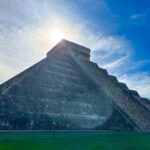
- El Castillo: the signature pyramid and why it’s famous
- Gran Juego de Pelota: ballgame reliefs you can actually spot
- Tzompantli: the skull rack and what the artwork is showing
- Eagles & Jaguars Platform: a ceremonial stage without a temple on top
- El Caracol: the observatory angle, star watching, and the sky logic
- Chichén Itzá big-picture stop: Maya–Toltec fusion in one sweep
- Temple of the Warriors: the tiers and the sea of columns
- Red House (House of Little Holes): the latticework detail
- The Ossuary: seven tombs and why the name stuck
- Las Monjas: a huge building with wall texts and Kakupakal
- La iglesia: the veneer decorations and the masks of Chac
- How long it really takes (and how much walking you should expect)
- Best for: who will enjoy this most
- Should you book this Chichén Itzá self-guided audio tour?
- FAQ
- Is the Chichén Itzá entrance ticket included?
- How long does the audio tour take?
- Does it work offline at Chichén Itzá?
- Do I need internet to download the tour?
- Where does the tour start?
- Does the audio play automatically?
- What do I need on my phone?
- What languages are available?
- What devices are recommended for navigation?
- Can I cancel for a refund?
Key highlights you’ll feel right away
- Offline-first audio + GPS: download once, then keep going without data
- Hands-free narration: stories start when you reach points on the route
- A route that actually works: stop order is designed to cover the essentials
- 37+ audio stories with images/text: more than just a voice track
- Skip the guide cost: you get context without paying for a private tour
Why this Chichén Itzá audio tour is such good value

At $9.99 per person, you’re buying convenience plus context, not admission. Chichén Itzá’s entry fee is separate, but the app is the part that can save you from paying for an expensive guide just to understand what the stones mean.
This tour also makes a practical promise: you won’t be wandering around hoping for the best. The route is laid out to cover the big structures in about 1–2 hours of listening time, and the full walk is about 2+ miles if you want to hit everything.
I also like the “no pressure” vibe. You’re not stuck with a group schedule, and you can linger at El Castillo or duck into shade when the sun decides to audition for the role of villain.
You can also read our reviews of more guided tours in Chichen Itza
Entering the site with offline GPS and map support
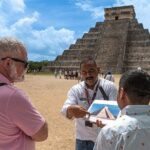
Here’s how you’ll use it once you’re inside. You don’t meet a guide at the start. Instead, you open the Action’s Tour Guide app on your phone at the first story point, and the audio begins automatically as you walk.
The clever part is that the narration is tied to your location. As you pass each stop, you’ll hear the relevant audio, with supporting images and text. If you drift off the route for photos or souvenirs, GPS can bring you back to the next part of the storyline.
A small but real tip: keep your headphones on. Since the audio can begin before you fully arrive at the exact spot, you’ll catch the explanation as you get into position.
Before you go: download on strong wifi and prep your gear
This is a self-guided phone experience, so the best moment to be prepared is before you arrive.
You’ll get an email and text with setup instructions and a password. You also need to download the separate tour app while you have strong wifi/cellular. After that, it’s offline—GPS keeps working inside the site.
Practical phone rules based on what the tour suggests:
- Use an iPhone with iOS 15+ or Android 9+
- Bring headphones/earbuds for best results (and quieter ruins etiquette)
- Consider a portable charger if you’re staying for a full, stop-by-stop circuit
The day runs smoother when your phone is charged, your download is done, and you’re not trying to solve app passwords under the harshest sun of your trip.
Handicraft Market stop: warm-up with context and orientation
Your first stop is the Handicraft Market. It’s a good place to get oriented because you’re fresh, your phone is awake, and you can figure out how the GPS-triggered audio feels in motion.
The tour frames this area as a gateway to Mayan presence and the mysteries you’ll see throughout the site. It’s also where the app starts you off with a chunk of content, including more than 37 audio stories across the whole walk.
This is also where you can decide your pace. If you like to read as you listen, the images and text support your understanding. If you’re strictly audio, you can mostly ignore the screen and just follow the cues.
Official guide stop: adding Mayan context early
Next you hit a short stop tied to official guidance at Chichén Itzá. The audio sets up the Maya as one of the dominant and advanced Mesoamerican societies of their time.
This matters because Chichén Itzá is not one single “thing.” You’re seeing layers, styles, and time periods that overlap. Getting a quick grounding up front makes later stops—especially the Toltec-Maya fusion—make more sense.
It’s a short stop on the route, but I’d rather have the context early than scramble for it later.



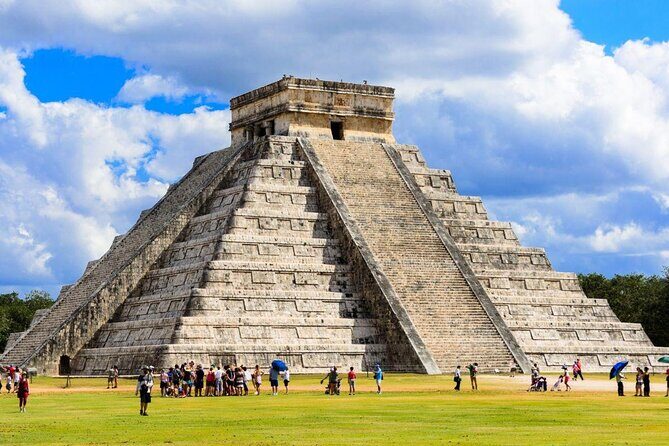
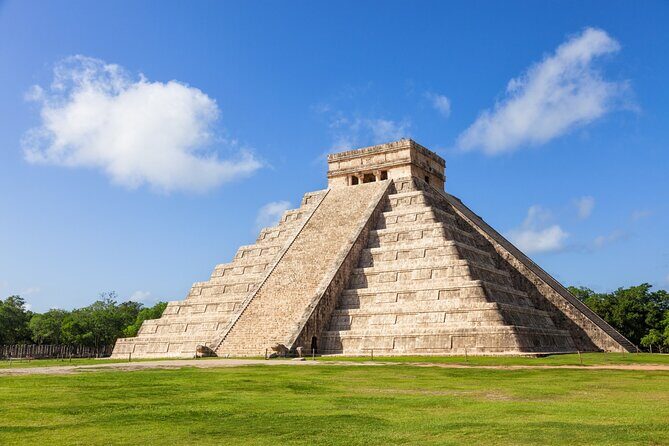
El Castillo: the signature pyramid and why it’s famous
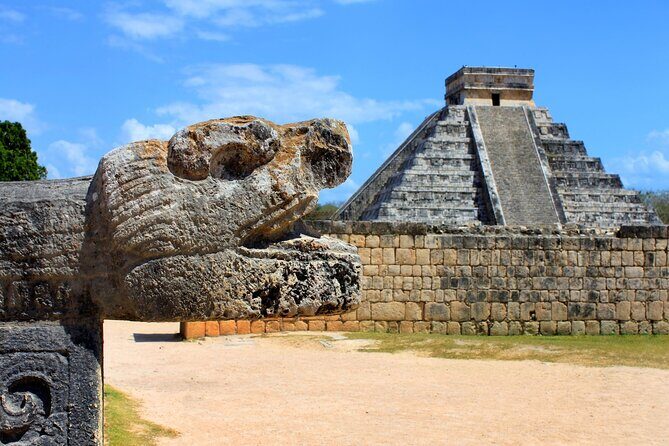
El Castillo is the big one, the landmark that most people come for. The app describes it as the Pyramid of Kukulkan, built to honor the snake deity Kukulkan.
Even if you’ve seen photos before, standing in front of El Castillo works better when you know what the building represents. The story helps you look past the shape and toward the religious and cultural meaning behind the architecture.
Time note: your on-foot route includes a short span at El Castillo—about 10 minutes—so don’t plan on treating it like a slow museum. Plan on a focused look, a few photos, then move on while the audio keeps you oriented.
Gran Juego de Pelota: ballgame reliefs you can actually spot
This is where the site gets cinematic. The Gran Juego de Pelota isn’t just a court; it ties into Maya culture through sculpted reliefs along the walls.
The app points out that you can look for multiple scenes where ball players appear. That detail changes the experience. Instead of seeing a field, you start noticing storytelling carved into stone.
If you enjoy close-up observation, this stop rewards patience. If you’re rushing, you’ll miss the best part, which is the carvings.
Tzompantli: the skull rack and what the artwork is showing
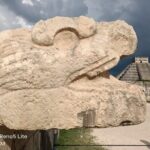
Tzompantli literally means skull rack, and the tour explains the concept directly. It was once exactly what it sounds like: a platform related to the display of human heads after sacrifice.
The description covers warriors carrying human heads plus skulls, snakes, and eagles across the walls. It’s intense subject matter, but the audio keeps it clear about what you’re looking at.
Go in expecting heavy imagery. If you’re sensitive to archaeological sites linked to sacrifice, this is the stop to approach carefully and at your own pace.
Eagles & Jaguars Platform: a ceremonial stage without a temple on top
This square platform with stairways on each side is framed as likely used for ceremonies—dance, ritual, or public speeches. The tour notes it was designed as a flat stage, not crowned with a temple.
That “not a temple” detail is useful because Chichén Itzá has lots of structures that feel templish at first glance. This one is different, and the audio helps you interpret the function.
At about 5 minutes on the route, you’ll want to keep your eyes up and scan the stairways and flat platform before the audio moves on.
El Caracol: the observatory angle, star watching, and the sky logic
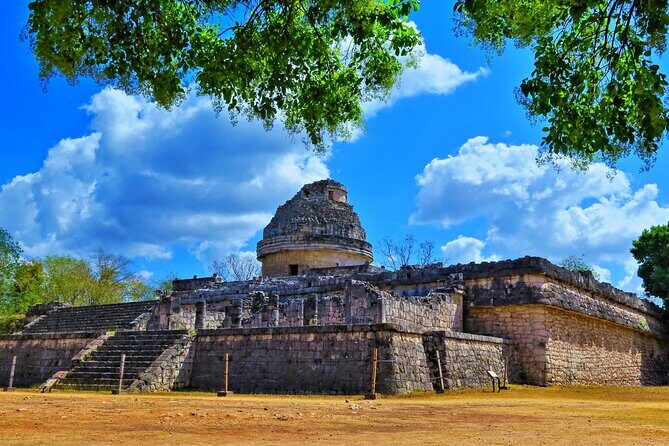
El Caracol is one of the more interesting buildings in the complex. The app describes remains of what was an observatory, and explains how people would watch the stars and use planetary movement to infer future outcomes.
This is a great counterpoint to the more intense, human-centered stops. It shifts you into a “sky and time” way of thinking.
Also, you’ll see El Caracol on the route more than once. The tour includes it at two points—so depending on how you walk, you may get a second chance to catch the explanation and angles as you move through the layout.
Chichén Itzá big-picture stop: Maya–Toltec fusion in one sweep
One longer stop gives you the broader explanation of what Chichén Itzá was. The tour calls it a sacred site and one of the greatest Mayan centers of the Yucatán peninsula.
The audio includes the nearly 1,000-year timeline idea and the fact that different peoples left their mark over time. It also highlights the fusion of Mayan construction techniques with elements from central Mexico, describing this blend as one of the most important examples of Mayan–Toltec civilization in the Yucatán.
This stop is where you stop treating the site like a list of monuments and start seeing it as an evolving urban and ceremonial center. It’s also your chance to reset your expectations: later stops (like the columns at the Temple of the Warriors) start to click.
Temple of the Warriors: the tiers and the sea of columns
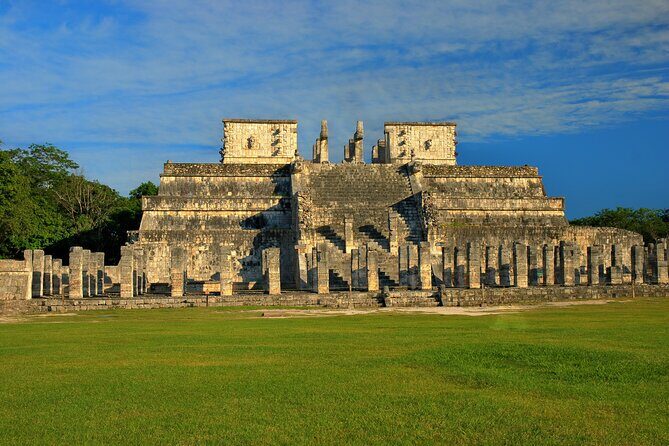
The Temple of the Warriors is described as having three thick tiers with a small temple at the top—kind of like a stacked wedding-cake shape. The audio also calls out about 200 columns, each with carvings of Toltec warriors in different scenes.
This stop is memorable because it’s visual volume. You’re not just looking at one carving. You’re surrounded by repetition—story after story in stone.
If you want the maximum payoff, don’t rush to the top. Walk along the lower tiers and scan the columns. The audio sets you up to notice the variety in the warrior scenes.
Red House (House of Little Holes): the latticework detail
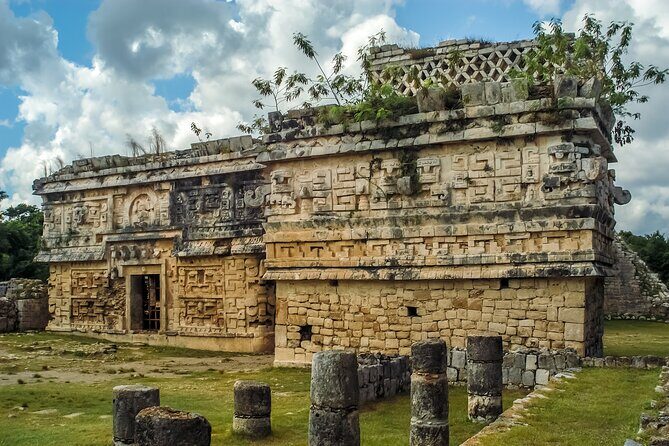
The Red House is also known as the House of Little Holes because of the latticework on the top. The tour notes a Mayan name—Chichanchob—and suggests it could mean small holes.
This is a small stop in time, but it’s one of those “stop and look closely” moments. You can understand the shape and mood better once you notice the top pattern rather than focusing only on the exterior color.
The Ossuary: seven tombs and why the name stuck
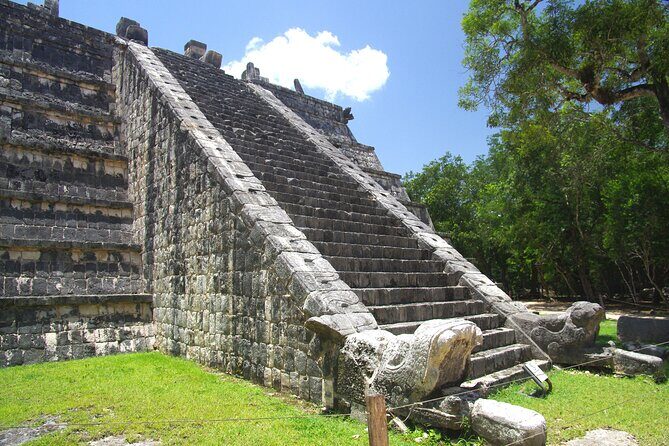
The Ossuary (also called the Ossuary/El Osario on the route) is named for human remains uncovered by archaeologists. The audio describes a cavern beneath the pyramid and seven tombs uncovered there, believed to belong to members of Mayan high society.
This stop is a reminder that Chichén Itzá isn’t just built for showing. It also holds burial and ritual meaning tied to social rank.
Since the route budgets it as a short stop, give it your full attention for a few minutes rather than treating it like a photo checkpoint.
Las Monjas: a huge building with wall texts and Kakupakal
Las Monjas, also called the Nunnery, is described as one of the largest buildings at Chichén Itzá and archaeologically significant because of texts inscribed into the walls.
The audio mentions many of these texts mention a ruler named Kakupakal. That name matters because it turns “cool ruin” into “specific people, specific time, specific rulers.”
If you care about the language of power—who commissioned what and who mattered—this stop is one to linger at, even if your route time doesn’t ask you to.
La iglesia: the veneer decorations and the masks of Chac
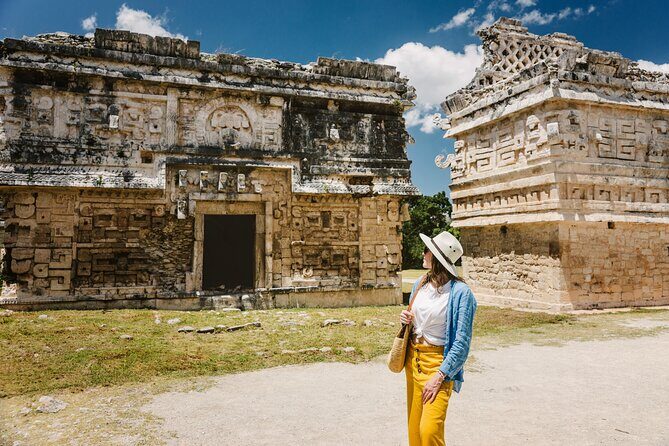
La iglesia is one of the most photographed buildings at Chichén Itzá. The tour explains that its exterior is covered with veneer decorations, and points out masks of Chac on two upper stories.
It also lists small extras you might spot among the Chacs: armadillo, crab, snail, and tortoise. That list helps you look more than just at the main mass of the building.
This stop is short on the route, so don’t rely on the first glance. Spend your minute scanning upward and then scanning around for those animal carvings mentioned in the audio.
How long it really takes (and how much walking you should expect)
The walking route is over 2 miles long, covering the essentials of Chichén Itzá in roughly 1–2 hours of listening time, plus walking time between stops.
Plan for more time if you:
- stop for extra photos
- like to read the text on the screen
- wander briefly off-route for shade or souvenirs
One review-style practical takeaway I agree with: if you want to see all the structures, you need a decent amount of walking. Build water and time into your plan, and don’t count on sitting down often.
Best for: who will enjoy this most
This self-guided approach fits best if you want:
- a cheaper alternative to hiring a private guide
- to avoid crowd pressure
- to control your pace, including repeats and pauses
- to understand the site without being stuck in a group rhythm
It’s also useful if the on-site signage feels minimal to you. The audio gives you wording and context right when you’re looking at the structure, which is usually when it clicks.
If you want a deep, classroom-style explanation or a live Q&A with someone in front of you, this might feel short on some details. But for many people, it’s the right trade: context now, flexibility always.
Should you book this Chichén Itzá self-guided audio tour?
Book it if you want to learn while you walk, at a price that doesn’t require a second bank account. The offline GPS setup is the killer feature, and the route helps you cover the essentials without guessing.
Don’t book it if your phone is unreliable, your battery always dies fast, or you hate tech setups. This experience leans on downloading correctly and listening through headphones. Get that right, and you’ll enjoy a calmer, smarter visit—especially if you’re trying to skip guide costs.
FAQ
Is the Chichén Itzá entrance ticket included?
No. The tour price covers the self-guided audio experience and map. You still need to buy the Chichén Itzá entry ticket separately.
How long does the audio tour take?
It’s designed for about 2 to 3 hours total. The route covers the essentials in roughly 1–2 hours of active exploring while listening, plus walking time between stops.
Does it work offline at Chichén Itzá?
Yes. After you download the tour content, it works offline using GPS. You don’t need data roaming during your visit.
Do I need internet to download the tour?
You do. You must download the tour while you have strong wifi/cellular, and you’ll receive setup instructions and a password by email and text.
Where does the tour start?
It starts at 97751 Chichén-Itzá, Yucatan, Mexico. The activity ends back at the meeting point, and no one meets you at the start since it’s self-guided.
Does the audio play automatically?
Yes. Once you open the app at the first story point, the audio is location-triggered and plays on its own as you reach stops along the route. You can also start explanations manually.
What do I need on my phone?
At minimum: the Action’s Tour Guide app, the downloaded tour content, and GPS. Headphones/earbuds are recommended for best listening.
What languages are available?
The experience is offered in English.
What devices are recommended for navigation?
The tour suggests an iPhone running iOS 15 or later, an Android device running version 9 or later, or an iPad/tablet with GPS and cellular connectivity.
Can I cancel for a refund?
Yes, free cancellation is available up to 24 hours in advance for a full refund. If you cancel less than 24 hours before the start time, the amount paid won’t be refunded.