REVIEW · MERIDA
Puuc Route Mayan Archaeological Ruins: Uxmal, Kabah, Sayil and Labnah
Book on Viator →Operated by Esplendor Yucatán · Bookable on Viator
Puuc Route hits different before the tour buses. This private full-day trip strings together four major Puuc sites with a 7:00 am early start, so you spend more time looking and less time fighting for position. I love the pacing and the way a good guide helps you read what you’re seeing, not just pass by stones.
My other favorite part is the focus on details that most one-stop visits miss, from Uxmal’s quadrangles to Kabah’s Chaac masks and Labná’s famous false arch. The one drawback to plan around: there’s real walking on uneven ground and a good bit of stairs at the ruins, so bring solid shoes and expect some uphill moments.
In This Review
- Key highlights you’ll feel right away
- Why the Puuc Route feels calmer than the big-name ruins
- Your private ride from Mérida: what the day’s timing really means
- Uxmal first thing: Nuns’ Quadrangle, Birds’ Quadrangle, and the Governor’s Palace
- What to watch for at Uxmal
- Kabah’s Codz Pop masks and the palace where royal life lived
- Sayil’s North Palace, viewpoint, and the fertility stele
- Labná’s false arch: small stop, big architectural moment
- Lunch at Restaurante Halach – Huinic: what’s actually worth eating
- Price and value: what you’re paying for beyond the ruins
- What to bring for a comfortable Puuc day
- Guide style: how Victor and Claudia shape what you see
- Who this tour suits best (and who should plan a different day)
- Should you book this Ruta Puuc day tour?
- FAQ
- How long is the Puuc Route tour and what time does it start?
- Is hotel pickup included in the Puuc Route tour?
- Are entrance tickets included in the price?
- What does the tour include for food?
- What level of walking or fitness is required?
- Is this tour private and does it include a guide?
- What happens if weather is poor?
Key highlights you’ll feel right away
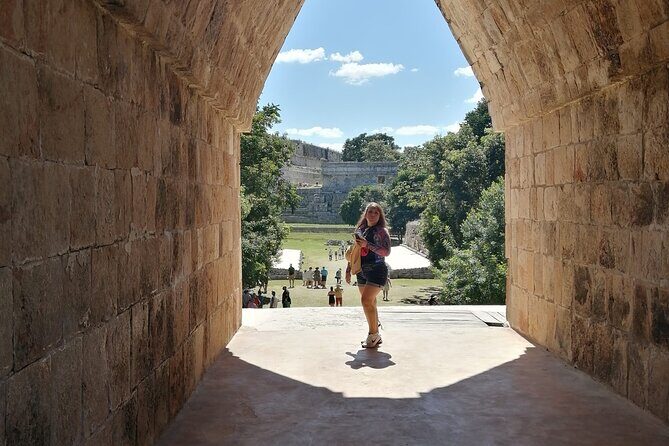
- Early arrival at Uxmal helps you see the site before the busiest pressure hits
- Four Puuc ruins in one day gives you the full picture of how styles changed across nearby cities
- Guide-led explanations connect architecture, symbols, and daily life instead of leaving you with random facts
- Regional lunch included (at Restaurante Halach – Huinic) gives you a proper Yucatán meal break
- Private transportation means your group can move at a comfortable speed
Why the Puuc Route feels calmer than the big-name ruins
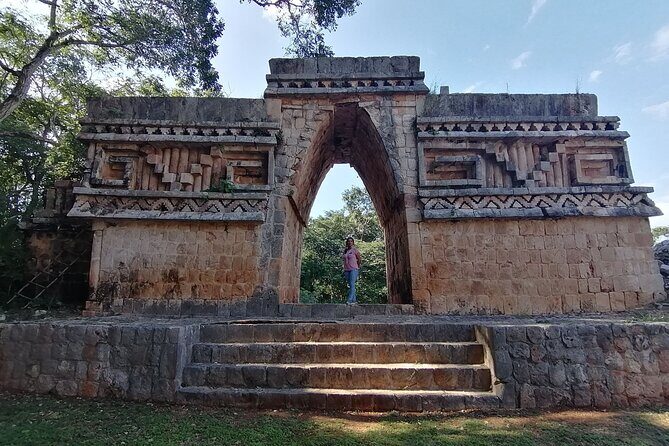
The Puuc sites are the kind of Mayan ruins you appreciate slowly. Uxmal gets the attention, sure, but Kabah, Sayil, and Labná reward you for showing up early and taking the time to look up at the carvings.
I like that this itinerary is built around flow. You’re not doing one site, rushing away, and then repeating the same crowd pattern all day. Instead, you get a full arc: one major showstopper, then three more stops that help you understand the Puuc region as a connected story.
If you’re the type who wants photos without a wall of strangers in every frame, this route is a strong fit. Several recent guests specifically called out the near-empty feeling at Uxmal early in the morning.
You can also read our reviews of more tours and experiences in Merida.



Your private ride from Mérida: what the day’s timing really means
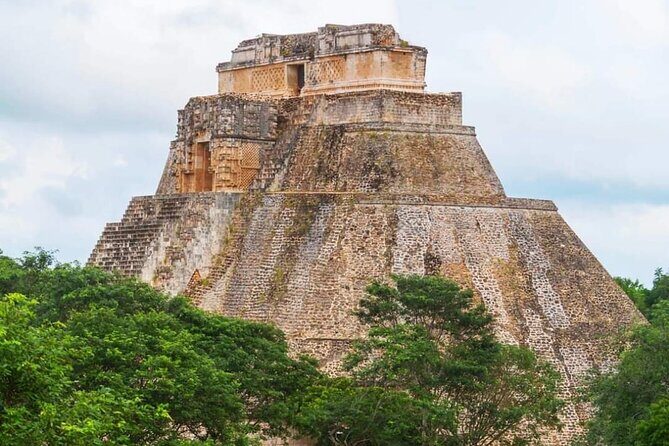
This tour runs about 9 hours 15 minutes total, with pickup in Mérida starting at 7:00 am. It’s designed as a long day, but the driving time is thoughtful: about 1 hour 15 minutes each way between Mérida and Uxmal, plus roughly 2 hours of travel between the other Mayan cities.
On a practical level, that timing matters. It keeps the sequence tight enough that you still get good light for photos at the key ruins, while also giving you enough breaks to stay comfortable.
It’s also a real advantage to travel privately. Your guide can pause when a detail catches your eye—like the shape of an arch or a cluster of carved masks—without the whole group getting herded along.
Uxmal first thing: Nuns’ Quadrangle, Birds’ Quadrangle, and the Governor’s Palace
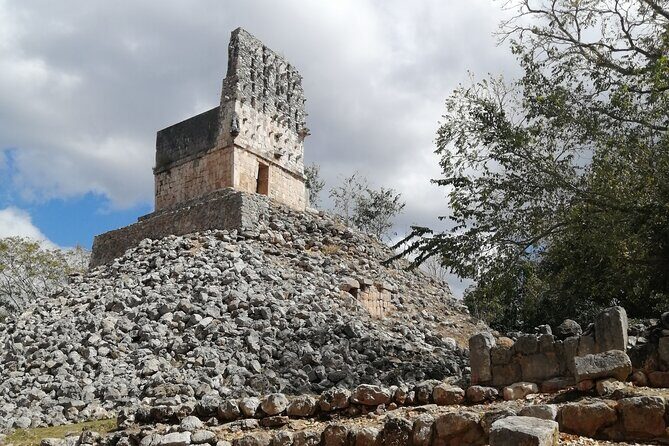
Uxmal is where the Puuc style becomes impossible to ignore. You start at the major set-pieces that most people come to see, but the real value is in how your guide points out what’s going on and why it matters.
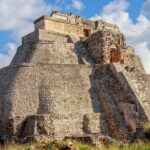
You’ll get time around the Nuns’ Quadrangle and the Birds’ Quadrangle, plus stops at the Governor’s Palace and the soothsayer’s pyramid. Even if you’ve looked at pictures before, these parts hit differently when you’re standing close enough to notice how the stonework is laid out and how the space is organized.
One thing I really appreciate: going first means you’re not always dealing with a crush around the most photographed corners. Guests noted long lines later, which is exactly why an early start changes the whole experience.
What to watch for at Uxmal
The Puuc style is full of patterns and careful surfaces. When you’re there in person, ask your guide to slow down for the details—small icon changes, the rhythm of repeating carvings, and the way different buildings sit in relation to each other. That’s how the ruins stop being a checklist and start feeling like a place.
Kabah’s Codz Pop masks and the palace where royal life lived
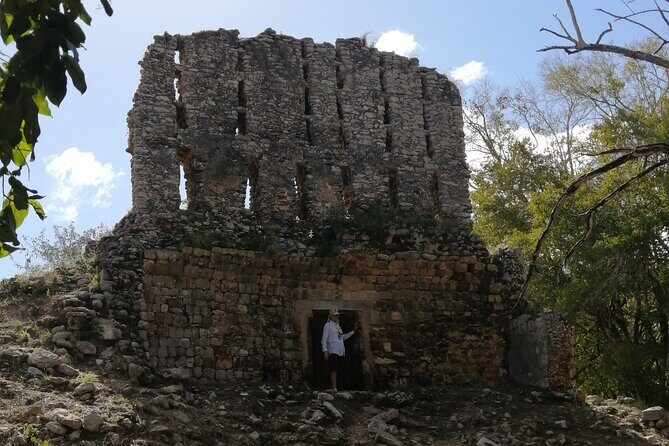
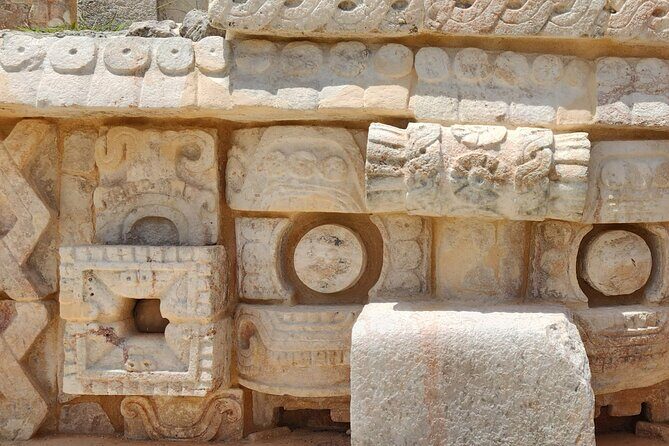
Kabah is the breather stop that still delivers big visuals. You’ll see Codz Pop, famous for being decorated with hundreds of masks dedicated to Chaac, the rain deity.
Then you’ll move on to the palace area where the royal family lived. That second focus matters because it’s not just about one carved theme; it’s about understanding how spiritual symbolism ties into real political power and daily authority.
Kabah’s short time slot—about 45 minutes—means you’ll want to be ready to look fast. If you’re the type who likes to linger, ask your guide to point out a few must-see angles early, then you can choose where to spend your remaining minutes.



Sayil’s North Palace, viewpoint, and the fertility stele
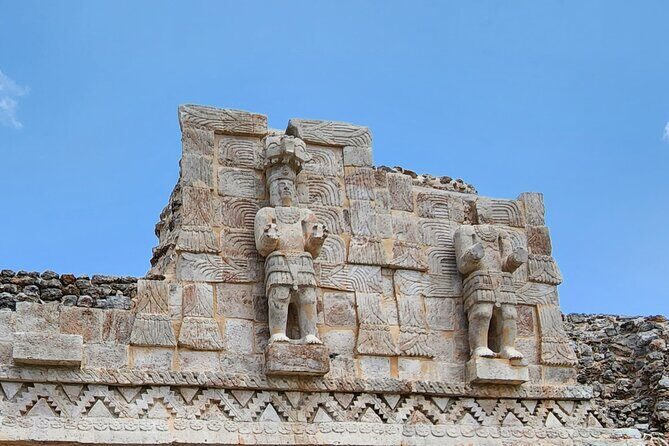
Sayil feels more intimate. It doesn’t try to compete with Uxmal’s scale, and that’s a good thing, because it gives you a different kind of experience: less spectacle crowding your attention, more architecture you can actually study.
You’ll focus on the Great North Palace, then head to a viewpoint and see the stele of the god of fertility. This is where the Puuc region starts to feel like more than pretty buildings; it starts feeling like a network of places with shared beliefs and local expression.
In a practical sense, the viewpoint stop is your moment to re-orient. It helps you understand how these cities sit in their environment and how people likely moved between spaces.
Labná’s false arch: small stop, big architectural moment
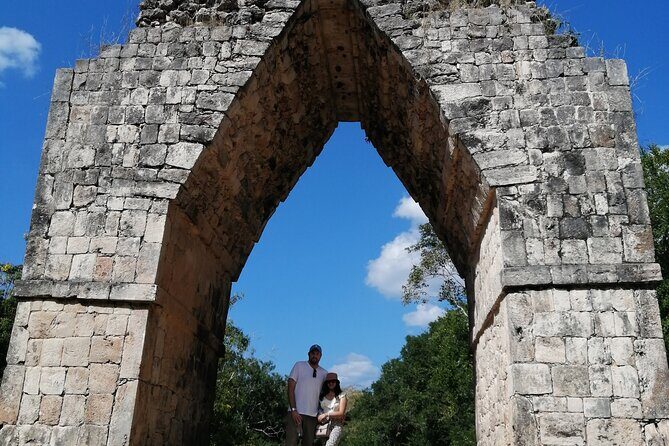
If you want one reason people remember Labná, it’s the finely decorated false or projecting arch. It’s a technical feature, but it reads like art when you’re there—an architectural trick that shows serious skill.
Labná typically gets about 45 minutes, so I’d treat it like a close-up gallery stop. Spend time on the arch itself, then let your guide point out how the decoration frames the structure and what that likely signaled to people using the space.
This is also a nice emotional shift. After two heavier symbolism-focused ruins (Kabah and Sayil), Labná offers something more tactile: you can appreciate craftsmanship with your eyes even if you’ve never studied the Mayas before.
Lunch at Restaurante Halach – Huinic: what’s actually worth eating
Lunch is included, and it’s at Restaurante Halach – Huinic. Expect regional Yucatán food, and in particular, you might run into classics like sopa de lima and cochinita pibil.
I like that the lunch is part of the day’s plan instead of a rushed stop. You get around 1 hour to eat, reset, and hydrate, which matters because the ruins are active and the sun can hit hard.
One more practical note from guest feedback: vegetarian options have been mentioned as more than just a token side salad. If you eat vegetarian, it’s worth telling your guide when you’re on the ride so they can help you navigate what’s available.
Price and value: what you’re paying for beyond the ruins
The tour price is $179.21 per person, and archaeological entrance fees are not included. The listed entrance cost is MX$1,031 per person, so your all-in spending will depend on your ticket total plus anything you choose to buy on site.
Here’s how I see the value. You’re paying for:
- Private transportation that reduces the hassle of moving between four remote sites
- A certified guide who connects the dots between the buildings
- Regional lunch included
- Time strategy, like hitting Uxmal before peak crowds
If you’re only going to see Uxmal, you’ll still enjoy it—but you’ll miss the Puuc “before and after” feeling. Seeing Kabah, Sayil, and Labná in sequence helps you notice how style and symbolism shift across nearby cities. That extra context is hard to recreate if you’re doing it all on your own.
What to bring for a comfortable Puuc day
This is a long, active day. The tour info specifically calls for a strong physical fitness level, and guests have mentioned uneven surfaces, large steps, and plenty of walking.
My practical packing list:
- Comfortable shoes with grip
- Water, even if you plan to buy it or hope your guide has extras
- Sunscreen and sun protection (a hat or light layer)
- A small umbrella can be a smart move for shade and heat control
- A light layer for early morning air
Also, bring a mindset for patience. Even with a private tour, you’ll want time to stop for photos. The best experience comes when you don’t feel rushed at each viewpoint.
Guide style: how Victor and Claudia shape what you see
The biggest difference between seeing Mayan ruins and understanding them is your guide. This tour has had guides like Víctor and Claudia leading the experience, and both are noted for turning architecture into meaning.
What I love about this approach is the combination: clear explanations plus room for questions. Guests praised how the guide could be humorous and conversational without turning it into a lecture, and how they helped interpret details—like the symbolism tied to Chaac at Kabah or the way Labná’s arch fits the broader Puuc look.
One especially useful point from guest feedback: guides have shared extra context on native plants and the area around the ruins. That kind of detail makes the setting feel less like a backdrop and more like part of the story.
Who this tour suits best (and who should plan a different day)
This tour is ideal if you:
- Want four Puuc sites instead of only one big name
- Like learning through on-site explanations
- Prefer a calmer feel than the biggest, most crowded Mayan destinations
It may not be the best fit if you:
- Struggle with stairs and uneven ground
- Need lots of sitting time between stops
- Expect a low-walking day
That said, many guests still felt the tour was manageable because the stops are timed reasonably, and the pace can flex a bit on a private day.
Should you book this Ruta Puuc day tour?
If you want a Puuc experience that feels personal, efficient, and built around seeing the ruins early, I think you should book it. The combination of Uxmal plus Kabah, Sayil, and Labná is exactly what makes this route more satisfying than a single ruin stop.
I’d especially recommend it if your travel style is practical: you’d rather spend the day getting close to the architecture and learning what you’re looking at, instead of burning time on logistics or waiting in crowd lines.
FAQ
How long is the Puuc Route tour and what time does it start?
The tour runs for about 9 hours 15 minutes and starts at 7:00 am.
Is hotel pickup included in the Puuc Route tour?
Pickup is offered. The meeting details say the Fiesta Americana hotel area is close to the monument to the homeland, and you can tell the provider which hotel you’re staying at so they can come pick you up.
Are entrance tickets included in the price?
No. Entrance fees for the archaeological zones are not included, listed at MX$1,031 per person.
What does the tour include for food?
Regional food is included, and lunch is provided at Restaurante Halach – Huinic for about 1 hour.
What level of walking or fitness is required?
You should have a strong physical fitness level. The ruins involve walking, steps, and uneven surfaces.
Is this tour private and does it include a guide?
Yes. It’s a private tour/activity for only your group, with private transportation and a certified guide. The tour is offered in English.
What happens if weather is poor?
The tour requires good weather. If it’s canceled due to poor weather, you’ll be offered a different date or a full refund.