REVIEW · MERIDA
Merida: Mexican Embroidery Workshop
Book on Viator →Operated by Get Routa · Bookable on Viator
Thread, tradition, and a calm craft session. In Merida, this Mexican embroidery workshop at Casa Texoxe pairs hands-on stitching with clear context on what embroidery means for cultural identity, and why preserving these patterns matters. The biggest wins are the patient, encouraging teaching and the way the instructor ties the work to real traditions, not just a craft project.
You’re guided step-by-step—from introductions to a history talk, then materials, then getting your hands moving—so first timers feel grounded. One watch-out: Merida can be confusing to navigate, and the exact studio location can be tricky to find if you rely only on basic map results.
By the end, you take home what you made (plus extra designs to keep going), which is a nice way to turn a couple hours in Mérida into a lasting souvenir.
In This Review
- Quick highlights
- Casa Texoxe in Centro: finding the meeting point without stress
- How the 2 hours works: meet, learn the story, then stitch
- What you’ll actually learn with your hands
- Otomi and Maya Yucatecan patterns: why the lesson feels more meaningful
- Your supplies, your finished piece, and what to do after class
- Kits and extra supplies: a useful bonus if you want to keep going
- English-friendly teaching, with patience for first timers
- Who this workshop suits best (and who should skip it)
- Price and value: $56.72 for materials, water, and a take-home result
- FAQ
- FAQ
- How long is the Merida Mexican Embroidery Workshop?
- What language is the workshop taught in?
- What’s included in the price?
- Are snacks included?
- Where do I meet, and where does it end?
- How big is the group?
- Is it suitable for beginners?
- Does the workshop depend on weather?
- Should you book the workshop in Merida?
Quick highlights
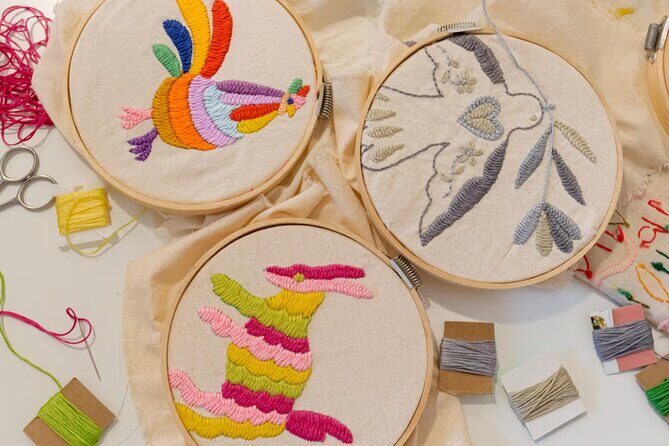
- Casa Texoxe studio time: comfortable setting for learning stitches at an unhurried pace
- History plus hands-on work: you learn the why behind the stitches, not just how
- Small group format: maximum 6 travelers, which usually means more personal attention
- Beginner-friendly energy: clear instructions and lots of patience for your first attempt
- Take-home piece and extra designs: you leave with work to finish or save
- No snacks included: plan for a quick food stop before you go
Casa Texoxe in Centro: finding the meeting point without stress
The workshop starts at Casa Texoxe, on C. 72 418 A, Centro, Mérida. It’s also described as taking place at Texoxe House, so you’ll want to keep both names in mind when you’re searching. The location is near public transportation, which helps if you don’t want to rely on a single ride app for every leg of your day.
Here’s the practical tip that matters most: don’t assume standard map directions will land you on the right building first try. One participant had real trouble because the addresses given weren’t easy to pinpoint, and the buildings were locked. The fix is simple—use the exact location details sent to you ahead of time (and check them again right before you leave).
If you’re visiting during a busy time in Centro, give yourself a little buffer. You’ll enjoy the class more when you’re not rushing to arrive.
A few more Merida tours and experiences worth a look


How the 2 hours works: meet, learn the story, then stitch
This is an approximately two-hour workshop with a straightforward flow. It’s designed so you don’t just sit through a lecture, and you don’t feel thrown into the stitching without context.
First, you get to know each other. That short beginning matters more than it sounds, because it sets a relaxed pace—something confirmed by the calm, meditative feel people describe.
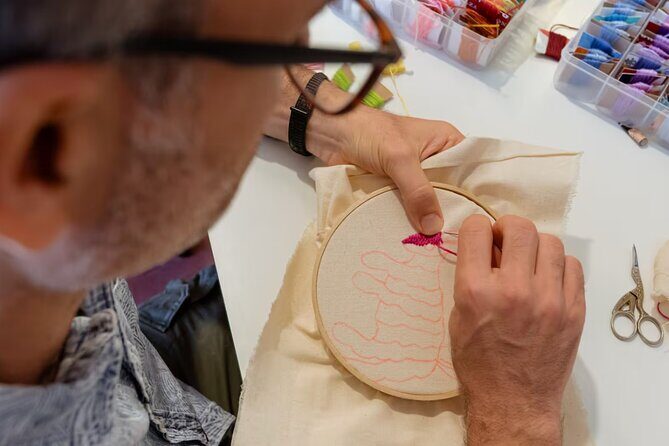
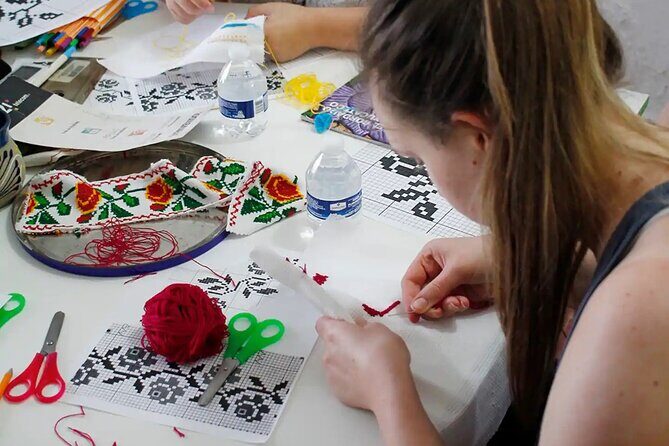
Next comes the embroidery history and cultural importance. You’ll talk about the relationship between craftsmanship and cultural identity, and how art helps keep traditions alive over time. Then you move into the practical part: you get materials distributed, and you start working on the embroidery you came for.
By the end, the instructor wraps up what you learned and gives you your finished work to take home. You’re also given more designs to keep working at home, which is great if you want something to keep your hands busy after your Merida trip.
What you’ll actually learn with your hands
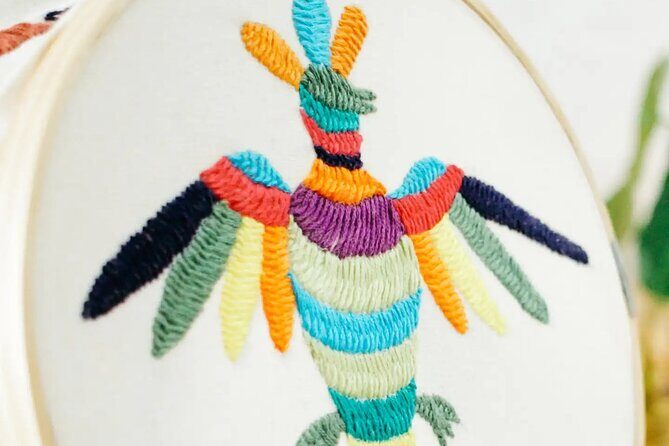
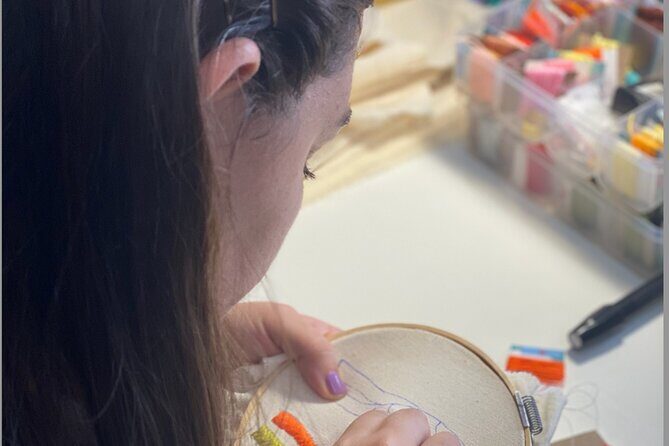
You’ll learn stitches as part of creating your project. In past classes, the instruction has included traditional styles like Otomi embroidery and also work connected to Maya Yucatecan embroidery. One participant described learning several stitches, then practicing free-form stitching to create a sense of dimension—so even if your drawing skills are limited, you still get a path to making the work look more dimensional and intentional.
If that’s your goal—something beyond basic lines—this workshop format is a good fit.
Otomi and Maya Yucatecan patterns: why the lesson feels more meaningful
Embroidery in Mexico isn’t just decoration. It’s a way of encoding identity—who a community is, what it values, and which traditions get passed down. That’s the thread this workshop follows, and it’s part of why the class works for both total beginners and craft people who want deeper context.
In the class discussion, you’ll hear about the embroidery style you’ll work on and why its preservation matters. That context helps you understand what you’re looking at when you see embroidery everywhere in the region—on clothing, textiles, and small handmade items.
A standout detail from prior sessions: one instructor, Mayra, has been described as a master artisan and a former university teacher, with background across illustration, embroidery, and photography. That kind of teaching background tends to show up in the way instructions are structured—clear steps, plus examples that help you “see” the stitchwork rather than only memorize it.
If you like learning through examples, you’ll likely appreciate the way traditional patterns are presented alongside ways to incorporate the style into other embroidery projects. That’s the difference between leaving with a single souvenir, versus leaving with ideas you can reuse later.
Your supplies, your finished piece, and what to do after class
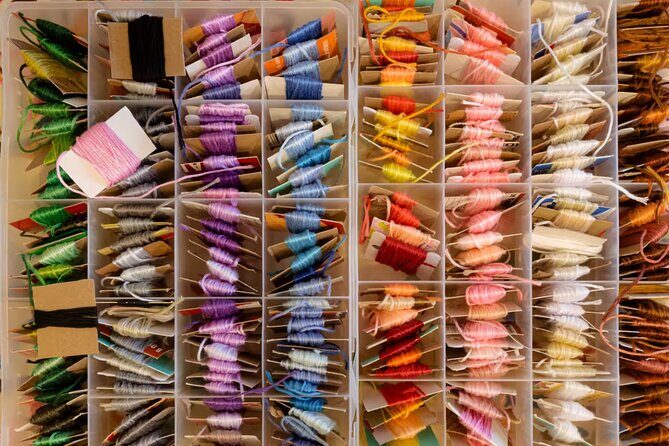
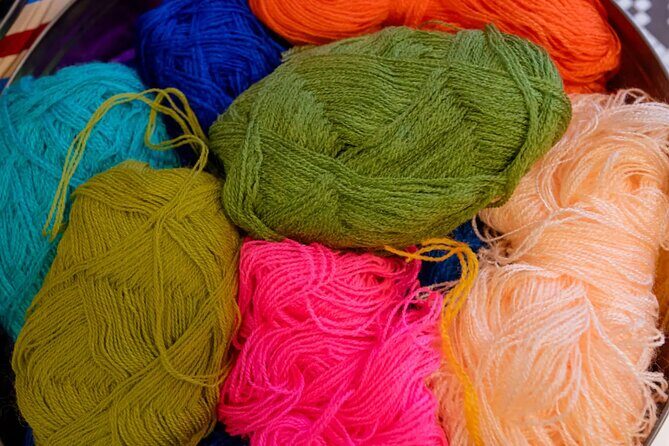
Materials needed for the activity are included, and you’ll also get water during the workshop. That’s a practical benefit: you don’t need to hunt down hoops, needles, thread, or fabric right before class.
What you should plan around: snacks aren’t included. If your day is busy (and Centro can be), grab a quick bite before you go so you can focus on stitching instead of hunger.
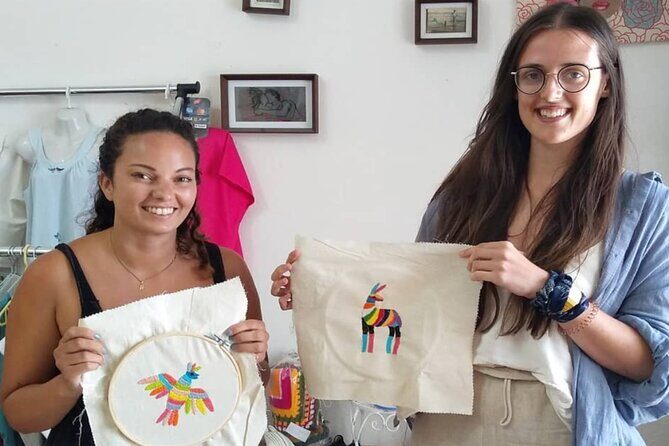
You’ll take home what you make, and you’ll also receive additional designs to work on afterward. For many people, that follow-up set of designs is what turns the workshop from a one-off activity into a new hobby.





Kits and extra supplies: a useful bonus if you want to keep going
One review mentioned that kits can be available for sale and that the instructor offered directions to nearby shops if you wanted more supplies. Since those details aren’t part of the basic inclusions, treat them as an optional extra rather than a guaranteed add-on. Still, if you’re the type who hates running out of thread mid-project, it’s worth asking on the day what’s available nearby.
English-friendly teaching, with patience for first timers
The workshop is offered in English, and the group size is limited to a maximum of 6 travelers. That small limit is what helps keep the pace friendly and the guidance individualized.
The tone of instruction gets praised a lot. People describe the instructor as patient, kind, and calm, and that matters especially on a first embroidery attempt. One person even said it sparked their interest to continue, which is usually the sign you got the “how to learn” part—not just the “how to finish this one project.”
Language can still be a factor depending on where you’re from, but there’s supportive flexibility. One class experience noted the instructor using a translation app on her phone, which helps if Spanish isn’t your strength. Even if the workshop is in English, having that safety net can reduce stress if you need clarification.
Who this workshop suits best (and who should skip it)
This is a good fit if you want a hands-on cultural activity that doesn’t require prior craft skills. The class has worked well for solo participants, couples, and families in prior sessions—mainly because the structure is calm and step-by-step, and because the group stays small.
It’s also a strong choice if you like quiet learning. Reviews mention it feeling relaxing, almost meditative for a few hours, which is rare for tourist activities.
On the rules side, there’s no mention of age requirements here, but there is a clear policy: no escorts or pets accepted. If you’re traveling with a pet (or you were hoping to bring an extra person who isn’t participating), you’ll need to plan a different activity.
Price and value: $56.72 for materials, water, and a take-home result
At $56.72 per person for about two hours, the value is mainly in what’s included: materials plus water. Craft classes often become expensive when you add supplies on top, and here you don’t have to do that math.
You’re also paying for the combination of craft instruction and cultural context. The history talk isn’t generic—it’s tied to why the specific embroidery style matters, and it connects the stitches to cultural identity and preservation. If you enjoy understanding the “why,” not only the “what,” that pairing boosts the value.
Finally, you’re not leaving empty-handed. You take home what you make, plus extra designs for follow-up practice. That turns your time into something you can keep for weeks, not just photos from the day.
FAQ
FAQ
How long is the Merida Mexican Embroidery Workshop?
It runs for about 2 hours.
What language is the workshop taught in?
The workshop is offered in English.
What’s included in the price?
You get the materials needed for the activity and water.
Are snacks included?
No. Snacks are not included, so it’s smart to plan a quick bite before you go.
Where do I meet, and where does it end?
You start at Casa Texoxe on C. 72 418 A, Centro, Mérida, Yuc., Mexico. The activity ends back at the meeting point.
How big is the group?
The workshop has a maximum of 6 travelers.
Is it suitable for beginners?
Yes. The workshop format includes patient instruction and clear steps, and people have specifically described it as a good first-time embroidery experience.
Does the workshop depend on weather?
Yes. It requires good weather, and if it’s canceled due to poor weather, you’ll be offered another date or a full refund.
Should you book the workshop in Merida?
If you want a hands-on Merida activity with a slower pace, this is a strong pick. The best reason to book is the combo: stitch instruction that actually helps you make something, plus cultural context that explains why the patterns matter.
I’d book it if you’re traveling solo and want a calm, structured experience, or if you and a partner want an activity that isn’t just another walk and a meal. It’s also worth it if you want a real souvenir you can finish later.
Skip it if logistics stress you out. The location may be harder to find if you rely on generic directions, so make sure you use the exact location details you receive ahead of time. If you do that, you’ll show up ready to enjoy the stitches.