REVIEW · MEXICO CITY
Anthropology Museum Guided Tour
Book on Viator →Operated by Amigo Tours · Bookable on Viator
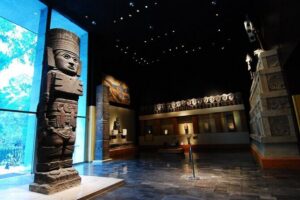
The museum is huge. This English-guided visit turns big, famous artifacts into a clear story across Mesoamerican history, with admission included and a pro leading the way. You’ll see standout pieces like the Stone of the Sun and the giant Olmec heads, plus context for the Aztec and Maya material that can feel overwhelming if you wander alone.
I also like that you’re not buying extra museum access on top of the tour price, and you’re set up for an efficient 2 hours 30 minutes. One thing to keep in mind: this experience depends on being on time, because once the group departs, you typically cannot rejoin.
In This Review
- Key Things You’ll Notice on This Tour
- Why This Museum Tour Beats Walking In Alone
- Where You Start in Polanco and How the Tour Feels Logistically
- The Single Stop That Packs a Big Timeline: Museo Nacional de Antropologia
- What you should expect as you move through the galleries
- The headliners you’ll hear about
- Drawback to watch for: pacing and clarity can vary
- What the Best Guides Do With the Same Artifacts
- Tickets, Time, and Staying With the Group
- What to Bring (and What to Leave Behind) Inside the Museum
- Is It Worth $39 for the Anthropology Museum?
- Who Should Book This Tour
- Final Call: Should You Book This Anthropology Museum Guided Tour?
- FAQ
- How long is the Anthropology Museum guided tour?
- How much does the tour cost?
- Does the ticket include museum admission?
- Is the tour offered in English?
- Where is the meeting point?
- What is the group size limit?
- Can I bring food, drinks, or a backpack?
- Is it near public transportation?
- What is the cancellation policy?
Key Things You’ll Notice on This Tour
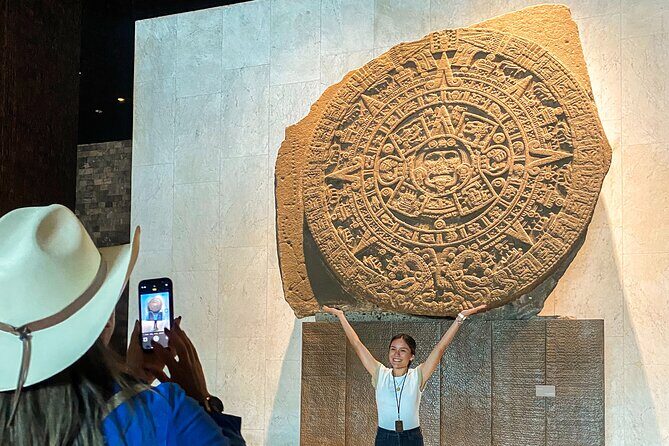
- The Stone of the Sun and the Olmec heads get explained in historical context, not just displayed.
- Ground-floor exhibits cover pre-Columbian civilizations across present-day Mexico and parts of the southwestern United States.
- A model of Tenochtitlan helps you connect the ancient Aztec capital to modern Mexico City.
- Maya themes like the Sacred Cenote and reconstructions of tombs show the archaeology behind the objects.
- Small-group size (max 25) keeps it more manageable than a free-for-all.
- English guiding is especially useful when many signs are in Spanish.
Why This Museum Tour Beats Walking In Alone
The National Museum of Anthropology can hit you like a wall of scale. You’ve got massive stone sculptures, big rooms, and exhibits that cover centuries, regions, and different cultures that all overlap in complicated ways.
What I like about a guided format here is that it helps you organize your attention. Instead of trying to read everything or guessing what belongs together, your guide provides the connective tissue: time period, geography, and why an artifact matters. That’s the difference between looking at impressive objects and actually understanding what they’re telling you.
And since it’s an English offering, you’re not forced to rely on Spanish-only signage to make sense of the story. One recurring theme in the feedback I saw: the best tours succeed by building a simple framework first, then adding details as you go. When a guide gets the pacing right, you leave with a mental map instead of just photos.
You can also read our reviews of more guided tours in Mexico City


Where You Start in Polanco and How the Tour Feels Logistically
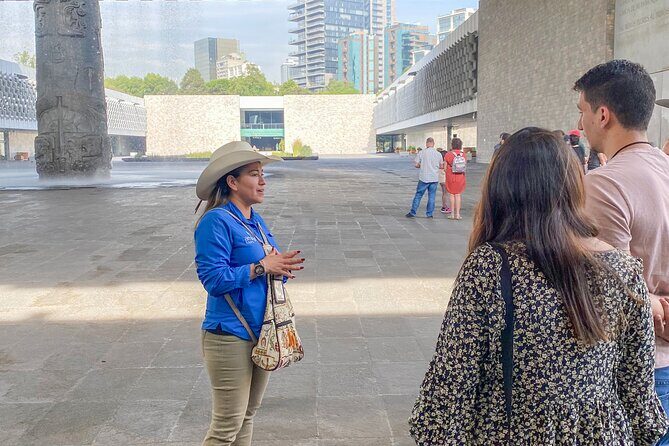
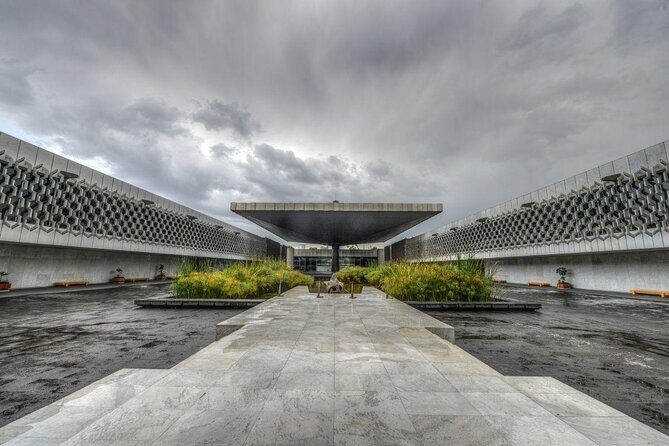
The meeting point is at Museo Nacional de Antropología, Av. P.º de la Reforma s/n, Polanco, Bosque de Chapultepec I Secc, Miguel Hidalgo, 11560 Ciudad de México, CDMX, Mexico. It’s also listed as near public transportation, which matters in Mexico City where getting across town can be the real challenge.
The tour itself runs about 2 hours 30 minutes, and it returns to the meeting point at the end. That may sound simple, but it affects your decision-making. You’re not spending your whole trip “looping” between sites—you’re putting most of your time where it counts: inside the museum.
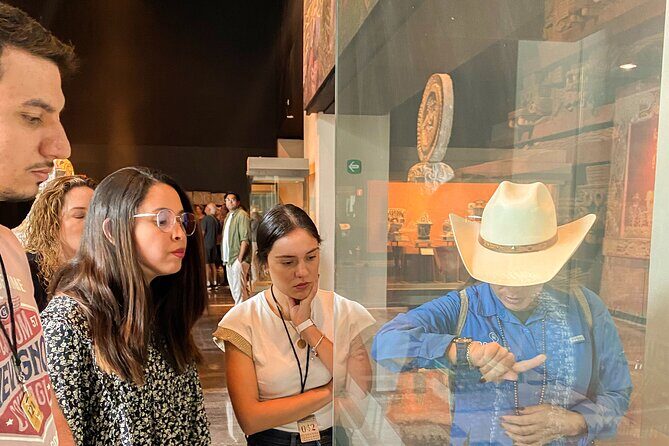
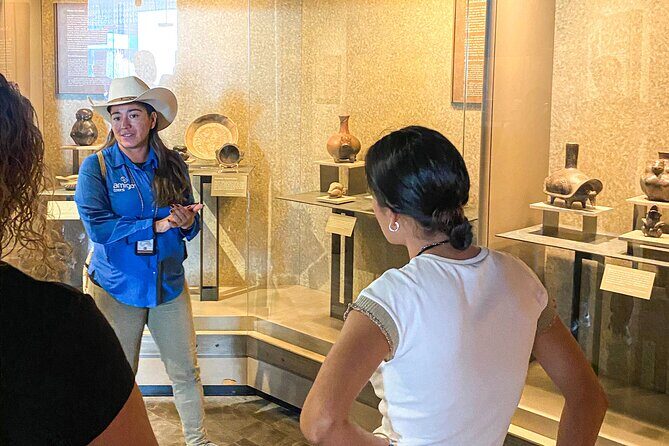
Also, there’s a clear size cap: maximum of 25 travelers. That’s big enough to feel lively but small enough that a guide can still steer you, answer questions, and keep the group together. In feedback, some people praised guides who spent time answering questions while others noted the experience can become more one-way with certain groups or guides—so you’ll want to show up ready to listen and ask when you get the chance.
The Single Stop That Packs a Big Timeline: Museo Nacional de Antropologia
This tour is essentially one continuous museum visit. That’s a plus if you like depth. You’re not bouncing around multiple ticket lines and buildings. You get focused time in a place that’s designed for long, multi-room viewing.
At a high level, the museum collections span:
- pre-Columbian civilizations through to the Spanish colonial period
- key cultures across Mexico and surrounding regions
- major archaeological objects plus reconstructions and interpretive displays
A standout feature is the sheer range of what you’ll recognize from famous names and also from objects that make those names feel real.
What you should expect as you move through the galleries
The permanent exhibitions include the pre-Columbian story across the territory of current Mexico and even into parts of the former Mexican territory that includes what is today the southwestern United States. You’ll also see visiting exhibits, which are generally about other world cultures.
So instead of one narrow theme, you’re dealing with a museum that’s trying to show the whole sweep of cultural development. A good guide handles that by giving you a sequence to follow. Some guides are praised for starting high-level—geography, big picture—then gradually zooming in on specific artifacts and rooms.
The headliners you’ll hear about
Here are the items explicitly highlighted as part of what you’ll encounter and learn from:
- The Stone of the Sun (often linked to Aztec imagery and timekeeping)
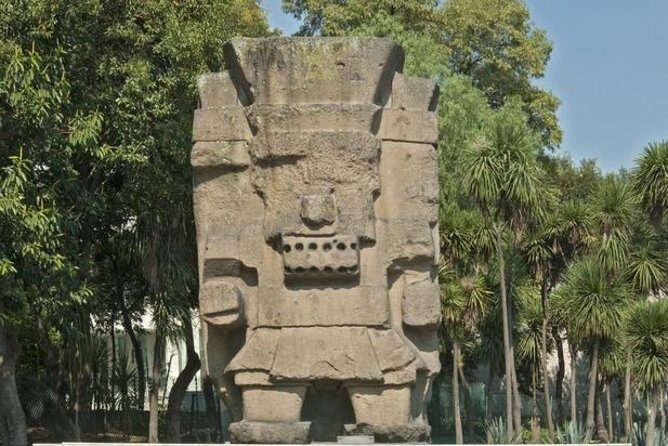
- Giant Olmec stone heads found in jungles of Tabasco and Veracruz
- Treasures tied to Mayan civilization, including themes connected to the Sacred Cenote at Chichen Itza
- A model of Tenochtitlan, the Aztec capital (and how its location is now part of modern Mexico City)
You’ll also see mention of:
- Aztec Calendar context
- reconstructions of Maya tombs
If you’ve ever walked through a museum and thought, I understand what the object is, but I don’t know what it means, this is exactly where a guided structure helps. You get the story behind the display label.
You can also read our reviews of more museum experiences in Mexico City




Drawback to watch for: pacing and clarity can vary
Because it’s a group tour, pacing depends on the guide and the crowd level. Some feedback praised guides who explained with a clear progression and made the museum feel accessible. Other feedback complained about parts that felt confusing, repetitive, or inefficient—like spending time walking and then revisiting information you could have read on your own.
You can’t control who you’re assigned, but you can control how you approach it: keep an open mind during the first major orientation steps, and if something feels unclear, ask a specific question early rather than hoping it will get answered later.
What the Best Guides Do With the Same Artifacts
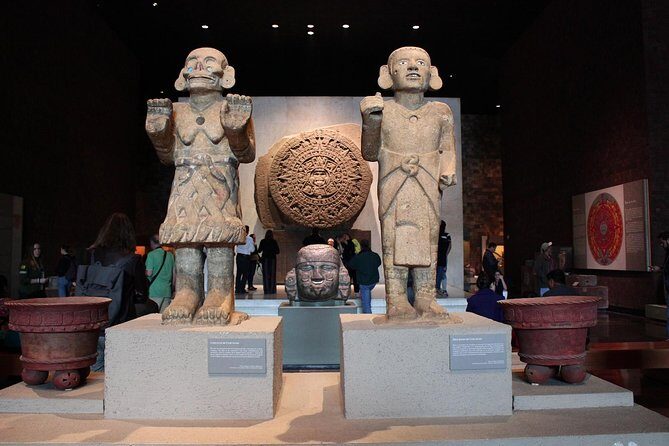
The museum content is the same for everyone. The difference is how the guide turns that content into something you can follow.
Several guide names came up repeatedly in the feedback, and they map to what you should look for in a great museum guide:
- Alexa: praised for an engaging, structured explanation of human history in the region from early periods through the Spanish conquest, using examples and even drawings to explain construction and building ideas.
- Alan: praised for starting with a big-picture geography and timeline, then going deeper in a way that felt patient and coherent.
- Genovanna: praised for giving key information first and then giving time to explore each salon independently.
- Hector: praised for making complex material understandable and for being helpful with questions.
- Ligia and Antonio: praised for being responsive, warm, and able to bring the museum story to life.
- Leonardo: praised for turning the exhibits into a clear progression and for helping people leave with tips for what to do next.
And there were also warnings. A few people found that English clarity varied by guide, and a few reported delays and disorganization that hurt the start of the tour. That’s not uncommon across museum tours in general, but it’s still something you should plan around.
My practical advice: when the group starts, listen for the structure your guide is using. If they’re building a simple timeline and tying rooms together, you’re in good shape. If it feels random, you can still salvage value by focusing on the most famous anchors first—Stone of the Sun, Olmec heads, and Tenochtitlan—then letting the rest fall into place.
Tickets, Time, and Staying With the Group
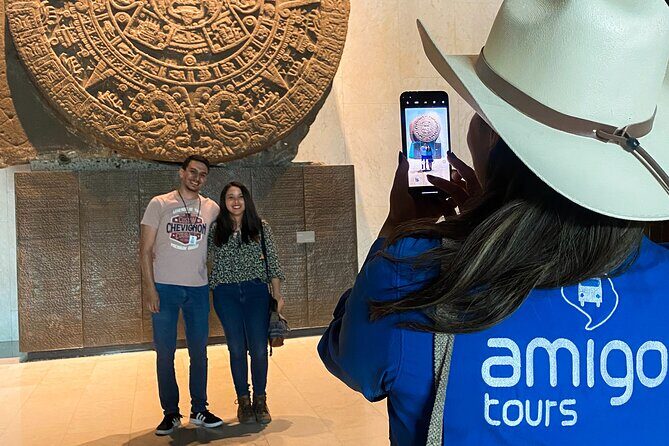
You get museum entrance included, plus a professional guide. That’s a straightforward value point: you pay once, and you don’t have to figure out separate admission logistics mid-trip.
The duration is about 2 hours 30 minutes, and it’s a guided route that stays at one location. That means your time inside matters. You’ll want to arrive at the meeting point early enough to handle any ticket handling or group organization steps without sprinting.
One important reality from the feedback: punctuality can be strict. There’s a story where a late arrival meant the group had already departed and the person couldn’t get back on the tour. The operator position in that case was essentially that the tour cannot wait or be rejoined once it’s gone.
So if Mexico City traffic can make you nervous, don’t treat this like a flexible suggestion. Give yourself cushion time. If you’re aiming to keep your afternoon free, the early departures can still work well, but only if you protect your meeting time.
What to Bring (and What to Leave Behind) Inside the Museum
The rules are clear on what you can’t bring in:
- no food
- no drinks
- no backpacks
- only a handbag is allowed
That affects your day. If you normally travel with a small daypack, you’ll need to switch to a handbag size bag for museum entry. Also, since food and drinks aren’t allowed, plan on handling meals before or after your tour.
If you rely on audio like headphones, note that one feedback mentioned headphones being handed out during the start process. That suggests you might have an audio setup at least sometimes, depending on how the guide runs the tour. If you’re issued any equipment, check it quickly before the narration begins.
Is It Worth $39 for the Anthropology Museum?
At $39 per person, what you’re really paying for is time efficiency and interpretation.
You get:
- guided context in English
- museum admission included
- a 2.5-hour structured visit inside a large, multi-room museum
If you’ve tried to go through this museum on your own, you know the challenge: the exhibits span multiple civilizations and long periods, and many signs won’t do the job of connecting the dots for you—especially if your Spanish is basic. In that case, the guided component becomes the value driver.
If you’re an archaeology person who already knows the timeline and wants to roam at your own rhythm, you might decide the museum is better self-guided. But if you want the Aztec, Maya, and Olmec material to click faster, this is a practical spend.
The best value is when your guide provides a clear structure and sticks close to what’s most important in each room. When the tour runs smoothly, it can feel like a high-quality primer that makes the museum feel readable.
Who Should Book This Tour
This guided visit is a great fit if you:
- want a first-timer overview of Mexico’s pre-Columbian and early colonial story
- love archaeology and want context around the big-famous artifacts
- don’t want to spend your limited Mexico City time trying to figure out what’s connected to what
It can also help if you don’t read Spanish well. Several comments emphasized that signage coverage and language can be uneven, and that an English guide makes the museum feel more accessible. Still, English quality can vary by guide, so you’ll get the most out of it if you stay flexible and ask questions.
If you’re traveling with kids, the museum itself is visually impressive, and the tour can give you a storyline that holds attention. Just keep in mind that ticketing rules around child pricing and entry can get complicated; one feedback story described a ticket validation dispute that caused delays and frustration.
Final Call: Should You Book This Anthropology Museum Guided Tour?
I’d book it if your goal is to leave with understanding, not just photos. The museum’s scale is real, and having a guide tie together anchors like the Stone of the Sun, Olmec heads, and Tenochtitlan’s model saves you time and confusion.
I’d hesitate only if you’re very sensitive to English clarity, group pacing, or you know you might arrive late. This tour is strict about punctuality, and if the start goes wrong, it can be hard to recover the value of the paid time.
My rule of thumb: if you want the museum to make sense quickly—book it. If you prefer total independence and you already know the historical timeline well—go on your own and spend extra time on the labels you choose.
FAQ
How long is the Anthropology Museum guided tour?
It lasts about 2 hours 30 minutes.
How much does the tour cost?
The price is $39.00 per person.
Does the ticket include museum admission?
Yes. The tour includes entrance to the National Museum of Anthropology, along with the guided portion.
Is the tour offered in English?
Yes, it is offered in English.
Where is the meeting point?
Meet at Museo Nacional de Antropología, Av. P.º de la Reforma s/n, Polanco, Bosque de Chapultepec I Secc, Miguel Hidalgo, 11560 Ciudad de México, CDMX, Mexico.
What is the group size limit?
The tour has a maximum of 25 travelers.
Can I bring food, drinks, or a backpack?
No. You’re not allowed to enter with food, drinks, or backpacks. A handbag is allowed.
Is it near public transportation?
Yes, it is listed as near public transportation.
What is the cancellation policy?
You can cancel for a full refund up to 24 hours before the experience’s start time, and cancellation is free.