REVIEW · MEXICO CITY
Turibus Hop On Hop Off Mexico City Tour
Book on Viator →Operated by Julia Travel · Bookable on Viator
Mexico City has a way of wearing you down fast. This Turibus hop on hop off tour keeps you moving with your own pace and an easy ride between major sights. I especially like that you can get off when something catches your eye, then hop back on at the next passing bus without wrestling with traffic or taxis.
My other favorite part is the on-board digital audio (you get headphones at the ticket office, and the commentary is offered in English). One thing to consider: service can be reduced by street closures, events, and traffic, and at the moment the tour may run only on the Historic Downtown Route from 9:00 a.m. to 7:00 p.m.
In This Review
- Key Things to Know Before You Ride
- What This Tour Really Offers (Beyond the Bus)
- Price and Value: When This Makes Sense
- Tickets, Routes, and the Coupon Booklet Setup
- How to Use the Hop On Hop Off Format Like a Pro
- The Historic Downtown Route: Zócalo, Garibaldi, Tlatelolco, and the Basilica Area
- Historical Center Route: Big Icons Along Reforma to Antropología
- Polanco Route: Upscale Streets and the Child-to-Museum Mix
- South Route: Markets, University City, UNAM, and Frida Kahlo’s Area
- Sunday Cycling Changes: What the 08:00 to 14:00 Update Means
- Practical Tips for Comfort, Timing, and Photos
- Should You Book the Turibus Hop On Hop Off Mexico City Tour?
- FAQ
- Is the on-board audio available in English?
- How long is the Turibus Hop On Hop Off Mexico City Tour?
- How do I board the bus?
- Can I ride on the open top or inside?
- Does one ticket cover multiple routes?
- What happens on Sundays between 08:00 and 14:00?
Key Things to Know Before You Ride

- Hop on, hop off your way across themed routes, with stops you can choose to explore in short bursts
- English audio commentary delivered through a mobile digital system you can follow in real time
- Open-top or air-conditioned riding, so you can match your comfort to the weather
- Coupon booklet discounts that can save money on local experiences (not just sightseeing)
- Route changes happen due to events, closures, and Sunday cycling restrictions from 08:00 to 14:00
What This Tour Really Offers (Beyond the Bus)
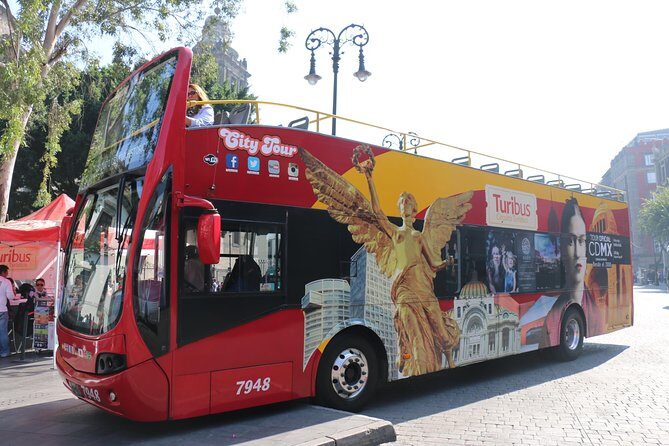
This isn’t a one-and-done loop where you sit, stare, and hope you get enough photos. It’s built for rhythm. You can treat the day like a choose-your-own-adventure: ride to a cluster of sights, get off to walk for a while, then re-board and keep going when you’re ready.
That freedom matters in Mexico City. You’re dealing with big distances, constant traffic shifts, and sidewalks that can be great—or chaotic—depending on where you are. A hop on hop off bus gives you a moving “home base” between neighborhoods, with far less decision fatigue than planning every leg yourself.
The other practical win is how the tour handles information. The digital audio system plus headphones makes the experience feel guided without turning it into a rigid schedule. You’re not trying to read signs while cars are honking and the wind is fighting your hat. You can listen, look, and decide when it’s worth stepping off.
You can also read our reviews of more city tours in Mexico City


Price and Value: When This Makes Sense

I can’t tell you whether this is a bargain without the exact price you’re seeing, but I can tell you how to judge value.
This tour tends to pay off if you want to hit multiple major neighborhoods in one go—especially if you hate paying for repeated taxi rides just to save time. The tour gives you transportation “between stops,” and it also bundles sightseeing support through audio plus a discount booklet.
It’s also a good fit if you’re traveling with mixed interests. One person might want architecture and museums; another might want street scenes and markets. The hop on hop off format lets you split your time without splitting into separate plans.
Where the value can weaken: if you only plan to spend time at one or two stops, you may feel like you’re paying for rides you didn’t need. Another factor is that reduced frequency and delays can happen due to safety protocols, events, road closures, and traffic. If you’re the type who hates waiting, plan a flexible window rather than a strict timeline.
Tickets, Routes, and the Coupon Booklet Setup
Here’s the basic flow. You show your voucher to board at the stops. The system is designed around a set of themed routes—Historical Center, Polanco, South, and Basilica—and you can hop between the available stops along those routes.
You’re also choosing how to ride:
- Open-top level for views and that classic sightseeing feel
- Lower level for air-conditioning when the city runs hot
The headphones piece is important. You pick up or use headphones at the ticket office so you can follow the on-board commentary while you’re moving. Since the tour is offered in English, it’s a straightforward option when you don’t want to rely on spotty translation apps at every stop.
Then there’s the exclusive Mexico City coupon booklet. The tour doesn’t make your whole trip depend on coupons, but it gives you a chance to lower costs on local experiences if you choose to use them. That’s a quiet but real value add—especially if your plans already include a few paid activities beyond walking.
One note to stay sharp: the tickets are described as valid for one operations day, and the voucher is also described as covering all four routes over one or two days depending on what you choose at booking. So, check what your specific option includes before you plan a multi-day strategy.
How to Use the Hop On Hop Off Format Like a Pro
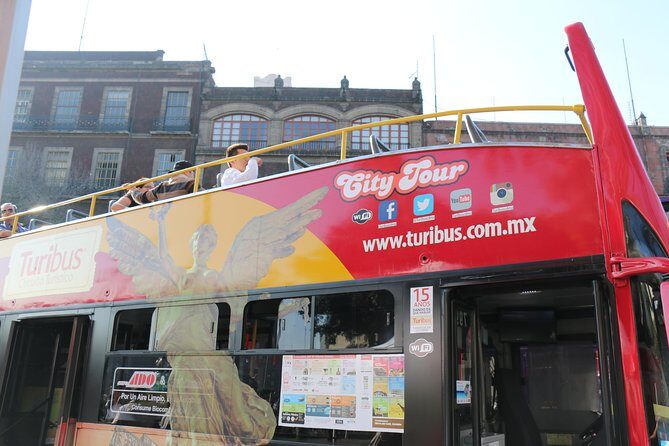
You’ll enjoy this most if you avoid the common mistake: treating every stop as a long museum day. Instead, think in “walk blocks.”
A good rhythm looks like this:
- Ride until a cluster you care about (a plaza, museum area, or neighborhood strip)
- Get off and walk for 30 to 90 minutes depending on the day
- Re-board at the stop you exited (or the next convenient one along the same route)
- Move on before you burn out
Also, pick your riding level with intention:
- Open-top can be great for skyline views and photo angles, but it’s less forgiving if the weather is windy or hot.
- Lower air-conditioned is a lifesaver when you want calm and shade between stops.
Since route variations can happen (and buses may run less frequently during disruptions), you’ll feel less stressed if you build in slack. Don’t stack your day around one “must catch at exactly this minute” plan.
The Historic Downtown Route: Zócalo, Garibaldi, Tlatelolco, and the Basilica Area
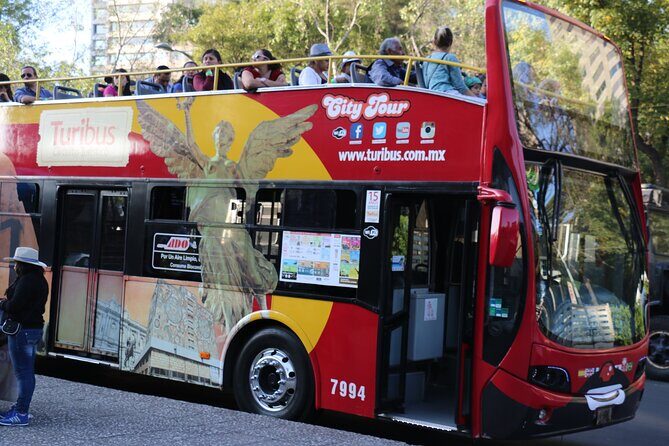
At the moment, the service may run only on the Historic Downtown Route, with a schedule from 9:00 a.m. to 7:00 p.m. If you’re coming through during that window, this part is the best place to start.
The anchor is the Zócalo stop, the heart of central Mexico City where you can orient yourself fast. From here, you can branch out on foot if you want to explore plazas, monuments, and the general “big city center” vibe.
Next up is Garibaldi Plaza, known for its lively atmosphere. Even if you’re not there for a specific performance, it’s a useful contrast to the more formal feel of the central plazas. It’s also a good “people-watching” stop if you want a break from museums.
Then you hit Tlatelolco, which gives you a different historical and architectural tone than the Zócalo area. It’s one of those stops where the surrounding setting helps explain the city’s layers rather than just showing one landmark.
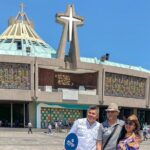
The route finishes in the vicinity of the Basilica. If the bus can’t reach the Basilica for reasons beyond control, the tour notes it will take you to Plaza de las Tres Culturas instead. Either way, you’re in an area where context matters, so plan to spend time on foot rather than rushing.
Finally, there’s a Turibus stop near the Palace of the Counts of Miravalle, which is a nice reminder that central Mexico City isn’t just one “tourist zone”—there’s history stitched into the streets.




Historical Center Route: Big Icons Along Reforma to Antropología
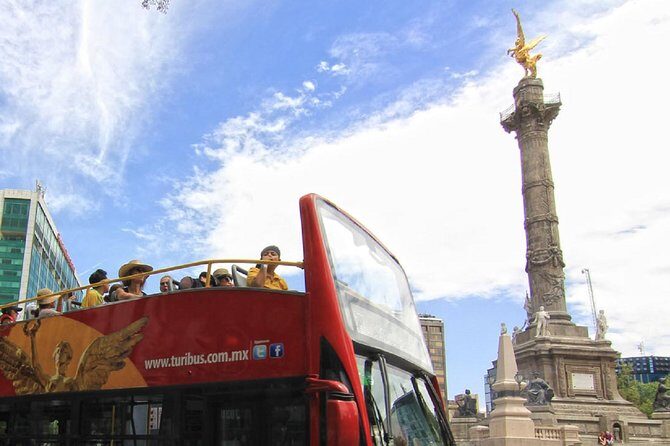
If full route service is available during your dates, the Historical Center route is the one that feels like “Mexico City at postcard speed”—without forcing you to cram everything into one long guided session.
You can start at Auditorio Nacional, a major landmark that’s great for a first orientation stop. From there, you pass Museo de Arte Moderno, which can be a quick museum interlude if you want an indoor option when the weather shifts.
As you continue, the route goes through La Condesa and Fuente de Cibeles. These areas are useful because they break the day into different “moods”: park-and-stroll energy around Condesa, then a more monumental, photo-friendly stop at Fuente de Cibeles.
A stop at Cultural Center Casa Lamm is one of the nicer “local culture” flex options—good for short visits if you want something more than big-ticket landmarks. From there, you reach The Angel of Independence, one of the city’s most recognizable symbols, and an easy place to spend time because several nearby streets make it easy to walk in multiple directions.
Reforma continues to matter on this route. You’ll see stops like Av. Paseo de la Reforma 222 and Av. Juarez 50, which are handy markers along one of the city’s most important corridors. Along the way you’ll also have Museo de Cera, which can be fun if you want something lighter after heavier history stops.
The route includes the Monument to Cuauhtémoc and then moves toward Zócalo, with additional central stops such as Plaza Manuel Tolsá, Museo Franz Mayer, and Plaza de la República. Each of these adds a different angle:
- Plaza Manuel Tolsá is useful for classic plaza viewing and quick photo breaks.
- Museo Franz Mayer is a strong museum stop if you want an interior option.
- Plaza de la República is another major public-space stop that helps you feel the scale of central Mexico City.
From there, there’s Museo San Carlos and then a Reforma L1 stop, which makes it easier to connect the tour with the city’s broader transit network if you decide to extend your day independently.
The route loops back near The Angel of Independence and continues with stops like Paseo de la Reforma – Río de la Plata and Museo Nacional de Antropología. That last stop is the one people often plan around because it’s not just a quick glance kind of place. If you only have energy for one “real visit” on this route, Antropología is usually the best candidate.
Polanco Route: Upscale Streets and the Child-to-Museum Mix

The Polanco-themed portion is a smart choice if you want a more polished neighborhood feel and an easier time strolling without feeling like you’re always navigating major traffic lanes.
You start at Auditorio, Bicigratis, then move along Calle Arquímedes and Avenida Presidente Masaryk. These are exactly the kind of stops where you can get off, walk a few blocks, and then decide whether you want cafes, shopping streets, or just the scenery.
The route goes to Antara and Museo Soumaya. Museo Soumaya is a standout stop for visitors who like architecture and well-known museum settings. Even if you don’t plan to spend a full day inside, seeing the building and surrounding area can be worth the stop.
Then you’ll reach Hipódromo de las Américas and Papá l ote Museo del Niño. That last one matters because Papalote offers a change of pace—good if you’re traveling with kids, or if you just want a more playful museum break when your brain is tired from monuments and plazas.
Polanco also tends to be easier to enjoy as a strolling day. You’re not only looking at sights from the bus; you can actually walk between stops without feeling like you’re constantly crossing unsafe zones or rushed intersections.
South Route: Markets, University City, UNAM, and Frida Kahlo’s Area
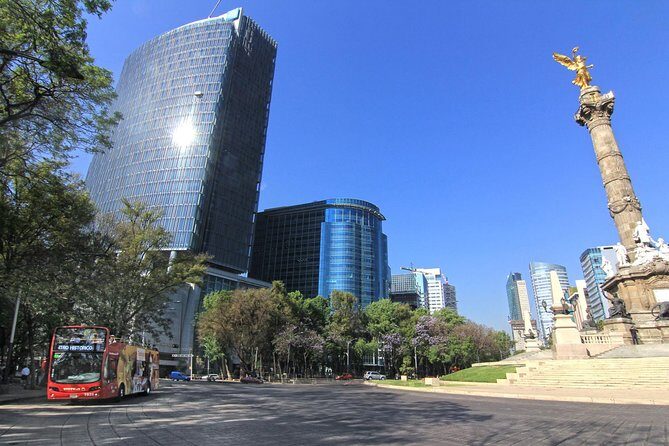
If your vibe leans more toward neighborhoods, markets, and a mix of culture with real everyday life, the South route is where you’ll feel the shift.
It begins near Fuente de Cibeles and then moves toward Mercado Roma, which is a great concept for visitors who like to taste the city through food culture (even if you only snack, not commit to a full meal).
From there, you ride past World Trade Center Mexico City, then to Monumental Plaza de Toros México—a big, dramatic setting that adds scale. You’ll also see Avenida de la Paz and reach Estadio Olímpico Universitario.
Next comes Perisur and Avenida Centro Comercial, which gives you an “organized shopping and transit convenience” feeling in contrast to market stops. Then it shifts again toward Mercado de flores San Ángel—a stop that’s especially interesting if you want a sensory break and an excuse to slow down.
The route includes Tlalpa Linares María Isabel, and then moves into the university zone with Universum, University City, and Rectoría de la UNAM. This is one of the South route’s strengths: it’s not only about famous museums. It’s about how the city functions around major institutions.
The bus also passes Alfredo Guati Rojo National Watercolor Museum, which can be a strong indoor stop if the weather turns or you want something more specific than the biggest-name museums.
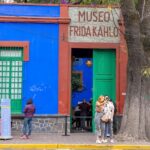
Then you head toward Coyoacán, and the route includes Frida Kahlo Museum. If your main goal is Frida’s area, this is the most direct place to plan your time. It’s a stop that usually deserves careful pacing—don’t try to stack it with another intense museum right before it.
Finally, there’s a stop called Aguayo. It’s a good reminder that the route isn’t only about the headline landmarks; you’ll see enough surrounding life to make the day feel grounded.
Sunday Cycling Changes: What the 08:00 to 14:00 Update Means
On Sundays between 08:00 and 14:00, Turibus notes it uses alternative ways on some tours because streets are closed by the Ciclotón. Translation: don’t assume the ride will behave exactly like a weekday loop.
If you’re visiting on Sunday morning, build in extra time and be ready for route variations. The overall tour experience still works, but you’ll get the best result if you treat the bus as flexible transport rather than a tight itinerary machine.
Practical Tips for Comfort, Timing, and Photos
This is where you can make the day smoother without overthinking it.
- Start earlier than you think if you can. You’re riding across multiple neighborhoods, and you’ll want time at your chosen stops.
- Bring a plan for heat. The option for air-conditioned riding is great, but you may still want sun protection for open-top segments.
- Don’t underestimate walking time once you’re off the bus. Many of the stops are in areas where you’ll naturally want to wander a bit.
- If you care about a specific museum visit, pick one “anchor” and use the bus to reach it. That keeps the day fun instead of stressful.
Should You Book the Turibus Hop On Hop Off Mexico City Tour?
You should consider booking if you want flexibility, English audio, and an easy way to connect major sights without constantly planning transportation. This is especially worth it if you’re trying to cover multiple neighborhoods—Reforma landmarks, central plazas, Polanco streets, or the South route’s university and Coyoacán energy.
I’d skip it (or at least lower expectations) if you only want one quick stop, or if you need a perfectly timed, minute-by-minute schedule. The tour can run with reduced frequency or altered routes due to closures, events, and safety protocols, and at the moment the service may be limited to the Historic Downtown Route from 9:00 a.m. to 7:00 p.m.
If you’re the type who likes control—choosing when to get off, choosing how long to stay—this bus fits your travel style. If you want a strict guided schedule with zero waiting, you’ll probably feel happier with a different format.
FAQ
Is the on-board audio available in English?
Yes. The tour is offered in English, and you’ll use headphones from the ticket office to follow the on-board digital audio commentary.
How long is the Turibus Hop On Hop Off Mexico City Tour?
The duration is listed as about 3 hours.
How do I board the bus?
You show your voucher to board at the stops on the available routes.
Can I ride on the open top or inside?
Yes. You can choose the open-top bus or the lower air-conditioned level.
Does one ticket cover multiple routes?
Yes. The tour is set up so you can use a single ticket for the routes and stops, and your voucher is designed to cover all four themed routes over one or two days depending on the option you chose.
What happens on Sundays between 08:00 and 14:00?
Turibus uses alternative routes on some tours because streets are closed for Ciclotón during that time window.