REVIEW · MEXICO CITY
Mexico City: Hop-On Hop-Off Bus City Tour
Book on GetYourGuide →Operated by Capital Bus S.A. de C.V. · Bookable on GetYourGuide
Riding a double-decker bus beats guessing routes all day. What makes this one different is the way it strings together big-city icons plus real neighborhoods, using three color-coded circuits under one 24-hour ticket. You get an on-board audio guide to turn street views into context, from Reforma’s famous monuments to southside areas like Coyoacán.
I especially like that you can hop on and off along the way, so your day matches your pace instead of a fixed schedule. I also like the variety: you’re not just circling downtown, you’re bouncing between Polanco/Condesa/Roma, major religious sites, and university and artsy corners like San Ángel.
One drawback to plan for: the audio experience depends on the bus system, and if your device has trouble staying connected, you may miss narration. The tour also doesn’t include headphones, so bring your own.
In This Review
- Key points that make this tour worth your time
- Price and value: what $20 really buys you
- Downtown to Polanco (Green): Reforma views, plus Roma and Condesa
- Downtown to Temples (Yellow): Guadalupe-area landmarks and the Benito Juárez Hemicycle
- Downtown to South (Blue): Coyoacán’s Coyoacán magic, plus San Ángel and UNAM
- Audio guide reality check: headphones and the WiFi factor
- Where to start: pink-vest staff, bracelet timing, and your first boarding
- How to use hop-on hop-off without losing your day
- Rain or shine and the “Ciclotón” Sunday route twist
- Who this hop-on hop-off bus is best for (and who should skip it)
- Should you book this Mexico City hop-on hop-off bus?
- FAQ
- How long is the ticket valid?
- Do I need headphones for the audio guide?
- Where do I meet the staff?
- What do I need to bring with me?
- Is food or drinks allowed on the bus?
- Can I cancel for a refund?
Key points that make this tour worth your time

- Three circuits (Green, Yellow, Blue) with one one-day ticket, so you can mix and match stops.
- Major landmarks plus neighborhoods: Reforma Avenue monuments, Guadalupe-area sites, and Coyoacán/UNAM.
- Audio guide included, helpful for understanding what you’re actually seeing from the street.
- Hop-on hop-off format keeps you flexible for photos, walking, and breaks.
- Rain or shine operation, so you aren’t forced into a weather gamble.
Price and value: what $20 really buys you

At about $20 per person for a full day, this hop-on hop-off format is about value through coverage. One ticket, three different routes, means you pay once and then decide how much of each loop you want to ride or walk.
For me, the best value isn’t the bus itself. It’s the fact that Mexico City is big, traffic can be slow, and sites are scattered. This kind of loop-and-stop system helps you see a lot without spending your whole day locked into one part of town.
Also, you get travel insurance and an audio guide included. Those details matter when you’re juggling a tight schedule, since you’re not paying extra for basic “make this worth it” extras.
You can also read our reviews of more city tours in Mexico City



Downtown to Polanco (Green): Reforma views, plus Roma and Condesa

The Green circuit is built for classic Mexico City sights with a side of stylish neighborhood wandering. You start with a panoramic view of the Zócalo, which is one of the best quick ways to orient yourself—especially if it’s your first time in the city.
Then you roll along Reforma Avenue, the boulevard where so many “big photo, big meaning” monuments sit close together. Keep an eye out for the Angel of Independence and Diana the Huntress. Even if you’re not the kind of person who reads plaques, seeing them from the street helps you understand how the city likes to stage its identity in public space.
What I like most is that the route doesn’t stop at postcard spots. It runs through parts of Roma, Condesa, and Polanco, which are the areas many people end up exploring on foot. From the bus, you can spot the vibe changes fast—wide avenues here, tree-lined streets there, and that mix of modern city feel with older building styles.
How to use this loop well: ride it once for the overview, then hop off when you spot a stop that lines up with your interests (photos, a quick stroll, or a meal nearby). With hop-on hop-off, your goal shouldn’t be “ride every minute.” It should be “see the right parts, then walk the rest.”
Downtown to Temples (Yellow): Guadalupe-area landmarks and the Benito Juárez Hemicycle

The Yellow circuit is for people who want Mexico City’s religious and civic history in a single day. It starts hitting spots with real staying power—places you’ll feel like you’ve heard of before you even step outside.
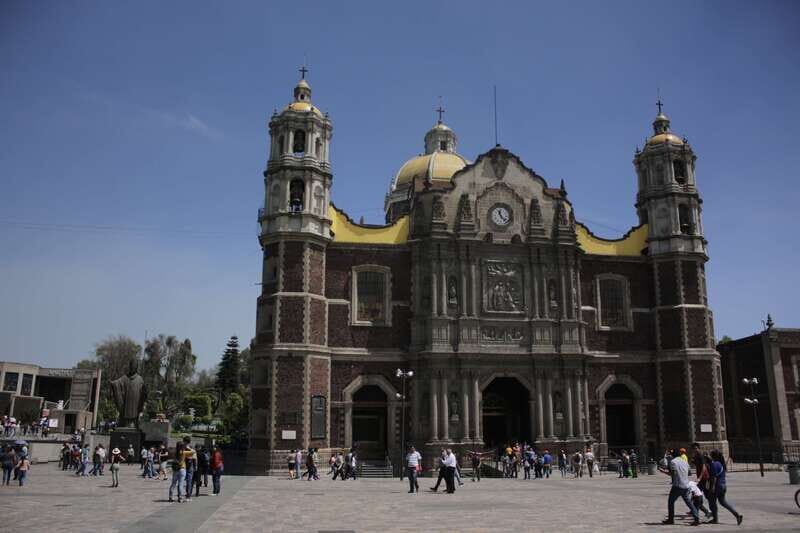
On this loop, you’ll pass key sites such as the Franz Mayer Museum, the Basilica of Guadalupe, the Temple of San Judas Tadeo, and the Benito Juárez Hemicycle. That’s a powerful mix because it covers different chapters of the city’s story: arts and culture, major pilgrimage sites, dramatic temple architecture, and a landmark linked to Mexico’s political identity.
If you want a practical way to plan your time, this is the circuit you build around your main “must-see” moments. The Basilica of Guadalupe area, in particular, is the kind of stop where you might want more than a quick look from the sidewalk. The bus lets you do that without committing to a single, rigid itinerary.
Possible drawback to expect here: places like temples and big religious landmarks can be busy, and that can slow your walking time. The hop-on hop-off approach helps you adjust—if a stop is packed, you can keep moving and return later when the timing feels better.
Downtown to South (Blue): Coyoacán’s Coyoacán magic, plus San Ángel and UNAM

The Blue circuit feels like a change of scene. It shifts you away from the “monuments-on-a-main-road” style and toward neighborhood character and university-city atmosphere.
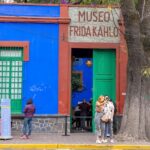
You’ll reach Coyoacán, including Frida Kahlo’s Blue House Museum. Even if you’re not obsessing over museum hours, this is one of the route sections that makes a Mexico City day feel more personal. Coyoacán is the kind of area where walking often beats staying on the bus, because the streets and plazas reward slow time.
From there, you’ll see San Ángel and its parks. The bus route gives you a fast introduction to the area’s calmer pace. You can use the stop structure to grab an earlier-than-planned walk if the weather is good, or to pivot to another loop if you want more classic monuments instead.
Then there’s UNAM, the National Autonomous University of Mexico (UNAM) campus. A university zone changes the feel of a city quickly—more students, different energy, and a sense that everyday life is happening right alongside the big sightseeing.
How this loop helps you on a first trip: it balances the day so you’re not only photographing famous buildings. It gives you “where people actually hang out” energy, even from street level.
Audio guide reality check: headphones and the WiFi factor

An audio guide is included, which is great—Mexico City is full of details, and the narration helps you connect what you’re seeing to what it means. But there’s one practical issue to plan for.
Headphones are not included, so bring your own. If you don’t, you might end up struggling to hear the guide properly when the bus is loud or when you’re seated away from the sound system.
Also, the narration can depend on the bus audio setup. In one experience like this, unstable WiFi meant the English narration didn’t come through reliably. I’d treat that as a heads-up: if your device tends to drop connections, test your phone settings before you settle in.
Simple fix you can do: download anything you can that helps accessibility on your phone (offline options, if available), and keep a backup plan for understanding stops—at minimum, use your phone to quickly look up each landmark name you’re seeing once you hop off.






Where to start: pink-vest staff, bracelet timing, and your first boarding

Meet staff wearing pink vests. They’ll validate your reservation and hand you directions. The tour notes to exchange your reservation for the bracelet, and it’s smart to arrive 10 minutes early so you’re not rushed before the bus fills up.
This matters more than it sounds. A hop-on hop-off bus is basically a moving checkpoint. If you’re delayed, you can lose time, and on a busy day you might end up waiting longer for the next bus cycle.
What I recommend you do at the start:
- Have your passport or ID card ready.
- Keep your sun hat and comfortable clothes on top of your bag. The tour runs in all weather, so you’ll still need sun protection when it’s bright.
- Think of your first ride as reconnaissance. You’re not committing to a final plan yet.
How to use hop-on hop-off without losing your day
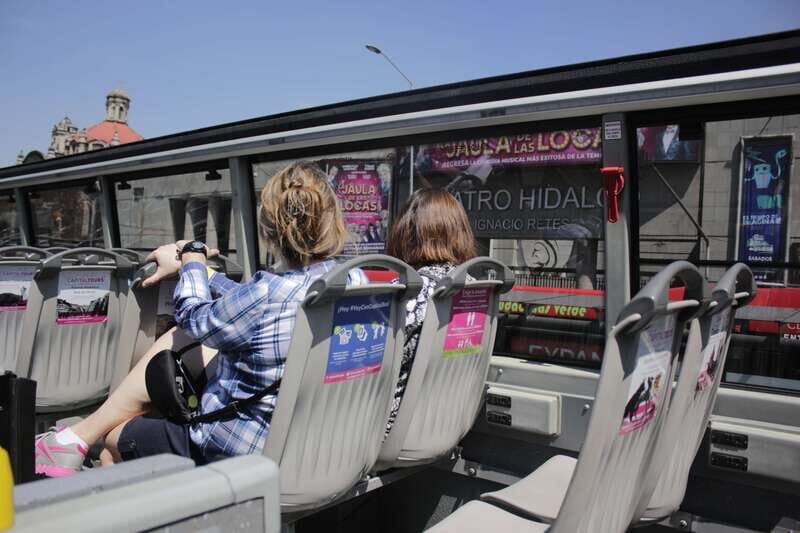
Here’s the trick: hop-on hop-off works best when you treat it like a transportation tool, not a “ride until you’re tired” activity.
I’d pick one “anchor” per circuit. For example:
- Green loop: anchor around Reforma and the monuments you want photos of.
- Yellow loop: anchor around Guadalupe or a civic landmark like the Benito Juárez Hemicycle.
- Blue loop: anchor around Coyoacán and UNAM-area vibes, depending on your interests.
Then you ride just enough to position yourself. When you hop off, walk for a short stretch, take photos, and check whether the stop feels worth extended time. If it doesn’t, you’ve not wasted a locked-in reservation—you’re just back on the next hop.
About food and drinks: food and drinks are not allowed on the bus. That means you should plan snacks and meals before you board or after you hop off. It’s not a dealbreaker; just don’t count on grabbing something on board while you move between stops.
Rain or shine and the “Ciclotón” Sunday route twist
This tour runs rain or shine, which is helpful in a city where weather can change quickly. The route may still feel different on rainy days because sidewalks and crossings can be slippery or crowded, so wear comfortable shoes and be ready for slower walking.
One more key detail: Mexico City’s government runs Ciclotón on Sundays from 08:00 to 14:00, and the bus uses alternative streets during that time. You don’t need to panic, but you should expect route adjustments on Sunday mornings.
My advice: if Sunday is your day and you want a specific sequence of stops, give yourself extra cushion and don’t build a tight minute-by-minute plan. Even small detours can change how quickly you reach a neighborhood.
Who this hop-on hop-off bus is best for (and who should skip it)

You’ll probably like this tour if:
- You want to see multiple areas in one day without constant rideshare planning.
- You enjoy pairing bus views with short walks where you can actually explore.
- You’d benefit from an audio guide to connect landmarks and neighborhoods.
You might want to skip it (or at least go in with caution) if:
- You rely heavily on your phone for audio and you know your connection often drops. The audio experience can be hit-or-miss depending on how stable the bus audio setup is.
- You want a deeply scripted, guided experience with lots of on-foot time at each stop. This is hop-on hop-off—flexible, not a guided walk tour.
Also, it’s a good fit for people who like structure but hate rigid schedules. Three loops under one ticket means you can change plans without starting over.
Should you book this Mexico City hop-on hop-off bus?
I’d book it if your goal is efficient sightseeing with flexibility. For the price, you’re buying access to three circuits that cover big iconic sites (Zócalo, Reforma monuments, Guadalupe-area landmarks) plus areas with neighborhood energy (Roma/Condesa/Polanco, Coyoacán, San Ángel, and UNAM).
But I’d also be realistic. The tour’s quality hinges on two things you control: having your own headphones and making sure your device can handle the audio setup without constantly dropping. If you’re prepared, you’ll get a smooth day that helps you see a lot of Mexico City without feeling trapped.
If you want a first-pass overview and then a way to explore on foot afterward, this is a solid choice. If you prefer very guided, step-by-step walking time at a few sites only, pick a smaller focused tour instead.
FAQ
How long is the ticket valid?
The ticket is valid for one day and works for 24 hours from first activation.
Do I need headphones for the audio guide?
No, headphones are not included. The audio guide is included, but you should plan to bring your own headphones to listen comfortably.
Where do I meet the staff?
You meet staff wearing pink vests. They validate your reservation and give you directions.
What do I need to bring with me?
Bring a passport or ID card, plus comfortable clothes and a sun hat.
Is food or drinks allowed on the bus?
No. Food and drinks are not allowed on board.
Can I cancel for a refund?
Yes. You can cancel up to 24 hours in advance for a full refund.