REVIEW · OAXACA CITY
Oaxaca city bike ride – History & traditions
Book on Viator →Operated by Bike Flow Oaxaca · Bookable on Viator
Oaxaca feels different from a bike saddle. This bike-first route mixes key history stops with street art you might miss on foot, all while your guide connects the dots between neighborhoods. Expect six stops across the center, from a major church viewpoint to mural-filled streets.
I love how the guides focus on safety and pacing, which matters when you’re rolling over uneven Oaxaca stone. In the same ride, you’ll hear history in plain language from guides like Marion and Humberto, and you’ll also get practical tips for what to eat and where to look next.
One thing to consider: the ride is bumpy, with sections that can feel rough under tire and foot, including older stone surfaces.
In This Review
- Key things I’d bet you’ll notice on this ride
- Why this Oaxaca City bike ride is such a smart first day
- Price and what you actually get for $38.81
- Meeting point and how to avoid the most common hiccup
- What the ride feels like on Oaxaca streets (and who it suits)
- Stop 1: Panteon General and Oaxaca’s cemetery roots
- Stop 2: San Matias Jalatlaco murals you can’t ignore
- Stop 3: Parque Juarez El Llano and traditional nieves
- Stop 4: Los Arquitos de Xochimilco and neighborhood history
- Stop 5: Santo Domingo de Guzman and the power of old churches
- Stop 6: Basilica de Nuestra Senora de la Soledad and center views
- Guides are the real difference: safety, humor, and context
- How to get the most out of the 2.5 hours
- Should you book it? My honest recommendation
- FAQ
- How long is the Oaxaca City bike ride?
- What language is the tour offered in?
- Where does the tour start?
- Do I need tickets for the stops?
- How big is the group?
- What if the weather is bad?
Key things I’d bet you’ll notice on this ride
- A small group (max 8) keeps it calm enough to ask questions and stay together.
- Six major stops give you a strong map of Oaxaca’s center in one go.
- Street art in San Matias Jalatlaco turns the ride into a real visual scavenger hunt.
- Traditional nieves at El Llano adds a tasty, local break without dragging the schedule.
- Safety-first guidance is a highlight, including careful bike handling and helmet fitting.
- One paid site (Panteon General) is the only spot where you should plan for admission costs.
Why this Oaxaca City bike ride is such a smart first day
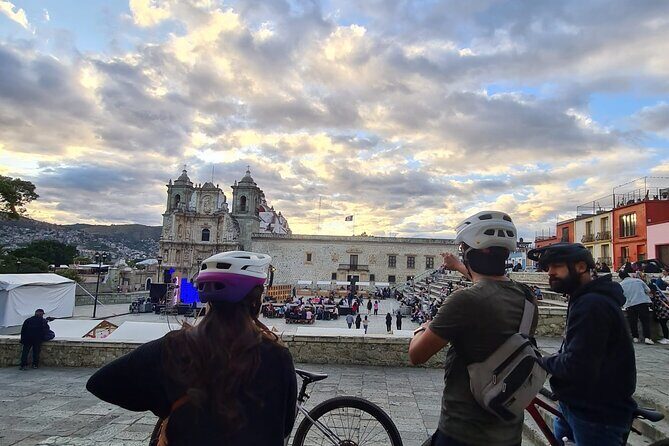
If Oaxaca City is your base, the hardest part is simple: figuring out how the neighborhoods and landmarks connect. This bike ride does that early. In about 2 hours 30 minutes, you get a guided sweep of the center’s geography, so later you can walk confidently and know what’s worth your time.
The format is built for real sightseeing, not just cruising. You stop long enough to look closely—street murals, church facades, and cemetery details—then you pedal to the next spot while the route stays manageable. And because the group is small, you’re not squeezed into a fast-moving line where you can’t ask questions.
You also get the kind of guided explanation that makes landmarks feel personal. Guides like Marion and Humberto (and others) are known for being warm and direct, with humor and a clear sense of what to point out. One guide even has a Master’s degree in Social Studies, which helps when the conversation shifts from architecture to cultural traditions.
You can also read our reviews of more cycling tours in Oaxaca City


Price and what you actually get for $38.81
At $38.81 per person for about 2.5 hours, this isn’t a cheap “just get you around town” outing. The value comes from packing in multiple guided stops plus the bike experience itself.
Here’s the practical math: you’ll see six historic/cultural sites during the ride, and most of them have free admission. The exception is Panteon General, where the admission ticket is not included. In other words, the tour price already covers the big structure of the experience—guide time, bike setup, and transportation on your own wheels—while leaving only one spot where you may need to pay entry separately.
If you’re comparing this to a walking tour, the bike matters. It lets you cover more ground without feeling like you’re trapped in slow crowds or constantly checking your phone for directions.
Meeting point and how to avoid the most common hiccup
You meet at Bike Flow Oaxaca in the Centro area: Mártires de Tacubaya 101, Ruta Independencia, Centro, 68000 Oaxaca de Juárez, Oax., Mexico. The tour ends back at the same meeting point.
Arrive a little early and keep your eyes on the exact storefront. One common moment of confusion is simply that the bike shop can look closed or locked from the street until it’s time to start. If you want a stress-free start, show up a few minutes before the scheduled departure and check in.
The meeting point is near public transportation, which is helpful if you’re not starting the day at your hotel.
What the ride feels like on Oaxaca streets (and who it suits)
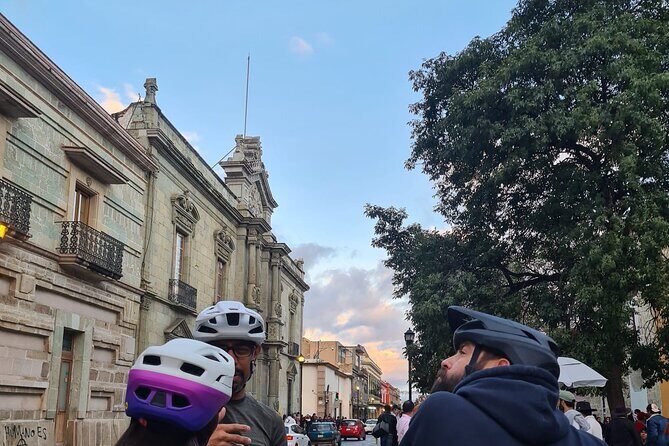
Most people can join, and you’ll bike in a group capped at 8 travelers. The staff gets your bike and helmet fitted quickly, which makes the start easier.
Still, don’t underestimate the road texture. Oaxaca City has a lot of uneven surfaces, and this route includes sections where you’re riding over rough, older stone. One rider described the challenge of rolling over centuries-old stones and needing to watch the ground to avoid holes and large stones. Translation: it’s not a flat, smooth cruise.
Also note the height limit: it is not suitable for persons under 1.50 meters tall. If you’re close to that threshold, it’s worth checking your fit with the operator during booking.
Stop 1: Panteon General and Oaxaca’s cemetery roots
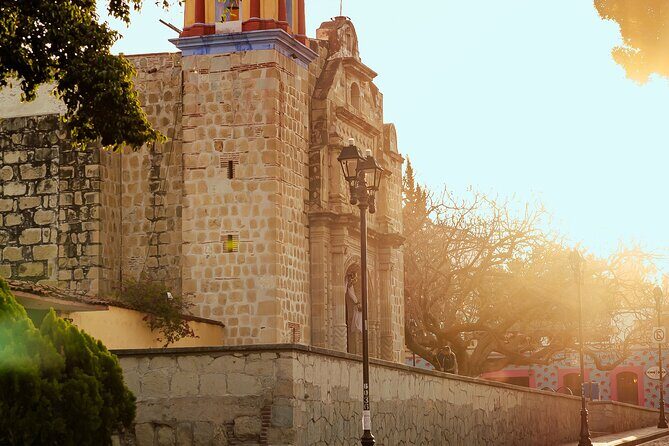
The ride opens at Panteon General, described as the first cemetery of Oaxaca and tied to the city’s early history. This is the kind of stop that shifts your perspective fast. Instead of focusing only on bright facades and church towers, you’re looking at how Oaxaca remembers its people and how traditions show up even in a cemetery setting.
You’ll get about 20 minutes here, long enough to orient yourself and absorb what the space communicates visually and culturally. Admission is not included, so if you don’t like last-minute surprises, plan for that entry cost before you arrive.
One plus: starting with this stop often helps the rest of the tour click. Cemeteries and churches are more connected than many first-time visitors realize.
You can also read our reviews of more city tours in Oaxaca City

Stop 2: San Matias Jalatlaco murals you can’t ignore
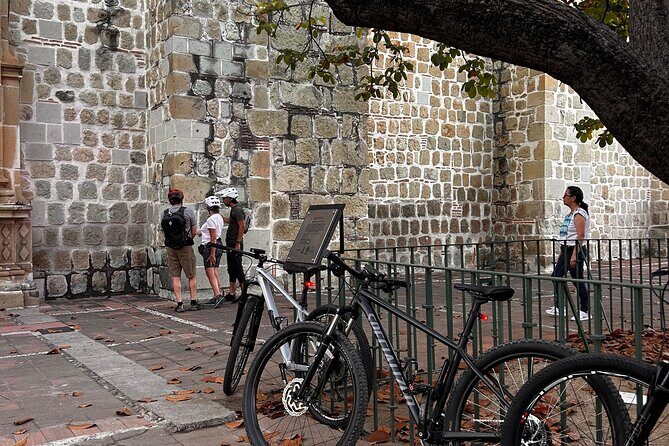
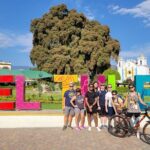
Next comes Templo de San Matias Jalatlaco, tucked into one of the city’s most colorful neighborhoods. This is where the bike ride becomes extra fun, because you’re moving through streets lined with street art and murals.
The time here is around 20 minutes, with your guide pointing out what to look for in the artwork and how it fits the neighborhood’s identity. Even if you think you’ve already seen a lot of Oaxaca’s art, this area has a different feel when you’re viewing it slowly from street level.
If you love photography, this stop is ideal—but keep one eye on your footing and bike line, especially on uneven stone.
Stop 3: Parque Juarez El Llano and traditional nieves
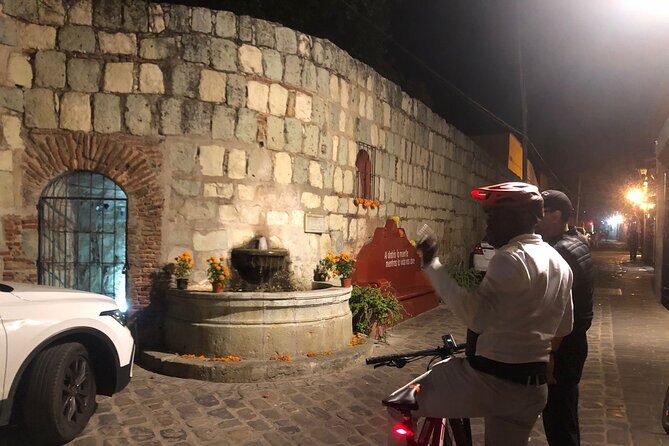
At Parque Juarez El Llano, you’re not just sightseeing—you’re tasting something local. You’ll try traditional nieves while learning about the history of the place.
Expect about 20 minutes here, a good balance between a quick break and real context. The big value isn’t just the dessert. It’s the way the guide connects the park’s story to everyday life in Oaxaca City.
This is also a smart moment to recharge. After the earlier stone surfaces and mural stops, a short food break helps you keep your energy up for the churches that follow.
Stop 4: Los Arquitos de Xochimilco and neighborhood history
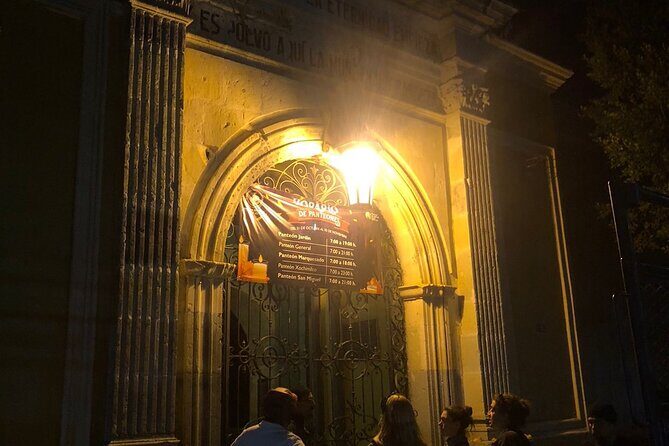
Then you shift to Los Arquitos de Xochimilco, where the focus is on the history and importance of that older neighborhood. The time is shorter—around 15 minutes—but it’s still enough to understand the idea: neighborhoods in Oaxaca aren’t just random streets. They’re built around identity, history, and how communities evolved.
This stop is a reminder that a good city tour isn’t only about the big-ticket landmarks. It’s about how people lived, gathered, and formed cultural patterns over time.
Admission is listed as free for this stop, so there’s no extra entry friction during the ride.
Stop 5: Santo Domingo de Guzman and the power of old churches
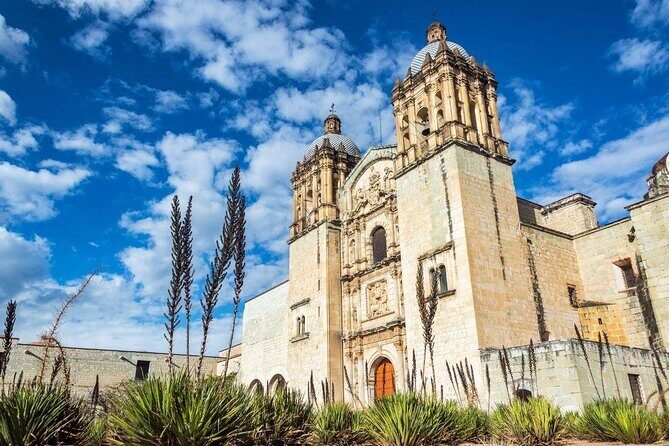
Now you’re back in architectural territory. You’ll visit Templo de Santo Domingo de Guzman, described as the city’s biggest and oldest church, with importance and history explained by your guide.
This stop runs about 15 minutes—enough time to look closely at the facade and get oriented to what makes it significant. If you’re the type who likes to notice details (shape, scale, where your eye lands first), this part rewards you.
Free admission is noted here, so it’s another stop where you can focus on the experience rather than logistics.
Stop 6: Basilica de Nuestra Senora de la Soledad and center views
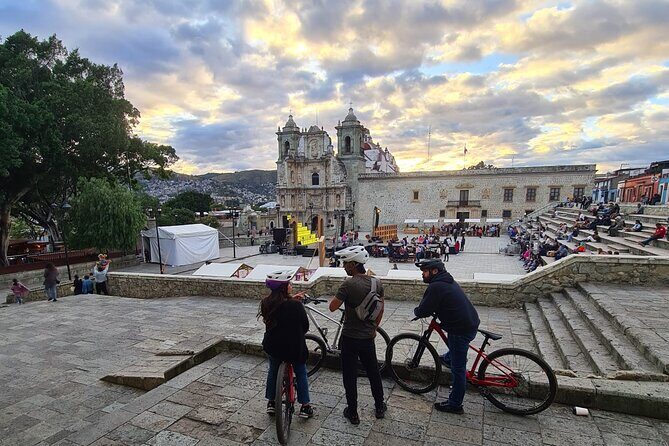
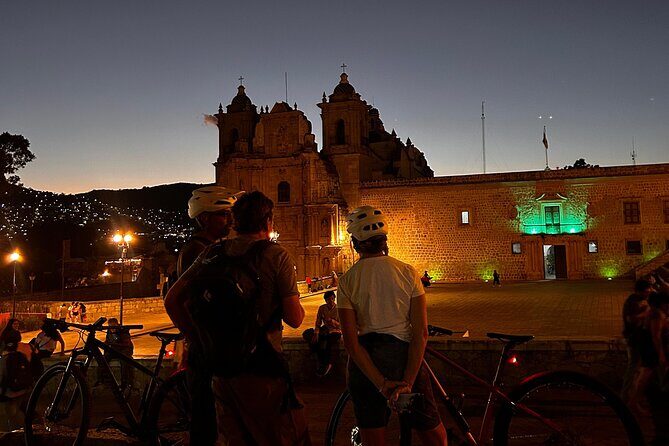
The ride closes at Basilica de Nuestra Senora de la Soledad, where you’ll admire the architecture and get a view of the center. You’ll also hear the history of the basilica during about 20 minutes.
This last stop matters because it gives your brain a final “map moment.” After looking at murals, parks, and older neighborhood streets, you can step back—literally—and see how the center fits together.
Free admission is included for this stop, so the ride ends without extra site fees beyond any planning you might need for Panteon General.
Guides are the real difference: safety, humor, and context
The biggest recurring strength of this experience is the way the guides handle both the route and the storytelling.
On the route side, expect careful, safety-minded cycling. Your guide is there to keep the group together and ride with caution through city streets. Bike fitting and helmet use are part of the start, and the pace is set so you can actually enjoy stops rather than sprint between them.
On the explanation side, guides named in the feedback—like Marion, Humberto, and Eric—are described as welcoming, friendly, and able to answer questions without making you feel rushed. One guide’s Social Studies background also shows up in how traditions are explained, not just dates and buildings.
How to get the most out of the 2.5 hours
A bike tour works best when you treat it like orientation, not like a checklist. Here are a few practical ways to make this tour pay off after you finish:
- Bring a mindset of looking. Focus on how each stop connects to the next street—especially as you move between neighborhoods.
- Wear shoes you trust on uneven stone. It helps even when you never get off the bike.
- Bring water if you tend to feel warm easily. You’ll have multiple stops and a dessert break, but the ride still takes energy.
- Ask one good question early. If your guide offers humor and history in plain language, lean into it.
Also, if you’re hoping to see every church in the center, keep expectations realistic. This ride focuses on a set of key landmarks and neighborhood moments, so you’ll likely want a second outing (walk or museum time) for anything that wasn’t on this route.
Should you book it? My honest recommendation
Book this tour if you want an efficient, guided way to understand Oaxaca City’s layout and traditions. It’s especially good as a first morning or first half-day when you’re trying to build a mental map.
Skip it (or consider another option) if your mobility is limited on uneven surfaces, if bumpy rides make you uncomfortable, or if you’re under 1.50 meters tall. Also consider whether you’re okay with one stop where admission is not included.
If you like history with practical context—plus street art and a taste of local nieves—this is a strong value for your time.
FAQ
How long is the Oaxaca City bike ride?
The ride runs about 2 hours 30 minutes (approx.).
What language is the tour offered in?
The tour is offered in English.
Where does the tour start?
You start at Bike Flow Oaxaca, Mártires de Tacubaya 101, Ruta Independencia, Centro, 68000 Oaxaca de Juárez, Oax., Mexico. The tour ends back at the meeting point.
Do I need tickets for the stops?
Panteon General has an admission ticket that is not included. The other listed stops on the ride are free.
How big is the group?
The tour has a maximum of 8 travelers.
What if the weather is bad?
This experience requires good weather. If it’s canceled due to poor weather, you’ll be offered a different date or a full refund.