REVIEW · MEXICO CITY
Guided Tour of Coyoacan and Leon Trotsky Museum
Book on Viator →Operated by Educando con Cultura · Bookable on Viator
Coyoacán is history you can walk to. This guided route strings together pre-Hispanic roots, Spanish-era religious history, and everyday local life, then finishes at León Trotsky’s House Museum. It’s a focused 2 hours 15 minutes that makes Mexico City feel less like a checklist and more like a neighborhood story.
I really like the format: short stops, clear pacing, and tickets handled for you (so you’re not constantly hunting for entry lines). I also like that the tour leans into real context—why Coyoacán mattered before Europeans arrived, and how the religious and political story kept evolving.
One thing to consider: this is not a “museum-only” tour. If you want lots of time inside multiple major museums, the schedule is tighter and you’ll mainly get depth through walking explanations and one main museum visit.
In This Review
- Key highlights you can plan around
- Why this Coyoacán and Trotsky combo works so well
- Price and timing: the value behind the $77.67 ticket
- Meeting up in Coyoacán: what your morning walk looks like
- Stop 1: Fuente de los Coyotes and Coyoacán’s pre-Hispanic roots
- Stop 2: Parish of St. John the Baptist and the mechanics of evangelization
- Stop 3: Coyoacán town hall for civic life and power
- Stop 4: Church of the Conception in La Conchita and Cortés’ red-house corner
- Stop 5: Coyoacán Market and local food you can actually try
- Stop 6: León Trotsky’s House Museum for the political asylum story in rooms
- What you’ll remember after the walking tour ends
- Who should book this tour, and who might skip it
- Should you book this guided Coyoacán and Trotsky experience?
- FAQ
- How long is the guided tour?
- How much does the tour cost?
- What language is the tour offered in?
- What is included in the price?
- Are admission tickets included for all stops?
- Where does the tour start?
- Where does the tour end?
- Is there a mobile ticket?
- Is there a limit on group size?
- Is lunch included?
Key highlights you can plan around
- Small-group pace (max 25) makes it easier to ask questions while you’re moving through Coyoacán.
- English-language guiding with strong storytelling, plus humor and Q&A moments.
- Trotsky’s house is the main event, with guided walkthroughs through the rooms.
- Market stop is optional-snack friendly, with examples like fried grasshoppers mentioned by guides.
- Multiple church stops help you connect evangelization, architecture, and colonial power in one route.
Why this Coyoacán and Trotsky combo works so well
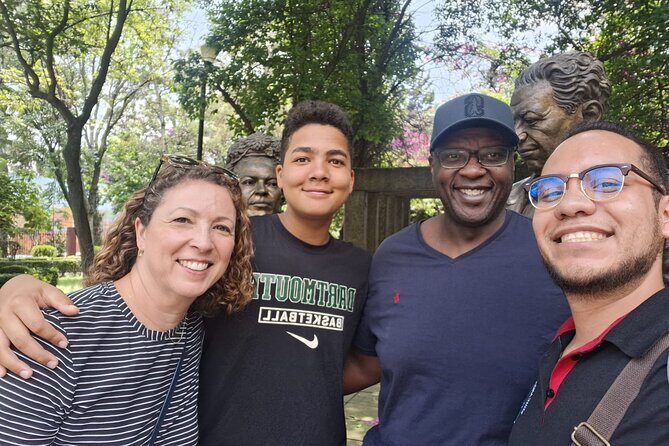
Coyoacán has a way of feeling both old and lived-in. You see the layered city right in front of you: pre-Hispanic beginnings, then the Spanish-era push to evangelize, and later the political and artistic waves people associate with Mexico City.
What I like about the tour is how it uses walking distance to do the heavy lifting. Instead of long gaps, you’re learning at each stop, with the story progressing from early foundations to Spanish influence, and finally to Trotsky’s dramatic years in Mexico.
And yes, the location choice matters. Ending at Trotsky’s House Museum means you finish on a clear “why it matters” moment, not on a vague stop that leaves you needing your own follow-up research.
You can also read our reviews of more guided tours in Mexico City
Price and timing: the value behind the $77.67 ticket
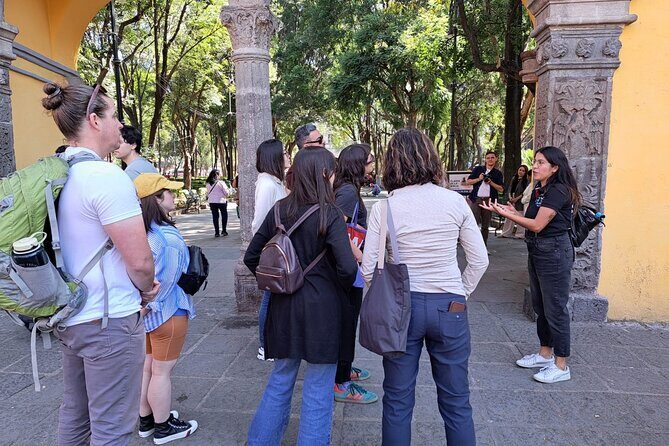
At $77.67 per person for about 2 hours 15 minutes, this tour sits in the “reasonable day out” category for Mexico City. The key value is not only the guide—it’s that tickets are included for the major paid parts, so you don’t have to track what costs extra.
You’ll also appreciate the duration. Two-plus hours is long enough to learn and still short enough to keep your afternoon open. That’s handy if you’re pairing this with other Coyoacán favorites or exploring Frida Kahlo–related sights later on your own time.
If you’re traveling with limited energy, the pacing is built around stops that last roughly 15 to 25 minutes each, plus one longer museum segment. You won’t be stuck in a single location for the entire experience.
Meeting up in Coyoacán: what your morning walk looks like
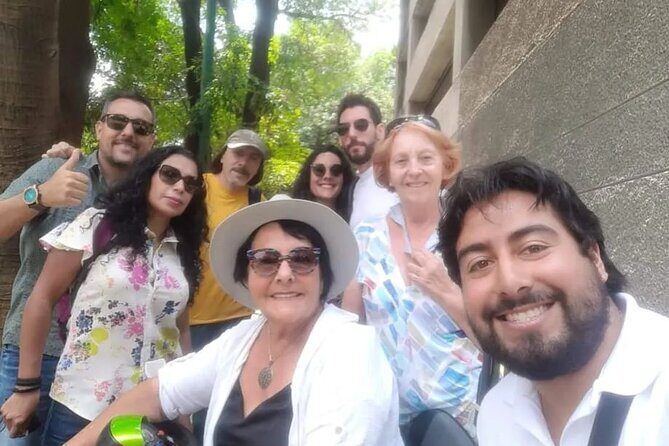
You start at Fuente de los Coyotes in Parque Centenario, Coyoacán. The ending point is León Trotsky’s House Museum on Av. Río Churubusco, in Del Carmen, Coyoacán.
This is a practical setup for two reasons. First, it keeps the whole outing in one neighborhood, so you’re not spending your time zigzagging across the city. Second, it ends at the museum, which is an easy landmark to build your next plan around.
The tour uses a mobile ticket, and it’s offered in English. Service animals are allowed, and it’s listed as near public transportation, which matters in a city where the “right street” can save real time.
With a maximum of 25 travelers, expect a group size that stays conversational. It’s not so large that your questions vanish into the crowd.
Stop 1: Fuente de los Coyotes and Coyoacán’s pre-Hispanic roots
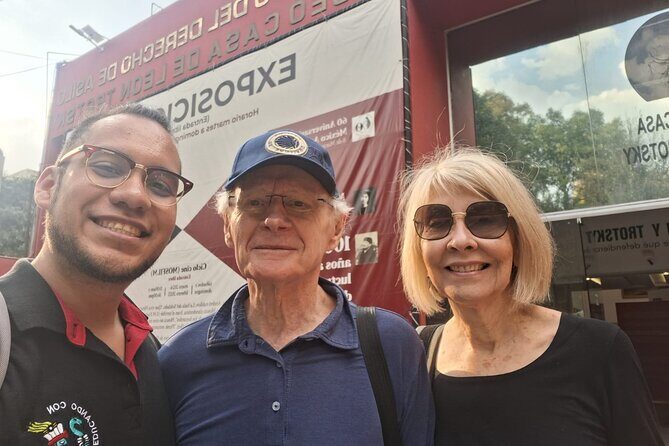
The tour begins at Fuente de los Coyotes, and you’ll get an introduction to why Coyoacán mattered since pre-Hispanic times. This isn’t a random fountain photo stop. It’s the “set the stage” moment, meant to give you a lens for everything that comes next.
The stop is about 15 minutes, with admission listed as free for this point. Even if you’ve visited Mexico City’s big attractions before, this kind of opener helps. You start the walk knowing that this neighborhood wasn’t created from scratch during the Spanish period.
Practical tip: show up a few minutes early. Starting on time keeps the whole route flowing, especially since you’ll be walking between several points and then into a museum at the end.
Stop 2: Parish of St. John the Baptist and the mechanics of evangelization
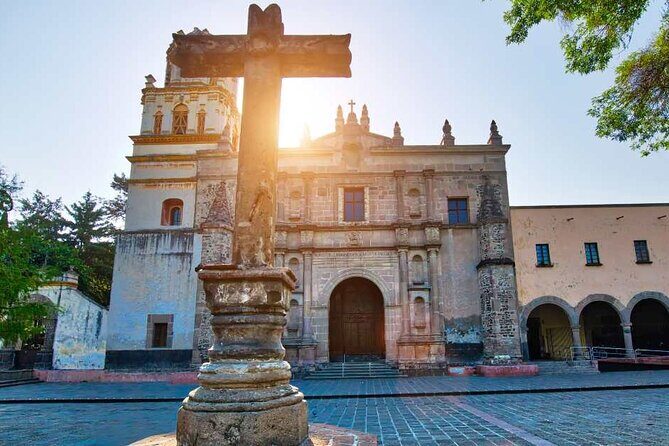
Next comes the Parish of St. John the Baptist, where you’ll enter and learn about the process of evangelization of indigenous people. This is a crucial stop because it connects religion to the real historical process of how societies were reshaped.
Plan on about 20 minutes here, and this one is marked with admission included. That inclusion matters because you get inside the space as part of the guided route, rather than just viewing it from outside.
What you’ll likely enjoy is the way the guide ties architecture and story together. One strong theme you’ll hear is that colonization wasn’t only politics and conquest. It also ran through religion, with a focus on conversion and control.
One consideration: if religious history is not your thing, you might find this the most “information-heavy” part. Still, it’s also the best stop for understanding why the next churches look the way they do.
You can also read our reviews of more museum experiences in Mexico City



Stop 3: Coyoacán town hall for civic life and power
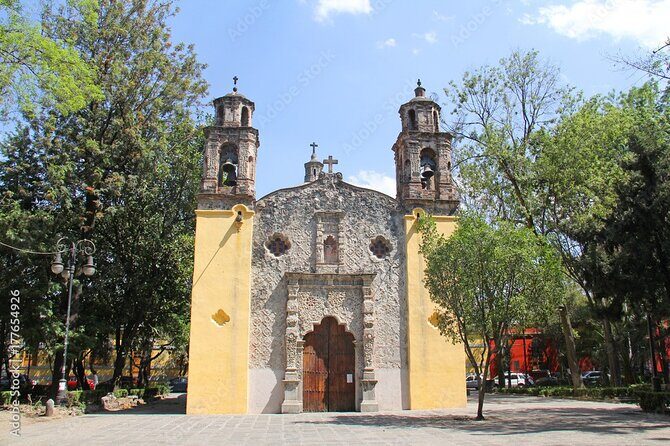
After the parish, the tour moves into Coyoacán at the town hall, with about 15 minutes on this stop and free admission listed.
This is the kind of place that helps you connect the dots between the old neighborhood story and the modern civic identity. You’re looking at local institutions after learning about colonial-era power. That contrast is useful.
I like this stop because it keeps the tour grounded in community life. Coyoacán isn’t just a “past museum.” It’s a functioning neighborhood, and the guide’s explanations can help you see why that matters.
Since it’s a short stop, treat it as a quick orientation checkpoint. If your guide offers time for questions, ask how the colonial timeline connects to what you’re seeing in the streets today.
Stop 4: Church of the Conception in La Conchita and Cortés’ red-house corner
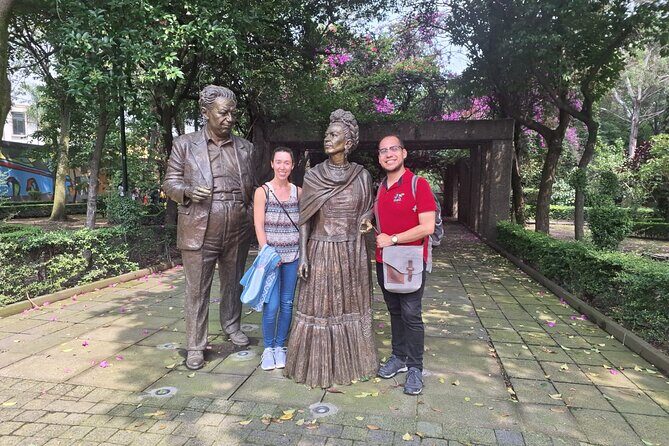
Now you head to La Conchita for the Church of the Conception, built in the 16th century by direct order of Hernán Cortés. You’ll also learn about the red house on the corner of the square, tying the landmark buildings to the people behind them.
This stop lasts about 20 minutes, with admission listed as free. The value here is that you’re seeing a Spanish-era religious site with a specific political origin story, not a generic colonial landmark.
You’ll probably pick up why guides like to talk about Cortés’ relationships with different indigenous groups. One itinerary narrative you may hear connects his alliances and strategies with the anti-Mexica peoples of the region. It’s the kind of context that makes the past feel less like a textbook diagram.
Small reality check: this stop is about learning the story, not about lingering for architectural sketching. If you love slow museum pacing, this is still fine—just know the route keeps moving.
Stop 5: Coyoacán Market and local food you can actually try
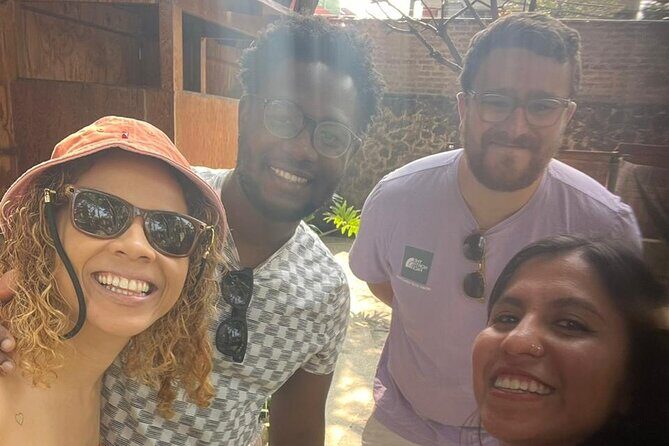
Next is the Coyoacán Market, scheduled for about 25 minutes and marked as free admission. This is where the tour shifts from monuments to daily life.
You’ll have a chance to try gastronomy if you want. In at least some guided experiences, the market tasting includes options like fried grasshoppers, which can feel like a stunt until you realize it’s just local snack culture.
Even if you don’t eat anything, I think this stop is worth it. Markets are where you learn how people live now, not only how they lived centuries ago. You’ll see what’s abundant, what’s seasonal, and what locals snack on when the day is normal.
Practical tip: keep your money accessible and your walking shoes on. Market time can mean more walking in tighter spaces, and the tour stays active rather than turning into a long sit-down pause.
Stop 6: León Trotsky’s House Museum for the political asylum story in rooms
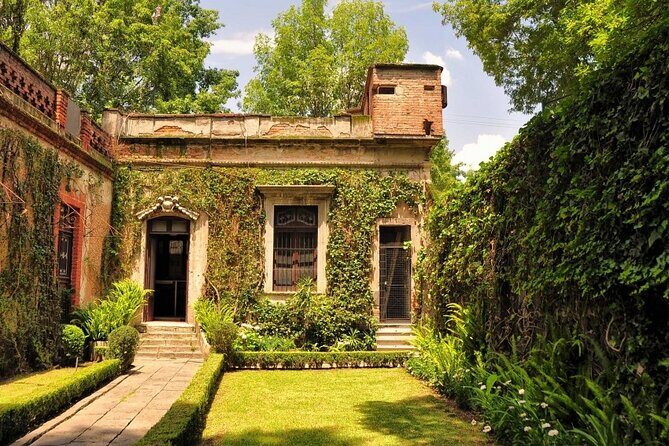
The final stop is Museo Casa de León Trotsky, with about 40 minutes and admission included. This is the tour’s big finishing act, and the way it’s staged helps you focus: you walk through the rooms and hear the story of his stay in Mexico in detail.
This is not just a biography stop. The most praised part of the experience is how guides connect Mexico City to Trotsky’s dramatic timeline, including the tension around assassination attempts. You’re learning how asylum, politics, and personal safety collided in the same walls.
What makes this museum moment work inside the context of the full tour is that it links Coyoacán’s earlier layers to later global politics. You start with indigenous history and Spanish influence, then you end with 20th-century ideological conflict playing out on a Mexico City stage.
If you’re a Frida Kahlo fan, you should know what this tour isn’t. One recurring comparison you might hear in the same neighborhood is that this route is more Trotsky-focused than Frida-focused. If your priority is Trotsky and the surrounding history, that clarity makes it feel like a smarter use of limited vacation time.
What you’ll remember after the walking tour ends
This kind of guided route leaves you with more than photos. You walk away with a mental map of Coyoacán’s story arc.
You’ll also likely remember the guide’s approach. Many of the strongest notes mention guides who use clear explanations plus humor, and who answer questions in a way that makes the city feel less overwhelming. Names that come up in the experience include Ana, Rodrigo, Delta, Jorge, and Jesus, with Delta especially associated with detailed Q&A and helpful flexibility on pacing.
And yes, the market snack memory tends to stick. Even if you skip eating, the fact that there’s food involved makes the stop feel real, not staged.
Who should book this tour, and who might skip it
This tour is ideal if you want a guided neighborhood walk rather than a long museum day. You’ll get history and architecture, plus a living stop at the market, and then you finish with a focused museum visit that anchors the whole experience.
It’s also a good match if you enjoy political history alongside place-based travel. Trotsky’s House Museum can be a powerful capstone when you’re already learning about how Coyoacán has shifted through major eras.
You might consider something else if you need a more time-heavy museum itinerary. This is structured for momentum, not for lingering. If you’re the type who wants to sit and read for long stretches, you may find the schedule brisk.
Should you book this guided Coyoacán and Trotsky experience?
Yes—if your goal is to understand Coyoacán quickly and meaningfully, this tour is a strong choice. The value is in the pairing: churches and civic spaces that explain how the neighborhood formed, plus Trotsky’s House Museum that brings the story into the 20th century.
Book it especially if you want an English tour with tickets included for the key paid moments, and you like the idea of learning as you walk. Plan to come hungry enough for the market stop, and bring questions—you’ll get the most out of it when you engage.
If you’re on a short Mexico City trip, this is also a smart anchor. It’s compact, it stays in one area, and it ends at a destination you’ll want to remember long after the walk.
FAQ
How long is the guided tour?
The tour runs for about 2 hours 15 minutes.
How much does the tour cost?
The price is $77.67 per person.
What language is the tour offered in?
The tour is offered in English.
What is included in the price?
The tour includes a guide and tickets.
Are admission tickets included for all stops?
Admission is listed as free for several stops, and admission is included for the Parish of St. John the Baptist and the León Trotsky Museum stop.
Where does the tour start?
It starts at Fuente de los Coyotes in Parque Centenario, Coyoacán.
Where does the tour end?
It ends at León Trotsky’s House Museum at Av. Río Churubusco 410, Del Carmen, Coyoacán.
Is there a mobile ticket?
Yes, the tour uses a mobile ticket.
Is there a limit on group size?
Yes, the tour has a maximum of 25 travelers.
Is lunch included?
No. Lunch is not included.