REVIEW · PUEBLA CITY
City walking tour in Puebla (private tour)
Book on Viator →Operated by Unlimited Experiences · Bookable on Viator
Puebla’s best highlights, on foot. This private walking tour is a smart way to see Puebla’s Historic Center without feeling herded, and I really like the private flexibility to shape the pace around your interests plus the live guide commentary as you move between major sights. One possible drawback: a past group felt one guide could use more training for engagement, so if you want lots of punchy storytelling, start asking questions right away.
At $69 per person for about 3 hours, the value adds up fast because key admissions are handled for you, and you also get snacks, including a tortita de Santa Clara and a camote poblano—plus a tasting of Puebla wines and liquors. It’s also booked fairly often, meaning slots can disappear if you wait too long.
Logistics are simple: the tour meets at the Biblioteca Palafoxiana (Av 5 Ote 5, Centro histórico) and ends at La Pasita 1 (Av 5 Ote 602, Centro histórico). Hotel pickup exists, but only from select hotels, so if you’re not staying nearby you’ll likely rely on public transport.
In This Review
- Key things to know before you go
- Puebla private walking tour: price, time, and what private really buys you
- Start at Biblioteca Palafoxiana: Puebla’s first public library feeling
- Puebla Cathedral and its towering Renaissance-Baroque mix
- The Zócalo de Puebla: your photo stop that turns into a rest break
- Capilla del Rosario at Santo Domingo: Baroque gold and detail overload (in a good way)
- Calle de los Dulces: where the tour turns into sweets and souvenirs
- Barrio del Artista: cobblestones, workshops, and a slower pace
- Mercado El Parián: Talavera, textiles, toys, and real shopping time
- Callejón de los Sapos: antiques, color, and an easy wander
- Snacks and Puebla wine tasting: included, and actually worth planning around
- Who this private Puebla tour fits best (and who should tweak expectations)
- Should you book this private walking tour of Puebla?
- FAQ
- How long is the private walking tour in Puebla?
- How much does the tour cost?
- Is the tour offered in English?
- Is this a private tour?
- What does the tour include for admissions?
- What snacks and drinks are included?
- Where do I meet and where does the tour end?
- What’s the cancellation policy for a full refund?
Key things to know before you go
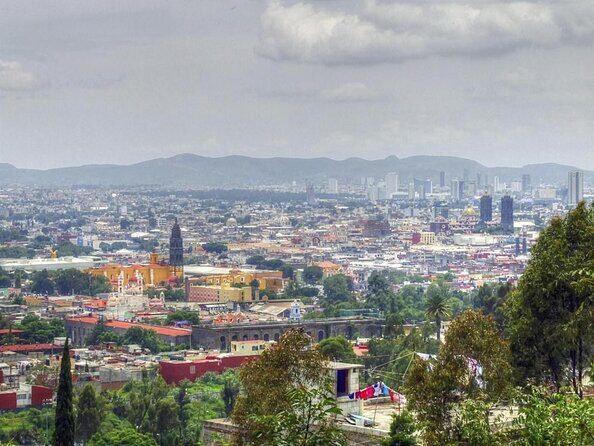
- Private group experience: It’s just your group, not a mixed crowd.
- English live guide commentary: The tour is offered in English.
- Admissions included where it matters: Biblioteca Palafoxiana, Capilla del Rosario, and the sweet-street stop.
- Food and drink included: You’ll get typical sweets plus a tasting of Puebla wines and liquors.
- Historic Center walk with variety: Big monuments, quieter art neighborhoods, and markets all on one route.
Puebla private walking tour: price, time, and what private really buys you
This is a 3-hour private city walking tour in Puebla’s Historic Center, for $69 per person (English guide, mobile ticket). “Private” is the big differentiator here. Instead of timing your photos to a larger group, you can slow down for details that catch your eye—whether that’s architecture, religious art, or the food.
Value is where this tour surprised me in the best way. It’s not just “see the sights and good luck.” You get admission coverage for major stops, and you also get an organized tasting moment. That matters in Puebla because the Historic Center is full of things that are worth seeing, but tickets and tastings add up quickly if you do everything on your own.
The tour is also designed for first-timers. You start with a top cultural anchor (the Palafoxiana Library), then move to the Cathedral and Zócalo, hit the Rosary Chapel (Baroque showpiece), and finish with streets, artisan areas, and a market vibe. You’ll get a rounded sense of Puebla in one loop.
One thing to consider: because it’s a walking tour, comfortable shoes help. And if you’re sensitive to rain days, keep a flexible mindset. In one reported case, a rain storm led to cancellation and an offered next-day option.
You can also read our reviews of more walking tours in Puebla City

Start at Biblioteca Palafoxiana: Puebla’s first public library feeling
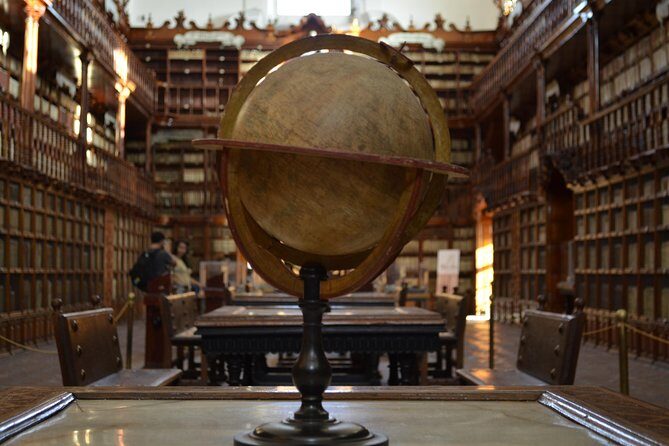
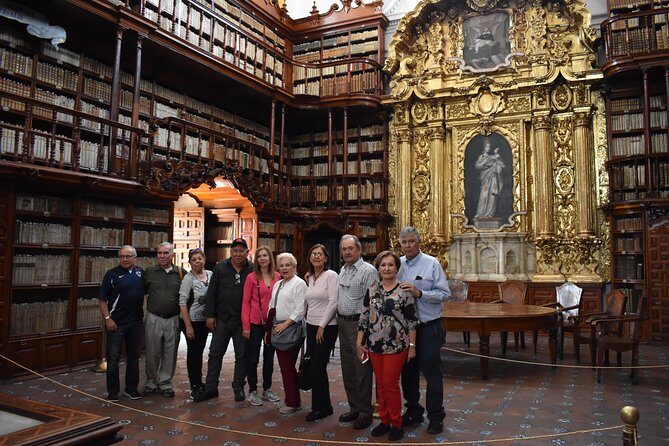
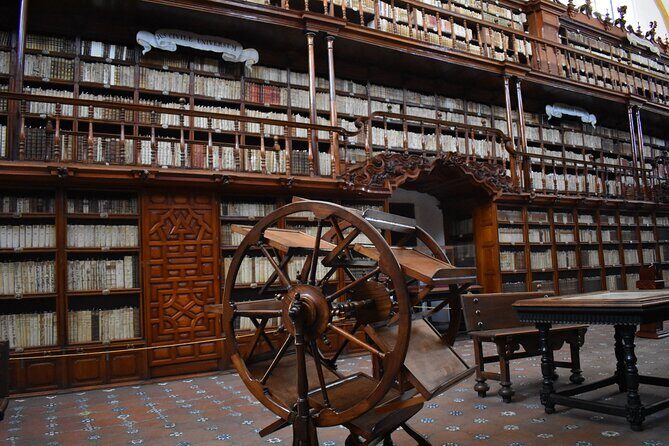
Your tour begins at Biblioteca Palafoxiana, in the heart of Puebla’s Historic Center at Av 5 Ote 5. This library is special for a simple reason: it’s often described as the first public library in the Americas, founded in 1646 by Bishop Juan de Palafox y Mendoza.
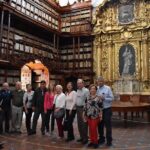
What you’ll notice immediately is the building itself. The Baroque architecture, carved wooden bookcases, and the altar dedicated to the Virgin of Wisdom make the place feel more like a work of art than a storage room for old books. This is also a UNESCO-recognized site in the Memory of the World program, and the library holds more than 45,000 books and ancient manuscripts, including items that are centuries old.
You typically get about 20 minutes here, and because admission is included, you can focus on the experience rather than paperwork. If you like history that feels physical—woodwork, stone, and symbolism—this stop is one of the strongest ways to start. It sets the tone for the rest of the route: Puebla’s identity is tied to art, learning, and faith, not just scenery.
Puebla Cathedral and its towering Renaissance-Baroque mix
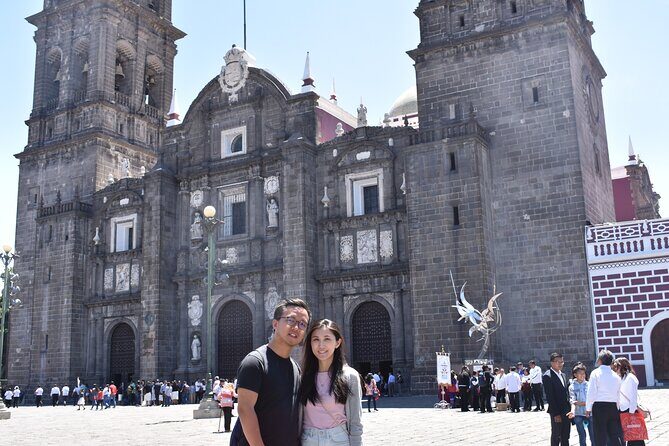
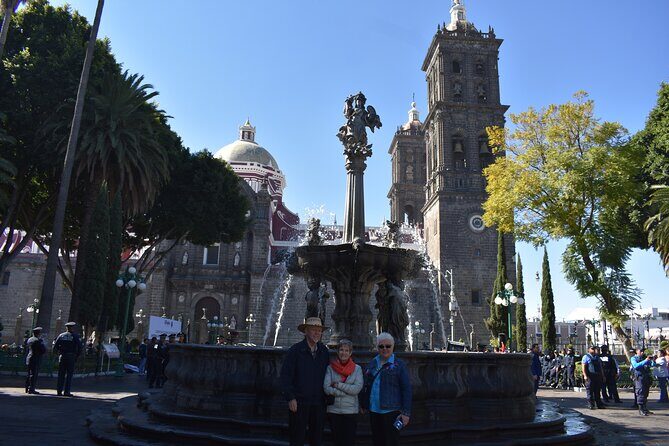
Next up is Puebla Cathedral, right by the Zócalo. This one is big, and not just because of size. Construction spans the 16th and 17th centuries, with a blend of Renaissance and Baroque elements. The standout feature is the two main towers, noted as the tallest in Latin America—a detail you’ll want to see in person rather than on a photo screen.
Inside, the Cathedral is known for artistic detail across altars and side chapels. The main altar is attributed to Manuel Tolsá, and the side chapels include sculptures and paintings that reflect the colonial era’s devotion and artistic ambition.
Time here is about 30 minutes, and the admission is free (so you’re not paying extra to get in). That’s a nice touch for value and planning. Even if you’re not a cathedral person, the building’s scale and the guide’s explanations can help you understand what you’re actually looking at: style, symbolism, and how Puebla’s Catholic identity took shape over centuries.
The Zócalo de Puebla: your photo stop that turns into a rest break
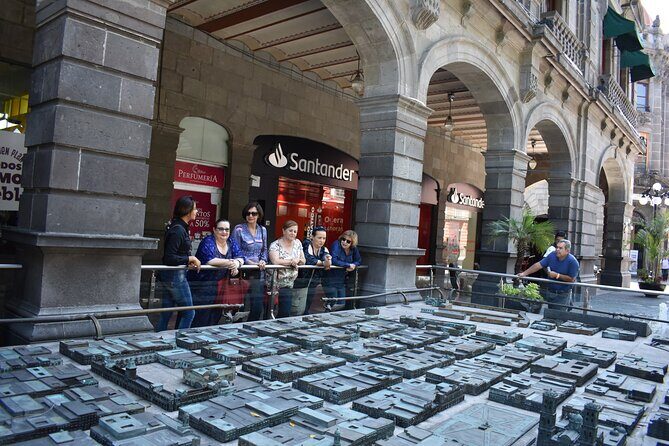
You’ll spend time at the Zócalo de Puebla, the city’s central square surrounded by colonial-era buildings, arcades, gardens, fountains, and benches. It’s also a UNESCO-listed historic center core, and it functions like a living hub—part viewpoint, part hangout, part starting point for exploring nearby streets.
This stop is about 20 minutes, and admission is free. I like it because it breaks up the more intense interiors with an outdoor pause. You can regroup, grab water, and plan your next photo moment without the pressure of a ticket line.
The Zócalo also makes sense for food. With cafés and traditional spots around the square, you can orient yourself to what Puebla tastes like. Even if you won’t stop for a full meal during the tour, you’ll walk away knowing what area to return to when hunger hits.
Capilla del Rosario at Santo Domingo: Baroque gold and detail overload (in a good way)
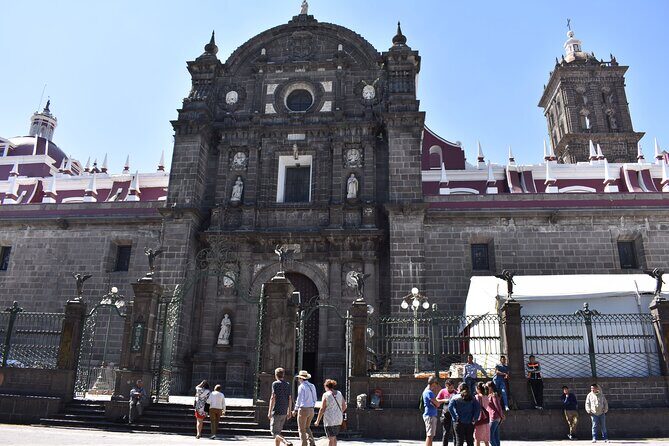
Then you’ll hit one of Puebla’s headline attractions: Capilla del Rosario, part of the Templo de Santo Domingo. If you enjoy Baroque art, this is where the tour earns its keep.
Built in the 17th century, the chapel is famous for intense decoration—often described as the Eighth Wonder of the World. The key is not just gold and ornament. It’s the way materials and symbols work together: gold, Talavera pottery, stucco, and a dense layer of angels, floral motifs, and religious imagery that can feel almost musical in its repetition.
You’ll also want to look at the dome. It’s described as representing the celestial heavens, so you get a sense of vertical storytelling: your eyes move upward, and the decoration pulls you along.
You get around 30 minutes, and admission is included. This time window is important. Enough time to look slowly, not enough time to turn it into a stress test. If you like taking in details, ask your guide to point out a couple of specific elements you might otherwise miss—like the way Talavera patterns are integrated into the overall religious artwork.



Calle de los Dulces: where the tour turns into sweets and souvenirs
After the chapel’s visual intensity, the route shifts to taste at Calle de los Dulces (also known as 6 Oriente). This is one of Puebla’s iconic streets for sweets and traditional treats, and it’s one of the most practical “tour value” stops on the whole itinerary.
Here, you can look for classic Puebla favorites such as camotes (often served as candied sweet potatoes), tortitas de Santa Clara, muéganos, and macarrones poblanos. Your guide isn’t just walking past storefronts—you’ll get a tasting, with snacks that include tortita de Santa Clara and camote poblano (typical sweets tasting).
Admission is listed as included for this stop, which matters because it turns the street into an organized tasting moment, not just a self-guided candy hunt. Even if you don’t end up buying souvenirs, you’ll leave with a clearer idea of what Puebla means by dessert: not one random pastry, but a set of generations-old favorites.
Barrio del Artista: cobblestones, workshops, and a slower pace
Next is Barrio del Artista, a Historic Center area known for art workshops and local creative work. You’ll move through cobblestone streets and see artists working and displaying work in real time, which is a different kind of Puebla experience than the major monuments.
This stop is shorter—about 15 minutes—and admission is free. That makes it a good add-on rather than an all-day commitment. You’re not expecting an art museum. Instead, think of it as an opportunity to notice Puebla’s maker culture: paintings, sculptures, and the feeling that art isn’t limited to galleries behind glass.
If you’re a person who likes to buy locally made items, this is the time to look around and see what draws your eye. If you’re not shopping, it’s still worth it for the atmosphere and for the chance to ask artists about their process—when your guide can help translate context.
Mercado El Parián: Talavera, textiles, toys, and real shopping time
Then you’ll reach Mercado El Parián, another free stop that works well in a walking-tour format: it gives you a quick taste of Puebla’s artisan trade without locking you into a long market session.
El Parián is known for traditional crafts, including Talavera pottery, embroidered textiles, wooden toys, and clay items. The best part of a market stop on a guided route is that you don’t just see products—you can ask what’s handmade, what’s traditional, and what the materials mean.
You’ll have about 20 minutes here. That’s enough time to browse and pick up a small souvenir without turning the tour into a shopping marathon. If your priorities are food and photos, you might treat this as a scouting stop, then return later on your own.
Callejón de los Sapos: antiques, color, and an easy wander
Your final sightseeing stop is Callejón de los Sapos, a cobblestone alley known for a bohemian feel and a classical antiques market. This is where you shift from artisan crafts to older, collectible pieces—things like vintage furniture and unique items that you can’t always find elsewhere.
The alley is also known for live music, art galleries, and restaurants. The tone here is more relaxed, so it’s a nice capstone after Cathedral, chapel, sweets, and markets. You’ll have about 20 minutes, and admission is free.
I’d treat this stop as your chance to slow down. If you’ve been rushing to keep up, this is a place to take photos, browse window displays, and grab a drink if you want something cold after walking. It’s also an easy place to pick a final souvenir type: not necessarily “traditional craft,” but something characterful and old-school.
Snacks and Puebla wine tasting: included, and actually worth planning around
One reason this tour feels like more than a sightseeing loop is the food-and-drink setup. You get snacks that include a tasting of typical sweets: tortita de Santa Clara and camote poblano. In addition, the tour includes alcoholic beverages with a tasting of Puebla wines and liquors.
For your decision-making, this is huge. When a tour includes tastings, it’s usually because the timing is built around it—so you’re not waiting in line for a shop later. It also helps you try Puebla flavors while someone explains what you’re eating, and (in this case) adds a little context to local wine and liquor culture.
Two practical notes:
- If you’re sensitive to alcohol, eat the sweets first and go slow. You’ll have a walk right after, and there’s no reason to rush.
- If you’re not into alcohol, you can still enjoy the sweets. Just plan to pace yourself so you stay comfortable for the full route.
Who this private Puebla tour fits best (and who should tweak expectations)
This tour is a strong match if you:
- want a first-time Puebla orientation that covers the core sights fast (library, Cathedral, Zócalo, Rosary Chapel)
- like architecture plus food, not just one or the other
- prefer your day to be private and adjustable instead of tightly timed with strangers
- want an English guide who can explain what you’re seeing while you walk
You might want to adjust expectations if you:
- expect a very high-energy performance style every minute. One guide was described as needing additional training for better tourist engagement, so if you want dramatic storytelling, ask your questions early.
- are traveling with mobility constraints. The tour is walking-based, and while one past guest who used a walker reported that their guide was helpful, the itinerary still involves streets and moving between multiple locations.
If you’re choosing a day where Puebla weather might be unpredictable, keep a backup mindset. In one case, a rain storm canceled the tour, and the operator offered a next-day option.
Should you book this private walking tour of Puebla?
I’d book it if you want a well-paced Historic Center loop that mixes major monuments with hands-on Puebla culture—library, Baroque chapel, sweets, artisan neighborhoods, and markets—without making you plan admissions and tastings yourself.
If your main goal is only the big-photo landmarks and you dislike walking, you might feel like it’s too much in one go. But for most visitors who want their Puebla day to feel complete, this private format makes the trip easier and more personal.
If you can, bring curiosity. A tour like this gets better when you ask simple questions: what to look for in the Baroque details, which sweets are most representative, and how Puebla’s mix of religion and artisanship shows up in the street scene.
FAQ
How long is the private walking tour in Puebla?
The tour lasts about 3 hours.
How much does the tour cost?
It costs $69.00 per person.
Is the tour offered in English?
Yes, the tour is offered in English.
Is this a private tour?
Yes. It’s listed as a private tour/activity, meaning only your group participates.
What does the tour include for admissions?
Admission ticket access is included for Biblioteca Palafoxiana and the Capilla del Rosario (Templo de Santo Domingo). Admission is also included for La Calle de los Dulces.
What snacks and drinks are included?
You’ll get snacks including a tasting of typical sweets, with a tortita de Santa Clara and camote poblano. The tour also includes a tasting of Puebla wines and liquors.
Where do I meet and where does the tour end?
You meet at Biblioteca Palafoxiana, Av 5 Ote 5, Centro histórico de Puebla and end at La Pasita 1, Av 5 Ote 602, Centro histórico de Puebla.
What’s the cancellation policy for a full refund?
Free cancellation is available up to 24 hours in advance of the experience start time for a full refund.