REVIEW · CABO SAN LUCAS
Small-Group Whale Watching Zodiac Boat Cruise in Cabo San Lucas
Book on Viator →Operated by Cabo Expeditions · Bookable on Viator
Whale spotting off Cabo can be pure chaos—in a good way. This small-group Zodiac trip is built for getting you out quickly for possible humpbacks, grays, sperm whales, dolphins, and even orcas, with a marine biologist on board to explain what you’re seeing. I love that it’s set up as a fast, intimate ride (so you’re not stuck behind a crowd for an hour), and I love the on-water learning that turns random sightings into something you can actually understand. One possible drawback: the ride can feel bumpy if the ocean is rough, and your exact boat crowding can vary—so it’s smart to ask how many passengers you’ll have on your sailing.
You’ll also get a classic Cabo photo moment with a brief stop by El Arco (the Arch at Land’s End), then head out toward the Sea of Cortez and/or Pacific side depending on conditions. I like that the trip ends back at the meeting point, which keeps the day from turning into a shuttle marathon. If you’re hoping for a super sedate cruise, this one isn’t it—Zodiacs are sporty, by design, and you’ll want to hold onto your hat and stay steady.
In This Review
- Key highlights to plan around
- Cabo Zodiac whale watching: what makes this one worth your time
- Price and fees: $85 plus one not-so-hidden line item
- Where you meet: La Terminal de CaboMarina (and what not to expect)
- Stop 1: El Arco and Land’s End in 10 minutes
- The main outing: how you’ll search for whales (and what you can spot)
- What “close” often looks like
- The marine biologist talk: why it actually helps your viewing
- Ride reality: Zodiacs are fast, and that affects comfort
- Small-group expectations: what the cap means in real life
- Wildlife on both sides: why your route can change
- What to bring (so you don’t waste whale time on “where’s my…”)
- Who this tour fits best (and who should choose another day)
- Private boat upgrade: when paying more changes the day
- Cabo Expeditions: what matters about the operator
- Should you book this Zodiac whale watching cruise in Cabo?
- FAQ
- How long is the Zodiac whale watching cruise in Cabo San Lucas?
- What does the tour cost, and are there extra fees?
- What kinds of whales might I see?
- How many people are on the boat?
- Where do I meet, and is hotel pickup included?
- Is the tour offered in English?
- Do you have a marine biologist onboard?
- Is this tour suitable for kids and families?
- What is the cancellation policy if weather is poor?
Key highlights to plan around
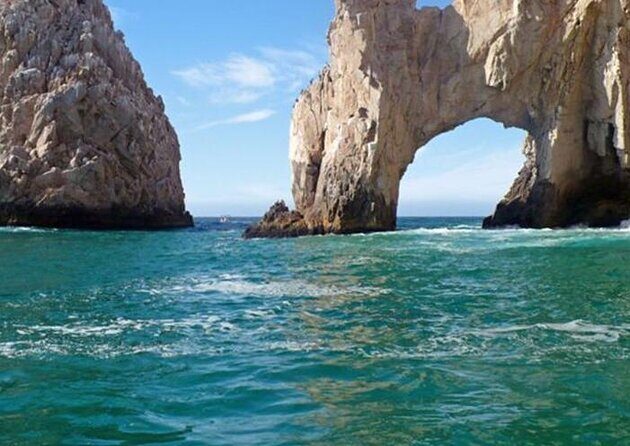
- El Arco photo stop: a quick 10-minute pass by Cabo’s most recognizable granite arch
- Fast Zodiac, small cap: sold as small-group (with the activity listing showing up to 13 travelers)
- On-board marine biologist: live talk about Baja geography and seasonal whale activity
- Photo-first chasing strategy: you’ll cover territory to set up close viewing opportunities
- Private upgrade available: if your group wants quieter, more controlled attention
Cabo Zodiac whale watching: what makes this one worth your time
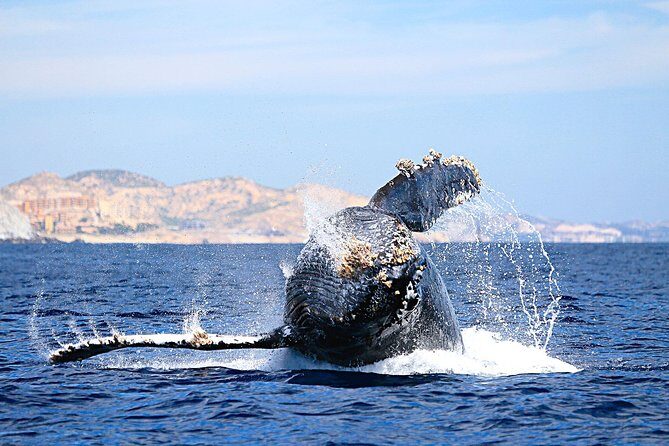
Cabo whale watching works when the crew is paying attention and the boat can move fast enough to meet whales where they surface. This tour is built around that idea: a small, speedy Zodiac plus a marine biologist onboard, so you’re not just watching—you’re learning what you’re looking at as you go.
The other reason I’d put this on your short list is how it fits into a “vacation day.” You’re not committing most of your day to transfers or long dock waits. You’re meeting at CaboMarina, doing the water time (about 2.5 hours), and getting back to the same area when you’re done.
You can also read our reviews of more boat tours in Cabo San Lucas
Price and fees: $85 plus one not-so-hidden line item
The base price is $85.00 per person for the tour, and it runs about 2 hours 30 minutes. Bottled water and a professional guide are included.
Two costs to factor in:
- A $5.00 per person dock and protected areas fee is listed as not included.
- Souvenir photos are optional and sold separately.
I like that the price is straightforward, but I’d still double-check your total before you show up, especially if you’re booking for a family.
Where you meet: La Terminal de CaboMarina (and what not to expect)
You start at La Terminal de CaboMarina de Cabo San Lucas, in front of the Breathless Hotel, El Medano. The end time also returns you to the meeting point (so plan for that if you’re thinking about where you’ll have lunch afterward).
Hotel pickup/drop-off is listed as not included, even though the general description you might read elsewhere sometimes sounds like drop-off at your hotel. In practice, treat the meeting point as your anchor. If your hotel is far from CaboMarina, you may want to arrange your own ride.
Stop 1: El Arco and Land’s End in 10 minutes
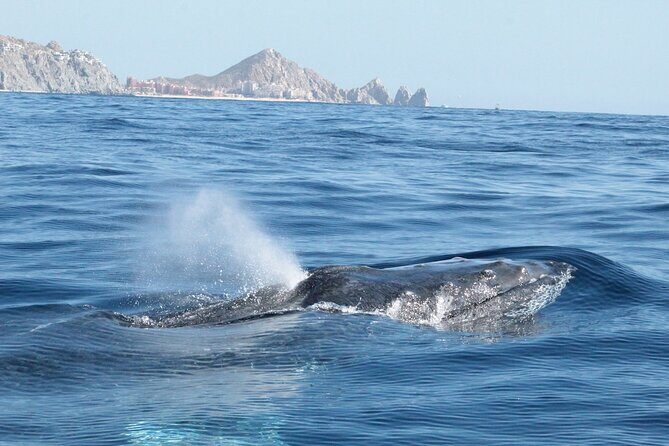
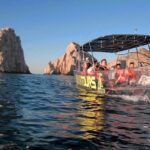
You’ll have a quick 10-minute stop at El Arco de Cabo San Lucas, the three-story granite arch that towers above the meeting point of the Pacific and the Sea of Cortez. It’s one of those places where the photos don’t feel “touristy”—they feel like you’re actually capturing the Baja peninsula’s shape and power.
What this stop does well is timing. It’s long enough to frame a few photos from the boat, but short enough that you don’t waste your best whale time waiting around. If El Arco is on your Cabo checklist, this is a clean, low-stress way to knock it out.
The main outing: how you’ll search for whales (and what you can spot)
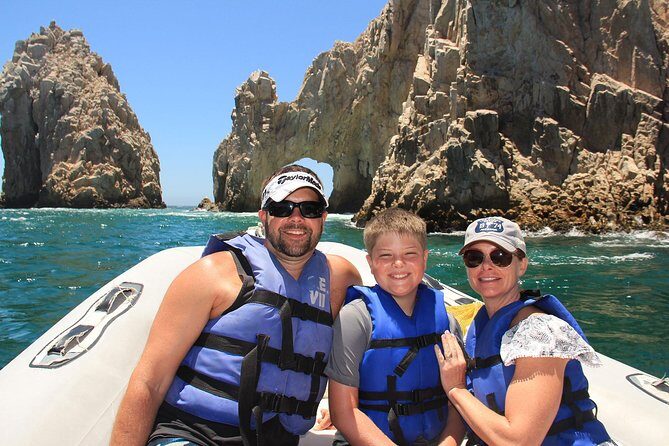
Once you’re on the water, your captain typically runs a plan that balances location with timing. Cabo can produce sightings on both sides, and this trip is designed to head out toward the Sea of Cortez or the Pacific side.
The species list you should keep in mind includes:
- Humpback whales
- Gray whales
- Sperm whales
- Orcas
- Dolphins
Blue whales are mentioned as an elusive possibility, and that matters because it sets expectations: whale watching is never a guarantee. Still, the crew’s job is to put you where whales are likely to surface, and the small Zodiac size helps keep you closer and more flexible than larger vessels.
You can also read our reviews of more whale watching tours in Cabo San Lucas
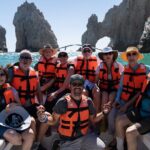
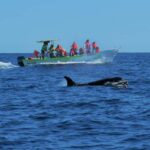
What “close” often looks like
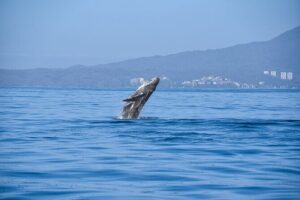
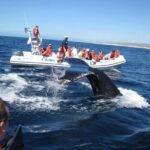
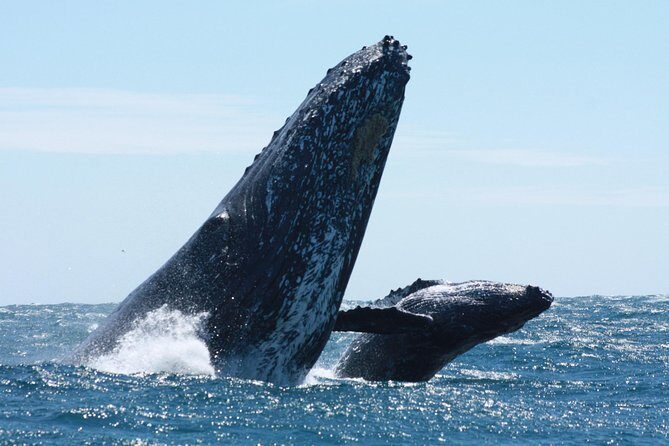
When whales are active, it’s not just a quick spout. People are often thrilled by behavior like breaching and fast movement at the surface. Your odds improve when the crew stays focused and moves smartly—because whales can change location quickly.
If you’re camera-ready, you’ll likely get more than one “that just happened” moment. This is exactly the kind of trip where your phone or camera stays busy for 90 minutes.
The marine biologist talk: why it actually helps your viewing
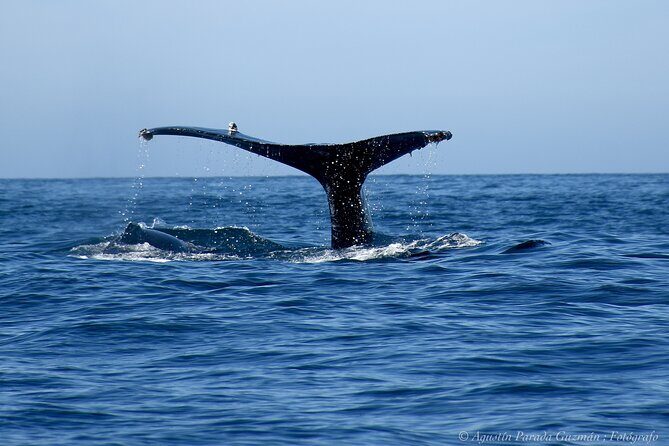
A marine biologist onboard isn’t just a nice-to-have. It changes the whole experience from watching water animals to understanding them.
On this tour, the biologist is there to cover:
- Cabo’s Baja geography
- How the Sea of Cortez supports whale species
- What’s happening seasonally and why whales show up where they do
- Answers to your questions while you’re on the water
Here’s what you should do with that: treat the talk as a live cheat sheet. If the biologist mentions a likely area, a behavior to watch for, or why one side might be better than the other, that’s your cue to adjust your stance and start scanning. Whale spotting becomes easier when you’re not guessing.
Ride reality: Zodiacs are fast, and that affects comfort
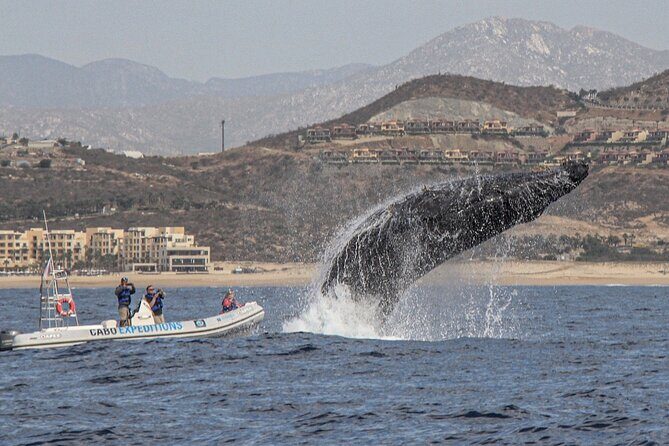
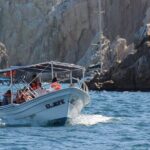
This is a small and speedy boat, which is a major reason the viewing can be so good. The tradeoff is that the ride can be bumpy when swells roll in. One of the most important practical points: this tour calls out that it may not be ideal for people with back issues, walking difficulties, and even pregnancy. If any of those apply to you, don’t assume the operator will improvise a smoother experience.
Also, wear gear like you mean it. On a fast Zodiac, things that would be fine on a calm day can become annoying—hat brim flying, phone slipping, and legs getting jostled. The best approach is simple: secure your essentials and keep your posture braced.
Small-group expectations: what the cap means in real life
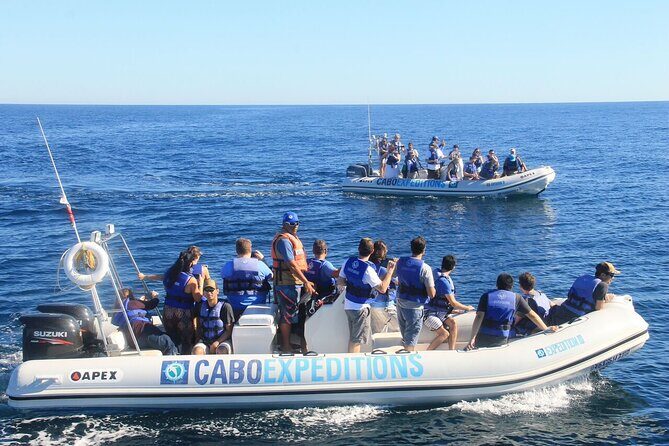
The tour is sold as small-group, with the activity showing up to 13 travelers. The boat description also frames the experience as max 15 people, and that’s the kind of difference that can matter when you’re trying to photograph a breach.
I won’t pretend crowding can never happen. But you can manage your own expectations. If whale viewing and photos are your top goal, ask one direct question before you board:
- How many passengers are on my exact boat sailing?
That’s the simplest way to reduce the chance you’ll end up in a packed situation.
Wildlife on both sides: why your route can change
Cabo isn’t one ocean—it’s a puzzle of water, currents, and meeting points. That’s why the itinerary mentions moving toward the Sea of Cortez or the Pacific side. From a viewer’s perspective, it means your captain will prioritize where whales are most likely, not where a map says they should be.
This also explains why some trips can feel like “all action” while others feel slower. It’s not necessarily that whales are absent. It can be that the day’s activity is concentrated in one area, and the crew is racing to reach it.
What to bring (so you don’t waste whale time on “where’s my…”)
The tour info specifically says to bring your camera, and I agree—that’s the one item that genuinely matters. Beyond that, think about basic sea-day needs:
- A phone or camera you can keep stable (strap helps)
- Sun protection (the ride is out on open water)
- Something to keep your hat in place if you wear one
- A light layer, because marine breezes can cool you off
One more tip: when you hear the captain or biologist say a whale is nearby, stop multitasking. Lock in your position for quick viewing and better shots.
Who this tour fits best (and who should choose another day)
This tour is a strong match if:
- You want a more active, close-up style of whale watching
- You like learning while you travel, not after the fact
- Your group can handle a small fast ride on a moving ocean surface
It’s less ideal if:
- You need a very smooth, slow cruise
- You have significant mobility or back limitations
- You’re traveling with concerns related to pregnancy (the tour notes restrictions)
If your goal is calm scenic sailing only, you might prefer a different Cabo water activity. But if your goal is whale time, the Zodiac format is the point.
Private boat upgrade: when paying more changes the day
There’s an upgrade option to a private boat tour just for you and your family and friends. If you’re booking as a group of friends, multi-generational family, or anyone who really wants quieter attention, private can be worth thinking about—not because it adds comfort on paper, but because it can reduce the “shared viewpoint” problem.
Private also makes sense if you’re traveling with someone who struggles with crowds or needs more personal explanation from the onboard guide.
Cabo Expeditions: what matters about the operator
The operator is Cabo Expeditions, and they’re positioned as a long-running choice in Cabo (over 20 years’ experience). That matters in whale watching because safety, timing, and knowing where to look aren’t learn-on-the-job skills.
You may see different captains and guides depending on your departure. Names that show up in the experience include Captain Baltazar, Katherine, Casey, Luis, Oscar, Rodrigo, Jose, Romel, Fernando, Julio, and Jaime. You won’t get to pick in most cases, but it’s a nice sign when many different crew members are praised for spotting whales and keeping things respectful on the water.
Should you book this Zodiac whale watching cruise in Cabo?
Book it if you want a small, fast, photo-focused whale watching outing with real interpretation from an onboard marine biologist—and you’re okay with a sporty ride when the ocean has attitude.
Skip (or switch to a calmer option) if you need smooth water comfort, you’re sensitive to bumpy movement, or you’re relying on a low-crowd guarantee without checking the exact passenger count for your sailing.
If you do book, do it with a camera ready and a flexible mindset. Cabo whale watching rewards the people who look up, listen fast, and stay steady when the boat starts moving toward the next surface.
FAQ
How long is the Zodiac whale watching cruise in Cabo San Lucas?
It runs for about 2 hours 30 minutes.
What does the tour cost, and are there extra fees?
The price is $85.00 per person. There is also a $5.00 per person dock and protected areas fee that is not included.
What kinds of whales might I see?
The tour highlights humpbacks, grey and sperm whales, orcas, and dolphins. Blue whales are mentioned as an elusive possibility depending on the season.
How many people are on the boat?
The tour is described as small-group with a maximum of 15 people. The activity listing also shows a maximum of 13 travelers.
Where do I meet, and is hotel pickup included?
You meet at La Terminal de CaboMarina de Cabo San Lucas, Puerto 0, in front of the Breathless Hotel in El Medano. Hotel pickup and drop-off are not included, and the activity ends back at the meeting point.
Is the tour offered in English?
Yes, the tour is offered in English.
Do you have a marine biologist onboard?
Yes. A marine biologist is onboard to explain wildlife and the surrounding geology and to answer questions.
Is this tour suitable for kids and families?
Children must be accompanied by an adult. The tour indicates that most travelers can participate.
What is the cancellation policy if weather is poor?
You can cancel up to 24 hours in advance for a full refund. The experience requires good weather, so if it’s canceled due to poor weather you’ll be offered a different date or a full refund.