REVIEW · PUEBLA CITY
Cholula Magical Twon on a Traditional Tram from Puebla
Book on Viator →Operated by Tip Tours & DMC · Bookable on Viator
Cholula hits fast, even on a short ride. This tram-style outing from Puebla is a simple way to see why Cholula is Mexico’s famous “magic town,” with big views, standout churches, and a long stretch of free time in the center. I especially love the pirámide de Cholula views from the tram route and the stop at Santa Maria Tonantzintla, where popular Baroque turns religious art into something intensely visual. One drawback to plan around: the narration may be pre-recorded (and not always live-guided), so the experience depends on which language you choose and how much you enjoy self-guided exploration.
You’ll cover the essentials without getting stuck in logistics. The pace works if you want a guided feel for the key sites, then breathing room to wander the Plaza de la Concordia area at your own speed. And because the group is capped at 30, it’s not a chaotic stampede.
The tour lasts about 5 hours and costs $7.70 per person, which is the main reason it’s so popular. Just remember: churches may be free, but food and the pyramid/archaeological area entry aren’t included, so you’ll want a little cash and a plan.
In This Review
- Key things you should know before you go
- From Puebla to Cholula by tram: why the pacing works
- The big first impression: pirámide de Cholula from the tram window
- Santa María Tonantzintla: popular Baroque, maize, and Indigenous angels
- San Francisco Acatepec: Talavera Poblana mosaics you can actually see
- Plaza de la Concordia and the Portal Guerrero arches
- Ex Convento de San Gabriel and the Capilla Real with 49 domes
- Casa del Caballero Águila and small art stops
- Your free time: pyramid visit options and Cholula food breaks
- Price and logistics: what you’re really paying for
- Comfort, audio language, and the group size limit
- Who should book this Cholula tram tour (and who might skip it)
- Should you book? My take on this Puebla to Cholula day
- FAQ
- How long is the Cholula Magical Town tram tour from Puebla?
- What is the price per person?
- Where does the tour start in Puebla?
- Where does the tour end?
- What is included in the tour price?
- Is food or drinks included?
- Is there a guide included?
- Are admissions included for the churches and the pyramid?
- Is hotel pickup and drop-off included?
- What requirements should I know about for clothing, fitness, and children?
Key things you should know before you go
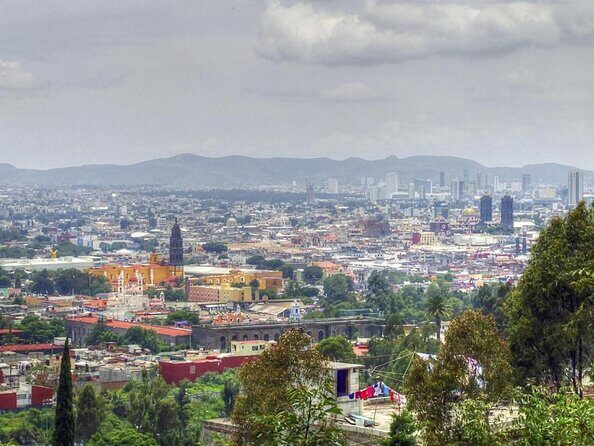
- Pirámide de Cholula views during the tram ride: You get the wow factor early, based on the size of the base.
- Santa María Tonantzintla is popular Baroque at full volume: maize themes and dark-skinned angels with Indigenous features.
- Talavera Poblana mosaics at San Francisco Acatepec: decorated by Puebla artisans between 1650 and 1750.
- Portal Guerrero and Ex Convento de San Gabriel in one neighborhood: arches, 16th-century roots, and serious architectural detail.
- Time in Plaza de la Concordia is the real payoff: shop, eat, and decide on a pyramid visit (entry extra).
- No hotel pickup and no food included: plan to start at the Puebla historic center and budget for meals.
From Puebla to Cholula by tram: why the pacing works
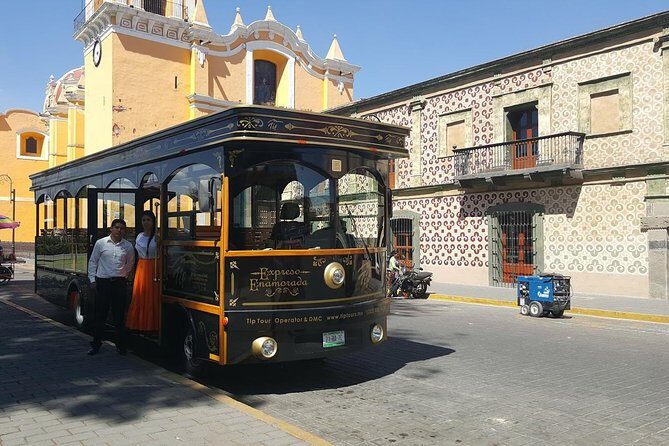
This is an easy, value-focused day: you meet in Puebla’s historic center and travel to Cholula by tram-style vehicle. The trip is designed around a loop feel, with quick stops at major church sites, then a longer stretch in the center where you can choose how much you want to walk.
Why I like this format for first-timers: it gives you context without asking you to drive, park, or play transit roulette. Even if you only have a half day in Puebla, you get to see the core Cholula scenes that people return for.
You’ll want to treat it as a mix of guided and self-guided time. The tram ride includes narration, but one real-world note is that the narration can be pre-recorded, so it may be tied to the language you selected.
You can also read our reviews of more tours and experiences in Puebla City.

The big first impression: pirámide de Cholula from the tram window
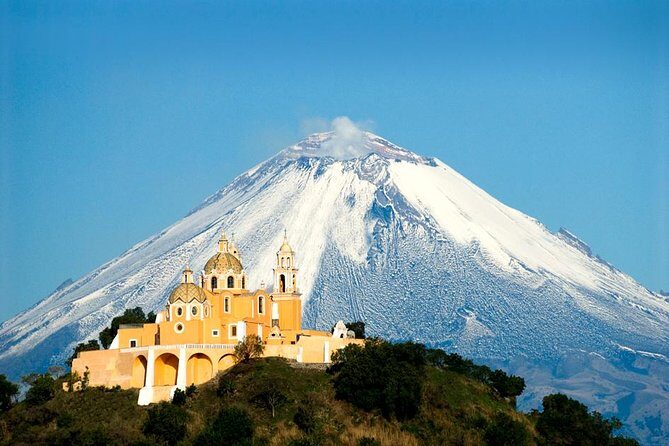
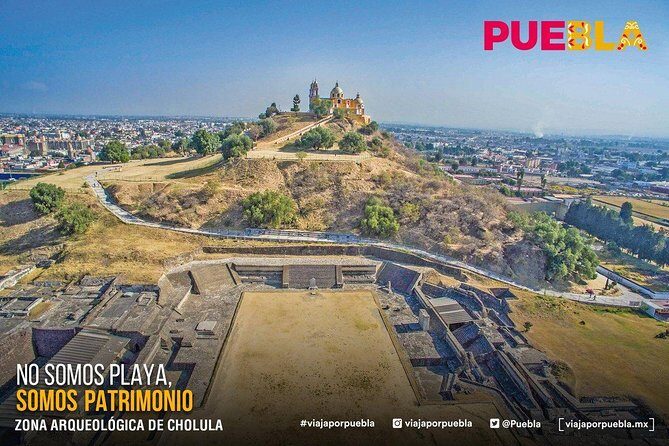
Cholula’s best-known feature is the Pirámide de Cholula, often described as the largest pyramid in the world by the size of its base. The tram route sets you up to see it in the “this is enormous” way, not just as a distant shape.
This matters because the pyramid is partly about scale and partly about perspective. From the tram, you get a sense for how Cholula grew around it, then you can decide later whether you want to go deeper into the site during your free time.
If you’re the type who likes order, this is also a good way to get oriented fast. You see the main landmark before the churches, so later details like domes, convent buildings, and the way the town is laid out make more sense.
Santa María Tonantzintla: popular Baroque, maize, and Indigenous angels
Stop one is where the day turns from sightseeing into wow-factor art.
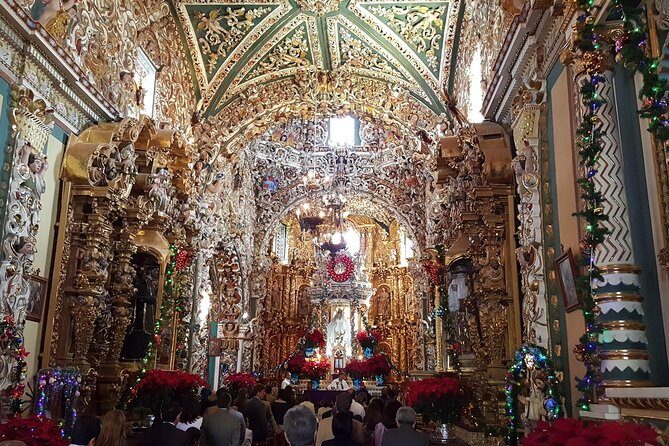
Templo de Santa Maria Tonantzintla is known for popular Baroque in its maximum expression. The church dates to the 16th century, and the name Tonantzintla connects to a pre-Hispanic idea tied to a mother goddess figure associated with protecting people and with corn/maize. In other words, this place is not just European-style decoration dropped into Mexico. It’s local symbolism blended into Catholic devotion.
What you’ll notice most is the sheer density of the decoration. The church is described as being adorned with maize motifs and angels with dark skin tones, with facial features that reflect Indigenous identity. That combination is exactly why people keep returning. It looks like faith, art, and local identity all working together.
Practical note: this stop is short on the schedule (about 10 minutes). That means you should go in with your eyes ready. Focus on the altar-area decorations and the main figure groupings first. If you want to buy souvenirs, keep it quick because the next stop is coming.
San Francisco Acatepec: Talavera Poblana mosaics you can actually see
The second church stop, Templo San Francisco Acatepec, leans into another side of Mexican Baroque: crafts at a high level of detail.
Between 1650 and 1750, the church was decorated by Puebla artisans using mosaics of Talavera Poblana. Talavera is known for its color and hand-finished character, and here it becomes a kind of visual “texture.” Instead of only thinking of ceramic as pottery, you start seeing it as an architectural surface.
This stop is also about 10 minutes. So again: prioritize. If you can, get close enough to see the mosaic work clearly, then step back to see how the colors read as a whole.
If you’re traveling with someone who loves art details, this is a great checkpoint. It’s one thing to hear the term Baroque; it’s another to watch how Puebla craft skills show up in a church setting.
Plaza de la Concordia and the Portal Guerrero arches
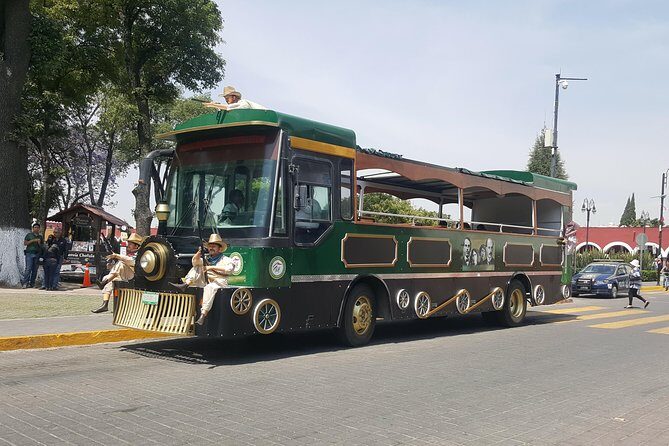
After the church stops, you’ll arrive at Plaza de la Concordia, which is where the trip becomes flexible. The schedule gives you about 4 hours for your own pace around the center.
One highlight you’ll pass through is Portal Guerrero, a long arcade with 46 half-point arches totaling about 170 meters. Even if you don’t read every sign, this is the kind of architecture that helps you feel the rhythm of the neighborhood. It’s also a nice place to pause in shade if the sun is intense.
From the plaza area, you can also visit several historic buildings, and this is where Cholula and Puebla’s shared colonial-era story feels real. Look for the cluster of sites tied to Ex Convento de San Gabriel, the Capilla Real, and nearby spaces used for art and small displays.



Ex Convento de San Gabriel and the Capilla Real with 49 domes
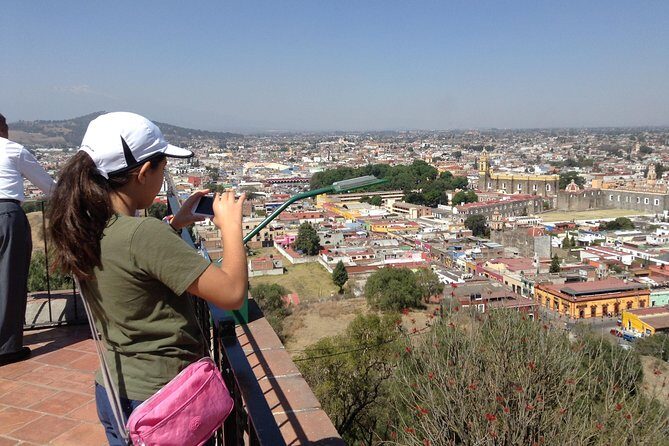
If you go only to one “inside” site during your free time, consider making it Ex Convento de San Gabriel and the related Capilla Real area.
Here’s what makes it special:
- The convent is tied to the idea of being built over older Indigenous temple ruins, described as the ruins of the Templo de Quetzalcóatl.
- Inside, you can see frescos dating to 1533 and paintings connected to the life of San Francisco de Asís.
- Next to it, the Capilla Real was built around 1540 for the purpose of instructing Indigenous people. The standout detail is the 49 domes.
This is one of those places where the details reward slow looking. If you’re short on energy, at least take a few minutes to scan the domes and then return your focus to whatever artwork is most visible from your entry route.
Also, don’t ignore the simple fact that it’s a convent complex: it changes the feel of your walk. You’re not just moving between churches; you’re stepping into a larger colonial-era setting.
Casa del Caballero Águila and small art stops
You may also have access to Casa del Caballero Aguila, which is described as hosting constantly changing art and painting displays.
Is it essential? Not always. But it’s a good way to break up a church-heavy day with something lighter. If your legs need a breather, pop in for a quick look and then head back out to the plaza.
This stop is also useful because it gives you something to do if the bigger sites are busy or if you’re simply in mood for a slower cultural moment rather than another interior with stairs and crowds.
Your free time: pyramid visit options and Cholula food breaks
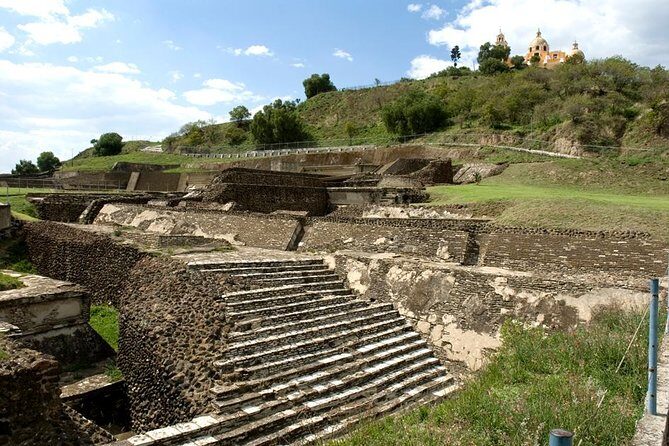
That final chunk of time is the smart part of the day. You can use it to shop, wander between churches, and decide whether to visit the archaeological zone/pyramid area.
Two points to keep in mind:
- The pyramid/archaeological entry is not included, so you’ll need to pay separately if you choose to go.
- Even if you skip the archaeological entry, the plaza and surrounding streets are still a great place for a relaxed afternoon walk and local snacks.
This is also when you can take the day from “see the sites” to “taste the town.” Cholula is famous for its food culture, and you’ll be in the right zone to find something easy without crisscrossing the whole city.
A small reality check: because your free time comes after multiple stops, you’ll want comfy shoes. You don’t need trekking boots, but you do need something that handles uneven sidewalks and the kind of walking that can add up faster than you expect.
Price and logistics: what you’re really paying for
At $7.70 per person for a ~5-hour outing, the value is mostly in transportation plus a structured route. The tour’s main included element is the tram ride through the town of Cholula.
Not included:
- Food and drinks
- Hotel pickup/drop-off
- A guide
The churches you stop at are listed with free admission tickets, while the pyramid/archaeological area entry is not included.
So is it cheap? Yes. Is it a full-day escorted tour with deep explanations every step? Not necessarily. The experience is built for people who want a solid overview without adding the cost of a private guide and without spending hours traveling around town.
If you want maximum value, come prepared to be your own assistant. Read a little before you go, keep your questions for the spots where the narration helps, and use the free time to go where you’re curious.
Comfort, audio language, and the group size limit
A few practical notes can make or break the day.
- Group size: capped at 30 travelers, which generally keeps things manageable.
- Dress code: smart casual.
- Physical fitness: moderate physical fitness level is suggested.
Audio/narration is another practical detail. One common pattern is pre-recorded narration, and if you sign up for a specific language, you may only hear that language. That means you should choose carefully based on what you can comfortably listen to while seated on the tram.
Return transport can be something to think about. Some departures use a double-decker bus for the ride back, and there’s at least one cautionary note about choosing seats upstairs if you’re nervous about traffic signals and wires passing close to the upper deck. If you prefer a calmer ride, pick the lower level when possible.
Who should book this Cholula tram tour (and who might skip it)
Book it if you:
- Want a fast, low-cost Cholula intro from Puebla.
- Enjoy church art and Baroque details and want to see two major examples back-to-back.
- Like a structured morning with real free time afterward to wander and eat.
- Are comfortable navigating a few short visits and then exploring independently.
Consider skipping or adjusting expectations if you:
- Want a fully guided walking tour for the entire day, including long explanations at each stop. This tour setup can be narration-based rather than guide-led.
- Are sensitive to riding on vehicles with different seating levels, since return transport may vary.
- Prefer long museum-style visits at one site. This day uses short stops plus a flexible center window.
If you’re traveling with kids, note that children must be accompanied by an adult. Also, the short church visits can be easier for younger travelers than a marathon of interior sightseeing, as long as you bring patience and snacks you’re allowed to carry.
Should you book? My take on this Puebla to Cholula day
If you want Cholula without the stress, this tour is one of the best ways to do it for the money. You get a direct tram-style ride, quick hits at major churches, and then enough time in the center to make the day feel like more than a drive-by.
The biggest reason I’d recommend it is the balance: you’re not stuck on the road all afternoon, and your free time is generous enough to turn the day into shopping and food as well as sightseeing. The main reason I’d hesitate is if you need a live guide with detailed explanations the whole time.
If you’re okay with a mix of narration and your own wandering, book it. Come with comfortable shoes, a light plan for what you want to see in Plaza de la Concordia, and be ready to add the pyramid only if that’s where your curiosity pulls you.
FAQ
How long is the Cholula Magical Town tram tour from Puebla?
It runs for about 5 hours (approx.).
What is the price per person?
The price is $7.70 per person.
Where does the tour start in Puebla?
It starts at Av. Don Juan de Palafox y. Mendoza 14, Centro histórico de Puebla, 72000 Heroica Puebla de Zaragoza, Pue., Mexico.
Where does the tour end?
The tour ends back at the same meeting point.
What is included in the tour price?
You get a tram ride through Cholula.
Is food or drinks included?
No. Food and drinks are not included.
Is there a guide included?
A guide is not included.
Are admissions included for the churches and the pyramid?
The church stops you visit are free admission. The pyramid/archaeological zone admission is not included.
Is hotel pickup and drop-off included?
No, hotel pickup and drop-off are not included.
What requirements should I know about for clothing, fitness, and children?
Wear smart casual. You should have a moderate physical fitness level. Children must be accompanied by an adult, and the tour has a maximum of 30 travelers.