REVIEW · MEXICO CITY
Tour Museum of Anthropology a trip to the past-Small groups
Book on Viator →Operated by Educando con Cultura · Bookable on Viator
Mexico City’s anthropology museum is huge. This small-group tour gives VIP access to the Museo Nacional de Antropología, so you can focus on the art and the stories instead of fighting crowds in hallways. With a group cap of 15, the experience stays personal and easy to follow.
I love the way the guide links artifacts into a clear timeline, the kind of storytelling that can make a giant museum feel organized again—especially with guides like Jorge and Delta. I also like the practical setup: an English guide with an earpiece helps when labels are mostly Spanish and the rooms are packed with details.
One possible drawback: 3 hours only covers highlights, so if you want extra time to roam and read everything, you may want to arrive ready to return later on your own.
In This Review
- Key things that make this tour work
- Why this 3-hour guided plan beats wandering the Museo Nacional de Antropología
- VIP access and the museum’s layout: what “skip the lines” really means
- From Sun Stone to Pakal: how the tour makes the museum’s icons understandable
- Why English support matters when labels are mostly Spanish
- Interactive multimedia and restoration: what you learn beyond the objects
- How guides like Jorge and Delta turn a giant museum into a story you keep
- Group size, timing, and comfort for a 3-hour museum sprint
- Price and value: is $98.57 worth it?
- Practical tips so you get your money’s worth
- Should you book this tour, or do the museum alone?
- FAQ
- How long is the tour?
- What’s included in the price?
- What’s the meeting point?
- Is the tour offered in English?
- What is the maximum group size?
- Do I need Spanish to understand the museum?
- Can I cancel for a full refund?
Key things that make this tour work
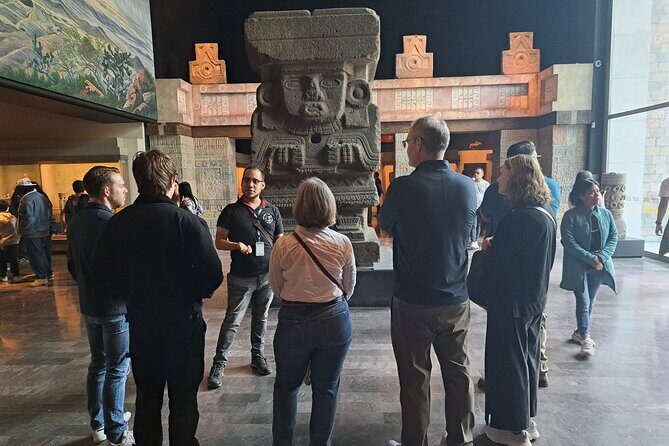
- VIP timing and fewer crowds help you see the museum without the line chaos
- Small group size (max 15) keeps the tour interactive and question-friendly
- English guide plus earpiece audio makes Spanish-heavy galleries far less frustrating
- Top artifacts get the spotlight like the Sun Stone and Pakal’s sarcophagus
- Multimedia and restoration context explain how archaeologists interpret what they find
Why this 3-hour guided plan beats wandering the Museo Nacional de Antropología
The Museo Nacional de Antropología can feel like three museums stacked on top of each other. Even with good maps, it’s easy to lose the big picture: what came first, why it matters, and how different cultures connect across centuries.
This tour is built for a simple reality: you don’t have unlimited time in Mexico City. In about 3 hours, you get a guided path through the museum’s most important areas, with an expert turning the building into a timeline you can actually hold in your head. Instead of trying to translate everything at once, you get the meaning first, then the objects make more sense.
The small-group setup matters more than it sounds. With a maximum of 15 travelers, the pace stays human. You’re more likely to ask questions, and the guide can notice what you’re missing—especially when you hit a gallery packed with stonework, ceramics, and symbols that look similar until you know what to look for.
You can also read our reviews of more museum experiences in Mexico City


VIP access and the museum’s layout: what “skip the lines” really means
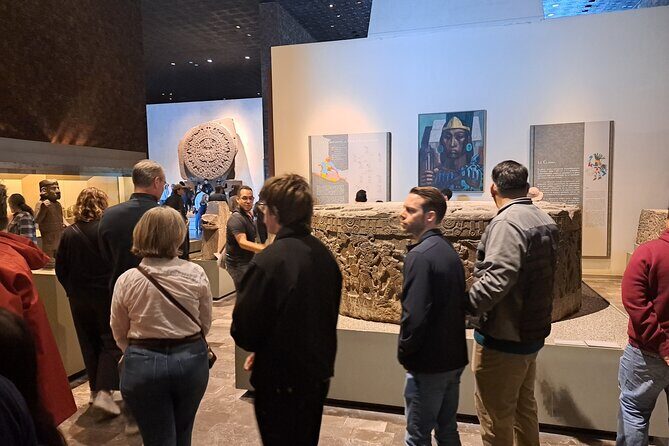
The tour includes VIP access and aims to get you in at special times, away from the worst crowds. That’s not just comfort. It’s how you protect your attention.
At the National Museum of Anthropology, crowd flow can warp your understanding. If you’re stuck behind a line of people trying to read a small label, you end up rushing. VIP timing gives you room to stop, look longer, and absorb what the guide points out—like patterns in iconography or specific restoration details.
Another practical bonus: the meeting point is right where you can access the museum without a big scramble. You start at Museo Nacional de Antropología, Av. Paseo de la Reforma s/n, Polanco (Bosque de Chapultepec I Secc), Miguel Hidalgo, 11560 CDMX. The tour ends back at the meeting point, so you’re not planning extra logistics mid-museum.
From Sun Stone to Pakal: how the tour makes the museum’s icons understandable
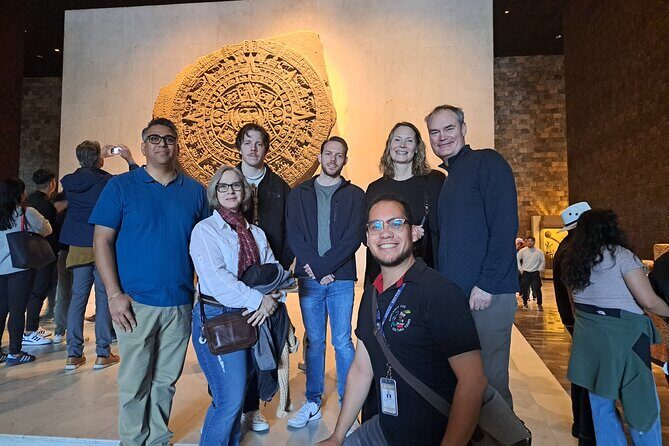
Two artifacts are often the headline grabbers, and this tour treats them like more than photo props.
You’ll spend time with iconic pieces such as the Sun Stone and Pakal’s sarcophagus. The difference with a guided visit is that you’re not just seeing famous objects—you’re learning how to read them. You get context for what the symbol system is doing, what the carved imagery communicates, and how the museum frames these objects within broader Mesoamerican timelines.
Here’s the key for your brain: guides don’t just list facts. They connect artifacts to each other. If you’ve ever wandered a museum and felt like every room was a standalone set of mysteries, this is the fix. The tour’s rhythm is designed to move you from one idea to the next—so when you see a motif, you understand why it shows up again.
If you’re visiting for the first time, this approach helps you avoid the common trap: treating everything as “ancient” and leaving without a sense of sequence. The guide’s job is to turn centuries into a map you can navigate.
Why English support matters when labels are mostly Spanish
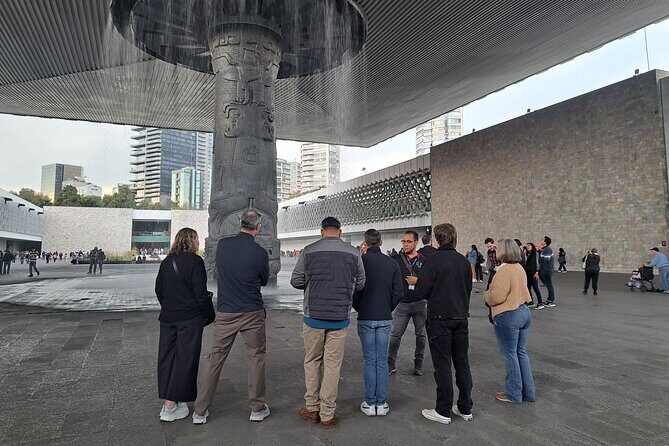
The museum has lots of information signs, but Spanish dominates. Even when you can read some parts, you’ll still miss nuance if you’re trying to translate on the move.
That’s where the tour earns its keep. Your guide explains what you’re looking at in English, and many parts of the museum are easier to understand when someone gives you the key terms first. And since this is a large building, noise and distance can be real issues—so the earpiece helps keep the narration clear.
If you’re comfortable in Spanish, you’ll still benefit. If you’re not, you’ll benefit even more. A guided route helps you spend your energy on meaning, not on deciphering every plaque letter-by-letter.
Interactive multimedia and restoration: what you learn beyond the objects
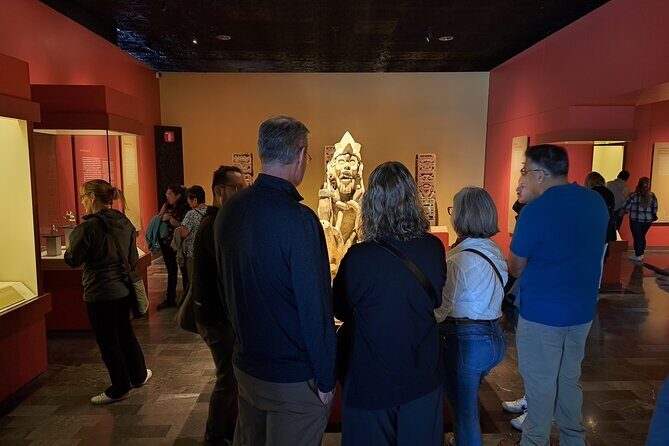
One thing I appreciate about this style of museum tour is that it doesn’t stop at “here’s a masterpiece.” It also touches the behind-the-scenes work that makes artifacts understandable today.
As you move through the galleries, you’ll encounter interactive experiences that use multimedia resources, including material aimed at ancient rituals. You also learn about the work behind restoration, which matters because museum objects are not time machines. They’re what survives—and what experts reconstruct or stabilize so you can safely study them.
This is one of those details that changes the tone of your visit. When you understand restoration and interpretation, you become less likely to fall for neat myths and more likely to notice what archaeologists can actually prove from evidence. In other words: the tour helps you look with a sharper, more skeptical eye—in a good way.
You’ll also get access to objects not regularly displayed to the public, which adds a “you had to be there” feeling. It’s not just another loop of the same highlights; it’s designed to show you more than what you’d see if you only followed the most obvious gallery signs.



How guides like Jorge and Delta turn a giant museum into a story you keep
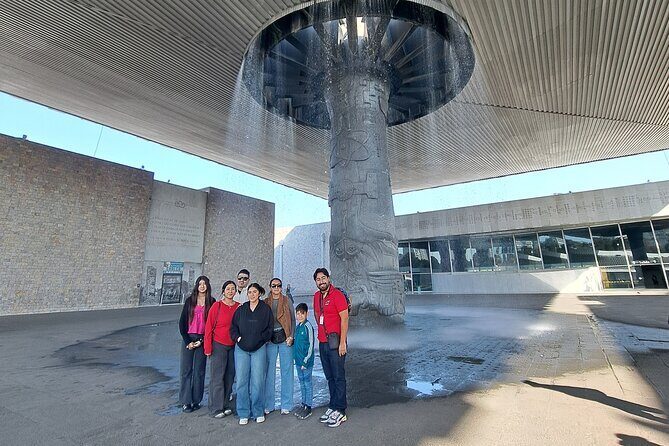
This is where the reviews’ energy matches what your day needs. In a museum this size, the quality of the guide is the difference between collecting photos and collecting understanding.
Guides such as Jorge and Delta are known for storytelling that ties artifacts together as a connected sequence across time. That matters because the museum can feel overwhelming in scale, and the guides use big-picture structure to keep it coherent.
In practice, that usually looks like:
- pointing out symbols and design details you might overlook
- using maps or charts to connect regions and timelines
- asking you questions along the way, so you’re not passively watching
That last part is underrated. When you’re asked to identify what you see, you pay attention differently. You start noticing shapes, repeated motifs, and the way each object answers the question posed by the previous gallery.
If you’re visiting with a friend, couple, or solo, the small group size supports this interaction. If you’re traveling with teens, it also helps keep them from zoning out during the museum version of rush-hour.
Group size, timing, and comfort for a 3-hour museum sprint
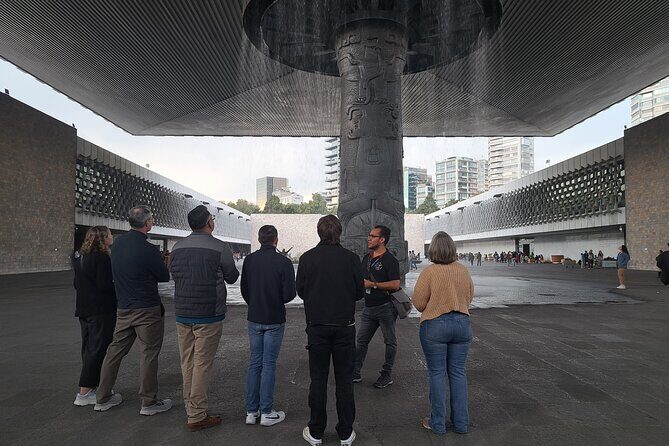
A 3-hour tour is intense in the best way—there’s enough time to learn, but not so much that you fade out. Still, you’ll be walking and standing in a museum where exhibitions are spread out.
The tour’s structure helps you keep your stamina. VIP access and guided flow reduce backtracking. And because the group is capped at 15, the logistics stay smooth—no endless waiting behind larger tour crowds.
One more practical thing: since this is mostly English narration, having the earpiece means you won’t lose words while you shift positions for better viewing. For a place where you might rotate between shoulder-to-shoulder crowd areas and quieter corners, audio clarity helps you stay focused.
Price and value: is $98.57 worth it?
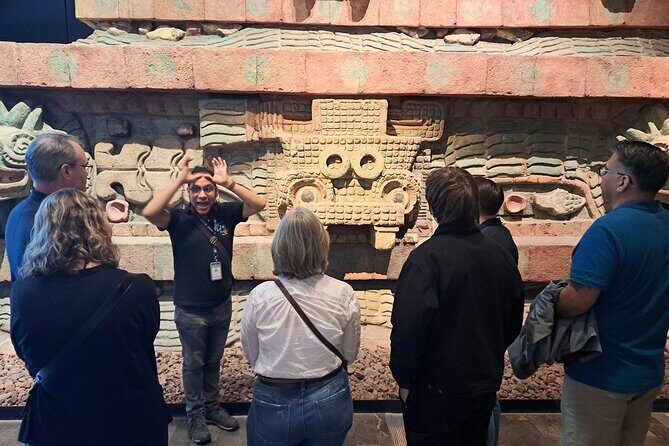
$98.57 per person isn’t a bargain-basement museum ticket. But it isn’t trying to be. What you’re paying for is the combination of:
- Admission included, so you’re not layering another museum price on top
- A guide plus tickets, which is the main value driver in a Spanish-heavy museum
- VIP access intended to reduce time lost to crowd bottlenecks
- A short, focused route that saves you from spending hours wandering without direction
If your alternative is spending the same 3 hours alone, reading Spanish labels while trying to avoid crowd flow, this tour often wins on cost-per-understanding. The guide acts like a translator for symbolism, timeline, and context. That makes the museum feel smaller—and smarter.
If you have deep interest in pre-Hispanic cultures and want more than surface-level viewing, you’ll likely feel the value quickly. If you prefer totally self-paced sightseeing and you read Spanish comfortably, you might decide the museum visit alone could work. But for many visitors, the guide is what turns the museum into something you remember.
Practical tips so you get your money’s worth
Here’s how to make this kind of museum tour land well:
- Arrive with comfortable shoes. The museum is large and you’ll be standing a lot, especially at big-ticket artifacts like the Sun Stone area.
- Expect Spanish labels. Even with an English guide, you’ll see plenty of Spanish signage. Treat it like extra texture, not a barrier.
- Come with a loose curiosity. If you know you want to understand Aztec-Mexica culture, Maya connections, or earlier civilizations, tell yourself what you’re hoping to learn before you start.
- Plan for highlights, not everything. A guided route covers key zones, not every corner of the collection. If you want additional time to linger, build it into your overall museum day.
- Use your audio gear seriously. The earpiece helps most in crowded rooms and when you shift away from the guide.
If you choose a later entry time, keep in mind the museum closes at 5. That can limit your time to wander afterward, so decide in advance whether you want extra independent browsing or a quick photo-and-go plan after the tour.
Should you book this tour, or do the museum alone?
Book it if you want:
- a guided path through the museum’s biggest ideas in a short time
- English narration when signs are mostly Spanish
- a chance to see top works like Sun Stone and Pakal’s sarcophagus with meaning attached
- a guide style that uses symbols, questions, and timeline connections (Jorge and Delta are standout examples)
Skip it and do the museum on your own if:
- you already know the timeline well and you want complete freedom to roam at your pace
- you’re comfortable reading Spanish labels without needing translation or structure
- you’re planning a longer museum day where you don’t mind slower wandering
My practical bottom line: if you’re here for first-time impact, this 3-hour VIP small-group tour is the fastest way to turn a huge museum into a clear story.
FAQ
How long is the tour?
It runs for about 3 hours.
What’s included in the price?
The tour includes tickets and the guide (admission ticket included).
What’s the meeting point?
Start at Museo Nacional de Antropología, Av. Paseo de la Reforma s/n, Polanco, Bosque de Chapultepec I Secc, Miguel Hidalgo, 11560 CDMX. The tour ends back at the meeting point.
Is the tour offered in English?
Yes. It is offered in English.
What is the maximum group size?
The maximum is 15 travelers.
Do I need Spanish to understand the museum?
The museum has many signs mainly in Spanish, so a guided tour is helpful if you don’t read Spanish well. The narration is in English.
Can I cancel for a full refund?
Yes. You can cancel up to 24 hours in advance for a full refund. If you cancel less than 24 hours before the experience starts, the amount paid is not refunded.