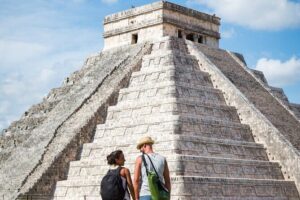
REVIEW · MEXICO CITY
Puebla, Cholula & Tonantzintla Plus Taxco, Cuernavaca & Mine, 2 day Combo
Book on Viator →Operated by Amigo Tours · Bookable on Viator
Two days. Big scenery. Real craft.
This combo strings together Puebla’s Angel vibe and Taxco’s silver-town drama, with enough stops to feel like you saw a lot—without racing through everything. I especially liked the day-one mix of Cholula’s famous church decoration and Puebla’s UNESCO-linked talavera craft.
What you’ll likely feel most is the contrast: ornate churches and historic squares one day, then an actual working-style look at mining the next. The possible downside is the pace and time in the vehicle—plus reports of heat/no A-C on long bus stretches, which can be rough if you’re sensitive to that.
In This Review
- Fast Facts Before You Go
- Two Days That Start at 6:20 am (and End Back at Your Start Point)
- Cholula First: Why This Town Feels Different from Puebla
- Santa María de Tonantzintla: Baroque Meets Indigenous Design
- Talavera Celia in Puebla: The UNESCO Pottery You Can Watch Being Made
- Walking the Puebla Center: Cathedral, Zócalo, and Church Corners
- Lunch in Puebla: Build Your Own Menu Break
- Museo Casa del Mendrugo: A Short Cultural Stop You’ll Appreciate More Later
- Day Two: Taxco’s Cobblestones and Old-Silver Attitude
- Santa Prisca: A Church Built for Silver Glory
- Pre-Hispanic Mine: The Elevator Descent and the 150-Meter Tunnel
- Shopping in Taxco: Silver, Artisans, and How to Shop Without Getting Stuck
- The Guides: From Aja and Ada to Francisco and Kevin
- Price and Logistics: Is $129 Worth It for a 2-Day Combo?
- Who This Tour Is Best For (and Who Should Rethink It)
- Should You Book This 2-Day Puebla, Cholula & Taxco Combo?
- FAQ
- What time does this tour start, and where do I meet?
- Is the tour in English?
- What’s included in the price?
- Is lunch included?
- Do I need a passport?
- Is hotel pickup included?
- How much walking is involved?
- How long is each day?
- Is the pre-Hispanic mine entrance included?
Fast Facts Before You Go
- Santa María de Tonantzintla’s Baroque-meets-indigenous interior is the type of church detail you’ll keep staring at after the tour ends.
- Talavera Celia in Puebla gives you a hands-on look at how the pottery style is made, and it’s tied to Puebla’s UNESCO heritage (2019).
- Pre-Hispanic Mine experience includes a descent in a mining elevator and a 150-meter illuminated tunnel.
- Taxco’s cobblestones and silver shops fit perfectly with a guided stroll plus time to browse and shop.
- Santa Prisca (1758) is the big church stop, connected to French immigrant Jose de la Borda’s silver story.
- Language depends on the operator; the tour may run in English or Spanish, so I’d plan to have at least basic Spanish confidence.
Two Days That Start at 6:20 am (and End Back at Your Start Point)
You’ll meet at Hostal Amigo Isabel La Católica near Mexico City’s historic center, with a start time of 6:20 am. Then you’ll head out by shared vehicle with a guide and do a mix of walking and sightseeing.
This is the kind of trip where timing matters. In the morning, you’re awake and the cities feel alive. Later, when the heat or traffic kicks in, you’ll be glad you planned for long days. One person’s key note was simply that the road time can be intense—so pack patience like it’s a travel essential.
Also note: hotel pickup and drop-off aren’t included. You’re expected to get yourself to the meeting point.
A few more Mexico City tours and experiences worth a look

Cholula First: Why This Town Feels Different from Puebla
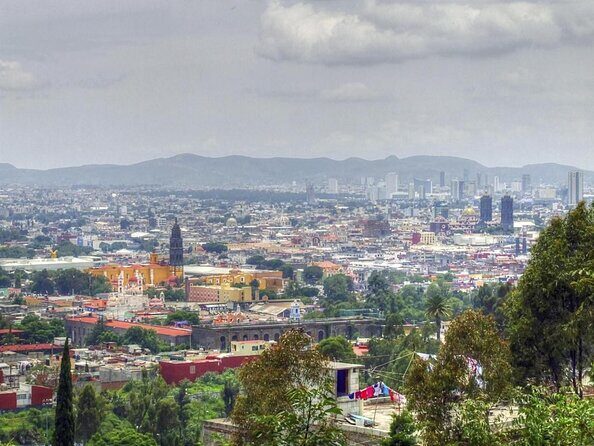
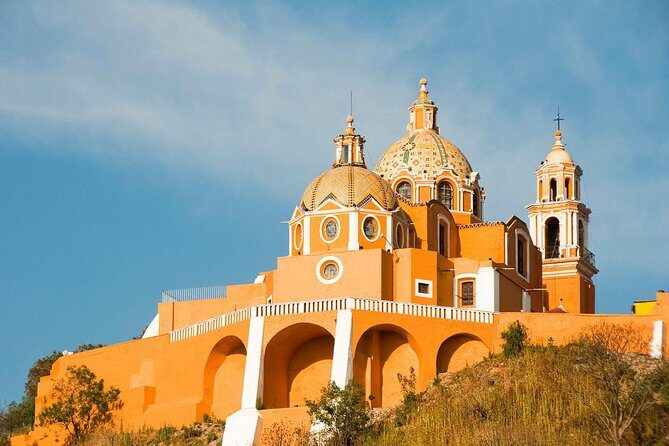
Day one starts with Cholula, about a two-hour drive from Mexico City. The approach alone is worth it: you pass mountainous scenery and can often see Iztaccíhuatl and Popocatépetl from the area around Cholula.
Cholula can feel like a place where time layered itself on purpose—quiet streets, major churches, and viewpoints that make you slow down. The highlight here is not just the location, but the visual overload inside the main church stop.
Even if you’re not the type to obsess over architecture, you’ll still get it: this is a church interior built to impress.
Santa María de Tonantzintla: Baroque Meets Indigenous Design
Your Cholula stop is Santa María de Tonantzintla, known for its mix of Baroque and indigenous architecture and its lavish decoration. This is one of those places where you’ll notice details longer than you planned.
In practical terms, bring your camera stance (steady hands help), because the ceiling and wall ornamentation is the point. The decoration can make it easy to forget you’re even in a tour schedule, which is exactly what you want from a cultural stop.
Talavera Celia in Puebla: The UNESCO Pottery You Can Watch Being Made
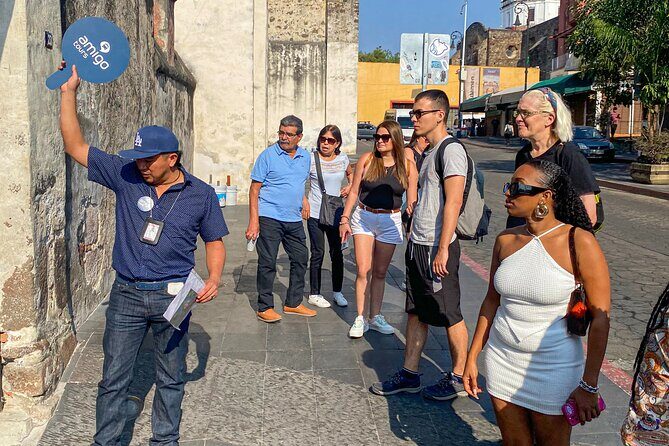
After Cholula, you head to Puebla, where you’ll visit Talavera Celia to see how talavera is made.
I like this stop because it turns a souvenir category into something you can understand. Talavera isn’t just pretty plates in a shop. You’ll get the sense of craft steps and the care that goes into the style—Puebla talavera is part of the UNESCO Cultural Heritage recognition (2019).
Tip: if you’re shopping later, you’ll be able to judge quality faster because you’ll have seen the process first.
Walking the Puebla Center: Cathedral, Zócalo, and Church Corners
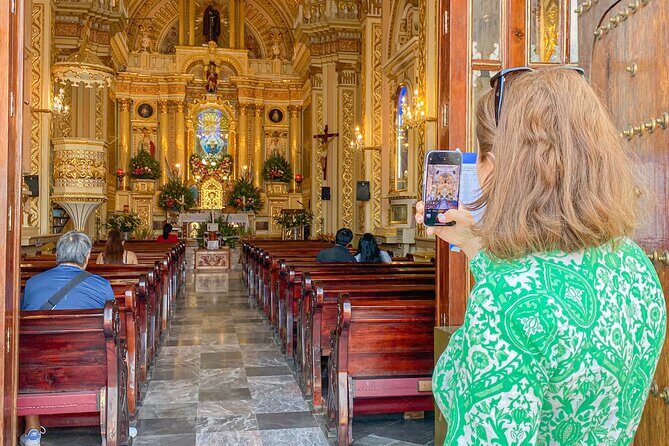
Then it’s on foot through Puebla’s historic center, often called the City of Angels. The walking tour includes major sights such as the Zócalo and the Cathedral, plus the Rosario church and other emblematic spots.
A walking tour like this is valuable in two ways:
1) You’re not trying to “figure out” a city map while also competing with traffic and time.
2) You get a guide to connect names and eras to what you’re actually seeing.
One of the most repeated praises is how much people learned from their guides on this route. Even if your Spanish is limited, the bigger story tends to land through repetition of key points: who built what, and why the city looks the way it does.




Lunch in Puebla: Build Your Own Menu Break
Lunch is on your own expense. You’ll stop for about an hour, and your guide will set you up with recommendations you can use right away.
This is where you’ll want to eat Puebla-style without overthinking it. Two local favorites highlighted for this break are mole poblano and semita. If you see those on a menu, you’re in safe territory.
Practical move: choose a spot near where you’ll naturally continue walking next. With tours that include multiple timed stops, “I’ll just walk 20 minutes for lunch” can turn into a schedule scramble.
Museo Casa del Mendrugo: A Short Cultural Stop You’ll Appreciate More Later

Next up you visit Museo Casa del Mendrugo, with entry included and time built in. This is a shorter museum-style stop in the middle of a city day—so don’t expect it to replace a full museum visit.
What it does give you is context. You’ll walk away with a better sense of Puebla beyond the big-photo landmarks, which makes your later market time and souvenir browsing more satisfying.
Day Two: Taxco’s Cobblestones and Old-Silver Attitude
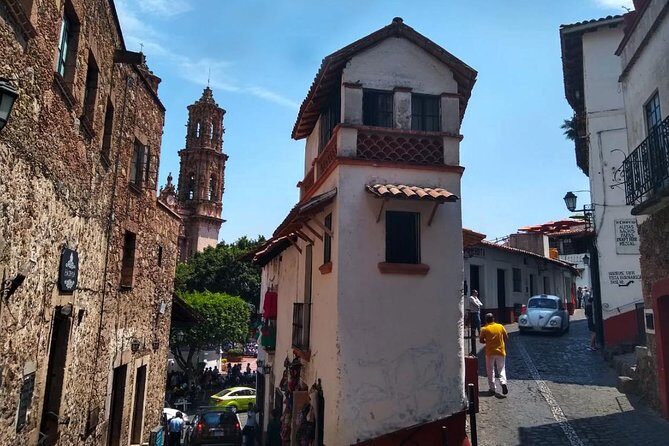
On day two you head to Taxco, described as the oldest mining city in America. The drive alone is part of the experience, but it can also be long. Plan for a full day and bring water.
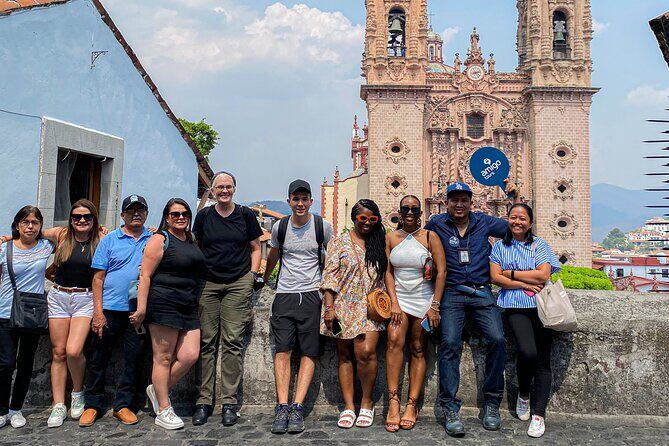
Taxco’s vibe is compact: hillside views, cobblestone streets, and cozy squares that make you want to stop every few minutes. The stroll time is big here—about three hours—so you have room to wander and browse.
This is a great day-two formula: a guided pass through the best highlights, then enough independent time to slow down.
Santa Prisca: A Church Built for Silver Glory
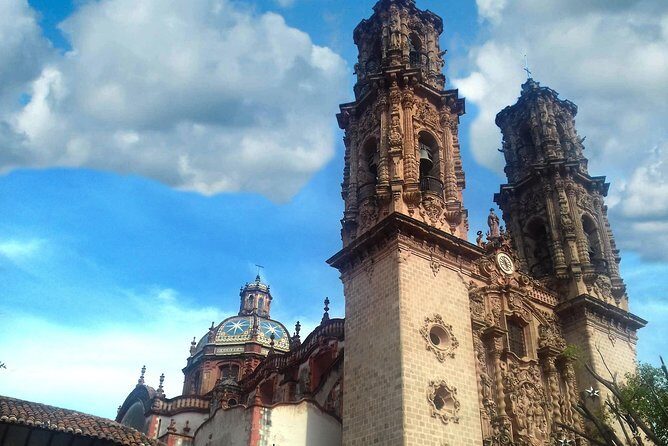
One of the main reasons Taxco is so famous is what you can see, and one of the biggest “see it now” stops is Santa Prisca, built in 1758 by French immigrant Jose de la Borda, tied to silver fortune.
The practical value of this stop is that the church’s scale helps you understand the whole mining-silver connection. You’re not just buying silver; you’re seeing where wealth went—stone, design, and status.
If your legs are tired, this is still worth the effort. Churches like this tend to reset your energy because the visual payoff is immediate.
Pre-Hispanic Mine: The Elevator Descent and the 150-Meter Tunnel
This is the part many people remember most: Mina Prehispánica de Taxco. You’ll descend via an authentic mining elevator, then move through a beautifully illuminated 150-meter tunnel where the walls show sparkling effects linked to precious metals.
What makes this stop interesting is the way the experience is framed. You’re not only looking at “a mine.” You’re shown how miners worked in the pre-Hispanic era (1400 to 1500) and what tools and techniques were used before the arrival of the Spaniards.
This is also where group dynamics matter. If you’re traveling with someone who needs constant movement, mining stops can work well because you’re always doing something—descending, walking, learning.
Shopping in Taxco: Silver, Artisans, and How to Shop Without Getting Stuck
Taxco is famous for silver, and this tour gives you access to handicraft store time and the chance to browse silver and artisan pieces.
My best advice: treat this as a browsing day until you find the item that genuinely fits you. A lot of silver shopping is about feel and detail. Since you’ll also have seen Puebla talavera earlier, you’ll better recognize that quality is tied to craft, not just branding.
If you’re souvenir shopping, go in with a small list:
- What style you want (simple, decorative, religious, modern)
- Your budget ceiling
- Whether you want something wearable or a decor item
That mindset helps you avoid the classic “I’ll just buy something because I’m here” move.
The Guides: From Aja and Ada to Francisco and Kevin
One of the biggest strengths you can’t measure from a brochure is the guide. People have specifically mentioned guides like Aja on the Puebla/Cholula side and Ada on the Taxco side as well as Francisco and Kevin for strong day leadership.
What I take from that pattern: when a guide is good, you start to understand the cities faster. You don’t just see the Zócalo and cathedral—you understand why they’re the heart of the city. You don’t just walk into a church—you understand the design language.
So if you’re choosing between tours, guide quality is a deciding factor. With this particular combo, that seems to be one of the most consistent wins.
Price and Logistics: Is $129 Worth It for a 2-Day Combo?
At $129 per person for a two-day guided circuit, the value depends on two things: what’s included and how you handle long-distance transit.
Included items that matter:
- Round trip transportation from your meeting point
- Professional guide
- Entrance to the pre-Hispanic mine
- Tickets/entry included for stops like Talavera Celia and Museo Casa del Mendrugo
Not included:
- Food and beverages
- Hotel pickup/drop-off
So yes, the price can be fair if you like structured days and you’re happy to spend time on the road. But here’s the catch: some people report no A-C on the vehicle for long rides, and with warm-to-hot conditions, that’s not a small complaint. Another key note: traffic and road time can push each leg of travel longer than you expect, even if your sightseeing parts are great.
My take: this tour is worth it if you see the vehicle ride as the price of admission for visiting several highlights that are otherwise hard to stitch together alone.
If you’re heat-sensitive, go in prepared—light clothes, water, and a mindset that day one starts early for a reason.
Who This Tour Is Best For (and Who Should Rethink It)
This is ideal if you want:
- A guided first-time circuit that covers Cholula + Puebla + Taxco
- A craft component (talavera) plus a hands-on kind of history (pre-Hispanic mine)
- Enough walking to feel the cities, but not a multi-day marathon of constant uphill climbing
Rethink it if:
- You hate long transit days. You’re in a vehicle for a big portion of the day.
- You need guaranteed comfort in the bus. Some past experiences mention missing A-C.
- Your comfort depends on perfect English. The tour may run in English or Spanish, and language can affect how smooth your day feels.
Should You Book This 2-Day Puebla, Cholula & Taxco Combo?
If your goal is to see major highlights in two tight days, I think booking makes sense. The combination of Santa María de Tonantzintla’s intense decoration, Puebla’s talavera craft stop, and Taxco’s silver culture plus the pre-Hispanic mine tunnel is a strong “variety with purpose” mix.
I’d book with confidence if you can handle early starts and long road time. I’d hesitate only if you’re very heat-sensitive or you’re expecting a perfectly comfortable ride the entire way.
If you do book, plan smart: arrive rested for the 6:20 am start, bring water, and keep your expectations realistic about transit time. The payoff at Cholula, Puebla, and inside that mine is the kind of memory you don’t get from a rushed day trip.
FAQ
What time does this tour start, and where do I meet?
It starts at 6:20 am at Hostal Amigo Isabel La Católica (Isabel La Católica 61-A, Centro Histórico de la Cdad. de México, Centro, Cuauhtémoc, 06000 Ciudad de México). The activity ends back at the meeting point.
Is the tour in English?
The tour may be operated in English and Spanish.
What’s included in the price?
Included are round trip transportation, a professional guide, and entrance to the Prehispanic Mine. Entry to Talavera Celia and Museo Casa del Mendrugo is also included, based on the itinerary details.
Is lunch included?
No. Lunch is not included, and you’ll have a break in Puebla where you pay for your own meal.
Do I need a passport?
Yes. You must present your passport (physical, digital, or photocopy) and the pages needed to prove legal stay in Mexico, including entry stamp and personal data page if required.
Is hotel pickup included?
No. Hotel pickup and drop-off are not included, so you should plan to get to the meeting point.
How much walking is involved?
You should have moderate physical fitness. The Puebla portion includes a walking tour of the historic center, and Taxco includes time walking through streets and squares.
How long is each day?
Day 1 covers Cholula and Puebla with several stops, and Day 2 covers the pre-Hispanic mine and Taxco with about three hours in Taxco. The overall duration is listed as approximately 2 days.
Is the pre-Hispanic mine entrance included?
Yes. Entrance to the Prehispanic Mine is included, including the elevator descent and tunnel experience described in the tour details.