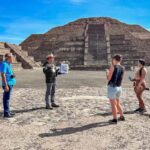
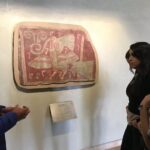
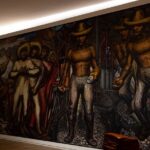
One guide turns the museum into a story. This private archaeologist tour at the Museo Nacional de Antropología gives you a guided path through Mesoamerica’s cultures, with context you won’t get from placards alone. It’s also in English, so you can focus on meaning instead of translating in your head.
I especially like how the tour is built around the museum’s main exhibition halls, with a clear goal: showing how far pre-Hispanic history goes beyond the usual Maya and Aztecs. You don’t just see objects—you hear how they likely fit into religion, politics, economy, architecture, and daily traditions.
One thing to consider: it’s a 3-hour walk through a very large museum, and food and drinks aren’t included. If you’re not great with standing and shifting galleries, plan for breaks.
In This Review
- Key highlights to know before you go
- Why a Private Archaeologist at Museo Nacional de Antropología Works
- Price and Value: $98 Includes Admission and Digital Aids
- Meeting Point in Polanco and the 3-Hour Museum Rhythm
- Inside the National Anthropology Museum: The Mesoamerica Story You’ll Actually Understand
- A note on what you might see
- David Huesca (Pakalito/Paquito): Storytelling, Symbols, and the iPad Tools
- Is This Tour Worth It for First-Timers, Couples, and Families?
- Who should skip it and go on your own
- Should You Book This Private Archaeologist Tour?
- FAQ
- What is included in the $98 per person price?
- How long is the tour?
- Is this tour offered in English?
- Where do we meet, and where does the tour end?
- Are meals or snacks provided?
- What happens if plans change or weather is bad?
Key highlights to know before you go
- A route with a real archaeologist’s lens instead of a random museum loop
- English-language interpretation focused on how cultures connect over time
- Digital support material and visual explanations to make sense of what you’re seeing
- Context on meaning, not just dates and names
- Private group experience with time for questions
- A focus on Mesoamerica beyond the usual icons
Why a Private Archaeologist at Museo Nacional de Antropología Works
The Museo Nacional de Antropología can feel like being dropped into the biggest study room in the world. The collections are outstanding, but the museum’s scale can be overwhelming fast. That’s where a private archaeologist changes everything: you get a guided storyline with a human pace, plus someone trained to connect artifacts to culture.
This tour is designed around Mesoamerica as a whole, not just a highlight reel. You’ll be guided “through the eyes of a young archaeologist,” which really means the explanations stay grounded and curious. And the emphasis isn’t limited to the famous headline civilizations. You’ll spend time with Mexico’s broader pre-Hispanic cultures and regions so the past feels like a web of interacting societies, not a list of isolated empires.
Two practical wins matter on tours like this. First, you avoid wandering from room to room wondering what you’re looking at. Second, you don’t have to figure out symbolism alone. The guide is there to make sense of the possible meanings behind what’s on display—religious themes, political messages, and how architecture and technology reflect society.
And you’ll likely leave with the kind of understanding that makes the museum feel smaller. Not physically smaller, of course. Just mentally manageable.
You can also read our reviews of more private tours in Mexico City

Price and Value: $98 Includes Admission and Digital Aids
At $98 per person for about 3 hours, this tour isn’t priced like a casual add-on. But it does include a big chunk of what people usually pay separately: the entrance fee. So you’re not juggling tickets and guide fees in your budget.
The other value piece is what you actually get during those hours. You’re paying for an expert interpretation of major exhibition halls, plus digital support material. In a museum where many labels may not be in the language you’re comfortable with, those extra explanations matter more than you’d think.
I also like the setup because it’s private. That means the guide can adjust how fast you move, what you spend time on, and which cultural threads you want to follow. If you’ve ever done a museum on your own and ended up stuck reading tiny text until your legs gave out, you’ll appreciate the focus.
In plain terms: you’re paying to reduce confusion. And in a museum this big, confusion is expensive. It costs your time, your energy, and your enjoyment.
Meeting Point in Polanco and the 3-Hour Museum Rhythm
You’ll meet at the Museo Nacional de Antropología, on Av. P.º de la Reforma s/n, in Polanco / Bosque de Chapultepec I Secc, Miguel Hidalgo, 11560 Mexico City. The tour ends back at the same meeting point.
The timing is also worth planning around. Tours run Tuesday through Saturday, 9:00 AM to 3:00 PM. Since the experience is about 3 hours, you’ll want to choose a start time that gives you enough margin for security lines, getting oriented, and settling in before the tour really hits its stride.
The tour is private, so it’s “your group only.” That matters when the museum gets crowded in the main halls. You don’t have to fight for hearing space. You can ask questions without feeling like you’re hijacking a group conversation.
A couple practical notes from the tour information:
- Near public transportation, so you’re not forced into a full-day car plan.
- Moderate physical fitness level is required. You should expect walking and standing.
- Service animals are allowed.
- The experience requires good weather. If it’s canceled for poor weather, you’ll be offered another date or a full refund.
If you’re the type who likes to see a museum early in your trip, this schedule can work well. A solid first visit makes later Mexico City archaeology stops far more satisfying.
Inside the National Anthropology Museum: The Mesoamerica Story You’ll Actually Understand
Your main stop is the Museo Nacional de Antropología, and the goal is not to list objects. The goal is to help you interpret them.
The tour focuses on Mesoamerica and its cultures and regions, with a clear promise: you’ll go beyond only Maya and Aztec history. That’s an important difference. If you only study the most famous names, it’s easy to think pre-Hispanic Mexico was a set of disconnected worlds. This tour pushes you toward a longer view—how societies changed over time and how different regions developed distinct traditions.
Here’s what the guide’s approach feels like inside the museum:
- You move through the main exhibition halls, so you’re not stuck in side corners.
- For each cultural focus, you get context across multiple lenses: religion, politics, economy, architecture, and traditions.
- You’re encouraged to consider possible meanings behind the artifacts and the display themes.
That “possible meanings” part is what keeps it from becoming a dry history lecture. Instead of treating objects like museum specimens, you’re thinking like a cultural translator. What did this symbol communicate? What did this structure signal? What does the design suggest about society and belief?
Also, the tour is structured so you don’t just learn facts—you learn connections. By the end, you should understand the variety of cultures and their processes over time. In a museum packed with hundreds of years of art and material culture, connections are what turn chaos into comprehension.
A note on what you might see
The museum is huge, so no single 3-hour route can cover everything. Still, the tour is built to cover major cultural themes and highlight points that help you build a mental map. If you’re planning other sites later, you’ll likely appreciate how the guide frames patterns you can recognize again.
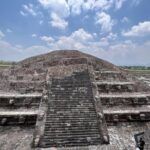
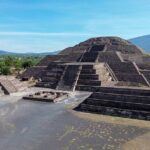
For example, if Teotihuacán is on your itinerary, this kind of context can make those later visits feel less like guessing and more like understanding.
You can also read our reviews of more museum experiences in Mexico City





David Huesca (Pakalito/Paquito): Storytelling, Symbols, and the iPad Tools
The guide for this experience is David Huesca, known on tours as Pakalito (also referred to as Paquito). The big theme across the way he presents is simple: explanation that feels human and practical.
In a museum setting, a great guide does two things well:
1) Makes complicated ideas understandable.
2) Helps you see what to look for before you miss it.
Pakalito’s style leans into both. He brings visual aids and uses an iPad with images and interactive-style materials to clarify concepts. That matters because the museum can be visually intense. When you’re staring at stonework, ceramics, and monumental art, your brain wants labels—but it also needs interpretation. The visuals help bridge that gap fast.
He also leans into storytelling. That’s more than performance. It’s a way to make timelines and cultural relationships stick. When you hear how politics and religion shaped art, you start noticing details you’d otherwise skim: recurring motifs, symbolic choices, and how architecture reflects society.
Another practical strength: he handles questions. If you’re curious about a specific artifact or theme, you won’t get brushed off. The tour format gives you space to ask, and that’s how you learn the most.
One tip that can improve the tour: if there’s a particular area you care about—certain cultures, a theme like writing or ritual, or an artifact type—send a message ahead and tell the guide what you want to focus on. It helps him steer the route so your 3 hours match your interests.
Is This Tour Worth It for First-Timers, Couples, and Families?
This is one of those tours that works for more than one type of visitor.
For first-timers: it’s ideal when you feel nervous about doing the museum alone. A private route through the main exhibition halls gives you bearings quickly. You won’t spend your energy trying to figure out where to start and what matters most.
For couples: it’s a shared experience with depth. You’ll get enough context to talk about what you’re seeing afterward, instead of both of you silently reading labels for three hours.
For families: the tour can be engaging across ages. Since it’s private, the guide can adjust the approach so children aren’t bored and adults don’t feel talked down to. If you’re traveling with kids, that flexibility is a real advantage in a museum environment.
For history buffs: you’ll likely appreciate the structured coverage of culture and meaning. This isn’t just a list of dates. You get religion, politics, economy, architecture, and traditions tied to what’s displayed.
Who should skip it and go on your own
If you only want photos and you’re fine reading every label yourself, a self-guided visit might be enough. But if you want meaning, connections, and interpretation, this private format is what you’re paying for.
A good rule: if you want the museum to explain itself to you, book the tour. If you want it to be mostly background, skip it.
Should You Book This Private Archaeologist Tour?
I think this is a strong yes—especially if it’s your first time at the Museo Nacional de Antropología or you want to understand Mexico City’s pre-Hispanic cultures with a clear framework.
Book it if:
- You want Mesoamerica explained beyond the usual Maya and Aztec focus.
- You prefer a private route through main exhibition halls rather than wandering.
- You’ll appreciate English interpretation and digital visual support.
- You plan to visit other archaeology sites later, and you want a foundation you can recognize again.
Skip it if:
- You’re comfortable doing the museum entirely on your own and you mainly want casual viewing.
- You know you’ll struggle with walking and standing inside a big, spread-out museum for about 3 hours.
- You don’t want to plan around no food or drinks included.
One last timing thought: the tour runs Tuesday through Saturday and ends back at the starting point. Pick a slot that matches your energy level and lets you enjoy the rest of your day after the museum, not just survive it.
FAQ
What is included in the $98 per person price?
The tour includes a professional archaeologist guide, a private tour setup, the museum entrance fee, and digital support material. Food and drinks are not included.
How long is the tour?
The tour is about 3 hours.
Is this tour offered in English?
Yes. The tour is offered in English.
Where do we meet, and where does the tour end?
You meet at the Museo Nacional de Antropología at Av. P.º de la Reforma s/n, Polanco, Bosque de Chapultepec I Secc, Miguel Hidalgo, 11560 Ciudad de México. The tour ends back at the meeting point.
Are meals or snacks provided?
No. Foods and drinks are not included.
What happens if plans change or weather is bad?
You can cancel for a full refund if you cancel at least 24 hours before the experience’s start time. The experience requires good weather, and if it’s canceled due to poor weather you’ll be offered a different date or a full refund.