REVIEW · OAXACA CITY
Monte Albán, Arrazola, Cuilapam y San Bartolo Coyotepec.
Book on Viator →Operated by Oaxacatours · Bookable on Viator
Monte Albán steals the show. This full-day Oaxaca route mixes UNESCO ruins with hands-on art village stops, plus a colonial-era convent and black pottery tradition. Hotel pickup and drop-off from your Oaxaca hotel keep the logistics simple for a long day.
What I like most is the way Monte Albán is treated like a story, not just a pile of stones. You’ll see the Grand Plaza, ceremonial platforms, Los Danzantes rock carvings, the I-shaped ball court from around 100 BC, and you’ll get up to the South Platform for serious views.
The one drawback to plan for is physical effort. Expect uphill climbing and a lot of steps at Monte Albán, and the schedule is full enough that a late lunch can mess with dinner plans.
In This Review
- Key things you’ll enjoy most
- Price and Logistics: $37.55 that still needs a small budget
- Getting to the first ruins stop without wasting your morning
- Monte Albán UNESCO: the views, the carvings, and the ball court
- What you’ll actually see during the guided time
- Climbing to the South Platform
- San Antonio Arrazola: alebrijes you can’t forget
- Cuilapam de Guerrero: Dominican capilla abierta and an unfinished basilica
- San Bartolo Coyotepec: black pottery, MEAPO, and a church with weight
- What’s on the schedule
- Time level
- Lunch at the buffet stop: good food, but mind the timing
- Guide impact: when the storytelling clicks
- What to pack and how to pace yourself
- Who should book this day trip (and who should pass)
- Should you book?
- FAQ
- How long is the tour?
- What time does the tour start and where do I meet?
- What’s included in the $37.55 per person price?
- Are entrance tickets included for Monte Albán and Cuilapam?
- Is the tour offered in English?
- How much walking and climbing should I expect?
- Can I cancel for a full refund?
Key things you’ll enjoy most
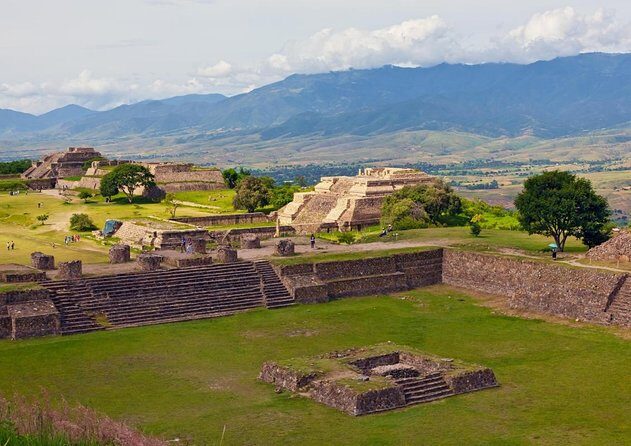
- UNESCO Monte Albán highlights: Grand Plaza, Los Danzantes, tomb area, and the I-shaped ball court
- Real artisan craft time: copal-wood alebrijes in San Antonio Arrazola
- Dominican convent history: the capilla abierta at Cuilapam de Guerrero
- Barro negro pottery culture: San Bartolo Coyotepec church, MEAPO, and craft market
- Hotel pickup and small-group feel: air-conditioned coach and a maximum of 18 people
- Time for exploring on your own: enough freedom to shop and wander at the art stops
Price and Logistics: $37.55 that still needs a small budget
On paper, this tour starts at $37.55 per person. In real life, the value depends on how you handle add-ons, because key site tickets are not included.
Here’s the practical breakdown:
- Included: professional guide (English/Spanish), travel insurance, and an air-conditioned vehicle, plus hotel pickup and drop-off.
- Not included: admission tickets for Monte Albán and for Cuilapam.
- There can also be extra costs at the Cuilapam stop if you choose the museum option (listed as $70 pesos per person if you want to visit the museum).
In past bookings, people commonly budget additional money for entrances and lunch. One shared example cited around 175 pesos per person for entrances, and lunch buffet costs roughly 200 to 300 pesos per person depending on what you order (plus drinks). Your final total can still be reasonable, but it won’t be just the $37.55.
You can also read our reviews of more tours and experiences in Oaxaca City.

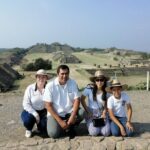

Getting to the first ruins stop without wasting your morning
The day starts at 8:30 am with pickup by coach. You’ll meet at Quinta Real 5 de Mayo, 300 Ruta Independencia, Centro, 68000 Oaxaca de Juárez. The tour runs for about 8 hours and typically comes back to the same meeting point in the evening.
A few things make this start time work for you:
- You beat the busiest light and heat at Monte Albán.
- You get a full 2.5 hours at the archaeological site, which is enough time to understand what you’re seeing and still have a little room to wander.
- The air-conditioned transport matters. Oaxaca driving adds up, and this keeps the trip from feeling like punishment.
One caution: tours like this can run later sometimes. If you have tight evening plans, I’d keep them flexible, just in case return timing slides.
Monte Albán UNESCO: the views, the carvings, and the ball court
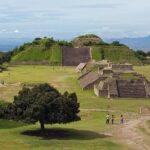
If you’re choosing one reason to book this day trip, make it Monte Albán. It’s a major Zapotec ceremonial center, and the site sits on a mountaintop above Oaxaca Valley. The altitude and steps make it a physical experience, but the rewards are clear fast.
What you’ll actually see during the guided time
Plan for a guided circuit that hits the main emotional beats of the site:
- Grand Plaza: the large open area on the flattened plateau where you can really picture how ceremonies might have played out.
- Ceremonial platforms: areas tied to ritual and public life.
- Los Danzantes (The Dancers): a series of rock carvings you’ll hear explained in context.
- Temples and altars: multiple structures that show how the ceremonial layout developed.
- Tombs: the excavations revealed paintings and stone carvings, so the guide can connect art to archaeology.
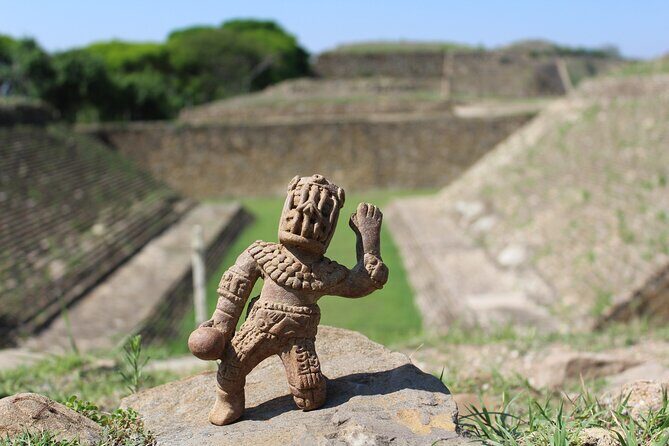
- The I-shaped ball court: built around 100 BC, one of the standout architectural features.
Climbing to the South Platform
You’ll also go up to the South Platform (Plataforma Sur), known for its wide staircase and strong panoramas. This is where the site stops being history class and becomes geography.
Bring the basics for the climb:
- Good walking shoes
- A hat and sunscreen
- Water (you’ll feel it in the sun)
If you’re only comfortable on flat ground, Monte Albán may feel like too much. If you can handle steps, you’ll likely love it.
San Antonio Arrazola: alebrijes you can’t forget
After Monte Albán, the tone shifts from ancient stone to living craft. The stop in San Antonio Arrazola is short but focused—about 45 minutes.
Here’s what makes it worth your time:
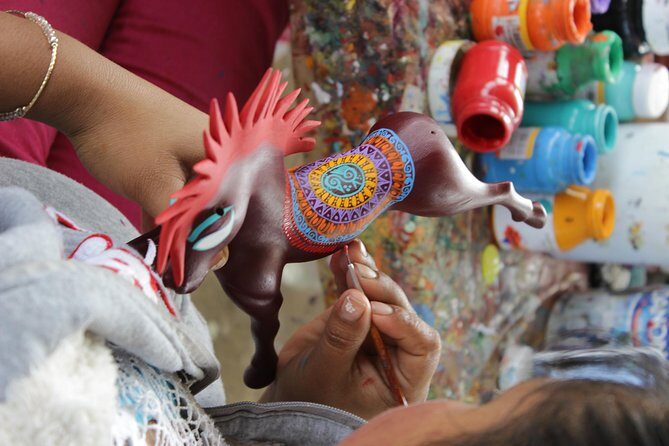
- You’re in a workshop-focused artisan town, so the experience isn’t just looking at finished art.
- You can admire alebrijes, the famous woodcarvings made from the copal tree, often featuring mythical monsters and strange animals—almost like Oaxaca’s version of fantasy bestiary.
This is also where shopping can get dangerous, because the artwork is genuinely fun. You’ll see a range of sizes and styles, and even if you’re not planning to buy, it’s a good place to understand the craft’s personality.
Practical tip: with only 45 minutes, decide what you want before you wander too far. Small pieces are usually the easiest for a day trip.
Cuilapam de Guerrero: Dominican capilla abierta and an unfinished basilica
Next comes the colonial layer at the Convento de Cuilapam de Guerrero. This is a 16th-century Dominican convent and it’s known for a striking capilla abierta (open chapel) and an unfinished basilica.
Why it matters to you:
- The capilla abierta is tied to evangelization strategies used by the missionaries, designed to draw larger numbers of indigenous people into worship spaces.
- The guide’s story connects the architectural details to real-world cultural change—less abstract than it sounds.
You’ll have about 1 hour here. There’s also an optional museum visit listed at an extra $70 pesos per person if you want it. If you love missions and colonial design, the extra time and museum stop can feel rewarding. If you’re more focused on archaeology and folk art, you may wish the convent stop were shorter—some people prefer to keep their attention mostly on Monte Albán.
San Bartolo Coyotepec: black pottery, MEAPO, and a church with weight
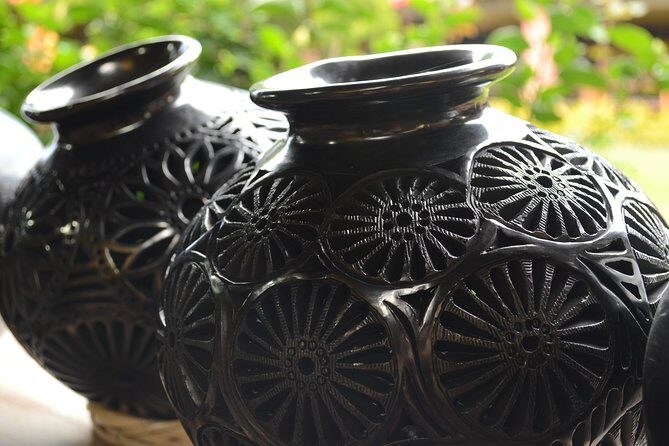
The last stop is San Bartolo Coyotepec, famous for barro negro—black pottery made locally since pre-Columbian times. This part of the day is about craft, process, and purchase-worthy objects you can actually understand after watching them explained.
What’s on the schedule
Expect a visit to:
- The 16th-century San Bartolo Coyotepec Church
- The Oaxaca State Museum of Popular Art (MEAPO)
- A craft market with work from more than a dozen families
- Time tied to the black pottery making tradition (including the local process, often shown in a demo-style visit)
The black pottery story is the kind of cultural continuity that sticks with you. You’re not just buying souvenirs—you’re seeing how a technique survives and stays creative.
Time level
Plan on about 45 minutes here. That’s enough to see the process, understand what makes it special, and browse for a piece if you want one.
Lunch at the buffet stop: good food, but mind the timing
Lunch is extra and happens at a buffet-style restaurant stop for about 1 hour. The cost is listed as $200 MX plus drinks in the tour summary, and other recent costs described have landed around 300 pesos per person depending on what’s ordered.
This meal stop is practical in a few ways:
- You’re fed before the final pottery town.
- It’s a real sit-down break with time to cool off.
- It can be a great moment to keep your energy up for the afternoon walking.
The only downside is timing. Some people reported eating closer to 2 pm, which can push your evening schedule later. If you have dinner reservations, keep them forgiving.
Guide impact: when the storytelling clicks
A big reason this tour gets strong ratings is the guide experience. On different departures, guides have included archaeology-focused specialists and bilingual communicators. Names you might hear (depending on your date) include Antonio, Emanuel, Daniel, Moisés, Gabriel, Jorge, and Silvia.
Here’s what matters for you as you book:
- The tour is described as English-offered, with guides speaking English and Spanish.
- In some cases, the narration may still lean more toward Spanish than you expect. If your Spanish is limited, sit where you can clearly hear and ask questions when the guide pauses.
One more real-life tip from the tour pattern: the best guides make small moments happen—like stopping in a court area for a live demonstration or tailoring explanations to what you’re looking at. That’s not guaranteed, but it’s a common strength of these archaeologist-style guides.
What to pack and how to pace yourself
This is a full-day loop with multiple stops and at least one major climb. If you prep like it’s a hike day, you’ll enjoy it more.
Bring:
- Sunscreen
- Hat
- Water
- Good walking shoes
A bonus item that some people find helpful in Oaxaca sun is an umbrella for shade.
Pace:
- Monte Albán is the toughest part. Take breaks when you feel yourself rushing.
- At artisan stops, use the time to observe process first, shop second.
Who should book this day trip (and who should pass)
Book it if:
- You want one organized day that mixes archaeology, colonial architecture, and living craft.
- Monte Albán is a must for your Oaxaca list.
- You like learning on the move, not in a museum-only setting.
- You’re comfortable with steps and uphill walking.
Consider a different option if:
- You hate stairs and uphill walking. Monte Albán is the anchor of the day.
- You’re only excited about Monte Albán and don’t care much about mission history or pottery craft. Some stops can feel less central if your interests are narrow.
- You have rigid evening plans and no flexibility at all. Lunch timing and return time can run long.
Should you book?
I’d book this tour if your ideal Oaxaca day includes big ruins plus hands-on art culture—and you can handle the steps at Monte Albán. The structure gives you enough time to see the real anchors (Grand Plaza, Los Danzantes, ball court) and still experience alebrijes and barro negro without feeling like you’re sprinting.
Skip or modify it if you’re step-averse or if admissions and add-on costs would make you feel nickled-and-dimed. The base price is attractive, but the day works best when you budget a little extra for tickets and lunch.
FAQ
How long is the tour?
The tour runs about 8 hours (approximately), with a schedule that includes time at each main stop.
What time does the tour start and where do I meet?
Pickup starts around 8:30 am, and you meet at Quinta Real 5 de Mayo, 300 Ruta Independencia, Centro, 68000 Oaxaca de Juárez, Oax., Mexico.
What’s included in the $37.55 per person price?
The price includes a professional English- and Spanish-speaking guide, travel insurance, and an air-conditioned vehicle, plus hotel pickup and drop-off from your Oaxaca hotel.
Are entrance tickets included for Monte Albán and Cuilapam?
No. Monte Albán tickets are not included, and Cuilapam tickets are not included. The Cuilapam museum option is listed as an extra $70 pesos per person.
Is the tour offered in English?
Yes, it’s offered in English, and the guide is described as English- and Spanish-speaking.
How much walking and climbing should I expect?
You should have moderate physical fitness. Monte Albán includes uphill climbing and lots of steps, including time on the South Platform staircase.
Can I cancel for a full refund?
Yes. Cancellation is free up to 24 hours before the experience start time for a 100% refund.