REVIEW · MEXICO CITY
Mexico City: Teotihuacan & Guadalupe Shrine Tour with Lunch
Book on GetYourGuide →Operated by Amigo Tours LATAM · Bookable on GetYourGuide
Three huge stops, one unforgettable Mexico story. I love how this day strings together Teotihuacan and Mexico City’s other layers, so the pyramids don’t feel random. You also get tequila tasting after an obsidian stop, which keeps the day from feeling like a nonstop museum crawl.
The one thing to plan for is the pace. This is a long 9-hour day, and the first archaeological visit at Tlatelolco can feel more like a look-and-listen moment than a deep wander. If you’re sensitive to heat or tired stairs, come ready with sun protection and good walking shoes.
In This Review
- Key highlights worth circling on your map
- Why this Teotihuacan-and-Guadalupe day works (and doesn’t feel random)
- Tlatelolco: Mexica ruins, human stories, and the weirdly haunting details
- Guadalupe Shrine: what you’re seeing is faith, art, and identity
- Obsidian workshop and tequila tasting: the best break in the middle of a heavy day
- Lunch choices: buffet is convenient, but you may prefer a la carte
- Teotihuacan: Avenue of the Dead, Sun and Moon, and why the guide route matters
- Getting around: pickup points, comfortable coach, and how to avoid tiny frustrations
- What you learn: how the three stops connect into one Mexico picture
- How the guides and drivers shape your day (more than you think)
- Who this tour fits best (and who should reconsider)
- Price and value: what $55 is actually buying you
- Before you go: packing and mindset for Teotihuacan heat + stair time
- Should you book this Teotihuacan & Guadalupe tour?
- FAQ
- How long is the Mexico City: Teotihuacan & Guadalupe Shrine Tour with Lunch?
- What are the main stops on the tour?
- Is lunch included?
- Does the tour include entrance to Teotihuacan?
- What language will the guide speak?
- Where are the pickup and drop-off locations?
- Is the tour wheelchair accessible?
Key highlights worth circling on your map
- Tlatelolco first: a guided introduction to ancient Mexica life, including the darker side of ritual history and the famous Lovers of Tlatelolco finds
- Basilica of Our Lady of Guadalupe: an easy-to-understand, guided stop at one of the world’s biggest Catholic pilgrimage sites, centered on the image on the cloak
- Tequila tasting + obsidian workshop: two culture-and-craft moments that break up the day nicely
- Skip-the-ticket-line entry to Teotihuacan: you spend more time at the ruins and less time waiting
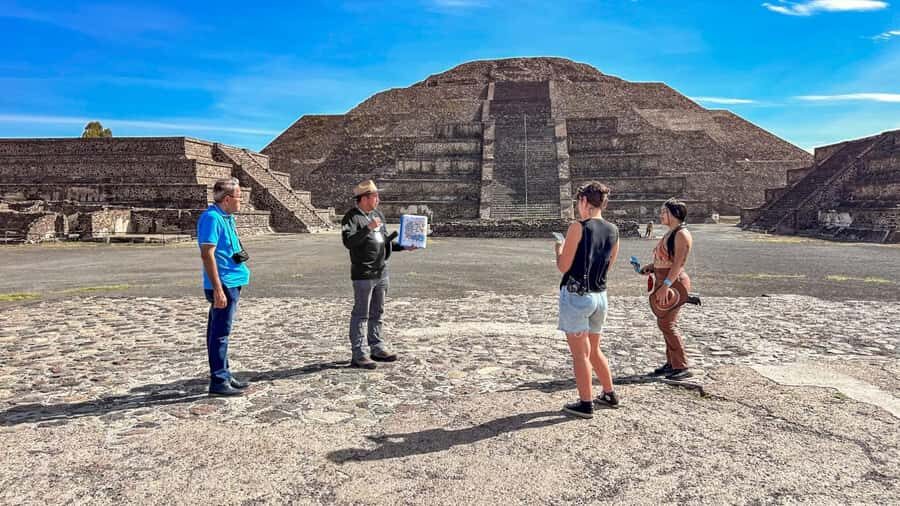
- Teotihuacan guided route: Pyramid of the Sun, Avenue of the Dead, Pyramid of the Moon, plus featured temples like Quetzalpapalotl
- Small-group feel options: private or small groups can make the day feel less crowded and more personal
Why this Teotihuacan-and-Guadalupe day works (and doesn’t feel random)
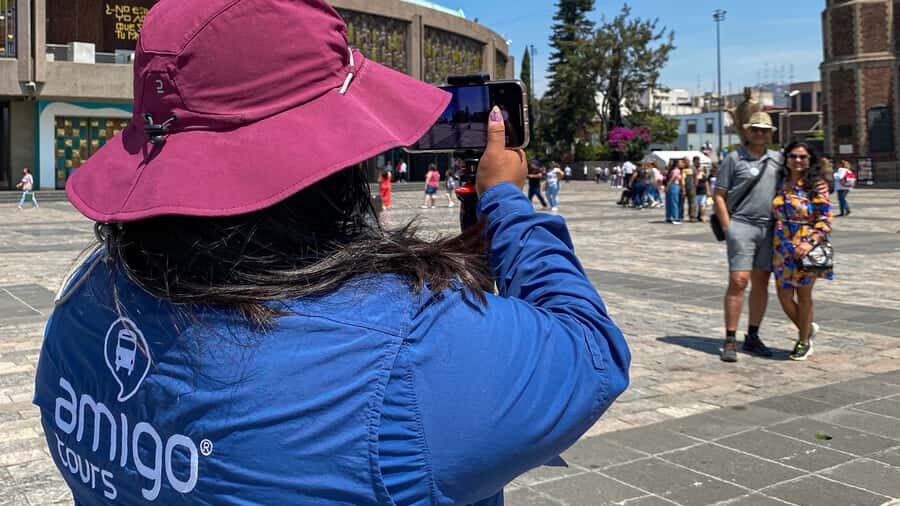
This tour is built around one clever idea: don’t treat Teotihuacan like a standalone “wow” stop. Instead, you start at Tlatelolco, move to the Guadalupe Basilica, then finish at the pyramids. By the time you reach Teotihuacan, you’re seeing Mexico as a chain of cultures—sometimes respectful, sometimes complicated, always changing.
The guide approach is also a big part of why this works. You’re not just left to read signs. The pacing is structured: guided time at each main site, then breathing room to look around and take photos. On a full-day itinerary like this, that structure matters.
You’ll also notice the tour doesn’t promise you a fancy meal. It promises you a day of seeing and understanding, plus a taste of Mexican liquor that’s hard to skip once it’s on the schedule.
You can also read our reviews of more city tours in Mexico City

Tlatelolco: Mexica ruins, human stories, and the weirdly haunting details
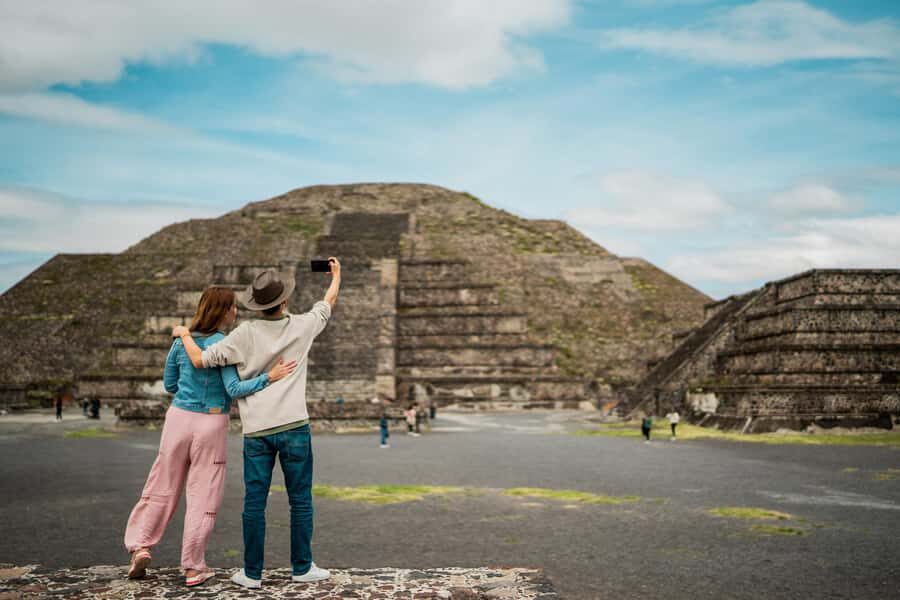
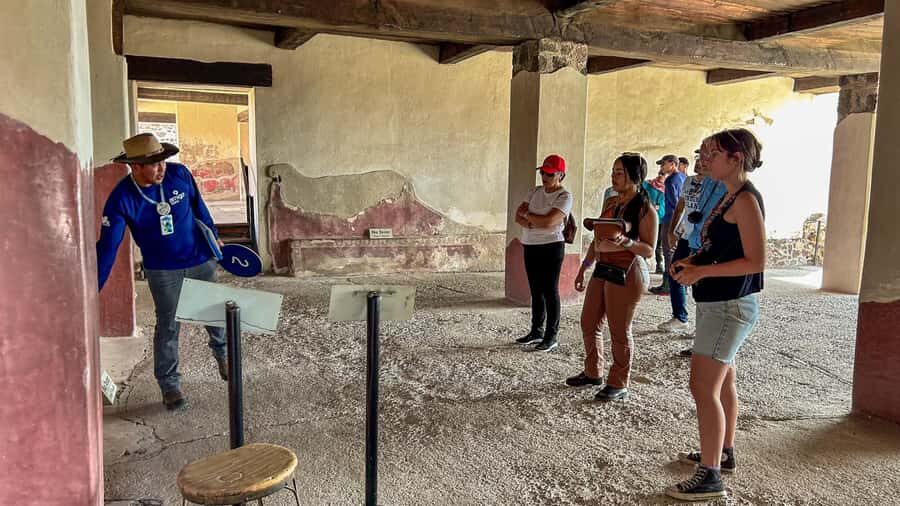
Your day begins at Tlatelolco, one of Mexico City’s most important archaeological sites. The guide-led time is about 45 minutes, which is enough to get the main ideas without turning your legs into plant pots.
This stop stands out because it’s not only about monuments. You’ll learn about Mesoamerican religious life and its darker chapters, including references to human sacrifice and mass graves. That’s heavy material, and the tour’s value is that it gives you context—so you don’t just label it as shocking and move on.
One very practical point: Tlatelolco can feel slightly “exterior” depending on how the group is paced. Some people end up doing more looking from where they’re positioned rather than wandering deep on their own. If you’re the type who wants to see everything up close, keep an eye on your guide’s focus and ask simple follow-ups on what you should look for next.
What you should do with this time
- Listen for the guide’s framing of the site: it changes how you read the ruins
- Spend a few extra minutes on the views and layout so it clicks as a city site, not just “old rocks”
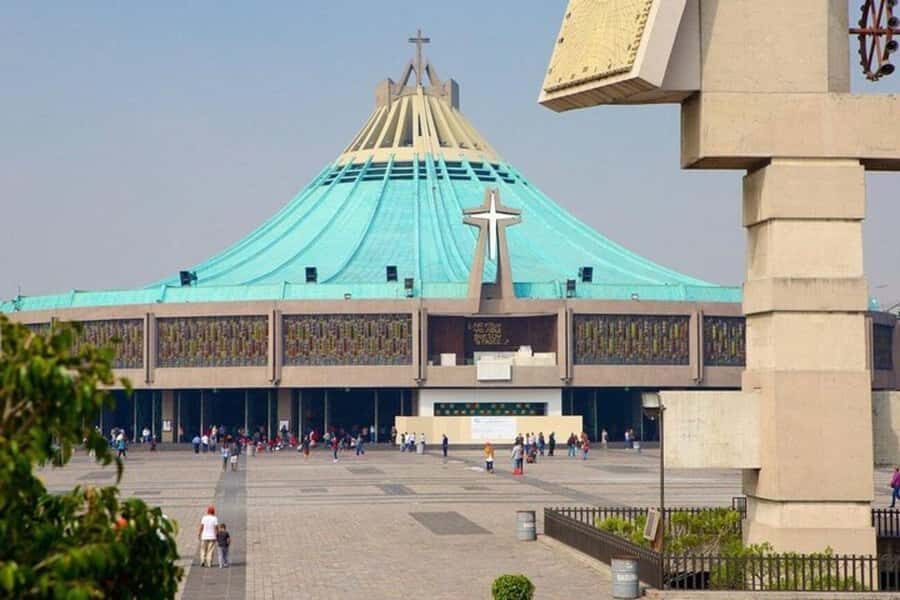
Guadalupe Shrine: what you’re seeing is faith, art, and identity
After Tlatelolco, the tour shifts from pre-Hispanic history to one of Mexico’s most powerful religious landmarks: the Basilica of Our Lady of Guadalupe. Expect about 1.5 hours of guided time here.
This is an 18th-century shrine where the cloak with the image of Guadalupe is central to the story. The guide explains Guadalupe’s significance to modern Mexican culture and the tradition that she appeared to an indigenous Mexican. Even if you’re not religious, this stop can hit you in the face—in a good way. You’re watching history become something living.
Why it’s worth your time: Mexico City is full of Catholic art, but this site is a specific origin story for millions. That makes it more than a pretty church stop. It’s also an important cultural anchor for understanding how different belief systems and identities coexist and shape one another over centuries.
A tip for making it meaningful
Go in expecting symbols—listen for what the guide points out in the imagery and story. If you just treat it like another landmark, you’ll miss what makes it powerful.
Obsidian workshop and tequila tasting: the best break in the middle of a heavy day
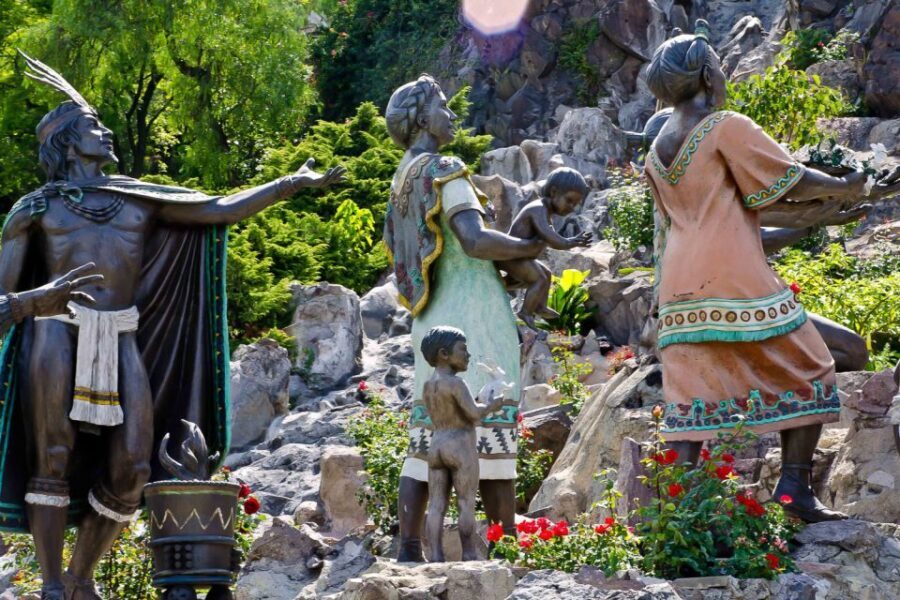
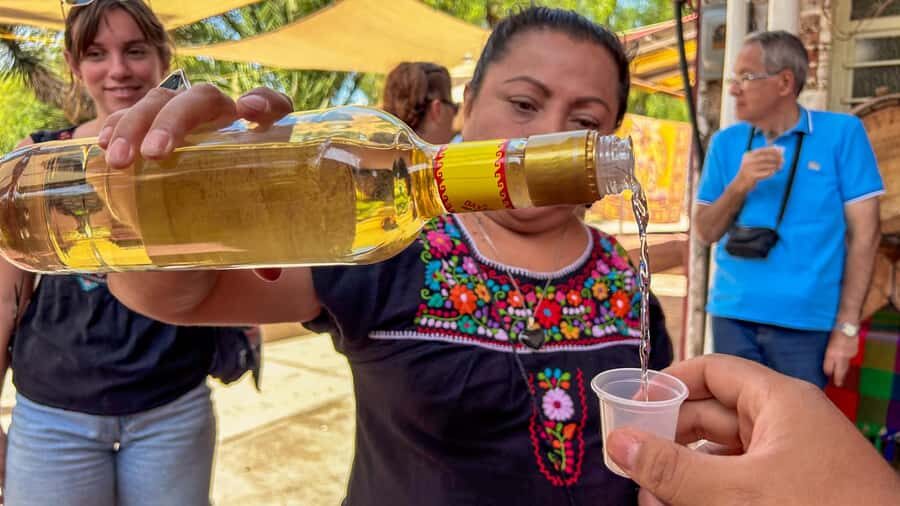
Next comes one of the most fun parts of the itinerary: an obsidian workshop followed by a tequila tasting. This is your mid-day culture reset—part craft, part flavor, and it helps keep you energized for the long final leg to Teotihuacan.
Obsidian matters in Mesoamerica because it was used as a cutting material long before modern industry. Even if you only catch the basics, you’ll start to understand why this volcanic glass earned serious attention. Then the tour adds tequila tasting, which is a very Mexico way to keep learning while also taking a breath.
The tasting is often a highlight because it’s not just one tiny sip. People describe it as a chance to try multiple types, so you can actually compare. It’s also a nice moment where the group energy loosens up a bit—good for families and first-time visitors who want more than just narration.
Practical advice
- If you’re the driver in your group, pace yourself.
- Bring a water bottle if you can (food and drinks aren’t included beyond lunch options).
Lunch choices: buffet is convenient, but you may prefer a la carte
Lunch is handled in two ways depending on what you select. The tour includes a Mexican buffet lunch only if you choose that option. If you don’t pick the buffet, you’re basically shopping for lunch on your own during the scheduled break.
Here’s the honest take: the buffet option can be convenient, but if you care about food quality and choice, you’ll likely be happier ordering from the restaurant’s standard menu rather than committing to a buffet line. The tour gives you time for lunch and a typical break that isn’t just “eat fast and run back to the bus.”
Also, the tour mentions traditional music and dance as part of the lunch/fiesta-style experience. That’s one of those “you don’t control it, so enjoy it” moments. If the restaurant has the vibe that day, you’ll feel it.
What you’ll like
- You get a real meal break instead of a rushed sandwich stop
- The timing helps you reach Teotihuacan with enough energy
A few more Mexico City tours and experiences worth a look




Teotihuacan: Avenue of the Dead, Sun and Moon, and why the guide route matters
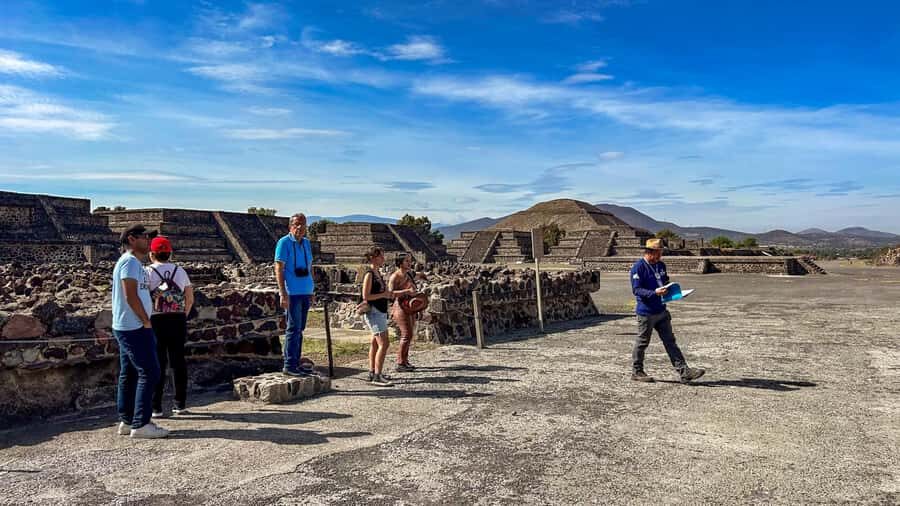
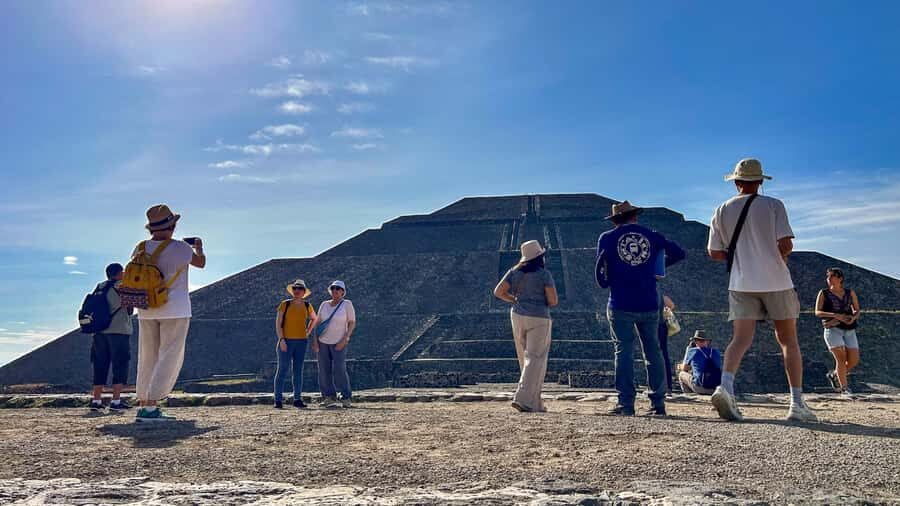
Teotihuacan is the big finale—two hours at the site with a mix of photo stops, a guided route, and time to wander. This is where most people’s eyes get wide.
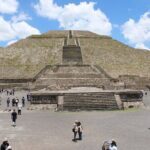
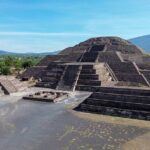
You’ll see the Pyramid of the Sun, noted as more than 200 feet tall, plus the Avenue of the Dead. The guide connects these structures to the idea of Teotihuacan as a religious and ceremonial city. You’ll also visit the Temple of Quetzalpapalotl (featured as Quetzalpapalotl) and the Temple of the Feathered Shells, along with the Pyramid of the Moon.
What makes the guided portion useful: Teotihuacan is huge and easy to feel lost in. A route helps you understand what you’re looking at and why those buildings are placed where they are. Without that, you might just snap photos and leave with a vague feeling of scale (which is fine, but the guide aims higher).
Some visitors also note the experience of being able to climb structures during their time there. If that’s allowed on the day you go, it can be a memorable way to understand the space—just go slowly and follow staff directions.
Heat and walking note
Teotihuacan sun can be intense. One thing I’d take seriously from people’s experience: come ready with protection. Even in “just February” weather, you can still get cooked. Bring sunglasses, a hat, and consider a small umbrella if you have one.
Getting around: pickup points, comfortable coach, and how to avoid tiny frustrations
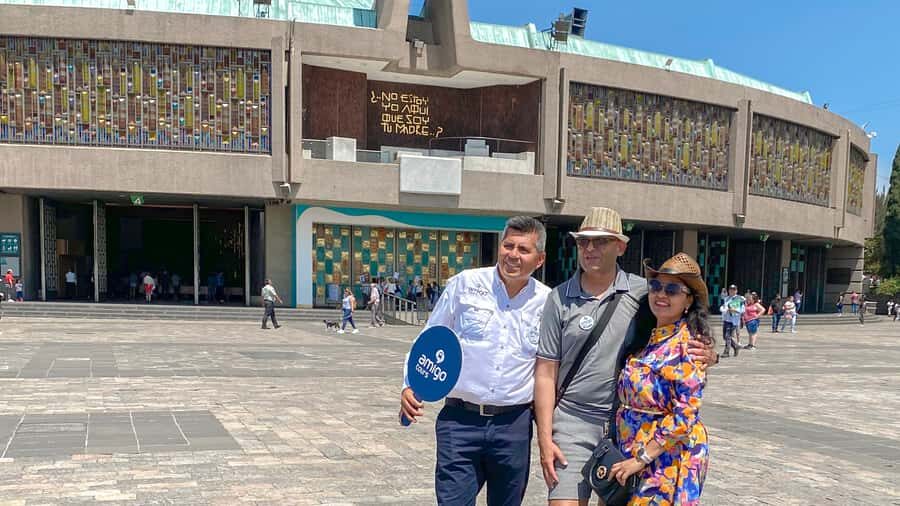
Transportation is the engine of this tour. You’ll be picked up from designated points in Mexico City (including MIGA café and Hostal Amigo), then returned to drop-off locations at the end of the day.
You’re also not stuck in a long, uncomfortable ride. Many people talk about a comfortable, air-conditioned coach—brand new in some cases. That matters because you’re on the bus for multiple stretches during the day.
A quick realism check: one review mentioned an unpleasant smell from the bus restroom area. That’s not something you can predict or control, but it’s a reminder that you should plan like an adult: expect the occasional minor discomfort on a 9-hour logistics-heavy day, and you’ll stay happy.
My practical rhythm for this kind of trip
- Sit where you can tolerate the day’s motion
- Keep your water handy
- Use the scheduled breaks instead of trying to “find a snack” everywhere
What you learn: how the three stops connect into one Mexico picture
The tour isn’t trying to cover every era in Mexico. Instead, it focuses on how different chapters of the country’s story overlap.
At Tlatelolco, you learn how the Mexica world built meaning through ritual and social order, even when the details are hard to hear. At Guadalupe, you see how Catholic faith became deeply woven into Mexican identity. Then at Teotihuacan, you land on an awe-heavy archaeological site where the guide helps you connect buildings to religious purpose and city planning.
You come away with a clearer mental map: Mexico City isn’t only modern streets and museums. It’s a layered place where old and new keep bumping into each other.
How the guides and drivers shape your day (more than you think)
This kind of tour lives or dies on the people behind the microphone.
Many names pop up for excellent guiding on this route—Alex, Francisco, Gio, Hector, Lily, Leonardo, Alicia, Alan, Sal, and Fernanda—and the common thread is storytelling. People describe these guides as patient, funny, and quick to answer questions in English and Spanish. A good guide makes the difference between “I visited three places” and “I understand why those places matter.”
Drivers also get credit a lot, including teams like Anthony, Juanito, Jaime, Simon, Salvador, Ricardo, and others, mainly for safe, smooth timing. That’s not glamorous, but on a day trip where you can’t miss a bus, it matters.
Who this tour fits best (and who should reconsider)
This is a solid pick if you want a guided, full-day highlights loop without planning the logistics yourself. It’s also a good choice if you like structure: guided time at each site, then time to look around, then back to the bus.
It may not be ideal if:
- You use a wheelchair (the tour is not suitable for wheelchair users)
- You hate long days. This is 9 hours total.
- You want a super-deep archaeological walk at Tlatelolco. That first stop can feel more focused on the main takeaway than on free roaming.
On the flip side, it can work well for families. People mention that guides keep it interesting for kids, and the stops change often enough to prevent total meltdown.
Price and value: what $55 is actually buying you
At $55 per person, you’re not paying just for Teotihuacan. You’re paying for a bundle:
- Round-trip transportation from the Mexico City meeting points
- A professional guide through the key sites
- Entrance to Teotihuacan
- Guided visits at Tlatelolco and the Guadalupe Shrine
- Tequila tasting
- Optional lunch (if you pick the buffet option)
That package is the value play. If you priced it out on your own—transport, guide time, and entry logistics—you’d likely spend similar money or more, and you’d do more of the work. Here, the point is convenience plus context.
The only value trap is the lunch choice. If you’re picky about food, consider skipping the buffet option and ordering a la carte during the restaurant break. That way, you keep the schedule but raise the odds of a meal you truly enjoy.
Before you go: packing and mindset for Teotihuacan heat + stair time
This day involves walking and outdoor sun, plus stairs and uneven areas at archaeological sites. You’ll feel better if you show up prepared.
Bring:
- Comfortable walking shoes
- Sun protection (hat, sunglasses)
- Water, since food and drinks aren’t included beyond lunch
- A light layer if you get cold on the air-conditioned bus
Mindset:
- Go expecting questions. The guide’s job is to explain what you’re seeing.
- Don’t rush Teotihuacan. Two hours is enough with a route, but you’ll enjoy it more if you slow down for key views.
Should you book this Teotihuacan & Guadalupe tour?
If you want an efficient, high-impact day with built-in context, I’d say yes. This tour makes Teotihuacan easier to understand, gives you a genuinely different cultural stop at Guadalupe, and keeps things fun with tequila tasting and an obsidian craft moment.
Book it if:
- You like guided history that connects the dots
- You want skip-the-line entry and smooth transportation
- You’re okay with a long 9-hour day and some walking
Skip it (or choose a different plan) if:
- You need wheelchair access
- You want lots of unscripted time at Tlatelolco
- You hate heat and long schedules
FAQ
How long is the Mexico City: Teotihuacan & Guadalupe Shrine Tour with Lunch?
The total duration is 9 hours.
What are the main stops on the tour?
You visit Tlatelolco, the Basilica of Our Lady of Guadalupe, and Teotihuacan. The day also includes an obsidian workshop and a tequila tasting.
Is lunch included?
Lunch is included only if you select the option with a Mexican buffet lunch. Food and drinks are otherwise not included.
Does the tour include entrance to Teotihuacan?
Yes. Entrance to Teotihuacan is included, and the tour also offers skip-the-ticket-line entry.
What language will the guide speak?
The tour offers a live guide in English and Spanish.
Where are the pickup and drop-off locations?
Pickup includes options at MIGA café and Hostal Amigo (plus another listed option). Drop-off includes Mexico City and those same two locations.
Is the tour wheelchair accessible?
No. It is not suitable for wheelchair users.