REVIEW · MEXICO CITY
From Mexico City: Cholula Pyramid & Puebla Small Group Tour
Book on GetYourGuide →Operated by Travis Adventures · Bookable on GetYourGuide
Cholula’s pyramid is more than ruins. This 10-hour, small-group tour pairs Cholula’s Great Pyramid with the wild interior art of Santa María Tonantzintla, so you’re not just sightseeing—you’re learning how Indigenous symbolism and Catholic devotion share the same spaces. A local guide meets you at Cholula, and names like Alberto and Javier show up in past-day comfort and pacing, while Puebla often gets a guide like Francisco who keeps the day organized.
The one real catch is physical: there’s no elevator to reach the top of the pyramid, and the day mixes walking, stairs, and uneven ground. If you’re dealing with mobility issues or very limited stamina, plan carefully.
In This Review
- Key highlights you’ll feel in the moment
- Why this Cholula-to-Puebla route works in one long day
- Getting there: meeting point, transport, and pacing
- Entering Cholula: the Great Pyramid and its museum first
- Climbing to Our Lady of Remedies: where two faiths share one hill
- Santa María Tonantzintla: how the dome tells a Indigenous story
- San Francisco Acatepec: the church moment after the big wow
- Puebla de los Ángeles: cathedrals, geometry, and big bells
- Capilla del Rosario: a must-see when your schedule allows it
- Calle de los Dulces: your final stroll, your snack plan
- Price and value: why $192 can make sense for a full-day loop
- Who should book this tour (and who should think twice)
- Should you book it?
- FAQ
- How long is the Cholula Pyramid & Puebla tour?
- What does the tour cost?
- Where do we meet for the tour?
- How many people are in the small group?
- Are admissions to the pyramid included?
- What language is the guide?
- Is transportation included?
- Are meals and drinks included?
- Will we definitely visit the Capilla del Rosario?
- Is there an elevator to reach the top of the pyramid?
- What time will we return to Mexico City?
- Is free cancellation available?
Key highlights you’ll feel in the moment
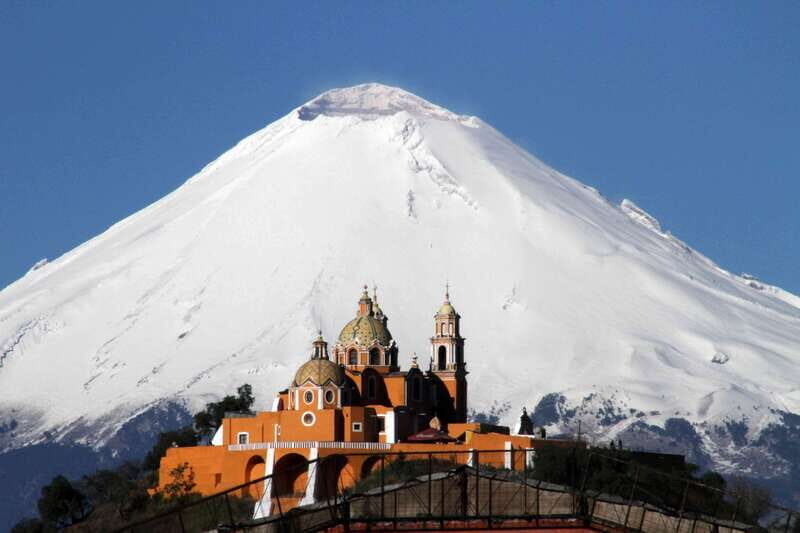
- Cholula’s Great Pyramid + museum: get context before you climb, not after.
- Tonantzintla’s dome story (Tlaloc + reincarnation faces): Indigenous motifs inside a Catholic church.
- Puebla Cathedral architecture: cross-shaped plan, 5 naves, and an octagonal central altar.
- Capilla del Rosario if available: a must-see chapel experience when timing allows.
- Calle de los Dulces: time to slow down and taste what Puebla is famous for.
Why this Cholula-to-Puebla route works in one long day
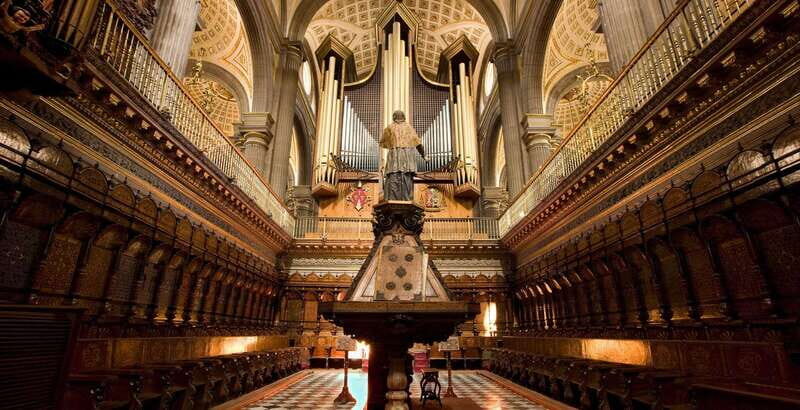
This tour strings together two of central Mexico’s most interesting places without wasting your hours on “transfer and wait.” Cholula gives you an archaeological site that feels layered, then Puebla de los Ángeles gives you colonial-era grand architecture and major religious landmarks. The payoff is that you start to see connections: how buildings reflect belief, power, and art—not just dates on a wall.
What I like about the structure is the balance. You get outdoor scale at Cholula, then you get close-up detail inside churches where your eyes have something to do for minutes at a time. And then you get Puebla’s cathedral and chapel, which are all about symmetry, craftsmanship, and big religious spectacle. It’s a full day, but it’s not random.
Also, the group size is limited to 15. That matters. In a big bus tour, you lose the chance to ask questions and get your bearings fast. Here, the guide can actually keep track of people.
You can also read our reviews of more city tours in Mexico City

Getting there: meeting point, transport, and pacing
You start at the Maria Isabel Sheraton Hotel, next to the roundabout of the Angel of Independence. From there, you’re in transport for the drive to Cholula and Puebla. Transport is included, and your guide is bilingual (Spanish and English), with a local guide at Cholula Pyramid.
The whole day runs about 10 hours, and you return to Mexico City by 6 PM. That end time is helpful for planning dinner back home. It also means you’ll want to travel light—think comfortable shoes, a layer for changing temperatures, and water for the day since meals and drinks are not included.
Past experiences with this kind of day trip tend to be sensitive to traffic. If there’s a delay, the smarter move is to keep a flexible mindset. The good news is that guides like Francisco (and others in Cholula) have shown they’ll work to keep the day on track as best they can.
Entering Cholula: the Great Pyramid and its museum first
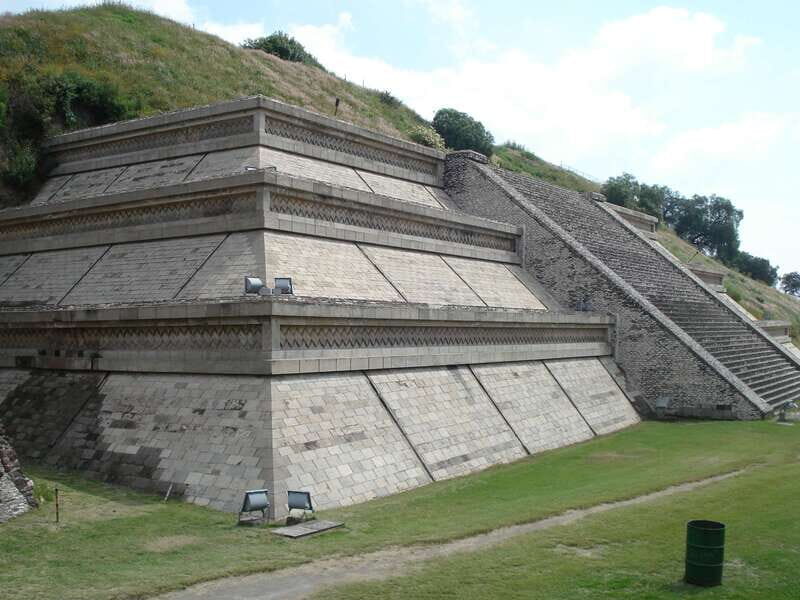
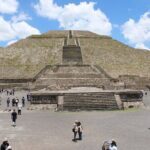
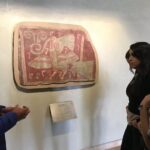
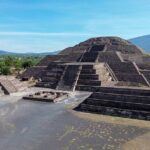
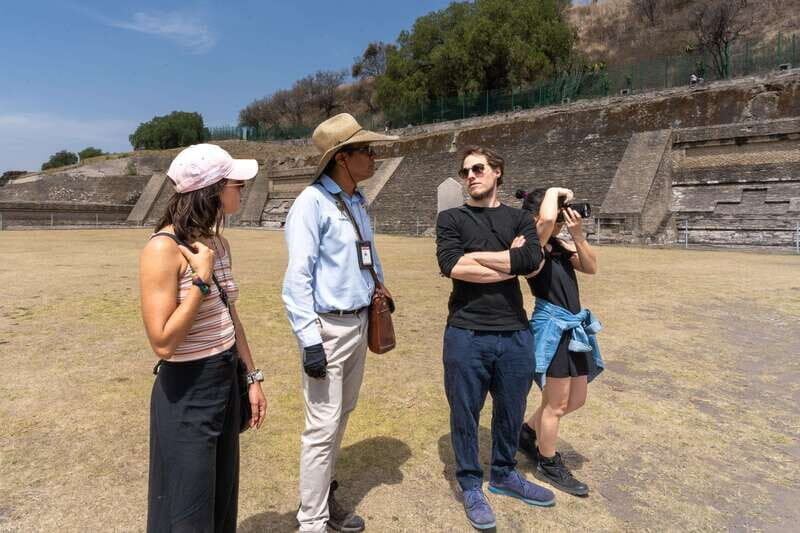
Cholula’s Great Pyramid is one of those sites where order matters. You’ll arrive and visit the archaeological area and the museum before you go into the climb. That sequencing helps a lot. Instead of guessing what you’re looking at, you get the story behind the stones, then you see it from the top.
The pyramid visit includes admissions, so you’re not doing ticket math while you’re distracted by the view. And because there’s a local guide at Cholula Pyramid, you’re not left to read alone.
Practical tip: treat this as a “walk and look” day. Even after the museum, you’ll want time to scan carvings and layout. Those details matter most when you connect them to what you just learned.
Climbing to Our Lady of Remedies: where two faiths share one hill
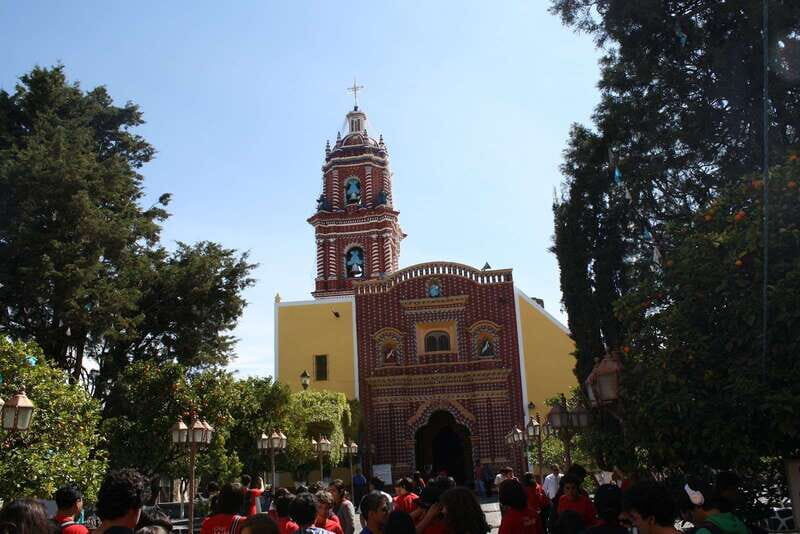
Once you’re ready, you ascend to the Our Lady of Remedies Church, built on top of the pyramid. This is one of the most memorable parts of Cholula because you can physically feel the concept of layers. The hill is archaeological, but the church is Catholic, and both are part of the same living panorama.
There’s no elevator here. You’ll be walking up. That doesn’t mean it’s impossible—it just means you should come prepared.
If walking isn’t your strong suit, consider:
- going slower than the group when you need to
- taking breaks without apologizing
- wearing shoes with real grip (pyramid-adjacent paths can feel unpredictable)
This is also where the “10-hour day” becomes real. Even if you handle the climb, you’ll likely have a tired-but-happy end-of-day feeling. That’s normal.
Santa María Tonantzintla: how the dome tells a Indigenous story
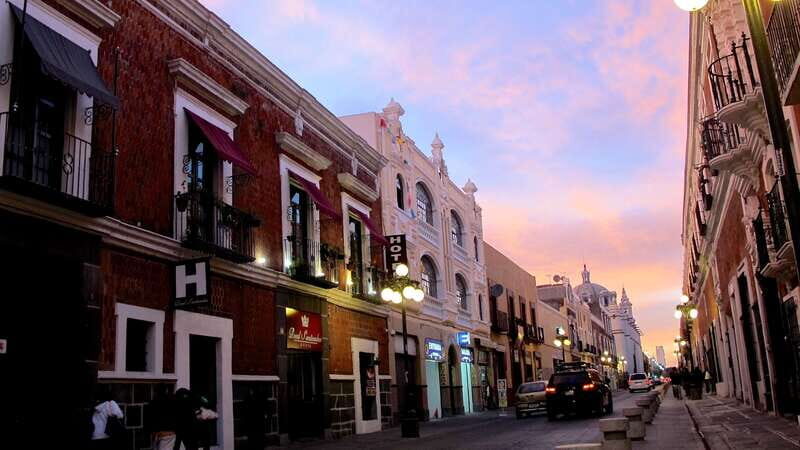
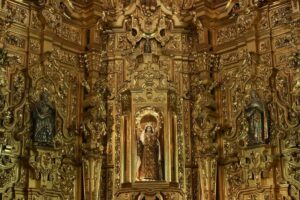
Santa María Tonantzintla is the church stop that can change how you look at everything else you’ll see that day. Its interior decoration mixes Indigenous motifs with Catholic elements, so it feels less like a generic church interior and more like a statement of identity.
The standout moment is the dome in the sky chapel. You’ll learn how Indigenous communities wanted to represent Tlaloc, the god of rain, through the dome’s design. That alone makes the architecture feel active—like it’s portraying weather, life, and belief rather than just decoration.
Then comes the detail that makes people stare: the carved faces. You’ll hear the explanation that not every face is an angel. Some are Indigenous people who died and were reincarnated in the sky. The effect is powerful because it reframes what you’re seeing from “religious symbols” to “specific cultural meaning.”
If you like places where art is doing real work—teaching, remembering, communicating—this stop is worth the effort.


San Francisco Acatepec: the church moment after the big wow
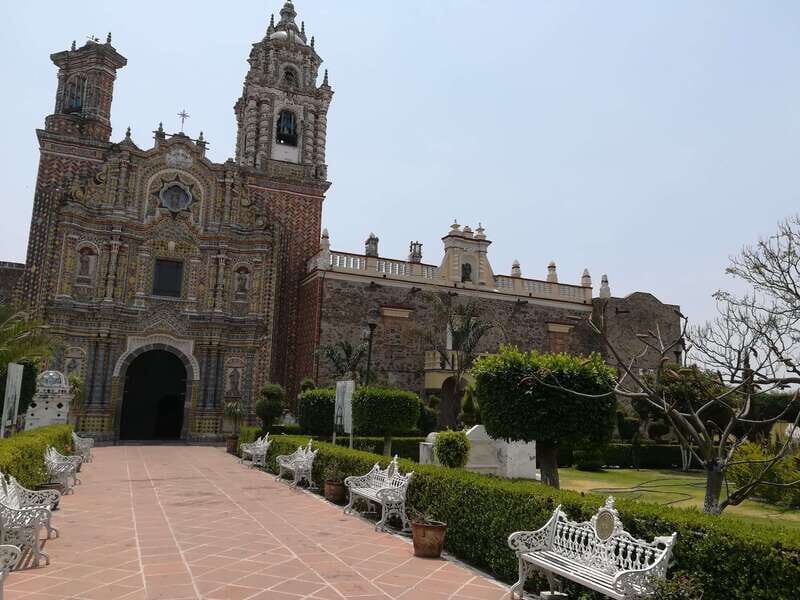
After Tonantzintla, you continue to the church of San Francisco Acatepec. The day doesn’t give you a lot of time to be passive here. The mood shifts from Tonantzintla’s intense interior narrative to another beautiful church that’s described as unforgettable.
Because the specific details aren’t laid out in the tour description you have, the best mindset is simple: treat this as your second chance to slow down and enjoy a church interior with your full attention. If Tonantzintla hits hard, San Francisco Acatepec can feel like the day’s reward—another place where craftsmanship shows up in ways you can’t fully capture in photos.
Puebla de los Ángeles: cathedrals, geometry, and big bells
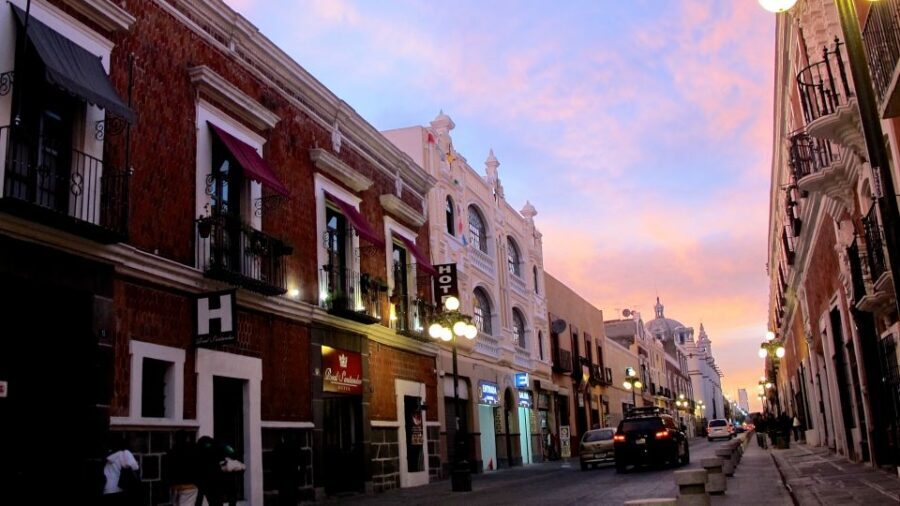
Once you reach Puebla de los Ángeles, the tour leans into architectural spectacle. You’re in one of Mexico’s major cultural heritage cities, framed by the presence of Popocatépetl and Iztaccíhuatl volcanoes.
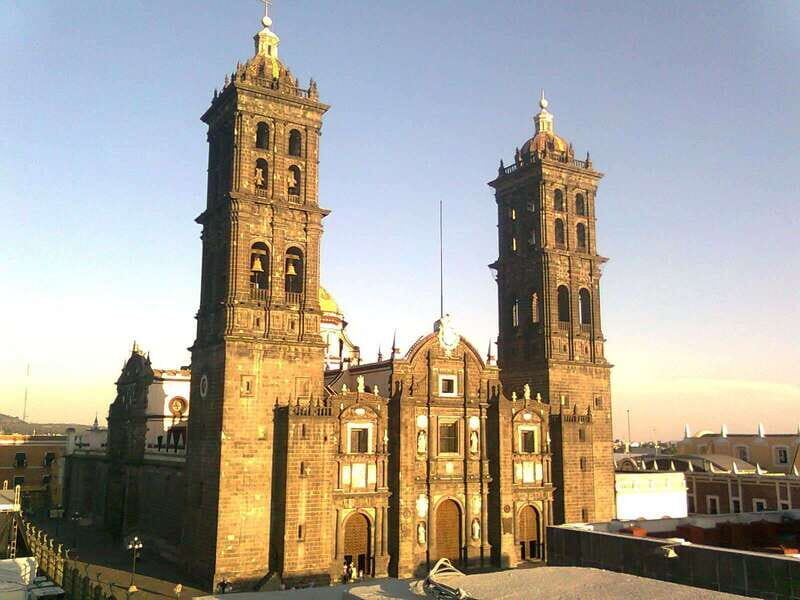
The centerpiece is the Puebla Cathedral. What you’ll notice right away is its cross-shaped layout and the fact that it has 5 naves. That’s not just trivia—it affects the feel of the space. You can sense direction and movement as you take in the central axis and side areas.
The altars are another key stop on your visual tour:
- the central altar is constructed in an octagonal shape
- the other four altars face toward compass points
That compass detail turns the building into something more intentional than “a big pretty church.” It suggests a relationship between devotion and orientation, and it’s the kind of thing a guide can point out so you actually see it.
And then there are the bell towers. They’re described as the largest in Mexico. Even if bells aren’t ringing, knowing that scale helps you read the cathedral’s silhouette.
Capilla del Rosario: a must-see when your schedule allows it
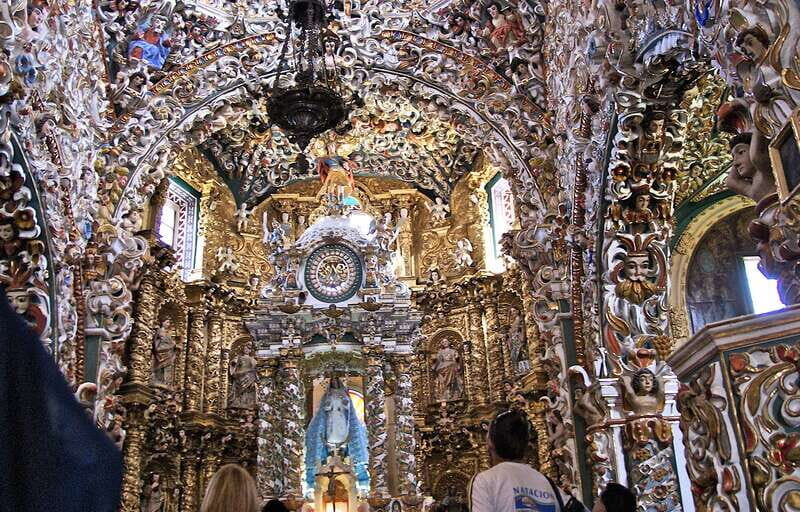
The Capilla del Rosario is one of Puebla’s headline religious spaces. The tour includes it if available, so you should be ready for either a planned visit or an adjusted route depending on timing.
When you do visit, you’ll be seeing a statue of the Virgin of the Rosary surrounded by saints, angels, and martyrs. It’s the kind of scene where the whole room works like a single composition: faces, figures, and sacred roles arranged for impact.
Even if you’re not a hardcore church fan, this chapel can win you over because it’s about visual storytelling. You’ll likely spend a bit of time looking up and taking in the layers.
Calle de los Dulces: your final stroll, your snack plan
By the end of the tour, you stroll down Calle de los Dulces. This is Puebla at its most everyday and fun: the street where typical desserts are the point, not just the backdrop.
Meals and drinks are not included, so this is a practical time to handle your hunger. The tour doesn’t force you into any one purchase, but it gives you the chance to stop, browse, and decide what you want to taste.
A helpful tip for this part of the day: keep your energy for standing and walking. Dessert shopping is not quick if you’re chatting with your guide and browsing carefully. Treat it as your decompression moment after the heavier church stops.
Price and value: why $192 can make sense for a full-day loop
At $192 per person for about 10 hours, this isn’t a bargain bus excursion. It’s priced like a curated, guided day that includes transport, admissions to the pyramid, and a bilingual guide—plus the added value of a local guide in Cholula.
Here’s how to judge value beyond the sticker price:
- You’re visiting multiple major sites in one day: Cholula’s pyramid area, two distinct church interiors in and around Cholula, Puebla Cathedral, and a possible Rosario Chapel.
- You don’t have to sort out entry tickets for the pyramid.
- You get interpretation, not just a list of stops—especially for Tonantzintla’s dome and the meaning behind the carved faces.
The small-group limit (15) matters again. In a crowded tour, you get less out of places that reward attention. Here, you’re more likely to get your questions answered without feeling rushed.
Who should book this tour (and who should think twice)
This tour fits best if you:
- enjoy architecture and religious art beyond a quick selfie stop
- can handle walking and stairs for the pyramid climb
- want a guided narrative that connects the stops
It’s a tougher match if you’re very mobility-limited or you know your stamina drops fast on uneven ground. The pyramid climb with no elevator is the big reason. Even with a caring, organized guide, you can’t change the stairs.
Should you book it?
If you want one day that actually connects the dots—Cholula’s archaeological layers, Tonantzintla’s Indigenous Catholic interior symbolism, and Puebla’s cathedral and chapel—this is a strong choice. The price feels fair when you count transport plus pyramid admissions plus bilingual guidance, and the small-group setup makes it more enjoyable than a cattle-call day.
Book it if you’re excited by details: dome symbolism, altar geometry, and the way churches tell stories through design. Skip it (or choose a gentler alternative) if you know you’ll struggle with climbing to the top of the pyramid.
FAQ
How long is the Cholula Pyramid & Puebla tour?
The tour lasts 10 hours.
What does the tour cost?
It costs $192 per person.
Where do we meet for the tour?
The meeting point is at Maria Isabel Sheraton Hotel, next to the roundabout of the Angel of Independence.
How many people are in the small group?
The group is limited to 15 participants.
Are admissions to the pyramid included?
Yes, admissions to the Pyramid of Cholula are included.
What language is the guide?
The tour includes a live bilingual tour guide in Spanish and English. You also have a local guide at Cholula Pyramid.
Is transportation included?
Yes, transport is included.
Are meals and drinks included?
No, meals and drinks are not included.
Will we definitely visit the Capilla del Rosario?
It is included if available.
Is there an elevator to reach the top of the pyramid?
No, there is no elevator to reach the top of the pyramid in Cholula.
What time will we return to Mexico City?
You return to Mexico City by 6 PM, when the tour ends.
Is free cancellation available?
Free cancellation is available up to 24 hours in advance for a full refund.