REVIEW · SAN LUIS POTOSI CITY
Pedestrian Tour in San Luis Potosí Downtown Historic District
Book on Viator →Operated by Auténtico San Luis · Bookable on Viator
At 5 pm, San Luis Potosí turns educational. I like how this downtown walk mixes major colonial landmarks with free entry stops, and I appreciate that the guide-led stories stay clear and human, like what you’ll hear from guides such as Miguel and Angela. One consideration: you’ll be on your feet for about two hours, so wear comfortable shoes and expect some uneven old-stone sidewalks.
This is a focused route through the Centro Histórico, designed to help you read the city like a map made of religion, politics, and money. I especially love the way the tour pays attention to church façades and iconography instead of only saying dates, and the pacing gives you time to look closely at what’s in front of you. If you want purely scenic views with minimal explanation, you may find the historical context feels like the main event.
In This Review
- Key highlights you’ll actually care about
- A 5pm Downtown Walk That Makes the Centro Histórico Click
- Start at Plaza de los Fundadores: The Easiest Place to Regroup
- Central Building Courtyard at the Autonomous University: New Spain’s Religious Power in Plain Sight
- Antigua Caja Real: The Quinto Real Behind the Gold and Silver
- Plaza de Aranzazu and the Franciscan World: Gardens, Alleys, and Sacred Iconography
- Plaza del Carmen: From Masks and Theater to the Interior of Temple of San Elías
- Plaza de Armas and the Cathedral Area: Civic Power and Cathedral Façade Stories
- What to Do (and Look For) to Get the Most From the Walk
- Price and Value: What $23.06 Buys You Here
- Should You Book the Pedestrian Tour in San Luis Potosí’s Historic District?
- FAQ
- How long is the pedestrian tour?
- What time does the tour start?
- Where do we meet for the tour?
- Is the tour offered in English?
- How much does it cost?
- What’s included in the price?
- Are admissions included at the stops?
- Is private transportation included?
- Is a service animal allowed?
- What is the cancellation rule?
Key highlights you’ll actually care about
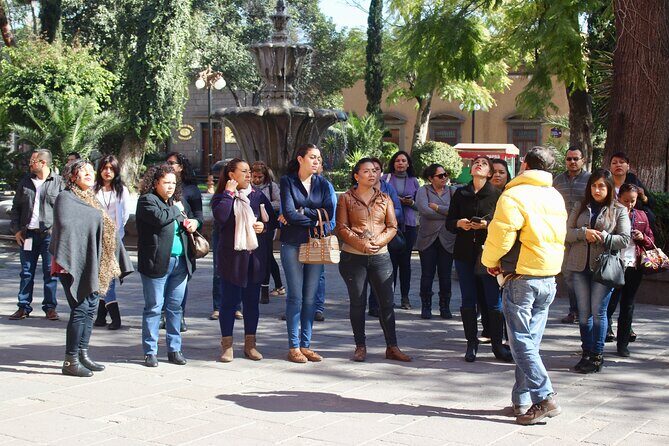
- A 5 pm start that keeps the walk comfortable while the center is still active
- Guides like Miguel and Angela bringing humor and real city context in English
- Free access at every major stop, so your $23.06 goes to the experience, not admissions
- Iconography-focused stops in churches, including details you would otherwise miss
- A small-group cap of 25, which helps you ask questions without shouting
- A simple loop that returns you to Plaza de los Fundadores at the end
A 5pm Downtown Walk That Makes the Centro Histórico Click
This tour is built around timing. Starting at 5:00 pm means you’re walking through the historic district when the light is friendlier for photos and the pace feels less punishing than mid-day heat.
It also works well for the first or second day in town mindset. When you only have a limited amount of time, you need orientation fast: where the power buildings are, where the religious complexes cluster, and how the city’s colonial layout still shapes everyday life. This route gives you that mental map—without turning into a rushed checklist.
You’ll walk between plazas that feel close on paper but don’t always feel close underfoot. Plan for a steady walk and a few stops where you’ll slow down to look up, not just look around.
You can also read our reviews of more tours and experiences in San Luis Potosi City.

Start at Plaza de los Fundadores: The Easiest Place to Regroup
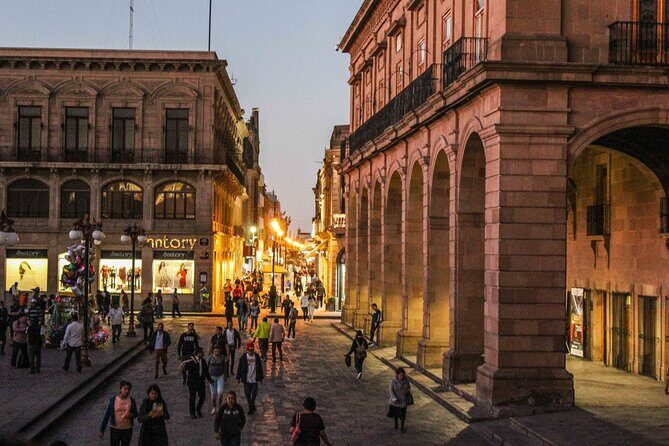
You meet in Plaza de los Fundadores, Centro Histórico (near 78000 San Luis Potosí). It’s a practical starting point because it’s in the middle of the action, so you’re not spending the first part of your evening on transit.
The tour uses a mobile ticket, which is handy if you don’t want to fuss with printed vouchers. And because it’s near public transportation, you can usually build it into a broader plan—dinner nearby, or another evening stop after you’re done.
If you’re the kind of traveler who likes to ask questions, show up a touch early. You’ll get settled, then your guide can start clean without delays.
Central Building Courtyard at the Autonomous University: New Spain’s Religious Power in Plain Sight
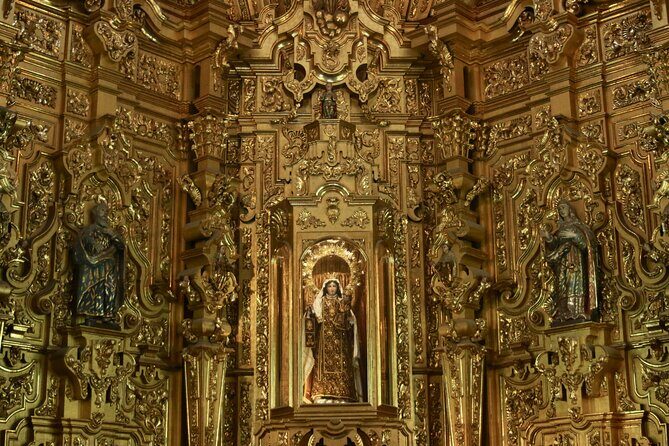
The first stop takes you into the patio of the Central Building of the Autonomous University of San Luis Potosí. This is one of those locations where the building’s function has changed over time—but the site still carries its original meaning.
What you’ll focus on here is the religious orders and their role in Potosí society in New Spain. The tour explains the dynamics: who held influence, why religious institutions mattered to everyday life, and how the space evolved into something with an educational vocation.
Why I like this approach: it prevents the common problem of visiting old churches and only hearing architecture talk. Instead, you get the social context. You start to see the city as a system—religion, education, and civic development all tangled together.
This stop lasts about 25 minutes, and admission is free, so you’re not stuck waiting around with nothing to do. You can look at the courtyard space, then listen to how that setting fits the larger city story.
Antigua Caja Real: The Quinto Real Behind the Gold and Silver
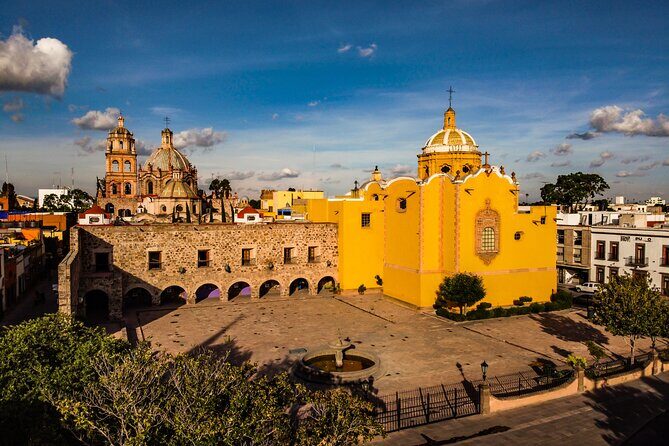
Next comes the Antigua Caja Real, a former collection house tied to the famous Quinto Real system. In New Spain, that system helped channel wealth from mining into the colonial administration.
You’ll hear how this building collected contributions and also helped protect the production of gold and silver coming out of the miners’ world. Today, the space is a cultural center administered by the Autonomous University of San Luis Potosí, which makes the stop feel more alive than a museum display.
What makes this stop valuable for you: it connects the glamour of mining legends with the paperwork and infrastructure behind them. Without that, the story stays abstract. With it, you understand why these buildings were built where they were—and why they still matter to the city’s identity.
Expect about 20 minutes here. Like the first stop, admission is free, so it’s a smart use of your paid tour time.
Plaza de Aranzazu and the Franciscan World: Gardens, Alleys, and Sacred Iconography
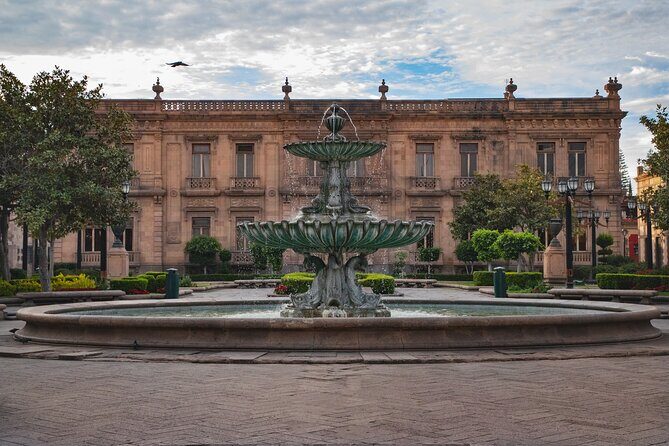
At Plaza de Aranzazu, the tour shifts from money and institutions toward the religious fabric of the city. You’ll explore the surroundings of the Old Franciscan Convent, along with the Guerrero Garden and the temple of San Francisco de Asís.
You also pass through the Santo Entierro alley and spend time in the plaza itself. The emphasis isn’t only on what the buildings look like, but on the iconography—how the design communicates religious ideas—and how people in San Luis Potosí use these spaces now.
This is where you start noticing how a city keeps telling stories even after the original era changes. The church features and symbols aren’t just decorations. They’re instructions the city learned to read.
This stop is about 25 minutes, and admission is also listed as free. If you’re the type who enjoys small visual details, this is a highlight.
One practical note: this is a lot of looking up and tracing lines across façades. If you’re planning photos, keep your camera ready, but don’t rush. The best moments happen when you pause and listen long enough to spot what your guide points out.
Plaza del Carmen: From Masks and Theater to the Interior of Temple of San Elías
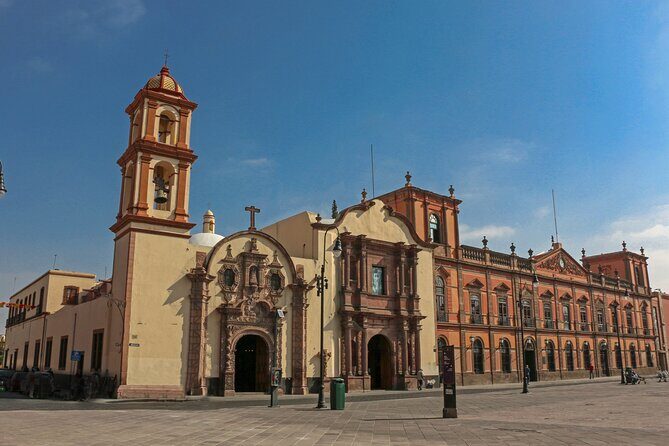
The tour then heads toward Plaza del Carmen, walking from the Guerrero Garden and passing the Former Agustino Convent along the way. This section feels like the city’s religious neighborhood changing its style as you move.
At the plaza, you’ll see the exterior of two standout cultural spaces: the National Mask Museum and the Peace Theater. Even from the outside, that pairing hints at the city’s mix of ceremony and performance—ritual isn’t only religious here.
Then comes the interior visit at the Temple of San Elías. This is a deeper stop than a quick façade glance. You’ll interpret the iconography of the façade and pay attention to the altarpiece and the altar of the seven princes. You’ll also hear about the dressing room of the Virgin of Carmen.
This interior focus is a big reason the tour earns strong ratings. Churches can feel overwhelming when you’re just walking through as a spectator. Here, you get a guided reading of what you’re seeing. You’ll walk out with a mental key—so the next church you visit won’t be blank.
It lasts about 25 minutes. Admission is free, so you’re not paying twice for the privilege of learning how to look.
Plaza de Armas and the Cathedral Area: Civic Power and Cathedral Façade Stories
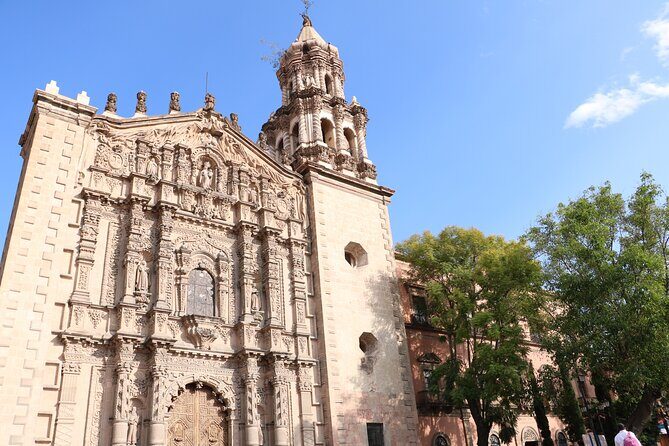
The final major segment takes you toward Plaza de Armas, also connected with Jardín Hidalgo. This is where the city’s civic identity shows itself, not just its religious one.
You’ll see the exterior of the Government Palace, the Old City Hall, and the State Congress. These buildings set the tone: the city wasn’t only built for worship; it was built to govern.
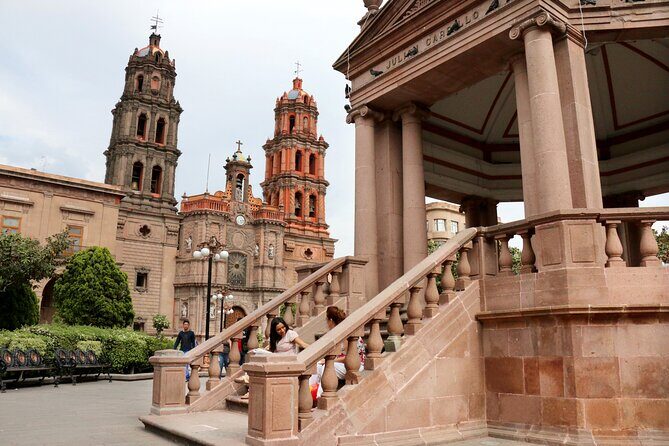
Then the tour turns to the Metropolitan Cathedral of San Luis Potosí, focusing on the iconography of its façade and key points from its history. The guide’s job here is crucial. Cathedral façades can be visually busy. The tour helps you pick out what matters and why it matters.
After that, you conclude your walk by passing the garden kiosk and returning to Plaza Fundadores, your meeting point. This closing loop matters because it makes the route feel complete instead of like an out-and-back.
This stop is also about 25 minutes. When you add up the pacing across the full route, the entire tour lands around the stated two hours.
What to Do (and Look For) to Get the Most From the Walk
If you want this tour to feel worth your time, don’t treat it like a photo safari. Use it like a city primer.
Here’s what helps:
- Track iconography, not just architecture. When your guide points at a symbol, treat it like a sentence. The stories connect across stops.
- Ask one good question early. If you’re unsure what to ask, ask about how the religious orders or mining wealth shaped the city’s layout. That theme shows up through multiple places.
- Wear comfy shoes. You’ll be walking several segments around plazas and through historic streets.
- Plan your evening after, not during. Since the tour loops back, schedule dinner soon after so you can keep the context fresh.
- Listen for guide names and style. In past sessions, guides such as Miguel and Angela were highlighted for energy and humor, and that kind of delivery makes the information easier to remember.
And if your group ends up smaller on your date, you’ll likely get more back-and-forth. The tour caps at 25 travelers, and smaller groups usually mean more room for questions.
Price and Value: What $23.06 Buys You Here
At $23.06 per person for about 2 hours, this is good value for three reasons.
First, the price isn’t only for walking. You’re paying for guided interpretation of major buildings, plazas, and interiors—especially the interior time at the Temple of San Elías.
Second, admission is free at the listed stops, and all fees and taxes are included. That removes the usual travel annoyance of adding surprise museum entry fees mid-tour.
Third, this is an English-friendly experience. The tour is offered in English, and past participants specifically praised guides for strong English delivery, which matters if your Spanish is limited.
Downside on value? If you only want broad, surface-level sightseeing, the format leans more “explainer” than “just show me.” The best match is a traveler who likes facts, symbolism, and how a city got to where it is now.
Should You Book the Pedestrian Tour in San Luis Potosí’s Historic District?
I’d book this tour if you want a smart way to understand San Luis Potosí’s Downtown Historic District without spending your whole day researching. It’s ideal if you’re:
- in town for a short trip and want orientation fast
- interested in colonial-era religion, civic buildings, and the stories behind façades
- the type who enjoys guided context more than just wandering
Skip it if you’re looking for a mostly visual tour with minimal talking, or if you hate walking for about two hours at an evening pace.
One more practical nudge: this tour starts at 5:00 pm. If that time works for your plans, you’ll get the best mix of comfortable walking and a route that pulls you through the city’s most story-heavy spaces.
FAQ
How long is the pedestrian tour?
The tour lasts about 2 hours.
What time does the tour start?
It starts at 5:00 pm.
Where do we meet for the tour?
You meet at Plaza de los Fundadores, Centro Histórico, 78000 San Luis Potosí, S.L.P., Mexico.
Is the tour offered in English?
Yes, it is offered in English.
How much does it cost?
The price is $23.06 per person.
What’s included in the price?
The tour includes all fees and taxes.
Are admissions included at the stops?
The listed stops show admission free, and the tour includes all fees and taxes.
Is private transportation included?
No. Private transportation is not included.
Is a service animal allowed?
Yes, service animals are allowed.
What is the cancellation rule?
You can cancel for a full refund if you cancel at least 24 hours before the experience’s start time. If you cancel within 24 hours of the start time, the amount paid is not refunded.