REVIEW · MEXICO CITY
City Tour and Xochimilco Floating gardens
Book on Viator →Operated by Encuentro T · Bookable on Viator
Mexico City can feel like a lot at first. This 8–10 hour tour helps you get your bearings fast with a guided minibus route and a real cultural payoff at Xochimilco. I especially like the way the day connects major landmarks to stories (from Rivera murals to Aztec roots), and I love ending with the trajinera boat ride through the canals. One thing to keep in mind: it’s a packed schedule, so you should expect limited time at each stop and to be flexible if streets slow things down.
You’ll ride in an air-conditioned minivan between highlights, with hotel pickup offered for selected hotels, and a guide who explains the big picture while you move. The group stays small (max 16), which helps, especially when the tour needs to switch between English and Spanish in a mixed group. If you’re the type who wants long, quiet visits inside buildings, this one may feel a bit like speed-dating with Mexico City.
In This Review
- Key things to know before you go
- A fast minibus day that still feels human
- Price and what your $85 really covers
- Fine Art Palace: marble, stained glass vibes, and big-style architecture
- Zócalo: where the Aztec past meets Mexico’s political center
- National Palace and Rivera’s mural story
- Museo del Templo Mayor: a short look with big archaeological weight
- Metropolitan Cathedral: quick, free, and visually loud
- UNAM Campus: stone murals and Rivera at a scale you feel
- Coyoacán walk: choose your vibe (morning coffee, afternoon color, or night mood)
- Azteca Stadium: modern scale over ancient stories
- Xochimilco trajinera: the festive canal ride you’ll remember
- Food on board: plan for separate spending (and check your booking)
- Transportation, timing, and how to avoid the most common day-killers
- So, should you book this Mexico City + Xochimilco day?
Key things to know before you go
- Small group size (max 16) keeps the day from feeling like cattle herding.
- Air-conditioned minibus + hotel pickup (selected hotels) saves you time in a city with real traffic.
- Xochimilco trajinera is included, and it’s the festive highlight of the route.
- Mix of free sights and ticketed areas means you’ll want to know what’s included.
- Panoramic stops at places like UNAM and Azteca Stadium give big views without long lines.
- Plan for a lively atmosphere at Xochimilco, including vendors and mariachi-style music.
A fast minibus day that still feels human
This is the kind of tour that’s great when you have limited time and you want structure. You’re not just hopping from photo spot to photo spot—you’re getting a guided storyline through Mexico City’s layers: Aztec foundations, colonial power, and modern identity.
You start at 9:00 am and spend about 8–10 hours moving between sights. The day is built around short stops and then stretches of travel time, so you’ll want comfortable shoes and the patience to sit still for a bit when traffic gets loud.
You can also read our reviews of more city tours in Mexico City


Price and what your $85 really covers

At $85 per person, the value comes from three main ingredients: a professional guide, transport by air-conditioned minivan, and the included trajinera ride at Xochimilco. Many of the big landmarks you’ll see are also free—like the Zócalo and the Metropolitan Cathedral area—so you’re not paying entrance fees just to stand nearby.
What’s not included is food and drinks, and the Templo Mayor museum ticket isn’t included. That doesn’t automatically mean you’ll go hungry, but it does mean you should budget for snacks or meals separately, and check your specific booking details if anything like lunch is offered on your departure.
Fine Art Palace: marble, stained glass vibes, and big-style architecture
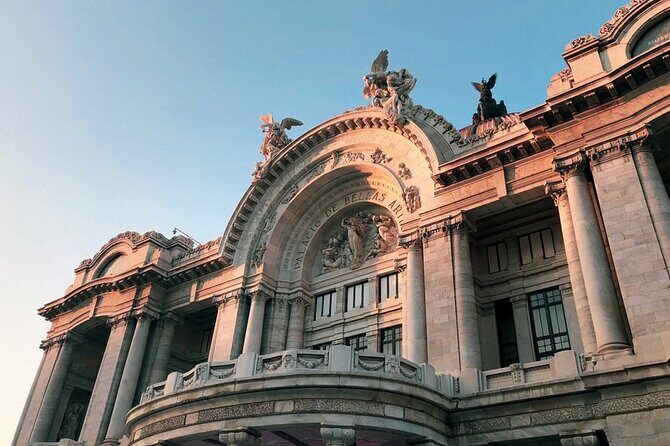
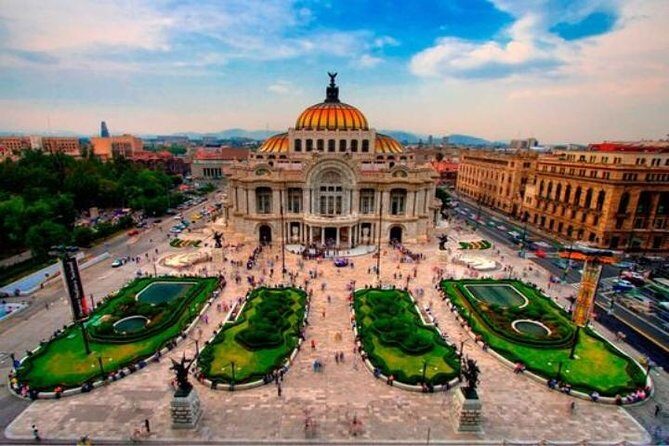
The first big cultural stop is Palace of Fine Arts (Palacio de Bellas Artes)—and even if you only see the exterior and key interior features from the tour route, it’s a showpiece. You’ll get a close look at its eclectic architecture, mixing Art Deco and Renaissance touches, plus an impressive mix of materials like Carrara and Mexican marbles.
One detail highlighted on the tour is the Tiffany curtain—a famous decorative element that helps explain why this building feels like theatre even on a regular afternoon. If you like architecture that looks like it has opinions, this is a great opener because it sets the tone for how Mexico City mixes old and new.
Potential drawback: because the day is tight, you may not have a long sit-down time here. If you want to linger and read every label, plan to come back another day.
Zócalo: where the Aztec past meets Mexico’s political center
Then you roll into the beating heart of the historic center: Plaza de la Constitución, better known as the Zócalo. This is one of those places that doesn’t just look important—it acts important. Around the square you’ll see major political buildings like the National Palace, City Hall, Justice Palace, and the Cathedral.
The guide focus here is on context: the Zócalo is tied to the Aztec empire through the remains of the Templo Mayor located in the area. You’ll also hear why the historic center is so significant—this is the expansive UNESCO-listed colonial core, and it earned the nickname Palaces’ City in the 19th century.
Timing is usually around 45 minutes, which is enough to orient yourself and snap photos. It’s also enough to feel the scale without needing half a day.
National Palace and Rivera’s mural story

Right after the Zócalo overview, the tour turns to the National Palace, the seat of Mexico’s federal executive power. The key reason this stop matters is what’s inside the palace complex: Diego Rivera’s masterpieces.
Rivera painted the history of Mexico and Mesoamerica across frescoes, so the murals don’t just decorate—they explain the country’s story in visual form. For many first-time visitors, this is where the “why should I care” clicks, because the tour shifts from sightseeing to meaning.
Potential drawback: even when something is visually central, you might not get deep interior time due to the rest of the day. If Rivera frescoes are your top priority, you may want a separate museum or palace visit later.





Museo del Templo Mayor: a short look with big archaeological weight
Next is Museo del Templo Mayor, centered on the Great Temple of Mexico—an enclosure made of constructions and towers, with a space that would have been the sacred setting of ancient life. The tour note here is that you’ll get a panoramic view rather than a long, slow museum session.
Admission for this stop is not included, and the time is brief—about 15 minutes. That brevity can feel a little unsatisfying if you’re hoping for a deep archaeological experience on this day. But as a guided “taste” that sets up the rest of your Mexico City understanding, it works.
Practical tip: since the ticket isn’t included, make sure your group knows what’s expected of you before you arrive so there’s no scramble.
Metropolitan Cathedral: quick, free, and visually loud
The Metropolitan Cathedral of the Assumption of the Blessed Virgin Mary sits on the north side of the Zócalo. It’s free for this tour stop, and you’ll get about 10 minutes to take it in.
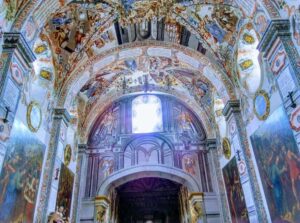
Even in a short timeframe, the cathedral lands because it’s the seat of the First Archdiocese of Mexico and a major visual marker in the historic center. It also helps you connect the day’s themes: Aztec roots nearby, then colonial power and Catholic architecture symbolizing a new era.
If you’re the type who likes to photograph doors, naves, and stonework details, you can use this short window well. If you want to step inside and take your time, don’t count on this stop to replace a dedicated visit.
UNAM Campus: stone murals and Rivera at a scale you feel
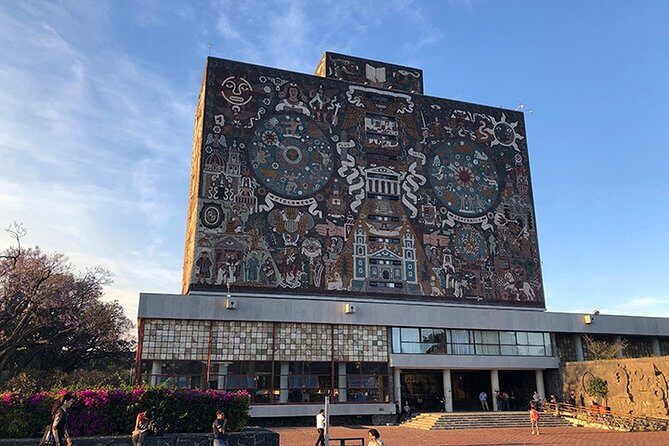
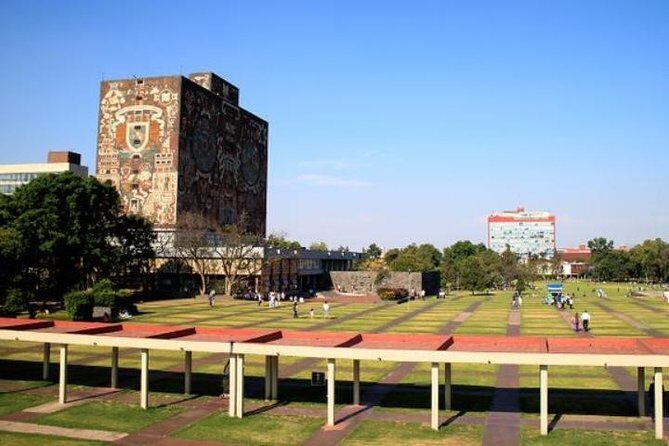
From the historic center, the tour heads to University City (Ciudad Universitaria), the main campus of UNAM, Mexico’s major public university. This stop is mostly a panoramic visit, about 20 minutes, with the big emphasis on architecture and art at a city scale.
You’ll look at one of the largest stone natural murals, plus Diego Rivera’s work connected to the campus—especially around the Olympic Stadium area. Even when you don’t go inside, the campus gives you a sense of Mexico City’s modern identity, and it’s a nice contrast after centuries of historic center stone.
Potential drawback: panoramic time means you’re seeing highlights, not exploring each building. If campus architecture is your thing, you’ll probably want to return on your own later with more time.
Coyoacán walk: choose your vibe (morning coffee, afternoon color, or night mood)
Then comes Coyoacán, a neighborhood many people visit for its charm and texture. This tour builds flexibility into that part of the schedule: you’ll walk through Coyoacán in a way that matches the time of day, with photo stops at strategic locations.
In the morning, you’re encouraged to imagine a slower start with coffee and a quieter feel. In the afternoon, the mood shifts toward colorful streets and the look of popular local life. Later on, the neighborhood can feel more musical and alive.
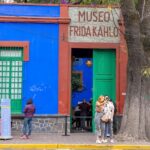
While the tour description focuses on the general neighborhood vibe—colonial houses, cultural centers, restaurants, bookstores, galleries, and craft houses—some departures also include views of key Coyoacán landmarks from the outside, including the area around Frida Kahlo’s home. You may also pass places like Coyoacán Square, and classic church and plaza areas such as San Juan Bautista and Hidalgo Square, depending on timing.
Practical note: this is walking time, so if you’re stacking socks and blisters already, pace yourself here.
Azteca Stadium: modern scale over ancient stories
Next is Azteca Stadium, a panoramic stop. This is Mexico’s football icon: capacity is listed at 87,000, making it the largest in Mexico, second in America, and seventh in the world.
The tour uses this as another “modern Mexico” marker. Even if you’re not into soccer, it helps you understand how the city celebrates big-scale identity now compared to its historic roots.
Potential drawback: again, it’s panoramic, not a full stadium visit. If you want the full experience—tours, interiors, seats—that’s a different type of day trip.
Xochimilco trajinera: the festive canal ride you’ll remember
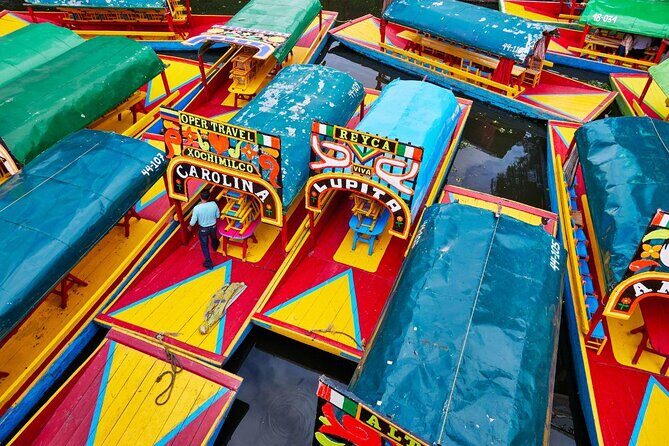
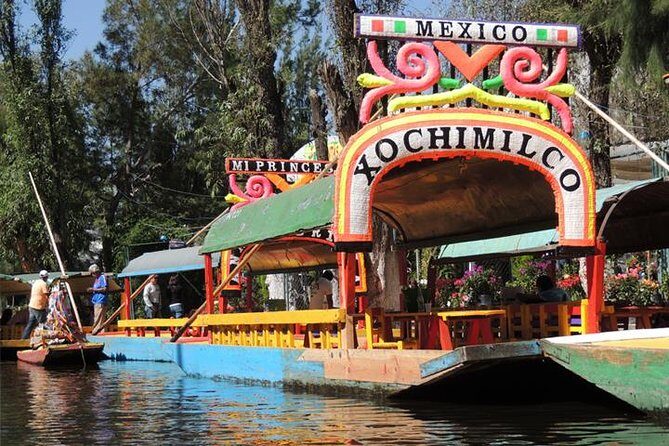
Finally, the day hits Xochimilco, and this is the part that tends to land hardest. The neighborhood feels like a town within Mexico City, and it connects you to Xochimilco’s canals, described as the last remnants of a huge Aztec transport system.
You board a trajinera (included), and you’ll ride through the canals in colorful boats similar in vibe to gondolas. You’ll pass food vendors, artisans, and you may hear mariachi-style music during the ride. The atmosphere is often festive, especially on weekends.
Timing is about 1 hour 20 minutes. That’s enough to enjoy the ride, but it isn’t so long that you feel like you can wander and read everything. One caution from past experiences: the actual time can feel tight if you end up spending extra time with market areas or getting oriented before boarding.
Reality check: Xochimilco boats can be close together. You might hear light banging or bumps—this ride isn’t a quiet museum.
Food on board: plan for separate spending (and check your booking)
The tour data says food and drinks are not included. Still, you may encounter departures where lunch gets offered as an add-on or package. Some departures have included lunch on the boat, and some guests say it was a highlight; others say the boat food didn’t match the price.
So here’s the best approach: treat meals as something you’ll handle strategically. If your booking includes a lunch component, great. If not, bring cash for snacks and keep expectations realistic—this is a canal experience with vendors and music, not a fine-dining reservation.
Also, keep in mind you may want cash on hand for small purchases and tips. You’ll likely find vendors with payment terminals, but cash is still useful for quick buys, especially if you want spices, cocktails, jewelry, or small souvenirs.
Transportation, timing, and how to avoid the most common day-killers
This tour is built for movement: minibus between stops, then walking pockets. That means your biggest enemies are traffic delays and street closures. Mexico City can reroute everything in minutes, and you may end up walking short distances instead of driving directly.
Here’s how I’d prepare:
- Wear comfortable shoes you can walk in for a couple neighborhood blocks.
- Keep your phone charged for photos, because you’ll take them.
- Bring a small snack or water if you’re sensitive to long gaps between food.
- Expect some waiting during city transit. It’s part of the deal.
Language-wise, the tour offers English, and guidance can be bilingual. In mixed-language groups, you might hear the same concepts more than once. That’s not wrong—it’s how you keep everyone in the story.
So, should you book this Mexico City + Xochimilco day?
Book it if:
- You want a first-visit overview that connects Mexico City’s landmarks into one guided narrative.
- Xochimilco trajiner is on your list and you want it included.
- You like the idea of seeing big names—Zócalo, National Palace area, cathedral area, UNAM panoramas—without planning every ticket yourself.
Skip it or choose another option if:
- You hate rushed stops and want long museum time inside major sites.
- You’re picky about food and want a guaranteed meal quality on the boat.
- You need flawless, nonstop English. The tour is designed to accommodate mixed groups, so you may hear bilingual explanations.
If you’re traveling with limited time but big curiosity, this is a strong value day: you pay for guide + transport + the canal ride, then you spend your energy on photos, stories, and soaking up two very different sides of the city.