REVIEW · PUERTO VALLARTA
Whale and Dolphin Watching with a Biologist in Puerto Vallarta
Book on Viator →Operated by Wildlife Connection · Bookable on Viator
Humpbacks show up close when you do it right. This 4-hour whale and dolphin watching trip in Puerto Vallarta pairs a marine biologist with a small group on the water, and it also ties your sightings to real citizen science work that supports animal protection.
I love that you’re not just chasing animals; you’re learning how and why they behave. I also like that the experience is built around winter humpback activity, plus dolphin species and extras like turtles and giant manta rays when conditions line up. One consideration: wildlife timing is nature timing, so even with strong searching you may still have a slower start if whales are elsewhere that day.
In This Review
- What makes this tour special right away
- Quick take: key highlights worth planning for
- Entering the water at Opequimar Centro Marino
- Who you’re actually looking for: humpbacks, dolphins, turtles, mantas
- The 4-hour rhythm: how the day unfolds on the water
- Why the biologist component changes everything
- Boat comfort details that matter more than you think
- Photo, audio, and the fluke-shot advantage
- Price and value: is $105 worth it?
- When to book for better chances in Puerto Vallarta
- Who this tour is best for
- Should you book the Whale and Dolphin Watching with a Biologist?
- FAQ
- What is the duration of the whale and dolphin watching tour?
- How much does the tour cost?
- Where does the tour meet in Puerto Vallarta?
- What animals can you see on this tour?
- Who leads the tour?
- Is the tour offered in English?
- How big is the group?
- Is confirmation sent after booking, and how soon?
- Is the tour suitable for service animals?
- Is the tour safe for pregnancy and everyone’s health?
- Is there a bathroom on the boat?
What makes this tour special right away
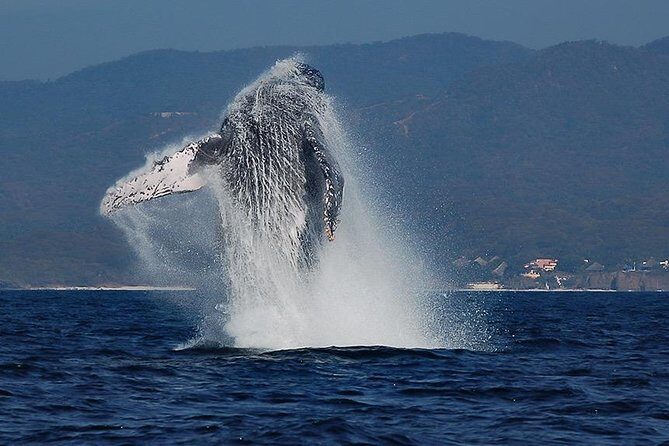
This is a whale-watching day with a research mindset. You’ll go out from Opequimar Centro Marino in Marina Vallarta, usually seeing humpbacks and dolphins in the same outing during winter, when the bay becomes a maternity and mating hotspot. The guide team includes cetacean specialists with marine ecology training and science communications experience, and they’re set up to explain what you’re seeing in plain language while you help with the project.
The group size matters here. With a maximum of 20 travelers, you’re more likely to get real viewing time rather than just taking quick looks while rotating like a slideshow. Still, it’s a boat day, so windy weather and sea conditions can affect comfort and ride smoothness.
Quick take: key highlights worth planning for
- Marine biologist leadership on the water so you’re not guessing what you’re seeing
- Humpbacks in winter plus multiple dolphin species in the same trip
- Underwater whale songs via hydrophone for extra wow factor
- Citizen science participation connected to real research and monitoring
- Small-group approach (max 20) for better sightlines and calmer pacing
- A listed guarantee: if animals aren’t found, they state you get your money back
You can also read our reviews of more whale watching tours in Puerto Vallarta
Entering the water at Opequimar Centro Marino
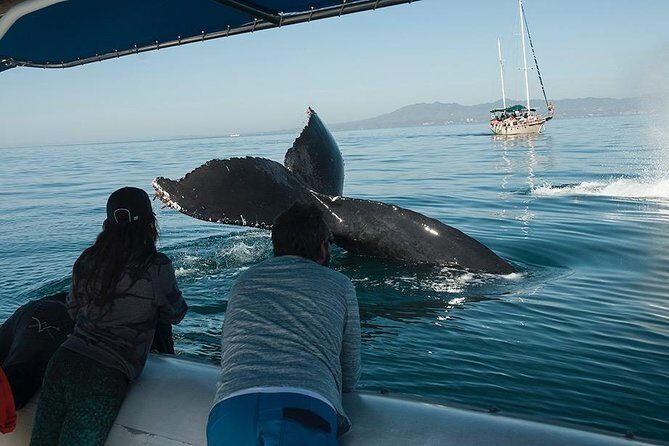
The tour starts at Opequimar Centro Marino, Av. Paseo de la Marina Sur 214, Marina Vallarta. From there, you head out on a small boat designed for active wildlife viewing. The whole point is to get you into the right zone quickly, because humpbacks and dolphins don’t march to a schedule.
Expect a structured day without feeling like you’re stuck in a classroom. Many groups also get a short educational moment before or early in the outing, and some guides include hands-on components such as seeing and touching whale-related materials (for example, baleen and vertebrae scale). Even if you skip the hands-on moment on a given day, the guide explanations still shape the experience.
You’ll end back at the same meeting point. There’s no need to plan separate transport at the end, which makes this a clean add-on to a Puerto Vallarta itinerary.
Who you’re actually looking for: humpbacks, dolphins, turtles, mantas
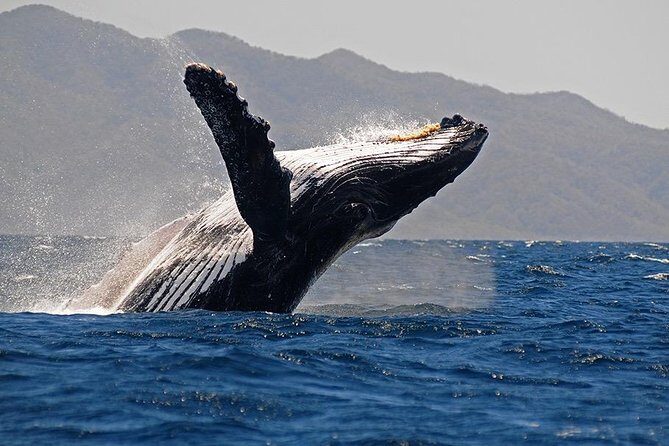
This is whale season in Puerto Vallarta territory, especially in winter, when humpbacks arrive to mate and give birth. When the whales are in the bay, you can get a front-row view of behaviors that are hard to understand until someone explains them.
Here’s the cast you can realistically hope to see:
- Humpback whales (the main target)
- Several dolphin species, including bottlenose dolphins, spotted dolphins, spinner dolphins, and rough-toothed dolphins
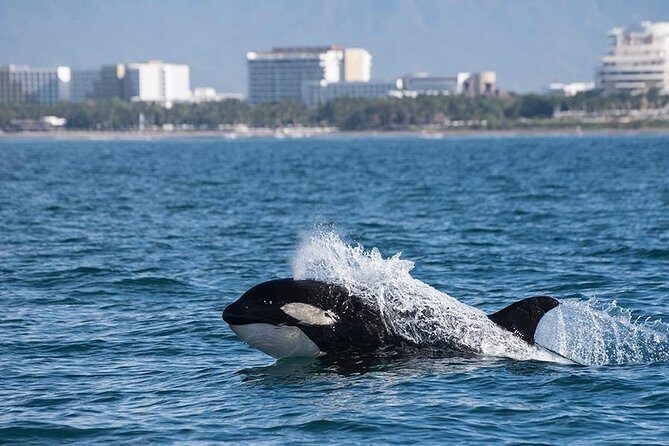
- With luck: Orcas or false orcas
- Giant mantas and marine turtles (extra sightings when conditions allow)
The best sightings tend to happen when you’re patient and when the captain and biologist work as a team: you’re not just going to a location, you’re going to animal activity. In practice, groups often report seeing adults, mothers, and calves, and that mix matters because each group type changes the behavior you’ll notice.
If hearing whale sounds is high on your list, this tour includes the chance to listen. Guides use a hydrophone to share underwater whale singing. Watching surface behavior while hearing vocalizations can make the whales feel less like random scenery and more like living, communicating animals.
The 4-hour rhythm: how the day unfolds on the water
The tour runs about 4 hours. That timing is a sweet spot for most people because it gives enough time to relocate and re-position without turning into an all-day endurance test. It also fits the reality of wildlife watching: sometimes you find the whales fast, sometimes the first stretch is quiet.
A common pattern looks like this:
- You launch and head to where sightings are expected or where the biologist is concentrating search effort.
- Once whales appear, you slow down and focus. This is where you learn behavior in context rather than just scoring a checklist.
- Then you often shift to dolphins, and on some days you get extra marine-life bonus encounters like turtles or manta rays.
One practical thing I appreciate: the captain’s job is not just getting to the whales, it’s positioning for viewing while keeping a respectful distance. When done well, that means fewer frantic spins and more time where you can actually track surfacing patterns and photo/video angles.
Also, don’t be surprised if the pace changes. Some outings start slow and then turn electric once whales surface in active groups. If you only have a short window in Puerto Vallarta, this tour’s length still keeps your day flexible.
Why the biologist component changes everything
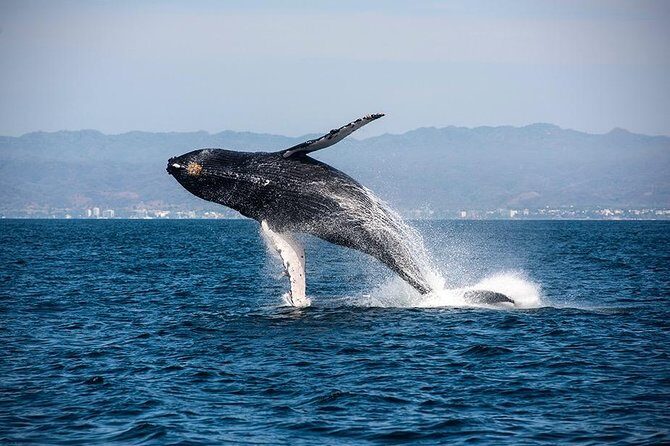
A regular whale tour can be fun. This one adds meaning. The guide is a cetacean specialist, and the team’s credentials include marine ecology training and science communication. You’ll hear explanations tied to what you’re observing right now, not general facts from far away.
What you gain from a trained guide is the ability to read whale behavior. For example:
- You’ll understand why certain whales move the way they do during winter mating and birthing activity.
- You’ll hear how vocalizations function within the social context you’re watching.
- You’ll connect what dolphins are doing to their own territory and group behavior, instead of seeing them as random streaks near the boat.
This is also where the research angle matters. The tour is described as citizen science in action. Your participation helps the project collect observations that support conservation and protection. In plain terms: your day is not only for watching, it’s for contributing to understanding.
They also state a 100% guarantee tied to finding the animals (with money-back wording if animals aren’t found). In nature, nothing is truly under human control, but having a stated promise like that signals they’re serious about locating whales, not just selling a departure.
You can also read our reviews of more dolphin watching tours in Puerto Vallarta


Boat comfort details that matter more than you think
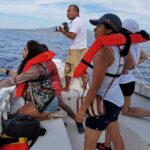
This experience caps group size at 20 travelers, and many groups describe being on smaller boats where you can shift positions and see both sides better. That matters when whales surface unpredictably; if you’re packed in tight, your view becomes whoever is standing at the right time.
From the practical side, expect:
- Life jacket use and safety guidance as you board
- Often a covered boat, which helps when sun is strong or when sea spray hits
- Comfort that aims to keep the ride functional for viewing rather than just sightseeing
A heads-up from real-world notes: there isn’t a bathroom on the boat. If you’re sensitive to that, plan your timing before you board. Bring essentials like water and sun protection, and keep snacks simple.
Also remember: seas are not always calm. Even on good weather days, you’ll want to dress for wind and shifting conditions.
Photo, audio, and the fluke-shot advantage
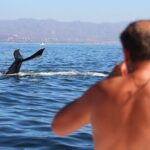
If you’re the kind of person who cares about photos and not just memories, you’ll probably appreciate how the captain works. Several groups highlight that the boat positioning aims to get you in the best spot when whales surface, including the classic fluke viewing and clean angles for video.
Pair that with hydrophone listening and the experience becomes multi-sensory:
- You watch the surface moment.
- You hear the underwater sound layer.
- Then you learn what the behavior likely means in context.
It’s the combination that makes the day stick. Otherwise, it can feel like whale sightings come and go like a video game.
Price and value: is $105 worth it?
At $105 per person for about 4 hours, this tour isn’t the cheapest way to see wildlife. But it’s also not trying to be a budget boat ride. The value comes from four things that you can feel while you’re there:
- A biologist-led format, not just a driver and a script
- Small-group size (max 20), which improves your real viewing time
- Citizen science participation, turning your trip into something purposeful
- The odds of “multiple kinds of marine life” on the same outing (whales first, then dolphins, plus potential turtles and mantas)
In other words, you’re paying for better searching and better interpretation, not just a seat on a boat. If you’re already planning a winter trip to Puerto Vallarta, this price tends to make sense compared with booking generic dolphin-only tours or repeat half-measures.
If you’re traveling solo, it can feel like a splurge. If you’re traveling as a couple or family, the learning component often becomes the best part, because you can share what you learned as you watch.
When to book for better chances in Puerto Vallarta
This tour is built for winter whale activity. If you’re going outside that window, your odds may change, because the itinerary timing is described around humpbacks returning during winter months.
Within whale season, I’d also think about flexibility. Even on perfect days, humpback movement isn’t predictable. Some groups describe slower starts that turned into amazing whale sightings later in the same trip. Translation: give it time once you’re out there.
If you’re comparing tours, look at this one if you care about:
- learning from a biologist in a real-time setting
- hearing whale songs through a hydrophone
- contributing to research instead of just taking photos
Who this tour is best for
This is a great match if you want more meaning than a standard sightseeing boat. It’s also a nice fit if you like structure without stiffness: a few hours, a clear focus, and a guide who explains what you’re seeing.
It’s also a good option for people traveling with kids or teens who want an active outing and a science story. In recent outings, families noted that the shorter duration and up-close viewing worked well for teens.
It’s not a good match for everyone. The tour is listed as not recommended for people more than 7 months pregnant.
Should you book the Whale and Dolphin Watching with a Biologist?
If you want the best shot at both action and understanding, I’d book this. The strongest reasons are the biologist-led explanations, the chance to hear whale songs with a hydrophone, and the fact that the trip ties into citizen science rather than being only a sightseeing loop. Add in the small-group cap of 20 and the real odds of seeing humpbacks in winter, and it becomes a strong Puerto Vallarta “do it once, do it well” experience.
The main downside is the one that comes with all wildlife: animals move, and you may have quieter stretches. If that would stress you out, plan to bring patience and a good mood. If that doesn’t bother you, this is exactly the kind of guided nature outing that makes Puerto Vallarta feel special beyond the beach.
FAQ
What is the duration of the whale and dolphin watching tour?
The tour is listed at about 4 hours.
How much does the tour cost?
The price is $105.00 per person.
Where does the tour meet in Puerto Vallarta?
The start location is Opequimar Centro Marino, Av. Paseo de la Marina Sur 214, Marina Vallarta, 48450 Puerto Vallarta, Jal., Mexico. The activity ends back at the meeting point.
What animals can you see on this tour?
The tour targets humpback whales and also includes dolphin watching. You may also see marine turtles and giant mantas, and there is a chance of orcas or false orcas.
Who leads the tour?
A biologist leads the experience, specializing in cetaceans.
Is the tour offered in English?
Yes, it is offered in English.
How big is the group?
The tour has a maximum of 20 travelers.
Is confirmation sent after booking, and how soon?
Confirmation is received within 48 hours of booking, subject to availability.
Is the tour suitable for service animals?
Service animals are allowed.
Is the tour safe for pregnancy and everyone’s health?
It is most travelers can participate, but it is not recommended for people more than 7 months pregnant.
Is there a bathroom on the boat?
A bathroom is not available on the boat.