REVIEW · MEXICO CITY
Travel by Cable Car in Mexico City-Iztapalapa
Book on Viator →Bookable on Viator
Cablebús views meet real neighborhood life. This is a small-group ride that takes you over Mexico City’s long cable line and points you toward Iztapalapa—a side of the city most first-timers never plan to see. I especially like the way the local guide keeps everything easy and controlled from Bellas Artes to the gondolas, so you can focus on the experience instead of logistics. I also like that your fare includes the key transport pieces, with no scavenger-hunt add-ons. The main drawback: it depends on good weather, and there are no snacks included, so you may want to grab a bite before you go.
What really makes it click is the human layer. Guides such as José and Luis bring conversation and context, and the ride feels more like moving through the city with a friend than checking boxes. If you’re expecting classic tourist sights, this tour is still fascinating—but it’s built around everyday Mexico City, public transit, and looking down at real neighborhoods.
In This Review
- Key highlights to know before you ride
- Cablebús Over Iztapalapa: Why This Feels Different
- From Bellas Artes to the Gondolas: The Logistics That Matter
- Stop 1: Iztapalapa From the Air and Up Close
- Safety and Peace of Mind on Public Transit
- Language: English, Spanish, and Real Conversation
- What You Pay: Is $40 Good Value?
- Timing, Weather, and What to Bring
- Who This Tour Fits Best (and Who Should Skip It)
- Should You Book This Cable Car Tour to Iztapalapa?
- FAQ
- Where does the tour start?
- How long does the tour take?
- What’s included in the price?
- Is snacks included?
- Is it offered in English?
- How big is the group?
- Is it safe?
- What happens if the weather is bad?
- Can I get a refund if I cancel?
Key highlights to know before you ride
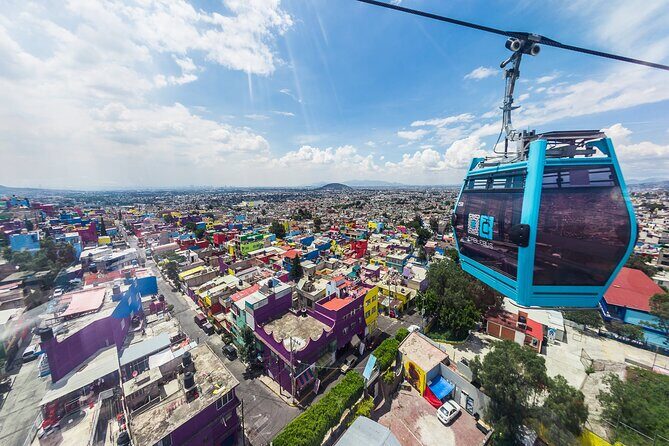
- One of the world’s longest cable car lines: you get big-city scale from above.
- Iztapalapa focus, not tourist routes: the goal is everyday life, not postcards.
- Small group (up to 9): easier questions, more guide time.
- Transport included: metro + Cablebús tickets, plus bottled water.
- Guide-led safety approach: you stay together and avoid risky street situations.
- English and/or Spanish: useful if you want language practice, not just sightseeing.
Cablebús Over Iztapalapa: Why This Feels Different
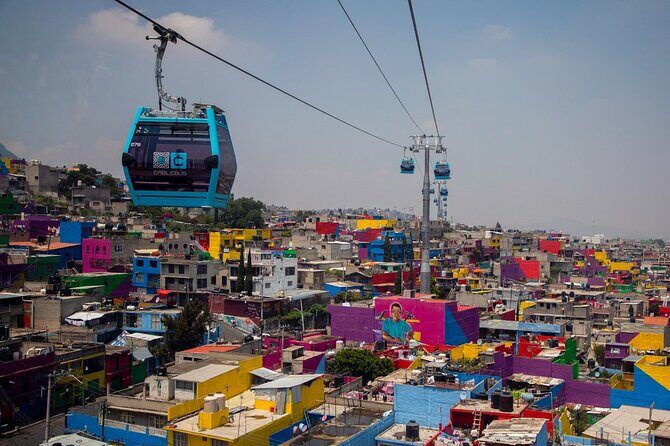
This tour’s idea is simple: use the Cablebús gondolas to get a safe, elevated perspective on a part of Mexico City that most people skip. You’re not just riding a transport system. You’re using it like a moving viewpoint, which is exactly what makes the experience memorable.
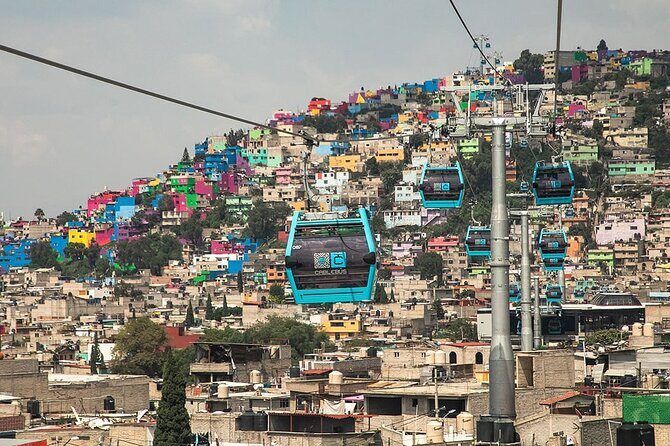
First, the views from the cable car give you city scale fast. Mexico City can feel endless on the ground, and from above you start to understand how neighborhoods link up—where people live, how streets thread through hills, and how the city stretches in every direction. Second, the local guide turns the ride into something you can actually interpret. When José or Luis talks about what you’re seeing, you stop thinking of Iztapalapa as a “place you pass over” and start thinking of it as a community with its own rhythms.
The tradeoff is that you won’t be chasing famous museums or monuments. If your perfect afternoon is standing in front of big-ticket landmarks, this might feel too transit-focused. But if you like getting your bearings, watching daily life from a respectful distance, and asking questions, it lands well.
You can also read our reviews of more city tours in Mexico City


From Bellas Artes to the Gondolas: The Logistics That Matter

The meeting point is straightforward: Bellas Artes Metro (Angela Peralta), Centro Histórico. You’ll start from there and then move by public transportation toward the beginning of the Cablebús line. The good news is the guide meets you at the start and stays with you the whole time, so you don’t have to figure out the flow alone.
A few practical things that make this easier:
- You get a mobile ticket, which reduces fumbling once you arrive.
- You’ll have metro + Cablebús tickets included, so you’re not scrambling for separate fares.
- The group is small, up to 9 travelers, which helps keep the pace calm and questions clear.
This is also a smart way to visit if you’re short on time. Even though the ride and transit can feel like a lot when you plan it yourself, the tour compresses the decision-making. You focus on the experience, not on routing.
Stop 1: Iztapalapa From the Air and Up Close
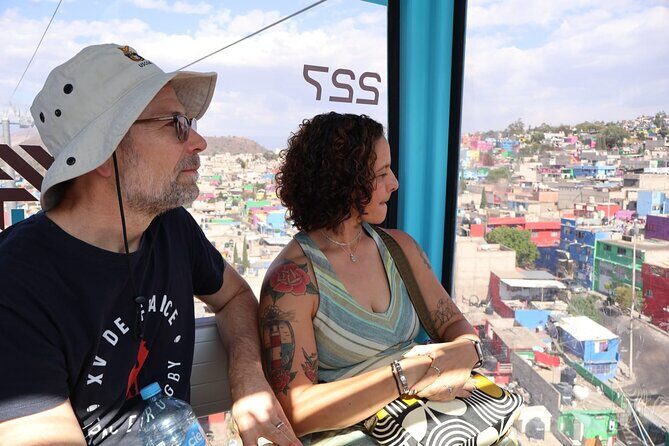
The main experience centers on Iztapalapa, and the whole point is to leave the usual tourist loop. The route is designed so you can learn about daily life without walking into street situations you wouldn’t want to handle on your own. You stay together, and the guide keeps you oriented while you move toward the cable line.
On the gondolas, you’ll watch how neighborhoods look from above: patterns of rooftops, the geometry of streets, and the way communities cluster. It’s a reminder that Mexico City isn’t one single “type” of landscape—it’s many cities inside one. That’s also why this tour works well for people who want their second layer of understanding beyond what you see around central sights.
What I like about this stop is that it’s not only visual. Guides like José and Luis bring stories about how the community works, what life looks like from street level, and how to interpret the city you’re flying over. One common theme in their approach is conversation. People mention that guides help with Spanish practice, and the tone can feel relaxed and friendly, not like a lecture.
One detail to plan around: snacks are not included. If you tend to get hungry during transit-heavy afternoons, bring a small snack or plan to eat immediately after.
Safety and Peace of Mind on Public Transit
This is the biggest reason many people choose this tour instead of DIY. The experience is structured so you don’t split up or wander off. The guide stays with the group at all times and the route is described as avoiding dangerous streets.
That doesn’t mean you should treat it like a theme park. Public transit is still public transit. You’ll be in crowded places at times, and Mexico City’s street life is lively. But the way the tour is set up—meet, travel together, ride together, return to the start—reduces the stress factor for visitors who want to explore without taking on extra risk.
Also, the group size matters here. When you’re in a bigger crowd, safety is partly about crowd control. With a max of 9 travelers, the guide can keep track of everyone more easily and help if anyone needs time or clarification.
Language: English, Spanish, and Real Conversation

The tour is offered in English, and the guide can speak English and/or Spanish during the experience. This matters because it changes how you experience the ride. If you only hear travel-brochure facts, you may miss the human side. But if you can ask questions—or even try a little Spanish—it turns into a two-way exchange.
José is one example people highlight for being conversational and helpful with Spanish practice. Luis is another name that comes up with a similar style: friendly explanations plus time for questions. If you like language learning that doesn’t feel like homework, you’ll likely enjoy that vibe.
If you only speak English, you’re still set. The listing says English is offered, and the reviews point to English-speaking guidance that focuses on clarity and safety.





What You Pay: Is $40 Good Value?

At $40 per person for about 3–4 hours, the main value is that you’re paying for more than a ride. You’re paying for three things you’d otherwise have to manage separately:
- Metro + Cablebús tickets (included)
- A guide who helps you interpret what you’re seeing
- Bottled water included, which is one less small expense
If you were to do this on your own, you’d likely still pay for transport. The tipping point is whether you want the context and route help. In this tour, the guide’s local knowledge is what turns the cable ride into something more meaningful than a view from above.
Also, the group limit helps keep costs feel fair. If you get individualized attention in a small group, the guide time becomes part of the price rather than feeling stretched thin.
Timing, Weather, and What to Bring

This experience is weather-dependent, which is a big deal for any gondola-based activity. If conditions are poor, the tour may be rescheduled or you may receive a full refund, so keep an eye on your forecast and don’t schedule it like a perfect certainty.
In terms of planning your afternoon, here’s what you can do before or after:
- Since the tour ends back at the same meeting point, it pairs easily with central-area time.
- The experience notes that it’s ideal if you want to enjoy the Museum of Fine Arts afterward.
What to bring:
- A light snack if you’re prone to hunger.
- Water is included, but you might want a second bottle if you run warm.
- Comfortable shoes for metro areas and short walking segments.
If you’re traveling with kids or teens, the structure is still appealing because the ride offers constant “something to look at.” People have mentioned that teenagers enjoyed the tour as well, especially the views and guide explanations.
Who This Tour Fits Best (and Who Should Skip It)

This is a strong fit if you:
- Want to see a different side of Mexico City than the central-sight routine
- Like public transit experiences that actually teach you something
- Prefer a guided approach when exploring parts of town you don’t know well
- Enjoy cable-car views and want that bird’s-eye perspective
You might skip it if you:
- Only want classic landmark tourism and timed museum stops
- Hate transit time or get uncomfortable in metro environments
- Want food included as part of the core plan
There’s also a good chance you’ll enjoy the social style. Multiple guides mentioned a friendly, conversational tone—so if you like chatting, you’ll probably find the experience more memorable.
Should You Book This Cable Car Tour to Iztapalapa?
If your goal is to understand Mexico City beyond the “obvious” places, I’d book it. The combo of Cablebús views, a local guide, and transport included is a practical way to get off the usual path without turning your day into a stressful navigation project. The small group size makes it feel manageable, and the emphasis on staying together helps reduce safety worries.
Book it especially if:
- You’re curious about how people actually live in large neighborhoods
- You want Spanish practice or English-friendly explanations
- You value a guided route over DIY trial-and-error
If you’re the type who needs a detailed food plan or you’re scheduling around uncertain weather, plan for flexibility and maybe eat before you go since snacks aren’t included.
FAQ
Where does the tour start?
It starts at Bellas Artes Metro station, Angela Peralta, in Mexico City’s Centro Histórico. The activity ends back at the same meeting point.
How long does the tour take?
The duration is about 3 to 4 hours, approximately.
What’s included in the price?
The price includes a metro ticket and a Cablebús (cable car) ticket, plus bottled water.
Is snacks included?
No. Snacks are not included.
Is it offered in English?
Yes. The tour is offered in English, and the guide may also speak English and/or Spanish.
How big is the group?
There is a maximum of 9 travelers.
Is it safe?
The tour is described as very safe, with the guide staying with you and not taking you out onto dangerous streets.
What happens if the weather is bad?
The experience requires good weather. If it’s canceled due to poor weather, you’ll be offered a different date or a full refund.
Can I get a refund if I cancel?
Yes. There is free cancellation, and you can cancel up to 24 hours in advance for a full refund.