REVIEW · MEXICO CITY
Teotihuacan Pyramids Tour, small group in Van, from Mexico City
Book on Viator →Operated by Estación México · Bookable on Viator
Mexico City’s ancient roots start early. This small-group Teotihuacán tour takes you from Palacio de Bellas Artes to the UNESCO pyramids, with a guide to explain what you’re actually looking at. You’ll hit the Sun Pyramid, Moon Plaza, and key temples without wrestling transfers on your own.
I like that the itinerary keeps your time focused: you’re not bouncing around for long stretches, and you get time for photos along the Avenue of the Dead and at major monuments. I also love that the included entrance and private minibus mean fewer logistics headaches and less time spent figuring out the route.
One thing to plan for: this is a walking-heavy morning, with limited shade at several stops, and the schedule can run long depending on how the day moves (traffic and group pacing).
In This Review
- Key things that make this Teotihuacán tour worth your time
- A Morning Route From Bellas Artes to Teotihuacán
- Palacio de Bellas Artes: A Smart Start Before the Ruins
- How the Teotihuacán Loop Really Works in 5–6 Hours
- Temple of Quetzalcóatl: Feathered Serpent Symbolism Up Close
- Edificios Superpuestos: The City That Kept Building Over Itself
- Sun Pyramid and Moon Plaza: The Views and the Classic Teotihuacán Walk
- Pyramid of the Sun (about 1 hour)
- Pyramid of the Moon (about 30 minutes)
- Palacio de Quetzalpapálotl: Feathered Butterflies and Paint Marks in Stone
- Getting Back to Mexico City: Alameda Central and a Useful Lunch Window
- Price and Value: Why $89.42 Can Make Sense
- Guides, Group Size, and the Day-of Reality Check
- What to Bring (and Who Should Skip It)
- Should You Book This Teotihuacán Tour?
- FAQ
- How long is the Teotihuacán pyramids tour?
- How much does the tour cost?
- What language is the tour offered in?
- What’s included in the price?
- Is admission to Palacio de Bellas Artes included?
- What’s not included?
- Where do I meet and where does the tour end?
- Is this tour physically demanding?
- Who should avoid this tour?
- What should I bring?
- When is pickup and what time do we return to the city?
Key things that make this Teotihuacán tour worth your time
- Small group cap (up to 13) helps you actually hear your guide and keep together.
- Private minibus + entrance tickets included cuts down on cash and coordination.
- Big hits, fast: Sun Pyramid, Moon Plaza, Temple of Quetzalcóatl, and Quetzalpapálotl.
- No souvenir-shop detours and no restaurant stops keeps the day on-track.
- Guide-led context turns random stones into a real story (including pigment details when offered by the guide).
A Morning Route From Bellas Artes to Teotihuacán
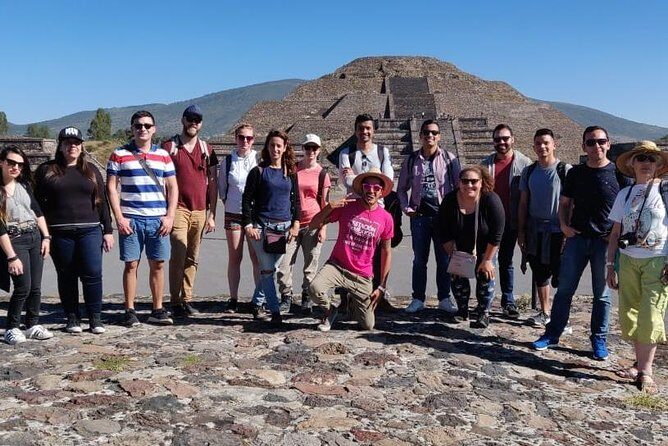
This tour starts bright and early at Palacio de Bellas Artes, right in the Centro Histórico area. You meet near Avenida Juárez, and the plan is to get you out of the city before the day heats up and traffic thickens.
The day is built around one main archaeological goal: Teotihuacán. That matters because too many “Teotihuacán + shopping + food” tours leave you tired and under-informed. Here, the goal stays clear: see the monuments, understand the meaning, and get back to Mexico City in time for lunch.
You should expect a lot of walking and standing. Teotihuacán is an outdoor site, and even when your stops are shorter (some are 10–30 minutes), you’ll still move constantly as the group transitions between viewpoints.
You can also read our reviews of more city tours in Mexico City

Palacio de Bellas Artes: A Smart Start Before the Ruins
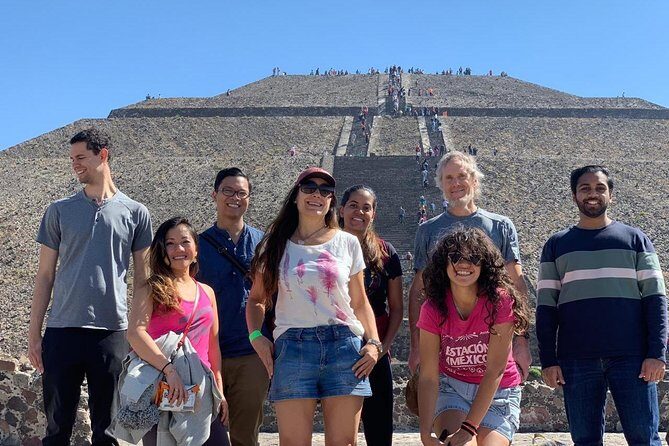
Your first stop is Palacio de Bellas Artes—one of Mexico’s most recognizable cultural landmarks. It’s known for its marble exterior and for murals attributed to major artists like Diego Rivera, David Alfaro Siqueiros, and José Clemente Orozco.
This part of the visit is about getting your bearings and getting you into the vibe of Mexico’s layered past before you step into Teotihuacán. The key practical detail: the stop lasts about an hour, but the admission ticket is not included, so if you want to go inside, plan on paying separately.
If you’re the type who likes context, this first hour helps. If you’re more “show me the pyramids,” you can treat Bellas Artes as a quick warm-up photo stop and keep your energy for Teotihuacán.
How the Teotihuacán Loop Really Works in 5–6 Hours
Once you’re at the site, you’re not doing a casual stroll through a theme park. Teotihuacán is a huge archaeological complex, so the tour uses a best-of route that hits the most meaningful monuments.
Your guide leads the pace and answers questions as you go. Some guides are known for bringing printed historical photos and using simple visual context to help you follow along. Others focus on how the city’s buildings were arranged and what each sacred space likely meant to the people who used it.
Important timing note: several stops are brief by design. For example, the route includes an early hit at Teotihuacán’s archaeological zone and then moves quickly to major temples and pyramids. That’s not a bad thing—it just means you’ll want to be ready to absorb and photograph on the fly.
Also, this experience is designed to focus on the ruins only. You’re not meant to get pulled into souvenir shops or sit-down restaurant stops during the main route, which keeps the day efficient.
Temple of Quetzalcóatl: Feathered Serpent Symbolism Up Close
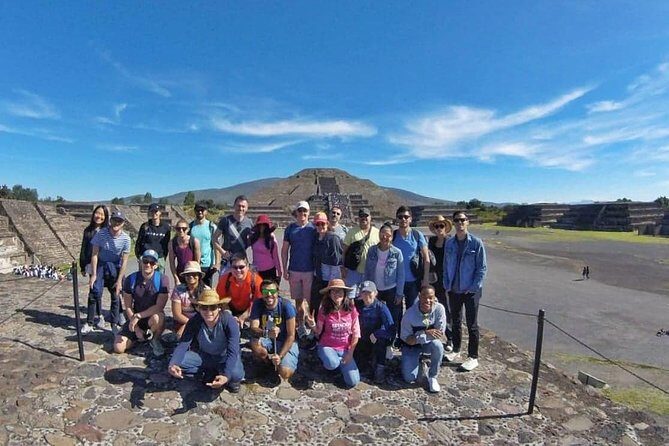
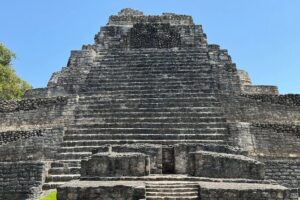
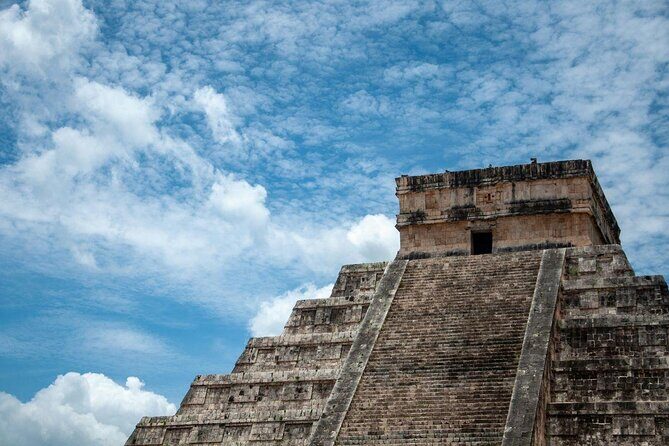
The highlight most people picture first is the Temple of Quetzalcóatl. Here, you’ll spend about an hour at the monument, which is known for sculptures of the Feathered Serpent—a symbol tied to Mesoamerican spirituality.
This is one of the stops where a guide really earns their pay. Without context, you can see carvings and steps. With context, the same details start to feel purposeful: you begin to understand why that temple mattered and why certain motifs show up again and again in the city.
Give yourself time at this stop to look sideways as well as up. The details are spread across the structure, and it’s easy to miss parts if you only chase the tallest angles.
Edificios Superpuestos: The City That Kept Building Over Itself
Short but fascinating, the “edificios superpuestos” (overlapping buildings) stop shows how later generations built over earlier ones. You’ll spend about 15 minutes here, and the point is simple: Teotihuacán didn’t freeze in time.
In a short window, you’ll notice that stone tells a timeline. Even if you don’t memorize dates, the physical layering helps you understand the city as a living, evolving place rather than one perfectly preserved moment.
If you like history that feels tangible, this stop is a good reset between larger, more dramatic monuments. It’s also a good place to slow down, because you can stand and study the structure without needing to chase the highest viewpoints.
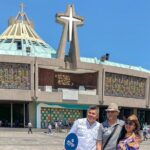


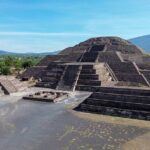

Sun Pyramid and Moon Plaza: The Views and the Classic Teotihuacán Walk
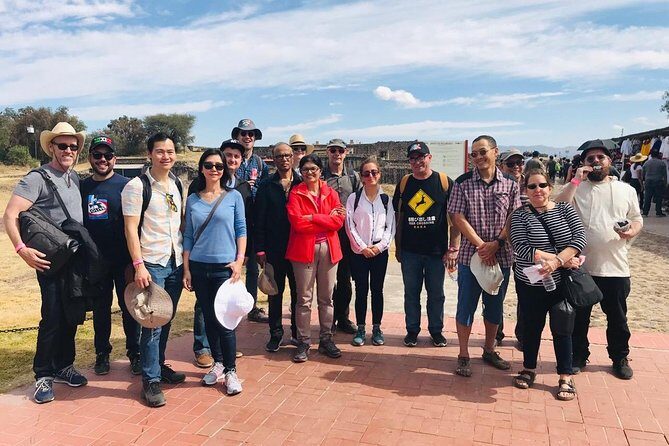
The route gives you the two biggest “wow” moments: the Pyramid of the Sun and the Pyramid of the Moon.
Pyramid of the Sun (about 1 hour)
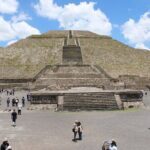
This is the largest pyramid at Teotihuacán, and you’ll get time here for viewpoints and photos. Expect a sense of scale—this is where you truly understand why Teotihuacán was such a major ceremonial center.
This is also where sun exposure becomes real. Bring what you need (hat, sunscreen, water) because even if your stops aren’t long, the ground and angles can make it feel hotter than it sounds.
Pyramid of the Moon (about 30 minutes)
Next is the Moon area, located at the end of the Avenue of the Dead. It dominates the landscape and gives you that classic Teotihuacán “you’re inside the story” feeling.
Your guide will usually frame what you’re seeing—why the Avenue mattered, and how the space worked from a ceremonial point of view. If you’re hoping to photograph the Avenue and the plazas, this is where you should be ready to move fast, then pause.
Palacio de Quetzalpapálotl: Feathered Butterflies and Paint Marks in Stone
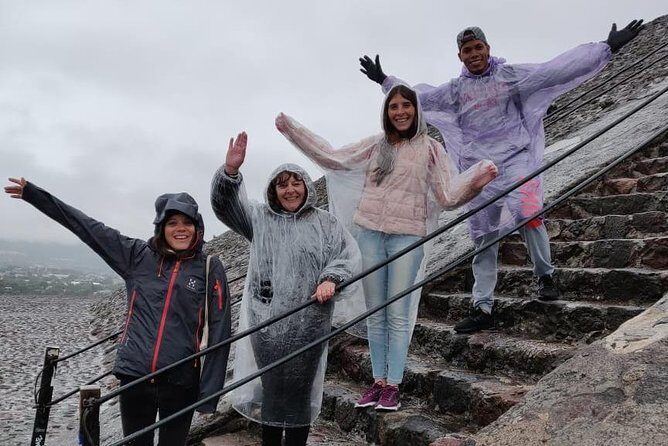
The visit to the Palace of Quetzalpapálotl is short on paper, but it’s described as a quietly powerful space once you slow down. You’ll spend around 10 minutes here, near the Moon Pyramid.
The structure is tied to feathered butterfly imagery—carved stone columns and vivid mural pigments are part of what gives it its nickname and importance. If you care about art details and symbolism, you’ll likely enjoy this stop more than you expect, because it’s more intricate than the big-pyramid viewpoints.
One practical tip: at this stage of the day, you’ll likely be a little tired. Don’t let that steal your attention. This is a great place to take a few close-up photos and then actually look with your own eyes before you speed up to the next transition.
Getting Back to Mexico City: Alameda Central and a Useful Lunch Window
After Teotihuacán, you board private transportation back toward Mexico City. The tour includes an hour around Alameda Central, with the day ending at the Hilton Mexico City Reforma, near Avenida Juárez.
Alameda Central is the oldest public park in Mexico City and it’s a handy last stop—easy to wander, easy to recharge, and easy to find food nearby. Your guide shares personal recommendations for what to eat and what to do next.
The timing is the big advantage. The plan is to arrive around 1:00 PM, which is perfect for lunch and a second half of the day in the Historic Center. Still, keep a flexible mindset: some days run over due to traffic or group pacing.
Price and Value: Why $89.42 Can Make Sense
At $89.42 per person, this isn’t a budget “DIY bus ride” option. But the value comes from what’s included:
- Archaeological tickets for the Teotihuacán site
- Private minibus transport
- A local guide
If you’ve ever tried to piece together Teotihuacán with local transit, you know it’s not just one ticket. It’s planning, time, and figuring out where to stand and wait. Here, you pay for a coordinated path so you can focus on seeing the pyramids and understanding what you’re looking at.
One more value angle: the tour avoids the common time-wasters. There are no forced souvenir-shop stops, and you’re kept on-site for the major monuments. For a short trip to Mexico City, that matters.
The main trade-off is that you’re paying for structure. If you prefer wandering slowly and changing your route, you may feel slightly “time-boxed” at certain stops that are only 10–15 minutes.
Guides, Group Size, and the Day-of Reality Check
This experience caps at a maximum of 13 travelers, which is exactly the kind of size that helps you stay oriented and hear explanations. Many reviews highlight that the pace works and the info feels organized—especially when your guide can keep track of where everyone is.
You might end up with guides such as Laura, Sophia, Luis, Carmina, or Ulysses Guerrero (Warrior)—names that show up in feedback with praise for clear explanations and a fun tone. Some guides are also described as patient and attentive, even helping older guests with chances to rest.
That said, one real-world caution: group size can change depending on the day’s logistics, including how additional people are handled. So even with a stated cap, it’s smart to keep expectations flexible, especially around timing and how quickly you move between photo points.
Also, because this tour involves outdoor walking, your “spot the guide” system can matter. Some guides may use visible cues like umbrellas when conditions require it, but in bright midday it can be harder to find a specific guide. The best move: listen for the guide’s plan at every stop so you’re not trying to guess what’s next.
What to Bring (and Who Should Skip It)
This tour is a good fit if you want a guided, efficient Teotihuacán route without the stress of logistics. It’s less ideal if you need lots of shade, lots of sitting, or minimal walking.
Here’s the practical list based on the tour guidance:
- Comfortable sport footwear
- Sunscreen
- Hat or cap
- A bottle of water
- Some snacks or fruit
- Comfortable clothes for a warm, outdoor day
The tour also suggests a minimum age of 12 because of physical activity. And if you have blood pressure problems, this is not recommended.
One more “bring it mentally” item: even if you only have 10–30 minute stops, you’ll still spend long stretches standing and walking between them. Plan hydration and breaks early, not after you’re already tired.
If you’re traveling with older relatives, it helps if your guide can accommodate rest moments. Some guides have been described as caring and helpful with that kind of need.
Should You Book This Teotihuacán Tour?
Book it if you want:
- A guided Teotihuacán route that covers the Sun Pyramid, Moon Plaza, Quetzalcoatl Temple, and Quetzalpapálotl
- Private transportation and included site tickets
- An end time that works well for lunch back in the Historic Center
Consider skipping (or changing plans) if you:
- Need a very slow pace or lots of downtime
- Are sensitive to sun and walking, especially with limited shade
- Want a fully self-paced exploration where you can spend extra time at just one monument
My call: this is a strong choice for most first-timers because it gives you the key monuments plus context, without turning the day into a scavenger hunt. If you show up ready to walk, wear sun protection, and stay flexible on timing, you’ll get a great Teotihuacán day.
FAQ
How long is the Teotihuacán pyramids tour?
It runs about 5 to 6 hours.
How much does the tour cost?
The price is $89.42 per person.
What language is the tour offered in?
The tour is offered in English.
What’s included in the price?
The tour includes a local guide, the archaeological ticket, and private transportation. It also includes all taxes, fees, and handling charges.
Is admission to Palacio de Bellas Artes included?
No. The visit to Palacio de Bellas Artes is listed as admission ticket not included.
What’s not included?
Brunch and hotel pickup/drop-off are not included.
Where do I meet and where does the tour end?
You start at Palacio de Bellas Artes (Av. Juárez S/N, Centro Histórico) and end at the Hilton Mexico City Reforma (Av. Juárez 70, Colonia Centro).
Is this tour physically demanding?
Yes. It includes physical activity and suggests a minimum age of 12. It also advises comfortable clothes and sport footwear.
Who should avoid this tour?
The tour is not recommended for people with blood pressure problems.
What should I bring?
Bring comfortable clothes, sport footwear, sunscreen, a hat or cap, and a bottle of water. It also suggests bringing snacks or fruit.
When is pickup and what time do we return to the city?
The start time is 8:00 am, and the tour ends at the Hilton Hotel around 1:00 PM.