REVIEW · LA PAZ
Sandboarding in the Mogote Dunes in Mexico
Book on Viator →Operated by Best Baja Tours · Bookable on Viator
Dunes, speed, and a sandboard lesson. That’s the core of sandboarding in the Mogote Dunes near La Paz, with a simple, beginner-friendly plan: practice on easier slopes first, then work up to steeper runs. You also get the fun part most tours skip: the off-road drive to reach the dune areas in a natural preservation zone called el Mogote.
Two things I love about this experience are the progressive coaching and the way the guides fit the ride to what you’re doing. You start on gentle inclines where you learn safety basics and correct sandboard use, then you move to steeper dunes as your confidence grows. And in the process, you’re not stuck with one-size-fits-none gear—guides can adjust what you use depending on slope and whether you want to ride sitting or standing.
One consideration: it’s a hot, sandy workout. Expect to walk back up dunes between runs, and the sand can heat up fast in direct sun, so plan for comfort (and sensible footwear choices) if you get tired.
In This Review
- Quick Highlights: Mogote Dunes in Plain English
- Mogote Dunes: The Real Reason This Tour Works
- ATV Ride to el Mogote: Off-Road Time That Actually Adds Fun
- The 3 Dune Areas: How the Skill-Building Stays Fun
- Stop 1: Gentle Inclines and Safety Skills
- Stop 2: More Incline, More Confidence
- Stop 3: Steeper Dune Runs (The One That Tests You)
- Sandboard Gear, Wax, and Coaching: The “Beginner No-Brainer” Part
- Views Over the Gulf of California: Why Timing Changes the Whole Experience
- Price and Value: Is $62.72 a Fair Deal?
- Who This Tour Suits Best (And Who Might Want to Think Twice)
- Practical Tips You’ll Be Glad You Follow
- Should You Book This Mogote Dunes Sandboarding Tour?
- FAQ
- Where does the sandboarding tour start in La Paz?
- How long is the Mogote Dunes sandboarding experience?
- Is prior sandboarding experience required?
- What language is the tour offered in?
- How much does it cost?
- What’s the group size limit?
- What happens if the weather is poor?
Quick Highlights: Mogote Dunes in Plain English
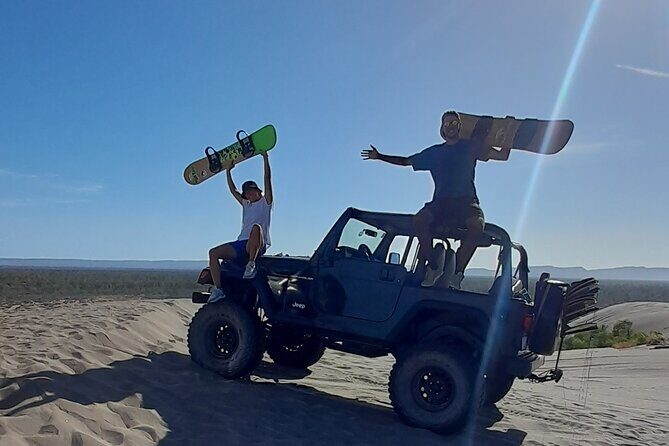
- Three dune areas: start easy, then progress to steeper descents
- Beginner-ready: no previous experience needed, instruction is step-by-step
- Personalized approach: guides match boards and techniques to slope and riding style
- Real break-time comforts: cold bottled water and snacks are included
- Fun camera moments: guides can record video and capture photos during your runs
- Big scenery payoff: Gulf of California views, with sunset options on some departures
Mogote Dunes: The Real Reason This Tour Works
Sandboarding looks simple in videos. In real life, it’s part balance, part technique, and part “figure out the sand under your board.” What makes this tour click is that you don’t jump straight to the steep stuff. You build skills on low-inclination dunes first, then earn your way up the difficulty with hands-on help.
This matters for value. If you’ve never sandboarded before, the expensive part isn’t the board. It’s wasted time. Here, the plan is built to keep you moving and learning instead of standing around watching others.
You’re in the el Mogote natural preservation area, so you trade city noise for wide-open desert and dune rhythms. And because the dunes sit by the water, you get that extra payoff of sea views while you ride, which makes the whole afternoon feel like more than just a single thrill.
You can also read our reviews of more tours and experiences in La Paz.


ATV Ride to el Mogote: Off-Road Time That Actually Adds Fun
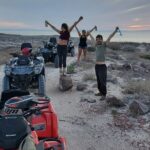
You don’t just show up at the first dune. You drive to the preservation area in all-terrain vehicles, then you hit three dune sections over the course of the outing. That structure helps because you’re not wasting your energy hiking long distances just to reach each new run.
The ATV part also changes the feel of the tour. It’s not only a sport session; it’s a scenic outing. You get the sense you’re going out to a specific dune world around La Paz, not repeating the same spot again and again.
If you’re the type who likes experiences that include a “getting there” moment, this delivery style is a plus. It also helps the schedule: by spreading your practice over three areas, you’re more likely to get a steady rhythm of practice and descents rather than one long, exhausting run.
The 3 Dune Areas: How the Skill-Building Stays Fun
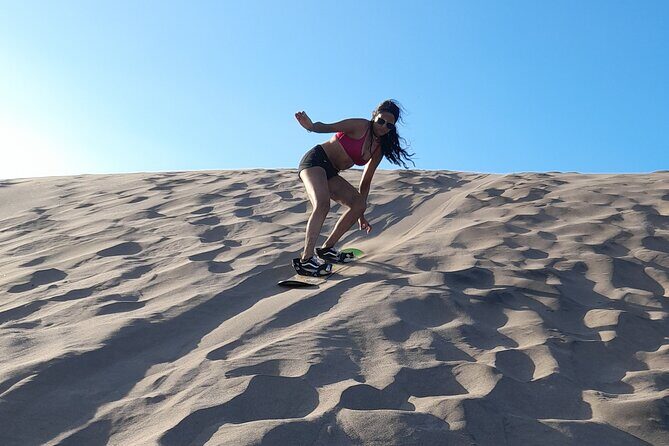
This is the heart of the experience: three dune areas in one session, with increasing difficulty as you improve.
Stop 1: Gentle Inclines and Safety Skills
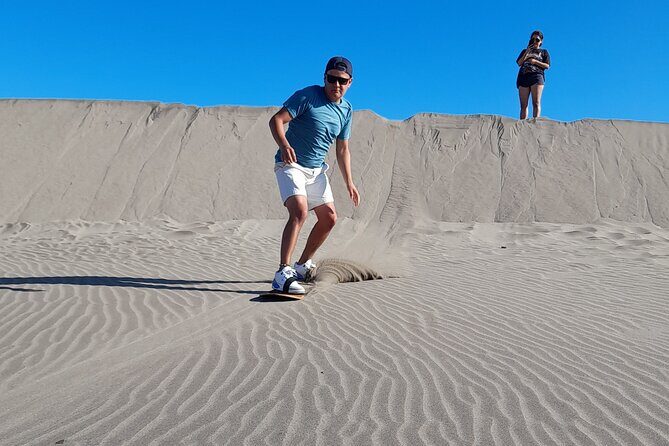
You start on dunes with little inclination. That’s where guides teach the basics: how to handle the sandboard safely and how to control your stance before speed becomes a problem. This first stage is less about “winning the run” and more about building muscle memory.
I especially like that this part includes technique for using the board correctly. Sandboarding isn’t only about going downhill. It’s about how you set up, how you keep the board stable, and how you understand what the sand is going to do.
Stop 2: More Incline, More Confidence
After the beginner foundation, you move to the next dune area with more slope. This stage is where you feel yourself leveling up. You keep practicing descents, but now the guidance matters even more: small body adjustments change how the board tracks and how easy it is to recover.
If you’re the cautious type, this is still reassuring. You’re not thrown into the steepest option immediately. The guide’s job is to help you earn the bigger descents at a pace that matches your comfort.



Stop 3: Steeper Dune Runs (The One That Tests You)
The final dune area is the most challenging. This is where people find out that sandboarding can be tougher than it looks, especially when you’re aiming for a smoother, longer run.
A practical note from actual real-world experience: be careful about sharp little hazards like thorny bushes near the dune edges. Go slow with your approach and stay aware of where you’re stepping between attempts.
By the time you hit this last section, you’re usually not learning everything from scratch. You’re applying what you worked on earlier, which is why first-timers often say they get it faster than expected.
Sandboard Gear, Wax, and Coaching: The “Beginner No-Brainer” Part
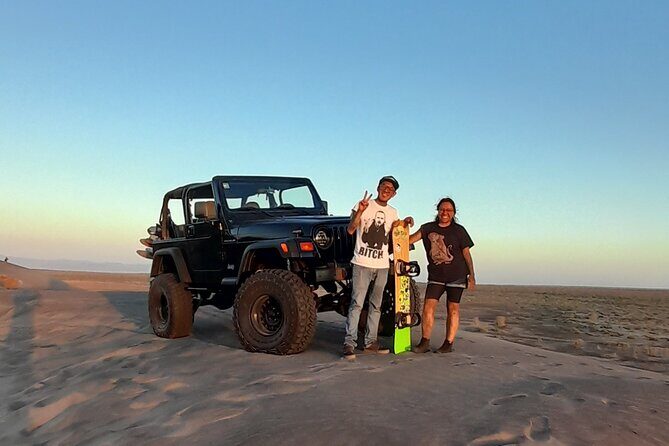
The tour is designed to work even if you’ve never done this before. The coaching style is part of the reason.
Across the experience, you may notice the guides use gear and technique that match what you’re trying to do:
- guidance for different riding setups, including sitting vs. standing
- adjustments for slope difficulty
- instruction that focuses on the basics first, then the descents
In some cases, guides teach you to prep the board with wax, which helps the board slide across sand instead of grabbing. That detail sounds small, but it’s often the difference between a run that feels controlled and one that feels like you’re fighting your equipment.
You’ll also see how much attention the guides give to comfort and control. People who were hesitant at first often feel more confident once they’ve done enough “bunny slope” practice, because the dunes start to feel predictable.
And yes, it’s worth paying attention to the photo/video angle if you like memories. Guides can record video and take footage during your attempts, which is great because sandboarding is chaotic by nature. After the fact, you’ll want a record of your best runs and your wipeouts, too.
Views Over the Gulf of California: Why Timing Changes the Whole Experience
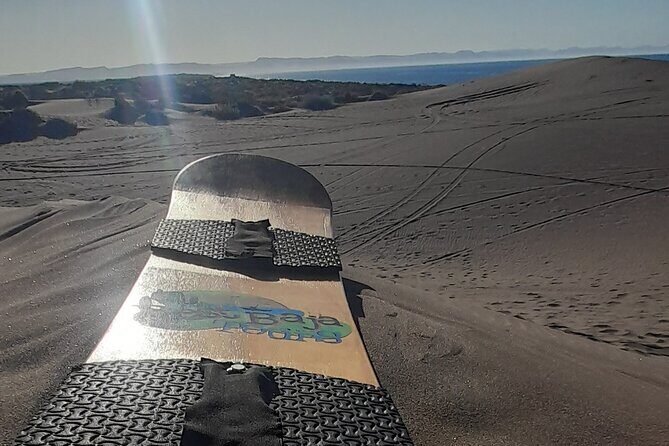
One reason I’d book this even if you’re not chasing speed is the scenery. From the dunes, you can look toward the Gulf of California, and the sky can turn the whole outing into a photo session without you even planning it.
Timing matters. If you catch a later departure (some sessions run toward sunset), you can ride as the light softens. That changes the vibe: the dunes look different, the temperature can feel kinder, and the views look extra dramatic.
So if you’re trying to plan your La Paz days, this sandboarding outing is a strong alternative to all-ocean plans. It’s the same region, but a totally different side of the landscape—dune energy, off-road travel, and desert views toward the water.
Price and Value: Is $62.72 a Fair Deal?
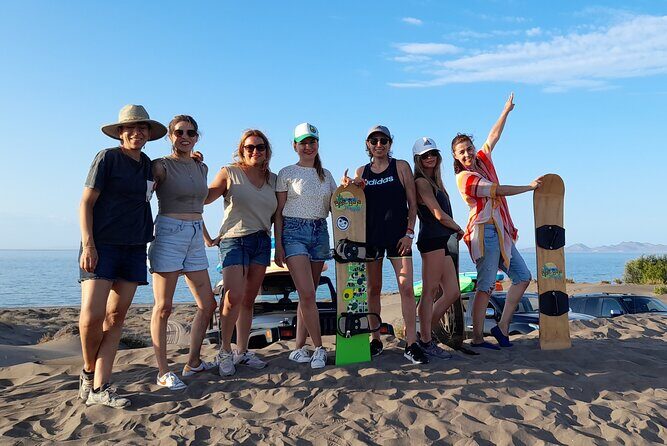
At $62.72 per person for about 3 hours 30 minutes, this sits in the “worth it if you actually ride” category. The value comes from three places:
- Skill progression built in
You’re not paying to stand around. You practice on easier dunes first, then you go steeper. That structure is what helps you get real results, even as a first-timer.
- Coaching + gear attention
Instruction matters. So does board setup and technique for different slopes and riding styles. You feel it when the run starts to click instead of feeling random.
- Included comfort items
You can expect cold bottled water and snacks. In some cases, people also received fruit and additional refreshments during breaks. That’s not a luxury here—it keeps your legs working through the sandy workout.
Group size is limited, with a maximum of 25 people, so you’re less likely to feel lost in a crowd. Smaller groups tend to mean more guide attention per person, especially when you’re learning.
Who This Tour Suits Best (And Who Might Want to Think Twice)
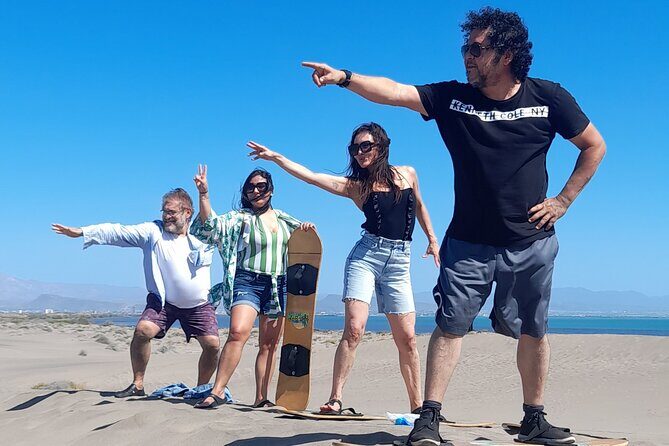
This tour is a great fit if:
- you’re a first-timer who wants a structured lesson instead of a trial-and-error chaos session
- you like outdoor play with clear instruction
- you want desert views plus a water-adjacent horizon
It’s also a fun option for groups and families, as long as everyone is ready for the physical reality of dunes: sand work, walking back up for multiple runs, and sun exposure.
If you’re dealing with mobility limits or you know you’ll struggle with repeated up-and-down dune movement, you might want to consider that as a deciding factor. Most people can participate, but sandboarding isn’t only a seated activity.
Practical Tips You’ll Be Glad You Follow
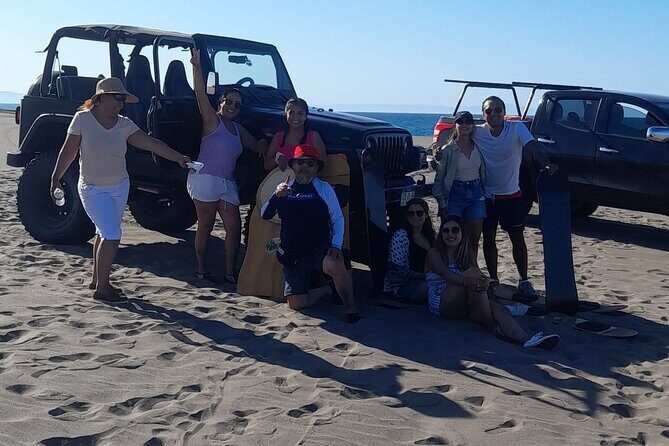
Here’s how to set yourself up for a better session, based on the realities of dunes and first-time sandboarding:
- Wear gear that handles heat and sand. Sand gets hot in direct sun fast. Some people choose to go sock-style for comfort later in the day.
- Bring water habits to mind. Even with included bottled water, you’ll feel thirst in the desert.
- Use patience on the steep part. The last dune area is where people get challenged. That’s normal.
- Watch your footing near edges. Thorny bushes can be an issue if you’re rushing between attempts.
Also, if you’re a “video person,” ask the guide about capturing your runs. If they’re set up for it, you’ll end up with a much better souvenir than just a few photos.
Should You Book This Mogote Dunes Sandboarding Tour?
Yes, I think you should book it if you want a beginner-friendly sandboarding session that actually teaches you to ride, not just to try. The biggest reasons to choose it are the step-by-step progression across three dune areas, the personalized coaching approach (including sitting vs. standing considerations), and the fact that the outing includes comfort breaks with drinks and snacks.
Skip it or reconsider if you’re not comfortable with heat and repeated walking back up dunes. Also keep in mind the outing requires good weather; if conditions are poor, you’ll need to plan around that.
If your La Paz trip has room for one active, view-filled afternoon in the desert, this is an easy pick.
FAQ
Where does the sandboarding tour start in La Paz?
The tour starts at Paseo Álvaro Obregón, Zona Central, 23000 La Paz, B.C.S., Mexico. It ends back at the same meeting point.
How long is the Mogote Dunes sandboarding experience?
The experience lasts about 3 hours 30 minutes.
Is prior sandboarding experience required?
No. The experience does not require previous sandboarding experience.
What language is the tour offered in?
The tour is offered in English.
How much does it cost?
The price is $62.72 per person.
What’s the group size limit?
The tour has a maximum of 25 travelers.
What happens if the weather is poor?
This activity requires good weather. If it’s canceled due to poor weather, you’ll be offered a different date or a full refund.
If you want, tell me your travel month and whether you prefer sunset timing, and I’ll help you decide the best day slot in La Paz.