REVIEW · SAN MIGUEL DE ALLENDE
Queretaro: City Tour in Classic Ford T Vehicle
Book on Viator →Operated by oh! Turismo que inspira · Bookable on Viator
A classic Ford T ride makes Queretaro feel closer. In about an hour, you glide past stories of old crime, Franciscan-era sights, and the city’s big architectural symbols. The best part is how the guide turns quick photo stops into a clear thread of legends you can actually remember, not just random facts. You’ll be in Santiago de Querétaro for the pickup, even if some listings tie it to the wider San Miguel de Allende area.
I especially love two things: the comfort (this is a good choice when it’s hot) and the way the guide stitches history and local lore into each stop. When I visited, the guide handling our group kept things moving and shared detail on things like a thorn-tree cross and the city emblem with 74 arches.
One thing to consider: this tour is short, so you’ll get highlights instead of deep museum time. Also, it’s good-weather dependent, so plan a flexible morning or afternoon if the sky looks iffy.
In This Review
- Key Highlights You’ll Notice Fast
- Queretaro by Classic Ford T: Why This 1-Hour Loop Works
- Price and Value: What $17.91 Buys You
- Meeting Point in Centro (and What to Bring)
- The First Legend: A 19th-Century Crime Story and a Haunting House
- Colegio de Propaganda FIDE: The Thorn Tree Cross
- The Battle of 1531 and the Foundation Story of Santiago de Querétaro
- 74 Arches and 1,280 Meters: The City’s Symbol and Its Legend
- Handicrafts for Indigenous Regions of Querétaro
- Antigua Estación de Ferrocarril: Porfirio Díaz’s Station
- Cerro de las Campanas: The Chapel Tied to the Second Empire
- Guides, Pace, and Photos: What Makes It Feel Right
- Who This Tour Suits Best (and Who Might Want Something Else)
- Should You Book the Queretaro Ford T City Tour?
- FAQ
- How long is the Queretaro city tour in the classic Ford T vehicle?
- Where is the meeting point for this tour?
- Is the tour offered in English?
- What vehicle is used for the tour?
- Are there any admission tickets included?
- What is the group size limit?
- Is there a cancellation option if plans change?
Key Highlights You’ll Notice Fast
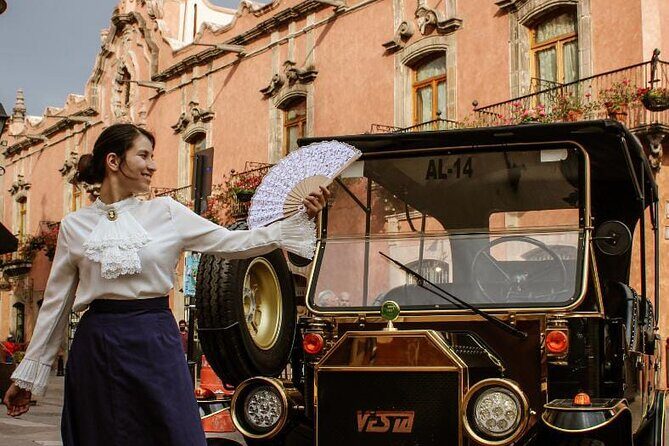
- Classic Ford T-style sightseeing that beats walking in midday heat
- Story-driven stops tied to legends, religious sites, and major Queretaro landmarks
- Two targeted cultural stops: the Porfirio Díaz railway station and the Cerro de las Campanas chapel
- Small group size (max 15), which helps the ride feel personal and not rushed
- Comfort perks like a breezy ride, so you can see more without burning out
Queretaro by Classic Ford T: Why This 1-Hour Loop Works
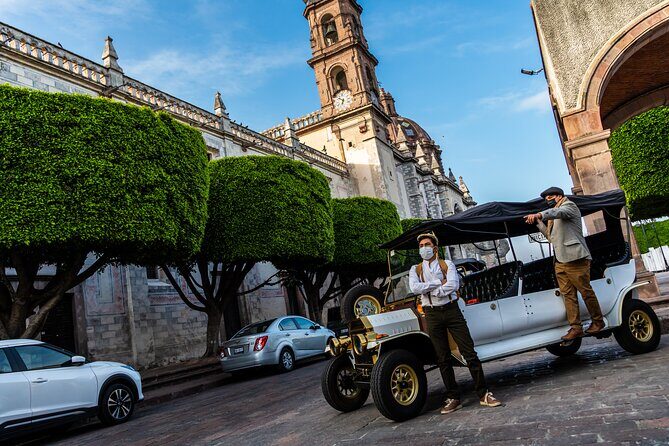
There’s a smart reason tours like this win people over. Santiago de Querétaro has a lot of historic corners packed into a walkable center, but that doesn’t mean you want to do it all on foot, especially under strong sun. This ride gives you a shortcut: you cover ground fast, then slow down at specific points that actually matter.
The Ford T concept also changes the feel. It’s not just transportation; it’s part of the fun. You’re sitting back, taking in views as the guide points out what you’re seeing and why it matters. When the weather is warm, that matters a lot. One of the biggest themes I noticed is that this tour is a lifesaver compared to sweating through a walking-only plan.
If you’re the type who likes a clear route with a narrative, this tour fits. You don’t get stuck guessing which building is important. You get a guided thread that starts with an old legend, moves through Franciscan-era architecture, then lands on the city’s iconic symbols and key cultural spaces.
You can also read our reviews of more city tours in San Miguel de Allende


Price and Value: What $17.91 Buys You
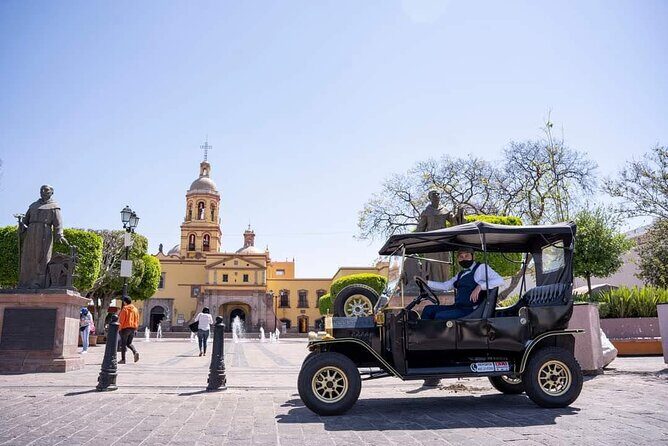
At $17.91 per person, this tour is aimed at value. You’re paying for two things: a short guided route with multiple stops, and the comfort of seeing more without the effort cost of walking.
The itinerary also includes some admission value. The Centro Cultural Antigua Estación de Ferrocarril stop uses a free admission ticket. Then Cerro de las Campanas includes admission. The other parts are mainly passing by or brief visits tied to storytelling, so you’re not paying admission repeatedly just to get moving.
Duration is also part of the value equation. At about 1 hour, you can fit this around other plans in Queretaro without losing half a day. That’s especially helpful if you’re building a day with nearby stops from San Miguel de Allende or just want an easy win in the center.
One last value point: English narration. If you’re traveling in a mixed-language group, this matters. I found the English-language format keeps the legends and landmarks from turning into a vague sightseeing blur.
Meeting Point in Centro (and What to Bring)
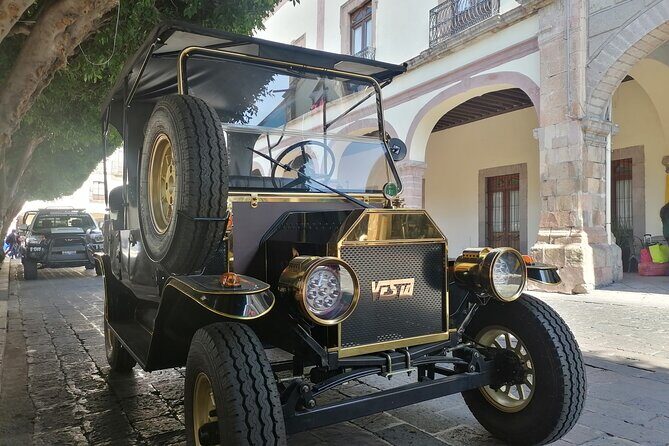
Your start is at oh! Turismo Querétaro, C. Independencia 64C, Centro, 76000 Santiago de Querétaro, Qro., Mexico. The tour ends back at the same meeting point. This round-trip setup is practical. No last-minute figuring-out how to get back once you’re done.
It also means you can plan your day with less uncertainty. I like tours that don’t strand you across town.
A few practical tips based on what’s known about this style of experience:
- Wear light layers. Even if the tour is short, the sun in central Mexico adds up quickly.
- Keep your phone charged for photos. Guides often take moments to help with pictures, and you’ll want to capture the architecture.
- Bring a hat and water if you tend to get warm fast. Even with a breezy ride, Cerro de las Campanas is still outside.
The tour can run with up to 15 travelers, so you don’t feel swallowed by a huge crowd. And yes, service animals are allowed, which is good to know if you travel with one.
The First Legend: A 19th-Century Crime Story and a Haunting House
The tour kicks off with a passing stop that sets the tone: you hear about a 19th-century crime legend involving a couple from the Zacatecas mineral. From there, the story connects to a place tied to decorative art and ghosts that are said to haunt an old house.
This kind of opener is more than spooky entertainment. It’s a way to help you read the city. When you know the legend behind a location, the building stops being just a backdrop. You start noticing the details that match the story the guide is telling.
If you’re wondering how much you’ll actually see here, think of it as a short, guided orientation moment. You’re not doing a full deep-dive museum visit at the first stop. Instead, you get the context for what you’re about to pass next.
It’s the perfect start if you like history told like a story instead of a textbook. And it helps you remember Queretaro’s layers: religious influence, colonial-era moments, and later local mythmaking all tied into the same streets.
Colegio de Propaganda FIDE: The Thorn Tree Cross
Next comes one of the most striking visuals on the route: the emblematic Colegio de Propaganda FIDE, left behind by Franciscan evangelizers. The inside highlight is the tree of thorns shaped like a cross.
This is the kind of detail you don’t want to miss. Religious architecture in Mexico often carries meaning in the objects themselves, not just in the building’s size. A thorn-tree cross is visually symbolic, and the stop gives you a quick chance to see that symbolism in person instead of just reading about it later.
Is it a long visit? No. The tour is tight. But even a short stop can be worth it when the visual is memorable and the guide explains what you’re looking at.
A practical note: this is an indoor viewing moment, so if you’re used to heat, it can feel like a welcomed break. It’s also a good spot to slow down mentally. After an outdoor drive-by legend, the thorn-tree cross gives you something concrete and specific.




The Battle of 1531 and the Foundation Story of Santiago de Querétaro
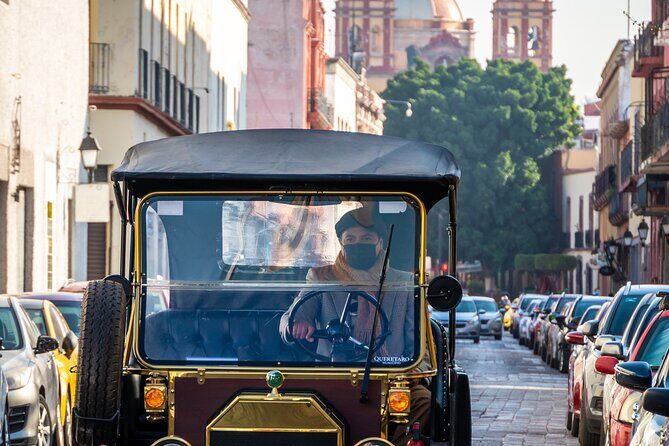
Then you’re taken to the place connected to a major turning point: the battle in 1531 that paved the way for the foundation of Santiago de Querétaro.
This stop helps you understand why the city matters historically. It’s not just a pretty center. There’s a real moment behind the streets.
What I like about this part is the framing. Instead of listing dates, the guide anchors the story to a specific location. That’s how you keep historical context from sliding right off your brain after the tour ends.
Think of it as your bridge stop. After this, the tour leans into the city’s symbols—things you can see from the outside—so the history has a visible payoff.
74 Arches and 1,280 Meters: The City’s Symbol and Its Legend
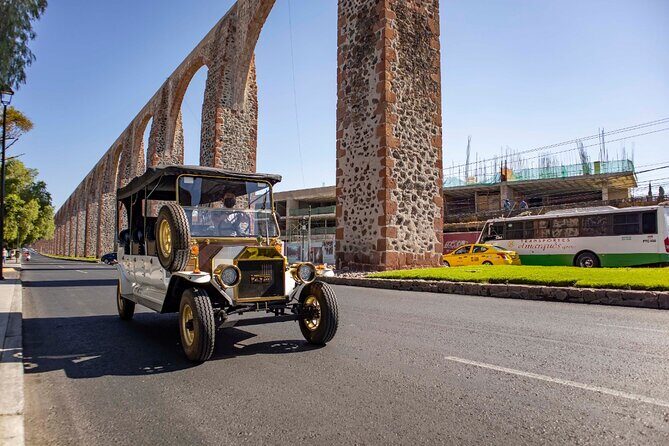
At the next big highlight, you learn about the city symbol described as having 74 arches spanning 1,280 meters. The guide also ties it to the work of the Marques de la Villa del Villar del Aguila, plus a legend connected to the place.
This is the stop where your sightseeing shifts from “interesting buildings” to “wow, that’s the icon.” Large-scale structures like this change the way you see the city because they’re visible from a lot of angles.
Even if you’re not a hardcore architecture fan, the guide’s legend makes the structure easier to remember. The number details (74 and 1,280 meters) give your brain something to latch onto. That’s why this kind of guided emphasis helps.
If you’re the type who likes taking photos from the best angle, this is likely one of your main photo moments. I’d treat it like your anchor shot for the day.
Handicrafts for Indigenous Regions of Querétaro
Between big landmarks, there’s time set aside for a space intended for the sale of handicrafts from indigenous regions of the state of Querétaro.
Here’s how to approach it without getting disappointed: treat it like a chance to browse, not like a guaranteed cultural market experience. Your goal should be to see the types of crafts being offered and pick up a small souvenir if it fits your style.
Because this tour is short, you won’t have hours to compare stalls. But you can still use the moment intelligently. If you see something that feels truly Querétaro to you, grab it then, or at least jot down what you liked so you can hunt for the same style later.
This stop also breaks up the concentration you’ve built from the legends and landmarks. A quick shopping window can reset your attention without turning the whole tour into a marketplace detour.
Antigua Estación de Ferrocarril: Porfirio Díaz’s Station
One of the best practical stops is Centro Cultural Antigua Estación de Ferrocarril. It’s a beautiful railway station inaugurated by President Porfirio Díaz. The stop is about 15 minutes, and admission here is free.
This is the kind of place that rewards a fast stop. Even in 15 minutes, you can soak in the scale and old-station feel, then move on with less fatigue than a longer museum plan.
Railway stations are also storytelling machines. They hint at when a city connected to bigger networks and how people moved through time. For me, this stop adds variety. You go from legends and religious symbols to a civic structure with a different kind of meaning.
If you like architecture, take a few steps around to catch different angles. Don’t rush the first photo and move on. Spend a couple extra minutes just looking at the station details, because you’ll remember those patterns later.
Cerro de las Campanas: The Chapel Tied to the Second Empire
The final featured stop is Cerro de las Campanas, with a chapel representing the end of the Second Empire in Mexico. Admission is included, and it’s another 15-minute window.
This is a strong ending because it shifts the tone from everyday sightseeing into a more reflective setting. Even with limited time, the chapel and its theme help you leave with a sense of closure: Queretaro isn’t just a set of postcards. It has chapters tied to national political change.
Be ready for outside conditions. Cerro de las Campanas is open to the elements, so dress for sun or wind. If it’s hot, the ride back afterward is a relief.
Also, this is likely where your guide wraps the tour’s story. If you’ve been mentally keeping track of the legend thread, this final stop is where you can connect those ideas into a clearer whole.
Guides, Pace, and Photos: What Makes It Feel Right
The difference between a so-so tour and a memorable one is the guide’s pacing. In this experience, the guides can be a big part of why it works.
I had a smooth experience with Jesus, who explained the city with clear, focused details and even helped with photos for the group. Another time, the key detail was about patience: Charlie was ready when someone got lost on the way to pickup. That kind of calm matters more than people think. It reduces stress at the start, and the tour feels smoother after that.
You’re in good hands when the guide:
- keeps stops tight enough that you don’t miss the next highlight
- explains what you’re looking at in plain language
- helps you get usable photos without everyone climbing over each other
This tour also has a built-in advantage for hot days. Even short stops add up when you’re walking in heat. Sitting in the classic ride helps you stay fresh for each landmark.
Who This Tour Suits Best (and Who Might Want Something Else)
This is ideal for you if:
- you want an easy, scenic way to cover central highlights in about an hour
- you’re visiting with limited energy or it’s hot outside
- you like local stories tied to landmarks, not just names and dates
- you want an English tour that keeps the narrative clear
It may not be the best fit if:
- you want long, slow museum-style time at multiple indoor sites
- you’re expecting a full-day deep dive into every stop
- weather is unpredictable and you don’t like plans that depend on it
Should You Book the Queretaro Ford T City Tour?
If you’re short on time and you want the center of Santiago de Querétaro without the walking grind, I think it’s a very good booking. The price is reasonable for a guided loop, and the mix of legend storytelling plus two meaningful cultural stops gives you more than a basic drive-by.
Book it if your priority is comfort, clear direction, and memorable highlights in a tight window. Skip it if you need long indoor time or you want a tour that unfolds slowly.
One smart move: plan it on a day when the weather looks stable, and arrive ready to enjoy. This tour is at its best when the ride and the stops can flow without interruptions.
FAQ
How long is the Queretaro city tour in the classic Ford T vehicle?
The tour runs for about 1 hour.
Where is the meeting point for this tour?
You meet at oh! Turismo Querétaro, C. Independencia 64C, Centro, 76000 Santiago de Querétaro, Qro., Mexico, and the tour ends back at the meeting point.
Is the tour offered in English?
Yes, it’s offered in English.
What vehicle is used for the tour?
The tour is described as a City Tour in a classic Ford T vehicle.
Are there any admission tickets included?
Yes. Centro Cultural Antigua Estación de Ferrocarril admission is free, and Cerro de las Campanas admission is included.
What is the group size limit?
The tour has a maximum of 15 travelers.
Is there a cancellation option if plans change?
Yes. You can cancel for a full refund up to 24 hours in advance. If you cancel less than 24 hours before the start time, the amount paid is not refunded.