REVIEW · MEXICO CITY
Puebla and Cholula
Book on Viator →Operated by Stepping Mexico · Bookable on Viator
One long day, two unforgettable cities. This private Puebla and Cholula trip is built for easy hotel pickup and a focused route through the area’s biggest religious and historical sights.
I especially like the Great Pyramid of Cholula as an anchor stop, because it turns a quick visit into a real sense of scale. I also like the way the itinerary clusters church stops, so you see how Puebla and Cholula express power through architecture. One possible drawback: the day is full and fast, and a couple spots may be limited by access rules or hours.
You’ll cover a lot, but the pacing feels intentional—mostly because your transport is private and your stops are timed. Still, if you’re sensitive to long drives or you need slower museum-style browsing, you may feel rushed by the schedule.
In This Review
- Key points before you go
- A Smooth, Private Day Trip Starts With a 7:30 am Pickup
- Cholula’s Great Pyramid: World-Scale Views and Why Tunnels Can Be Closed
- Templo San Francisco Acatepec: Talavera Mosaics and Red Brick Details
- Santa Maria Tonantzintla: Indigenous Baroque That Looks Like It’s Alive
- Puebla Cathedral: World-Heritage Historic Center and Marian Power
- Mercado el Parián: Handicrafts and a Real Place to Shop
- Capilla del Rosario at Templo de Santo Domingo: Church Wealth in Stone and Detail
- Biblioteca Palafoxiana: A Quiet Contrast to the Church Stops
- Price and Value: What You Get for $210 and What to Plan For
- Who Will Enjoy This Most (and Who Might Want a Different Plan)
- Should You Book Puebla and Cholula With This Operator?
- FAQ
- What time does the tour start, and how long is it?
- What’s included in the $210 price, and what isn’t?
- Is this a private tour?
- Do you offer hotel pickup in Mexico City?
- Are admission tickets covered?
- Can I cancel and get a full refund?
Key points before you go
- Private only for your party: No mixing, no waiting around for strangers.
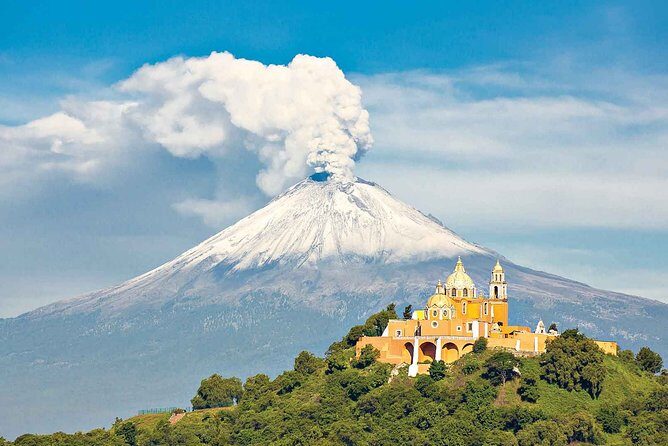
- Great Pyramid of Cholula: A world-scale site that’s included with admission.
- Baroque churches with distinct looks: Talavera mosaics in one place, indigenous baroque decoration in another.
- Shopping time at Mercado el Parián: Handicrafts in a market you can actually browse.
- A long day starting at 7:30 am: Great for maximizing sightseeing, but bring patience early.
- Some access can be limited: Pyramid tunnels and certain museums/church logistics can vary.
A Smooth, Private Day Trip Starts With a 7:30 am Pickup
This is a private tour, so your group is the only one riding in the vehicle and moving between stops. Pickup is offered from your Mexico City hotel, and if your exact place isn’t listed, the operator can arrange pickup at another hotel, an AirBnB address, or a meeting point within Mexico City.
The tour runs about 9 hours and starts at 7:30 am. That early start matters because Puebla and Cholula are a bit of a haul, and you need daylight (and working hours) to see everything on the route.
Value-wise, I like the way the price bundles the “hard parts” of travel: private transportation plus “all fees and taxes,” with snacks and bottled water included. Lunch is not included, so you’ll want to budget time and hunger for a meal on your own or via a recommendation.
One more practical note: the tour is offered in English, and service animals are allowed. Most people can participate, which is helpful if you’re traveling with mixed mobility in the group.
You can also read our reviews of more tours and experiences in Mexico City.


Cholula’s Great Pyramid: World-Scale Views and Why Tunnels Can Be Closed
Your morning begins with the Great Pyramid of Cholula (also called Tlachihualtépetl). This isn’t a small, “nice for photos” stop. It’s the largest pyramidal basement in the world, reported as about 400 meters per side, and it’s considered the largest archaeological pyramid site in the New World and the largest pyramid in the world today.
Expect about 1 hour here, with admission ticket included. The structure itself is what makes the stop: you’re looking at a massive footprint that helps explain why Cholula became such a powerful center.
Now for the real-world wrinkle. In some tours of this route, pyramid tunnels may be closed. If access is restricted, you can still enjoy the site’s scale and the surrounding views, but your experience may lean more visual and architectural than “underground.” It’s worth keeping that in mind if you specifically came for tunnel time.
If the weather cooperates, this is also one of the parts of the day where you may catch good views toward the volcanoes in the region (Popocatépetl comes up in feedback about this kind of itinerary). Even when clouds roll in, the sheer size of the pyramid tends to land.
Templo San Francisco Acatepec: Talavera Mosaics and Red Brick Details
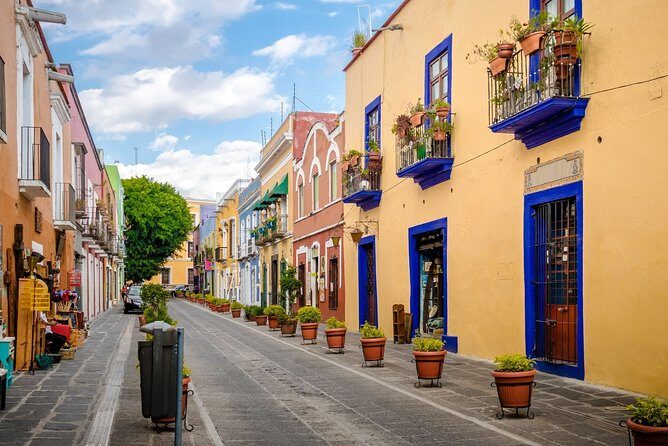
Next comes Templo San Francisco Acatepec, a religious monument from the 18th century. What makes this stop stand out is the front façade: Talavera mosaics paired with red brick.
You’ll get about 45 minutes, and admission is free. For this kind of church stop, I tell myself to look for two things. First, study the surface patterning—Talavera designs can look flat from a distance, then suddenly become intricate when you’re closer. Second, notice how the façade style fits the Baroque influence of the period.
This is also a good “breather” stop after the pyramid. It breaks up the day’s heavier history with something more detailed and decorative.
Santa Maria Tonantzintla: Indigenous Baroque That Looks Like It’s Alive
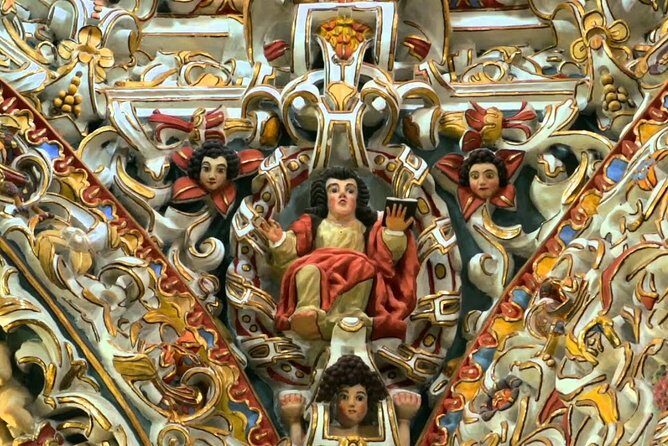
From there, you head to Santa Maria Tonantzintla. This church is known for what’s often described as popular or indigenous baroque—meaning the decoration doesn’t just follow European forms, it transforms them with local visual language.
Plan for about 45 minutes, and admission is free. You’ll want to take your time with this one because the value is in the layered details: surfaces, motifs, and the overall feel of ornamentation that doesn’t hold back.
If you’re the type who loves churches as art (not just background stops), this is one of the best places on the route. Even people who don’t usually care about baroque decoration tend to pause here for a second longer than planned.
One practical tip: in church interiors, photography rules can vary. If you see restrictions posted, follow them. If you’re photographing, focus on your angle and move slowly, because the best views come from standing back for the full effect.
Puebla Cathedral: World-Heritage Historic Center and Marian Power
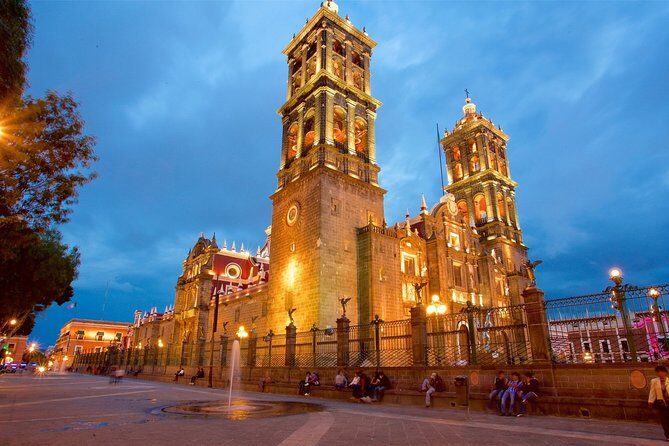
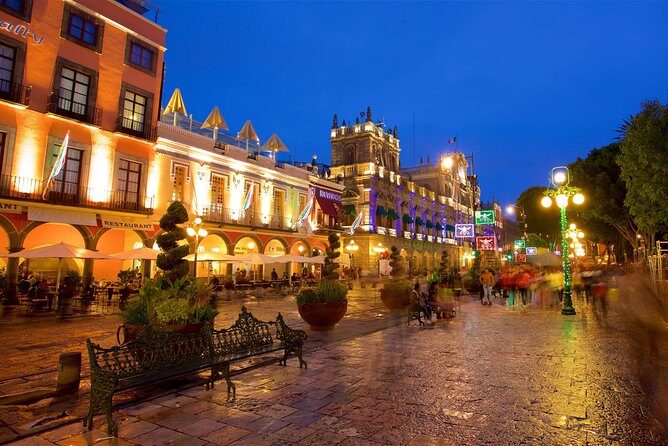
After Cholula, the tour shifts into Puebla’s historic center with a stop at the Basilica Cathedral of Puebla, dedicated to Our Lady of the Immaculate Conception. This building is the episcopal seat of the archdiocese of Puebla, and it’s part of the historic center recognized as a World Heritage Site.
You’ll spend around 30 minutes, and admission is free. Thirty minutes sounds short, but cathedral visits can be efficient when you go in knowing what you’re looking for: scale, façade style, and the way the space signals importance.
This stop also gives you a sense of why Puebla became such a major player in colonial Mexico. It’s not only religious. It’s political, social, and economic—written into stone and ceremony.
If the timing works, this is a great place to get oriented in the city. You’ll see the historic center rhythm: church plazas, historic streets, and the kind of walkable vibe that makes the rest of Puebla feel close and connected.

Mercado el Parián: Handicrafts and a Real Place to Shop
Next up is Mercado el Parían, described as Puebla’s most famous handicrafts market. You’ll get about 1 hour and admission is free.
This is one of those stops that can make or break your day, depending on what you like. I like it because it gives you control. You can browse for talavera items, small crafts, or gifts without needing a special plan from the guide.
Also, having shopping time inside a structured tour schedule is genuinely useful. Instead of hoping you’ll find the right market later, you know where to go, you know you’ll have time, and you can compare items across stalls calmly.
If you plan to buy, keep in mind: bargaining rules aren’t spelled out in the tour details you provided. So I’d keep it simple—ask the price, compare a couple stalls, and buy what you truly want rather than what you’re talked into.
Capilla del Rosario at Templo de Santo Domingo: Church Wealth in Stone and Detail
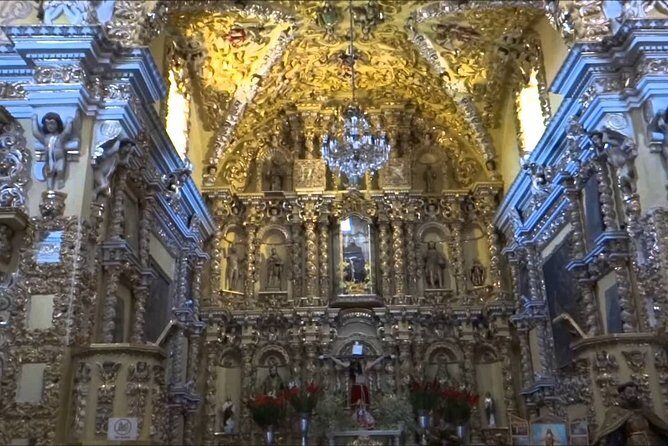
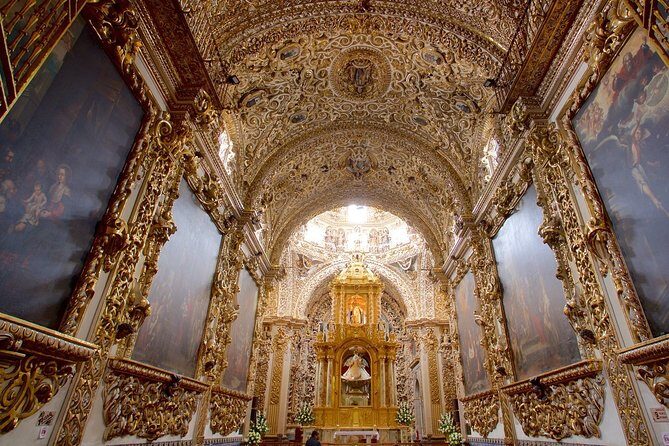
Your route then includes Capilla del Rosario, located within the Templo de Santo Domingo. This is one of the stops that reads like a “watch your step” moment—not physically, but in the way the architecture demands attention.
The chapel reflects the economic power of the church in that era, plus the ambition and sumptuousness used to plan and build it. You’ll have about 45 minutes, and admission is free.
Think of this as the tour’s “wow, slow down” church stop. When a design is built to show wealth and influence, it often shows up in the uniformity of materials, the feeling of depth, and how the details seem planned rather than random.
One thing to note from practical experience with church stops in Mexico: some interiors restrict photo-taking or limit access to certain viewing points. The tour details don’t list those rules, but feedback about this kind of itinerary suggests you should be ready to respect signage and follow guidance from your guide.
Biblioteca Palafoxiana: A Quiet Contrast to the Church Stops
To round out the day, you’ll visit the Palafoxiana Library. This bibliographic site in Puebla was founded by Bishop Juan de Palafox y Mendoza in 1646.
You’ll spend about 30 minutes, and admission is free. A library visit can feel like the odd one out on a day heavy with churches, but that contrast is part of the appeal. You go from outward, showy power—facades, mosaics, elaborate chapel space—to a place built around knowledge, preservation, and reading rooms.
If you like the “objects behind the story” angle, this is a strong way to end. Even if you only glance at key parts of the library, the idea of a 17th-century collection in Puebla helps the earlier stops feel connected instead of random.
Price and Value: What You Get for $210 and What to Plan For
At $210 per person, this tour sits in the “not cheap, but fair for private sightseeing” category—especially because it’s private transportation and includes all fees and taxes. Admission tickets are also handled for the one ticketed stop: the Great Pyramid of Cholula.
Here’s the value math as I see it:
- Included with the price: private transport, fees/taxes, snacks, bottled water, and listed admissions (pyramid ticket).
- Not included: lunch.
Snacks and bottled water being included is a helpful buffer on a 9-hour day. Still, you should plan as if you’ll need more than snacks by the end, because lunch isn’t included. If you’re the kind of traveler who gets cranky when hungry, eat at the recommended time and don’t wait until you’re already starving.
A second value point: this itinerary is heavy on free admissions, which keeps your spend predictable once you’re in Puebla. The trade-off is time. Free entry doesn’t mean slow entry. This is an efficient tour.
Who Will Enjoy This Most (and Who Might Want a Different Plan)
This tour is a great match if you like:
- Church architecture and decorated interiors
- A structured day trip that still feels private
- Seeing Cholula’s pyramid scale and then Puebla’s historic center in one go
- Shopping time at a known market like Mercado el Parían
It may be less ideal if:
- You hate early mornings or long driving days
- You want deep museum time or unhurried wandering
- You need specific tunnel access at the pyramid, since it can be closed
- You’re hoping for flexible last-minute additions. The schedule is tight by design.
Guide quality can also change your experience. Several guides are named in feedback—Carlos, Fernando, Francisco, Armando, Alejandra, and Alberto—and you’ll enjoy it most when your guide clearly explains what you’re seeing and manages time without rushing you out the door.
Should You Book Puebla and Cholula With This Operator?
I’d book this if your goal is a no-stress private day trip that maximizes your time from Mexico City and hits the biggest highlights: Cholula’s Great Pyramid plus Puebla’s famous church and cultural stops.
Skip it or consider adjusting expectations if you’re extremely sensitive to schedule pressure. This route is long and packed, and conditions like site access or museum/church timing can change what you get to see.
If you do book, set yourself up for success: carry comfortable shoes, plan for a long day, and come with one or two questions you care about (like how Talavera tiling connects to local identity, or why the rosary chapel is such a power statement). When you guide your attention, a day like this becomes more than “checklist sightseeing.” It turns into a real sense of how Cholula and Puebla built their importance.
FAQ
What time does the tour start, and how long is it?
The tour starts at 7:30 am and lasts about 9 hours.
What’s included in the $210 price, and what isn’t?
The price includes private transportation, all fees and taxes, snacks, and bottled water. Lunch is not included.
Is this a private tour?
Yes. It’s a private tour/activity, and only your group will participate.
Do you offer hotel pickup in Mexico City?
Yes. Pickup is offered from your Mexico City hotel. If your hotel is not listed, the operator can arrange pickup at another hotel, an AirBnB address, or any point within Mexico City.
Are admission tickets covered?
Yes. The Great Pyramid of Cholula has an admission ticket included. The other stops listed are admission free.
Can I cancel and get a full refund?
Yes. You can cancel for a full refund up to 24 hours before the experience’s start time.