REVIEW · MEXICO CITY
Private Tour with Archaeologist and VR Experience at Teotihuacan
Book on Viator →Operated by Un Joven Arqueólogo Tours · Bookable on Viator
Teotihuacan feels bigger when you have the right guide. This private 4 to 5 hour outing led by archaeologist David adds context to every major monument, and the VR experience helps you visualize how the site looked and changed over time. The main trade-off: you’ll still be outside for a good chunk of the visit, so plan for sun, dust, and some walking with only moderate fitness.
I love the way the tour is built around the city’s layout, not just a checklist of pyramids. You start with orientation inside the archaeological zone (meeting at Gate 1), then move along the main processional axis and into areas many people skip. One thing to consider up front: breakfast and lunch are not included, so you’ll want to time your meal break yourself.
If you want Teotihuacan explained in clear, human terms, this is a strong fit. You’ll get entrance fees, educational materials, and supporting artifacts as part of the program, and the guide takes time for questions (including for kids). The result is a tour that feels like you’re learning how archaeologists think, not just hearing facts.
In This Review
- Key highlights you’ll care about
- Why Teotihuacan feels different with an archaeologist guide
- Price and timing: what $120 buys you in real terms
- Meeting at La Ciudadela’s Gate 1 and getting your bearings fast
- Calzada de los Muertos: the city’s main processional spine
- Ciudadela and the Feathered Serpent Temple (Templo de la Serpiente Emplumada)
- Residential areas, murals, and how daily life shows up in stone
- Sun and Moon pyramids, offerings, and the environment’s role
- VR goggles and artifacts: seeing Teotihuacan as it changed
- How David’s style makes the whole day work
- What to bring and how to make the day feel easy
- Who should book this private Teotihuacan VR tour
- Should you book it? My practical take
- FAQ
- How long is the Private Tour with Archaeologist and VR Experience at Teotihuacan?
- Is this tour private or shared?
- Is the entrance fee included?
- Do I need to pay extra for breakfast or lunch?
- Where do we meet for the tour?
- Where does the tour end?
- What language is the tour offered in?
- Is there a VR component?
- What’s the cancellation policy?
Key highlights you’ll care about
- Archaeologist-led, private pacing for your group only
- Gate 1 entry + site orientation so you know where you are and why it matters
- Calzada de los Muertos, Ciudadela, and the Feathered Serpent Temple as the core route
- Residential areas and mural context, not just monuments
- VR goggles and photo reconstructions to visualize changes over time
- Meaning behind offerings and theories tied to what the ruins show
Why Teotihuacan feels different with an archaeologist guide
Teotihuacan can overwhelm you fast. You see massive pyramids, long avenues, and stonework that’s older than most countries. With a guide who approaches it like an archaeological site, it starts to make sense: scale, layout, and symbolism become easier to read.
On this private tour, you’re not just passed from one photo spot to the next. You’re taught how archaeologists interpret evidence: what’s visible, what’s missing, and what modern theories try to explain. That matters at Teotihuacan, where you’ll often hear different interpretations of the same structures.
I also like that the tour includes explanatory artifacts. Even if you don’t have a museum background, handling real or representative objects (or learning with them) helps you connect the dots between everyday materials and big ceremonial architecture.
You can also read our reviews of more private tours in Mexico City

Price and timing: what $120 buys you in real terms
At $120 per person for about 4 to 5 hours, you’re paying for a private, expert-led experience with entry included. That’s not cheap, but it’s not just a guide walking beside you either.
Here’s the practical value:
- Private format means you can ask questions and slow down when something clicks.
- Entrance fees are included, so you’re not juggling add-ons on-site.
- VR and educational materials are part of the plan, which turns it from a traditional guided walk into a mixed visual learning experience.
What’s not included is straightforward: breakfast and lunch. That’s fine, but you should plan a snack or hydration and decide where you’ll eat afterward.
If you’re comparing costs, think this way: the price is paying for time, expertise, and learning tools, not just transportation to and from the site.
Meeting at La Ciudadela’s Gate 1 and getting your bearings fast
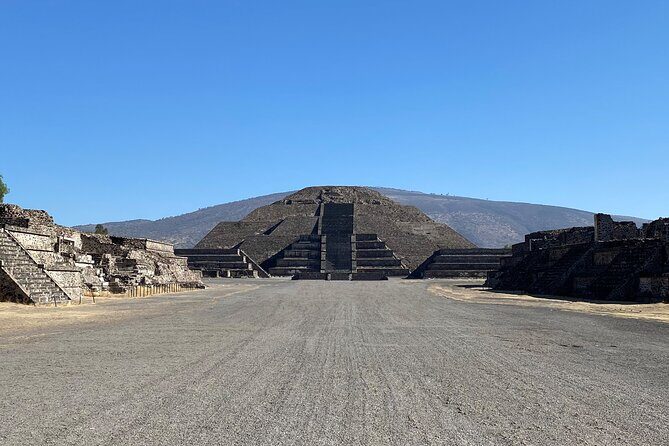
You meet at La Ciudadela at Access to Calzada de los Muertos by Gate 1. From a visitor perspective, that’s a good start point because it puts you near the main ceremonial spine right away. And the tour begins with an intro inside the zone, which helps you build a mental map before the pyramids get too tempting to rush through.
You’ll end at the Pyramid of the Moon, near exit gates. This is useful because you’re finishing where the site opens out visually and where you can transition to your next step without backtracking as much.
One small but meaningful consideration: the tour is listed as requiring moderate physical fitness. You’re not climbing mountains, but you are walking on uneven, sometimes dusty ground, and you’ll be moving between zones. Bring comfortable shoes and expect the heat.
Calzada de los Muertos: the city’s main processional spine
The first big walk follows Calzada de los Muertos, the ancient main access to the city. This is where a good orientation pays off. With a guide, you start to see the avenue not just as a long walkway, but as a designed corridor tied to how people moved, gathered, and performed rituals.
During this portion, you’ll learn how the route connects major architectural zones. That helps you understand why later stops feel like they belong together, instead of separate ruins you visit one by one.
If you like patterns and city planning, this part will probably feel extra satisfying. The guide’s explanations help you connect what you’re seeing on the ground to what archaeologists infer about the city’s organization.
Ciudadela and the Feathered Serpent Temple (Templo de la Serpiente Emplumada)
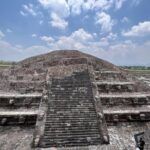
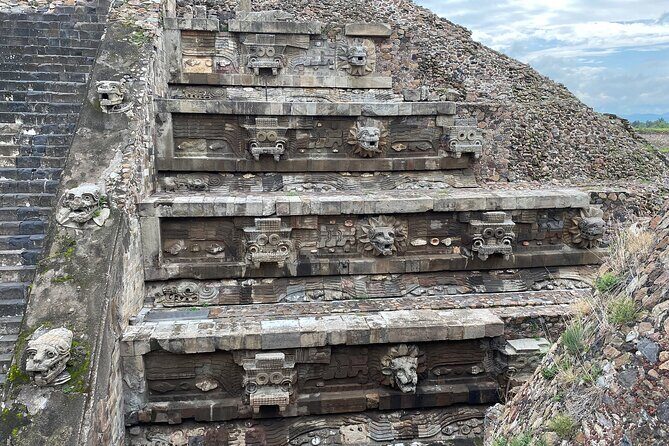
Next comes La Ciudadela, where you’ll visit the pyramid known as the Templo de la Serpiente Emplumada, or Temple of the Feathered Serpent. This is a major moment on the route, and the guide’s job is to make the structure readable.
You’ll get context around what the temple represents, how its design relates to Teotihuacan beliefs, and what archaeologists have found that informs modern theories. The tour focuses on meaning, not just angles for pictures.
A practical takeaway: if you tend to skim monuments on your own, you’ll likely slow down here. The explanations give you a reason to look closely at features you might otherwise ignore.



Residential areas, murals, and how daily life shows up in stone
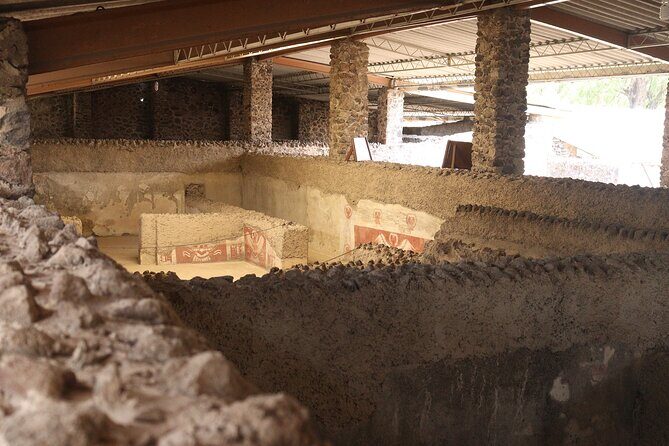
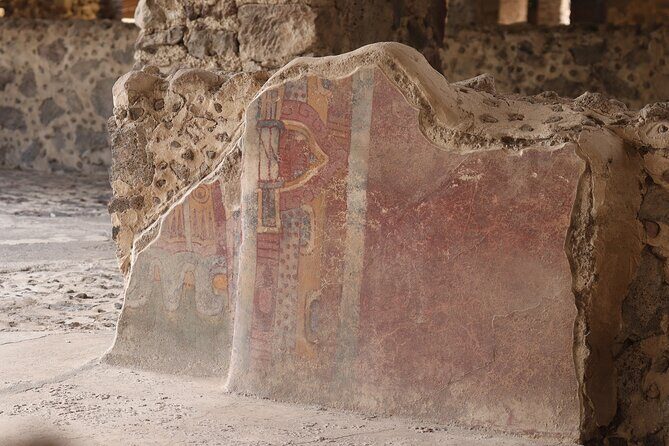
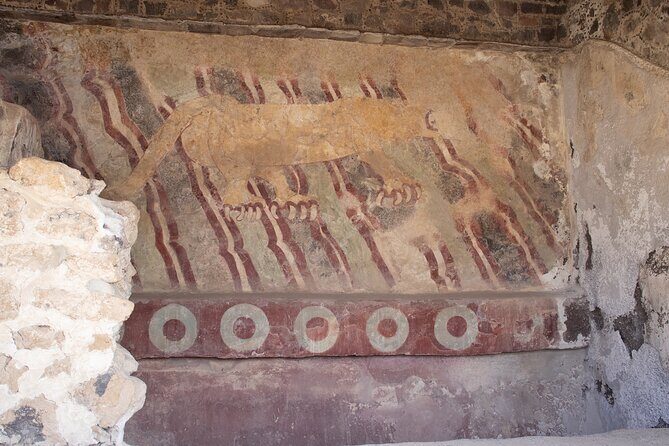
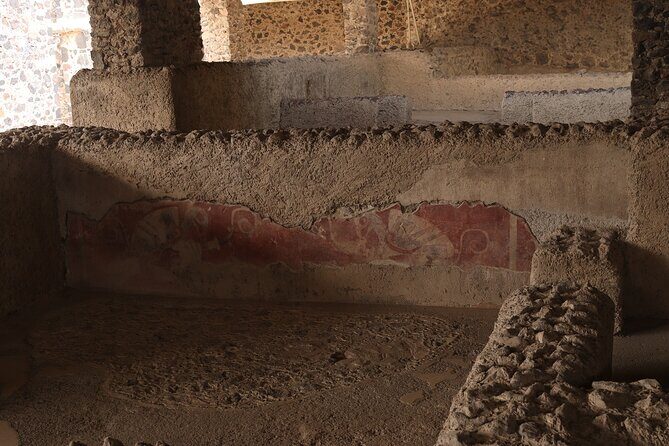
One of the best parts of this tour is that it doesn’t stop at big ceremonial spots. After the temple, you move into residential areas to observe everyday-life clues: architectural systems, how spaces connect, and mural paintings where available.
This is where Teotihuacan becomes more human. You’re not only thinking about rulers and rituals. You start seeing how people lived in a city built with serious planning and consistent construction methods.
If you want your visit to feel more than monument tourism, this stop helps. It also offers a smoother learning arc: ceremonial architecture first, then domestic context, so the whole city doesn’t feel like it’s made only for worship.
From what I value, this is often where tours either shortcut or get interesting. Here, you get time to look and ask questions.
Sun and Moon pyramids, offerings, and the environment’s role
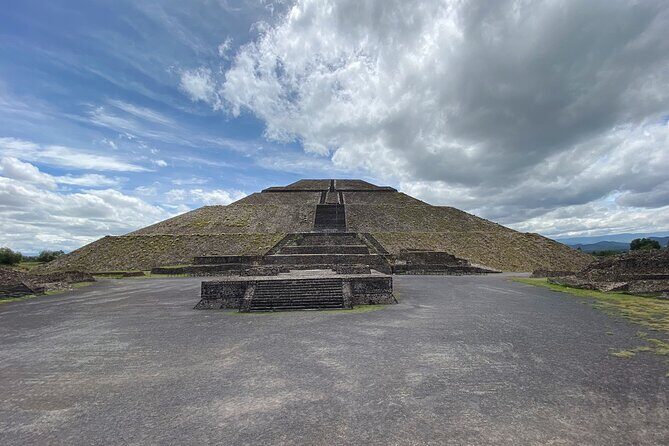
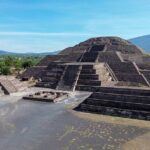
The route finishes with the pyramids of the Sun and Moon. These are big visual anchors, but the tour keeps them from turning into just landmark viewing.
You’ll discuss archaeological findings and modern theories about the city, including ideas about the meanings behind offerings. You’ll also talk about the relationship between the environment and the ruins. That part matters because Teotihuacan wasn’t built on an abstract stage. The setting influenced how people farmed, planned, and built.
When a guide ties ruins to environment, it changes what you notice. Instead of only staring at height and symmetry, you start paying attention to how the location shapes what the city could do.
The ending near the Pyramid of the Moon also gives you a natural place to wrap up your visit and plan your exit without turning the day into a zigzag route.
VR goggles and artifacts: seeing Teotihuacan as it changed
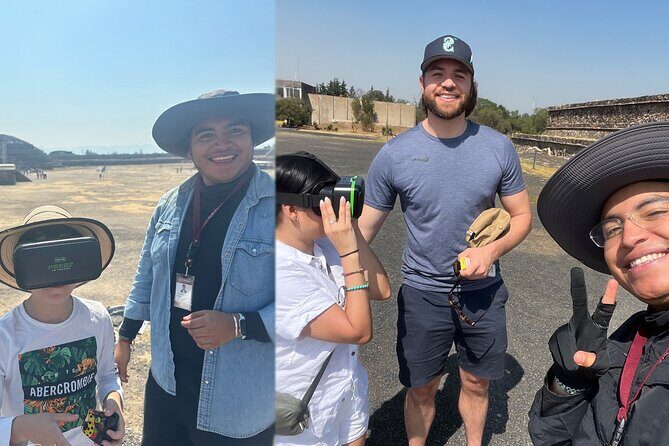
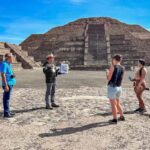
The tour’s standout technology is the VR experience. You use VR goggles to visualize changes over time, which is a big deal at Teotihuacan because so much is weathered, broken, or missing. In real life, you only see parts of the original surfaces and layouts. VR helps you mentally reconstruct what the site likely looked like in different periods.
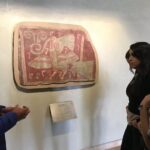
You’ll also see photo recreations that help connect what’s on the ground with how archaeologists interpret it. This is especially helpful if you’ve ever stood in front of a ruin thinking, I know it was once something more, but I can’t picture what.
The tour also uses artifacts to support those explanations. That combination is what makes it more than entertainment. It’s learning with visual tools, tied directly to the structures you’re walking through.
And if you’re curious about areas that aren’t open to the public, the VR setup is designed to show you parts of the story you can’t walk to in person.
How David’s style makes the whole day work
A private tour succeeds or fails based on the guide’s pacing and clarity. David’s approach, based on the way the tour is described, leans into planning your understanding as you go. He communicates in advance about pick-up location timing and keeps you updated, which reduces the stress of getting in and out.
He also brings visuals like maps and photos that help you “see” the city’s development. That matters because Teotihuacan has enough scale to make your brain lose track unless you’re given orientation at the right times.
For families, this format tends to land well because the guide can adjust to questions. Kids don’t need a lecture. They need an engaging story and a reason to pay attention. In this tour, you have a long stretch where the guide can keep explaining at the pace your group needs.
What to bring and how to make the day feel easy
You can’t control the sun, but you can control your comfort. For a 4 to 5 hour outdoor site visit, I’d plan around:
- Comfortable walking shoes (uneven ground is common at archaeological sites)
- Water and sun protection (shade is limited in many areas)
- A small snack plan since breakfast and lunch aren’t included
Also, consider that you’ll be doing both walking and VR time. If you’re prone to motion discomfort, you may want to mention it to the guide ahead of time, since VR goggles are part of the schedule.
Who should book this private Teotihuacan VR tour
This is the kind of tour you book when you care about understanding, not just checking a box.
It’s especially a good match if:
- You want a private archaeologist-led experience with time for questions
- You enjoy seeing how theories are built from physical evidence
- You like visual learning tools like VR reconstructions and photo recreations
- You’re traveling with kids who do better with stories and interactive tech
It might be less ideal if you want a very short, easy visit with minimal walking and minimal technology. This tour is structured and educational, and the outdoor time is part of the deal.
Should you book it? My practical take
If your priority is meaningful context at Teotihuacan, this is a strong booking. The value isn’t only in entry fees included. It’s in the combination of private pacing, archaeologist interpretation, and learning tools like artifacts and VR that help you visualize what time did to the city.
For first-time visitors, I think the tour route works well because it covers the main ceremonial axis (Calzada de los Muertos), key symbolic architecture (Templo de la Serpiente Emplumada), everyday-life clues (residential areas and murals), and then finishes with the Sun and Moon pyramids. You get a full arc rather than disconnected stops.
One last thought before you commit: since breakfast and lunch aren’t included, plan your day around that. If you handle meals and bring solid walking comfort, you’ll likely feel like the price makes sense.
FAQ
How long is the Private Tour with Archaeologist and VR Experience at Teotihuacan?
The tour lasts about 4 to 5 hours.
Is this tour private or shared?
It’s private. Only your group participates.
Is the entrance fee included?
Yes. Entrance Fees are included.
Do I need to pay extra for breakfast or lunch?
Breakfast and lunch are not included.
Where do we meet for the tour?
You start at La Ciudadela (Access to Calzada de los Muertos by Gate 1).
Where does the tour end?
The tour ends at the Pyramid of the Moon, near the exit gates.
What language is the tour offered in?
It’s offered in English.
Is there a VR component?
Yes. The experience includes VR as an immersive archaeological visualization tool.
What’s the cancellation policy?
You can cancel for a full refund if you cancel at least 24 hours before the experience’s start time.