REVIEW · MEXICO CITY
Palace of Fine Arts Mural Tour
Book on Viator →Operated by Educando con Cultura · Bookable on Viator
Mexican murals hit harder with a guide. At Palacio de Bellas Artes, you’ll step into Mexico City’s UNESCO-listed setting and follow the stories behind 17 murals of Mexican muralism, explained in English. Guides like León and Diego are specifically praised for turning symbolism and history into something you can actually track.
I love how the tour doesn’t treat the paintings like wall decor. You get mural storytelling tied to artists and ideas, and I also like the architecture walkthrough—inside and out—so you understand why this building matters, not just what it contains.
One thing to consider: the info notes admission ticket not included, even though the tour lists entries as included. That mismatch is worth checking during booking so you don’t lose time figuring out what you still need to pay for.
In This Review
- Key highlights
- Palacio de Bellas Artes: a UNESCO classroom for Mexican muralism
- How the mural tour runs (and why timing matters)
- The mural lineup: 17 works and the artists you’ll keep hearing about
- The Rockefeller Center connection you won’t forget
- Your stop inside and out: what the guide makes you notice
- A closer look at the featured murals and what you’ll learn from them
- Diego Rivera: power, community, and public message
- Gonzales Camarena: liberation framed as an idea
- José Clemente Orozco: catharsis as emotional politics
- Siqueiros: dramatic contrasts and political statements
- Rufino Tamayo and Rodríguez Lozano: different voices in the same hall
- Price and value: is $56.75 a smart buy?
- The admission ticket note: don’t skip the check
- Who this tour fits best in Mexico City (and who might pass)
- Practical tips for getting the most from the mural explanations
- Should you book the Palace of Fine Arts Mural Tour?
- FAQ
- How long is the Palace of Fine Arts Mural Tour?
- What language is the tour offered in?
- What does the tour price include?
- Is food and drink included?
- Where does the tour start and end?
- Is the admission ticket included?
- Can I cancel for a full refund?
Key highlights
- UNESCO significance in 1987: A World Heritage setting that frames the art.
- A guided sweep of Mexican muralism: You’ll focus on standout works by major masters.
- Porfirio Díaz context: You learn why the project was created and how it connects to national identity.
- Rivera’s Rockefeller Center story: The tour connects a famous mural episode to ideology and destruction.
- Small groups (max 35): More time for questions than a big bus-style stop.
- English-led, certified guidance: Clear mural explanations in a language most people can use confidently.
Palacio de Bellas Artes: a UNESCO classroom for Mexican muralism
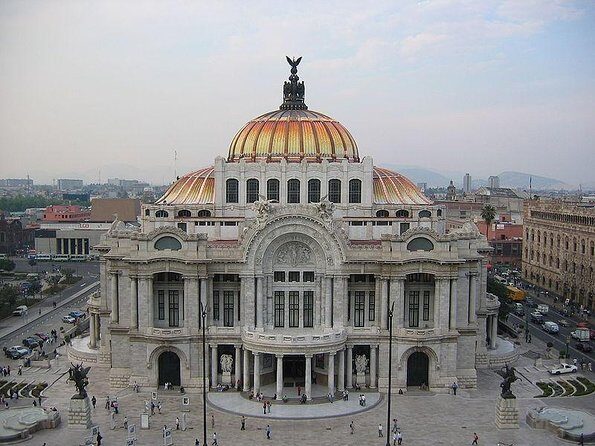
This stop is the main stage of the historic center for a reason. The Palace of Fine Arts (Palacio de Bellas Artes) was declared a UNESCO World Heritage Site in 1987, and that label isn’t just for show. It helps you see the building as part of Mexico’s public cultural story, not just a pretty landmark you pass by.
On this tour, you also get the setup for why the Palace exists in the first place. Expect the guide to explain the historical context around the project associated with Porfirio Díaz, and why that mattered for Mexico’s identity at the time. When you understand the purpose behind the walls, the murals stop feeling like separate artworks and start feeling like arguments being made in paint.
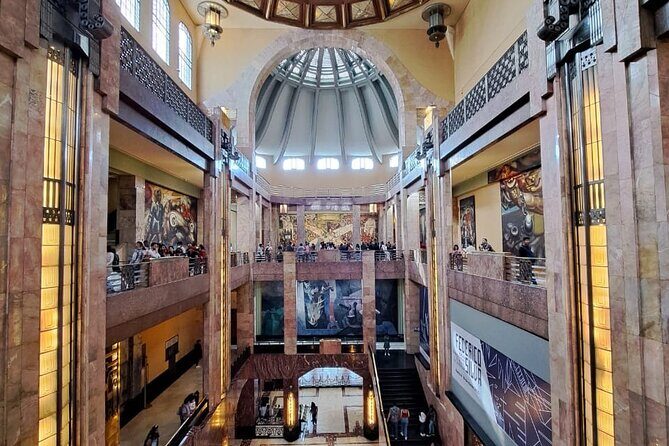
You’ll also look at the interior and exterior architecture with guidance. That’s useful because the Palace’s design choices shape how you move and where your eye goes. If you’ve ever stood in front of murals and thought, I’m not sure where to look first, this part helps you get your bearings fast.
You can also read our reviews of more tours and experiences in Mexico City.


How the mural tour runs (and why timing matters)
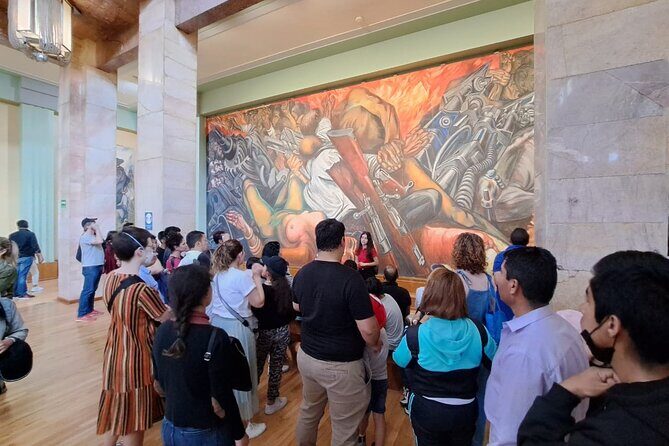
The tour lasts about 1 hour to 1 hour 30 minutes. That’s enough time to hear the major context and follow the mural themes without turning it into a half-day museum marathon. It also means the guide’s explanations are paced: you’re not meant to read every corner yourself for hours.
This is an English guided experience with a certified guide, and the group is capped at 35 people. A cap doesn’t guarantee a small group in practice, but it’s a good sign for how much attention you’ll likely get while you’re learning. The meeting and ending point are the same, so you’re not scrambling to find your way out afterward.
Two practical bits that affect your day planning:
- Food and drink aren’t part of the experience, so plan accordingly for the gap before or after.
- Since the duration is short, wear shoes you can stand in. You’ll be moving around the Palace as the guide points out architectural and mural connections.
The mural lineup: 17 works and the artists you’ll keep hearing about
Mexican muralism is one of those art movements where “the painting” and “the message” are hard to separate. This tour is built around major exponents of that movement—so you’ll hear familiar names and learn how they fit together as a bigger conversation.
You’ll be guided through murals associated with artists including Rivera, Siqueiros, Orozco, Camarena, Tamayo, and others. The Palace contains many mural works, and the tour format focuses your attention on key pieces so you can connect the themes without getting lost.
You’ll see or discuss works such as:
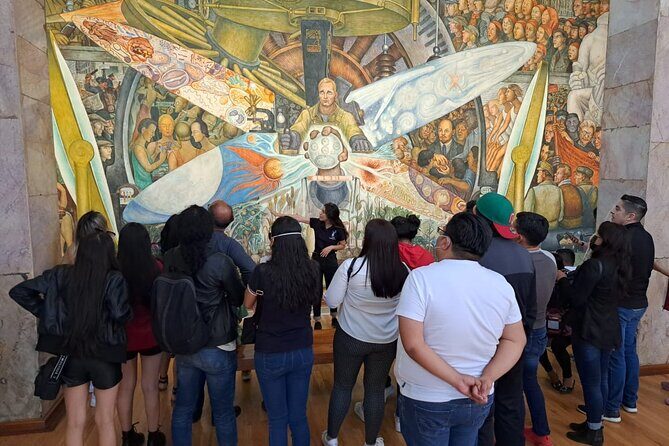
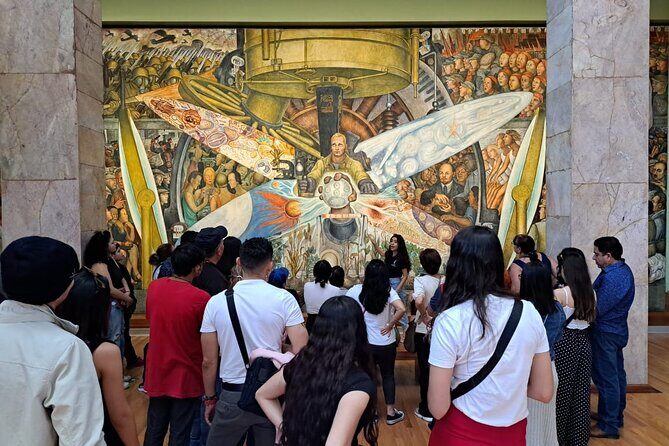
- Universe Controlled Man (Diego Rivera)
- Liberation (Gonzales Camarena)
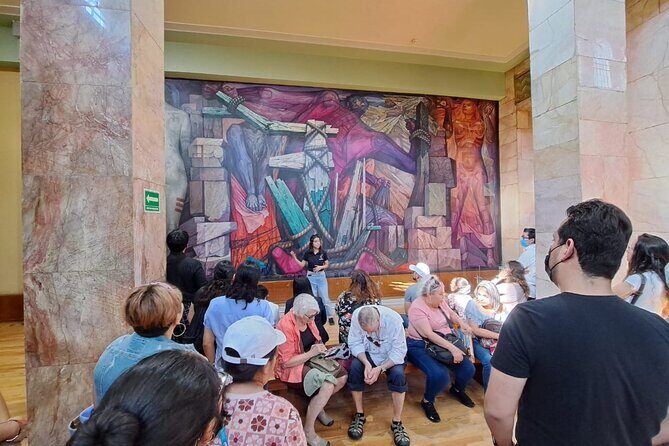
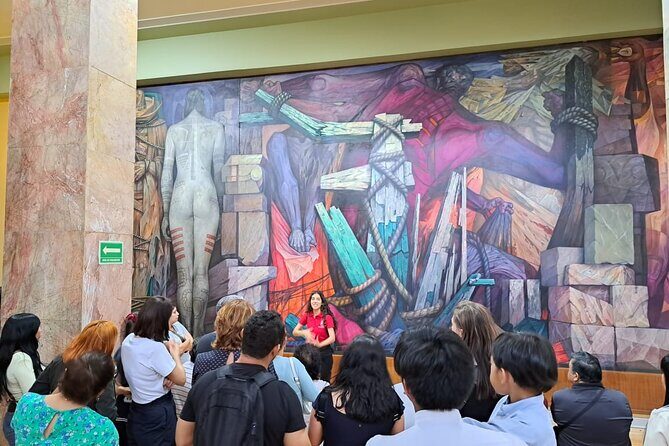
- Katharsis (Orozco)
- The carnival of Huejotzingo (Rivera)
- Diptych Torment and apotheosis of Cuauhtémoc (Siqueiros)
- Triptych of the New Democracy (Siqueiros)
- Pieces connected to Rufino Tamayo and the Piedad by Rodríguez Lozano
One of the strongest elements here is how the guide links the murals to meaning. The explanations you’re set up for aren’t just identification. You should expect the guide to talk through symbolism and historical context so you know what you’re looking at and why it was painted.
The Rockefeller Center connection you won’t forget
Among the stories you’ll hear, one stands out for sheer drama and political bite: the mural by Diego Rivera associated with Rockefeller Center, which was later destroyed due to ideology. Even if you don’t know the story already, the guide uses it as a way to show how murals weren’t harmless art projects. They were public statements, and that made them targets.
That kind of context is why a guided mural tour is often worth it. Without the background, you can admire technique and composition. With the background, you start reading the work like a message.
Your stop inside and out: what the guide makes you notice
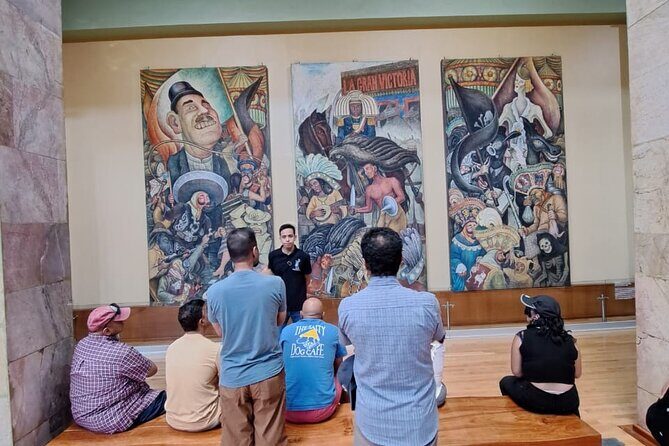
The tour is organized around the Palace experience itself: architecture first, then murals, all framed by the story of Mexican muralism and the Palace’s cultural role. Even though you’re in one place, it doesn’t feel like you’re repeating the same view from different angles. The guide points you to specific relationships—between building design and where the murals land visually, and between the murals and the ideas behind them.
That building-and-murals pairing matters because murals were made to be seen in public space. Their meaning depends on scale, placement, and the fact that people encounter them as part of everyday movement. You’ll get a better sense of how the Palace works as a platform for those messages.
Also, you’ll be listening for connections across artists. The tour doesn’t treat Rivera, Siqueiros, Orozco, and others like isolated chapters. You’re guided to see how themes repeat and shift—how public art can deal with politics, identity, struggle, and belief through different styles.


A closer look at the featured murals and what you’ll learn from them
You’ll likely spend time with the tour’s highlighted works rather than trying to cover every single mural detail on your own. Here’s how to think about what each piece is doing in the guide’s narrative, based on the mural themes and the kind of context the explanations are designed to provide.
Diego Rivera: power, community, and public message
Universe Controlled Man (Diego Rivera) is a great example of the way Rivera’s work often mixes social commentary with broad visual impact. In this tour, the guide uses titles and themes to help you understand the mural as an argument, not just a scene.
Then you’ll also hear about The carnival of Huejotzingo (Rivera). Carnival-like subjects tend to bring art closer to everyday life, and that matters in Mexico muralism where artists often connect national identity and public culture.
And yes—this is where the guide’s Rockefeller Center story slots in. You’re not just learning about a destroyed mural. You’re learning how ideology can collide with public art and how artists and institutions negotiate meaning in the real world.
Gonzales Camarena: liberation framed as an idea
Liberation (Gonzales Camarena) gives the tour a different angle. The title alone points you toward freedom, struggle, or release. The guide’s job is to connect that theme to the historical setting the mural belongs to, so you can see liberation as part of a larger national conversation rather than a vague emotional concept.
José Clemente Orozco: catharsis as emotional politics
Katharsis (Orozco) is another title-led theme stop. In a mural tour like this, catharsis is rarely only about feelings. It’s usually connected to how societies process pain, conflict, or change. You’ll get context that helps you recognize why Orozco’s approach fits into the broader mural movement.
Siqueiros: dramatic contrasts and political statements
Siqueiros is represented with two major, explicitly structured works:
- Diptych Torment and apotheosis of Cuauhtémoc
- Triptych of the New Democracy
The diptych/triptych format is important because it suggests a narrative arc: conflict to resolution, or suffering to a kind of future. The guide’s explanations help you follow the idea progression, so you don’t just see panels—you see a structured message.
You’ll also connect these themes back to why muralism works as public persuasion. Siqueiros-style storytelling isn’t shy about meaning.
Rufino Tamayo and Rodríguez Lozano: different voices in the same hall
The tour also points you toward works associated with Rufino Tamayo and the Piedad by Rodríguez Lozano. This is valuable because it reminds you muralism is not one single recipe. Even in the same Palace, different artists bring different priorities and visual language.
If you like art that can mean more than one thing, this section is often the one where people start paying attention to style differences as part of the message.
Price and value: is $56.75 a smart buy?
At $56.75 per person, this isn’t a bargain-basement walking tour. But for Mexico City, it can still be good value because you’re buying three things that cost money and time:
- A certified guide who explains the murals and their historical/cultural context
- Entry to the relevant areas (with the note that admission ticket is listed as not included)
- A focused experience that runs about 1 to 1.5 hours instead of a vague self-guided wander
The main value question is simple: do you want your time to be guided by meaning, or do you want to spend that hour reading at your own pace? If you’re the type who likes to understand why murals exist—politics, culture, and symbolism—this price starts to make sense.
If you’re only interested in quick photos or general admiration, you might decide to visit the Palace on your own. The guide is the product here, not a checklist of murals.
The admission ticket note: don’t skip the check
The info says admission ticket not included, but it also lists entries as included. That can happen when “entries” means access related to the tour route, while “admission ticket” refers to a separate general admission fee. To protect your schedule, confirm what you personally need when you book.
Who this tour fits best in Mexico City (and who might pass)
This is a strong match if you:
- Like art history that comes with context and symbolism
- Want to understand how Mexican muralism connects to public life and national identity
- Appreciate a guided explanation in English and a group size that stays reasonable (up to 35)
It’s also a smart pairing with a first visit to the historic center. You can walk into the Palace and walk out seeing the murals as part of Mexico’s larger story.
This may be less ideal if you:
- Expect a long, museum-style independent exploration
- Want a purely visual experience with no political or historical framing
- Are extremely strict about having everything fully ticketed with no follow-up payments (because of the admission-ticket note)
Practical tips for getting the most from the mural explanations
Since the tour focuses on meaning, your best strategy is to let the guide set the pace. Don’t worry about memorizing everything. Instead, pick one or two themes you’re curious about—like politics, identity, or emotional conflict—and listen for how different artists tackle them.
Also, because food isn’t included, plan a snack if you’re the type who gets hungry on short outings. Even a 1–1.5 hour stop can feel longer if you’re waiting afterward for lunch.
Finally, keep an eye on the language of the experience. The tour is offered in English, which is great for most visitors, but it also means you’ll want to be comfortable following explanations without constantly asking for repeats.
Should you book the Palace of Fine Arts Mural Tour?
If you’re excited by Mexican muralism as more than decoration, I think you should book this. The tour’s format is built for understanding: you get a guided context around the Palace itself, then you focus on major mural works and the ideas behind them.
Book it especially if you:
- Want your time spent in the Palace to come with clear storytelling
- Care about why art became public in Mexico, not just who painted what
- Prefer an English guide who can explain symbolism and historical background in an organized way
Hold off or confirm details if you’re unsure about the admission ticket situation. If you get that straight ahead of time, this turns into a smart, high-impact way to experience the Palace without wandering blindly.
FAQ
How long is the Palace of Fine Arts Mural Tour?
The tour runs about 1 hour to 1 hour 30 minutes.
What language is the tour offered in?
The experience is offered in English.
What does the tour price include?
It includes a certified guide and entries.
Is food and drink included?
No. Lunch, food, and drink are not included.
Where does the tour start and end?
It starts at Palacio de Bellas Artes, Av. Juarez S/N, Centro Histórico de la Cdad. de México, Centro, Cuauhtémoc, 06050 Ciudad de México, CDMX, Mexico, and ends back at the meeting point.
Is the admission ticket included?
The information provided says admission ticket not included. Since the tour also lists entries as included, it’s smart to confirm exactly what you need at booking.
Can I cancel for a full refund?
Yes. You can cancel up to 24 hours in advance for a full refund. Canceling less than 24 hours before the start time isn’t refunded.