REVIEW · OAXACA DE JUAREZ
Oaxaca: Vegetarian Cooking Class
Book on GetYourGuide →Operated by Etnofood · Bookable on GetYourGuide
Oaxaca’s best bites start in the market. This 3.5-hour vegetarian cooking class in Oaxaca, Mexico takes you from ingredient shopping to cooking to eating together, all in a small group limited to 4 people. You’ll also taste a local wild mezcal, which fits the day’s theme perfectly: food, place, and people.
I especially like the hands-on structure: you pick up local ingredients, learn what they are used for, then return to the kitchen to prepare a salad, a vegetarian main, and a dessert the traditional way. It’s the kind of class where the guide names matter too. People mention chefs and guides like Victor, Martin, Quetzali, and Benito, each bringing a clear style—market stories, step-by-step cooking, and plenty of inclusion.
One thing to plan around: transportation is not included, so you’ll need to handle getting to the meeting point yourself. Also, the day tends to produce a lot of food—come hungry, and don’t plan a tight dinner schedule right afterward.
In This Review
- Key moments worth your attention
- Market to meal: why this format works
- What you do first: shopping the market like an insider
- The kitchen phase: how the class teaches Oaxacan vegetarian cooking
- Salad and salsas: flavor you can replicate
- Vegetarian main: mole and Oaxacan comfort food
- Dessert: a sweet ending that fits the day
- Drinks: coffee or tea plus wild mezcal
- The shared meal: eating together is part of the lesson
- Price and value: is $70 a good deal for 3.5 hours?
- Who this tour suits best (and who should consider another option)
- Practical tips to make your day smoother
- Timing, languages, and group size you should know
- Should you book Oaxaca: Vegetarian Cooking Class?
- FAQ
- How long is the Oaxaca vegetarian cooking class?
- How much does it cost?
- Is transportation included?
- Where do I meet for the activity?
- What’s included in the class?
- How many people are in the group?
- What languages are offered?
- Is the experience wheelchair accessible?
- What should I bring?
Key moments worth your attention
- A local market ingredient hunt where you learn what you’re buying and why it works in Oaxacan cooking
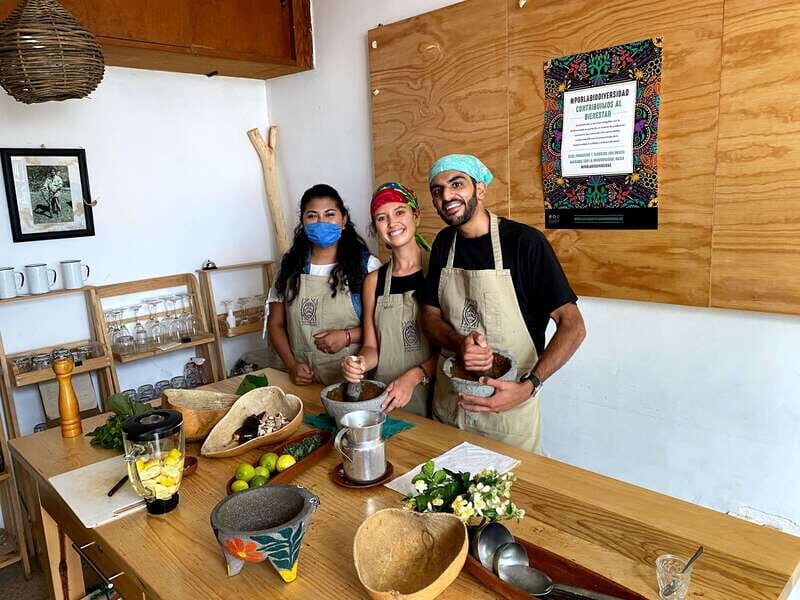
- Hands-on vegetarian recipes built around a salad, main dish, and dessert
- Traditional technique in the kitchen, with cooks guided through each step (no advanced skills required)
- A shared meal afterward, so you eat what you made instead of just watching
- Small group size (max 4), which usually means more help and more conversation
- Wild mezcal included, with coffee or tea also part of the menu
Market to meal: why this format works
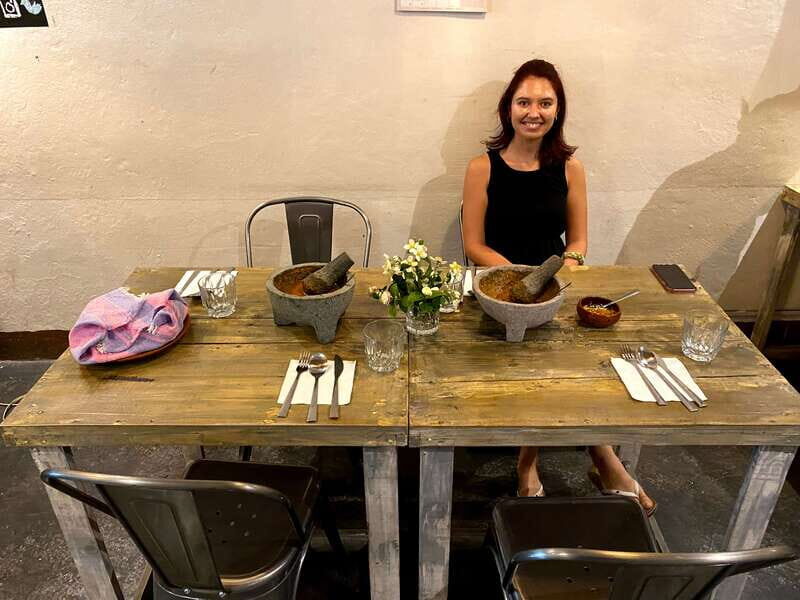
If you’ve ever taken a cooking class where you spend most of the time standing around, this one feels different. The day is designed as a loop: you start at a local market to choose ingredients, then you use what you bought to cook, and finally you sit down together to eat. That flow matters because Oaxaca food isn’t just about recipes—it’s about what’s in season and what local cooks know how to turn into something satisfying.
And you’re not just getting taught; you’re getting context. The market stop includes learning about local ingredients and meeting producers of fresh vegetables, with notes that some items are grown organically nearby and harvested that morning. Even if you only remember a few names—like common Oaxacan chiles or herbs—you’ll leave with a clearer sense of how Mexican cooking actually happens.
The small group (up to 4 participants) is a practical advantage, not a marketing detail. With fewer people, you’re more likely to get direct answers, see the cutting and mixing steps clearly, and adjust along the way. Several people also mention that it felt personal—like they had a chef and support team focused on the group dynamic.
You can also read our reviews of more cooking classes in Oaxaca De Juarez
What you do first: shopping the market like an insider
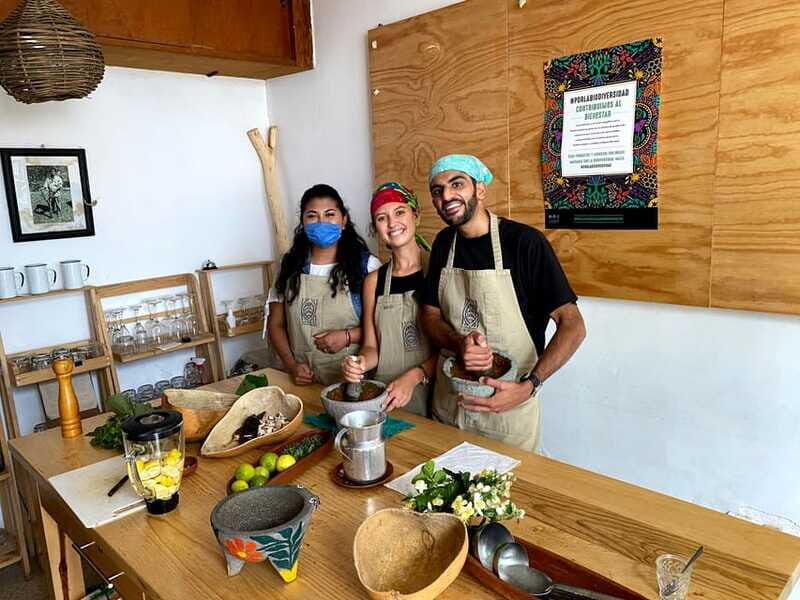
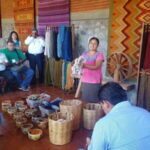
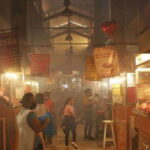
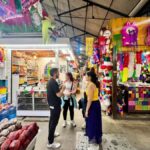
The start is straightforward: you arrive a little early (plan on 10 minutes before), then set off to buy your ingredients. The market portion isn’t framed as sightseeing. It’s framed as sourcing—learning how cooks choose produce, spices, and flavors that match Oaxacan style.
Here’s what makes this stop useful for you:
- You learn ingredient “jobs,” not just ingredient names. People mention getting explanations about different types of chiles and how they change flavor and heat. That kind of knowledge helps later when you’re trying to recreate sauces at home.
- You get a feel for cacao, coffee, and local herbs (some participants specifically call this out). Even if you’re not planning to cook with everything you see, understanding how these ingredients fit into everyday food connects the dots between drinks, desserts, and savory dishes.
- You may spot local fruit and learn how produce is used. One participant describes guides pointing out fruit trees and explaining what the fruit is used for, which makes the market feel like a living system rather than a stall-to-stall checklist.
There’s also a “lesser-known local market” vibe in the feedback. That’s not just romantic talk. A smaller, less-performative market tends to mean more conversation with sellers and more realistic insight into how ingredients get used locally.
The kitchen phase: how the class teaches Oaxacan vegetarian cooking
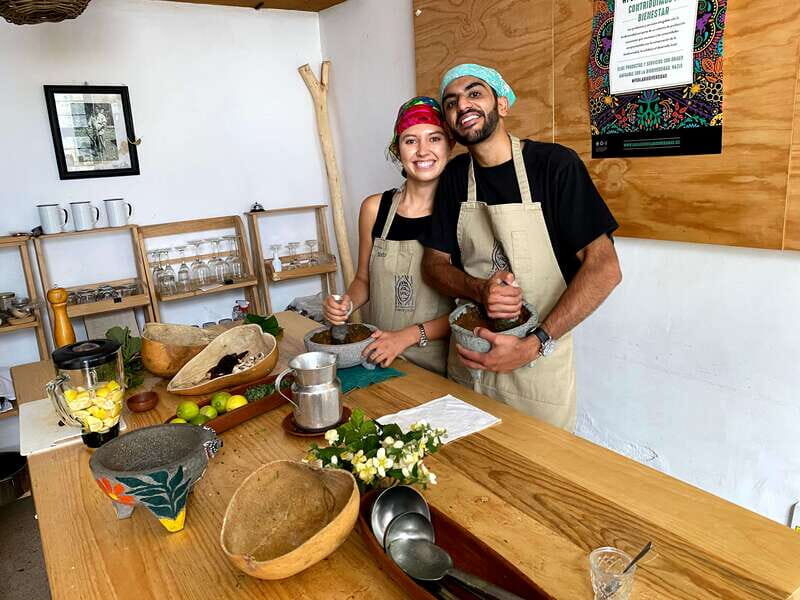
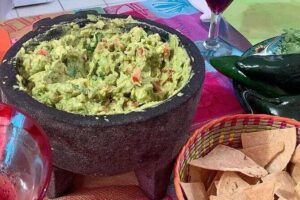
After the market, you head back to the kitchen. This is where the experience turns from learning to doing. You’ll prepare three parts: a salad, a vegetarian main dish, and a dessert—built the traditional way.
What’s notable is the emphasis on technique with real guidance. Several reviews mention step-by-step teaching with a friendly, patient approach. People also say they didn’t need advanced cooking skills, which is important if you’re thinking: I can cook basics, but I’m not a knife wizard.
Salad and salsas: flavor you can replicate
Many participants mention learning sauces and salsa-style components. Even when the exact menu varies, the learning pattern usually sticks: understand the ingredients, learn the balance, and then taste so you can correct salt, acid, or heat.
Vegetarian main: mole and Oaxacan comfort food
One of the most repeated food mentions is vegetarian Oaxacan mole. In practice, mole is where you see the biggest payoff from market knowledge: dried chiles, spices, and thickening ingredients all have to work together. People also mention things like handmade quesadillas and rice dishes, plus a note that one guide adjusted enchiladas for someone following a vegan diet.
That matters to you if you’re vegetarian and want Oaxacan food that feels genuinely local—not just “tomato pasta with a label.” The best sign here is that the class uses Oaxacan-style ingredients and traditional methods, not shortcuts.
A few more Oaxaca De Juarez tours and experiences worth a look


Dessert: a sweet ending that fits the day
Dessert is part of the structured class, not an afterthought. If you’re used to dessert being candy-first and cooking-later, you’ll probably like how this day treats sweetness as part of the same ingredient story you started in the market.
Drinks: coffee or tea plus wild mezcal
Included drinks are simple and practical: coffee or tea plus wild mezcal. Mezcal is also a nice bridge between cooking and culture—especially in a class that’s already connecting flavors, ingredients, and local producers. Just remember: even if it’s served casually, mezcal can sneak up on you.
The shared meal: eating together is part of the lesson
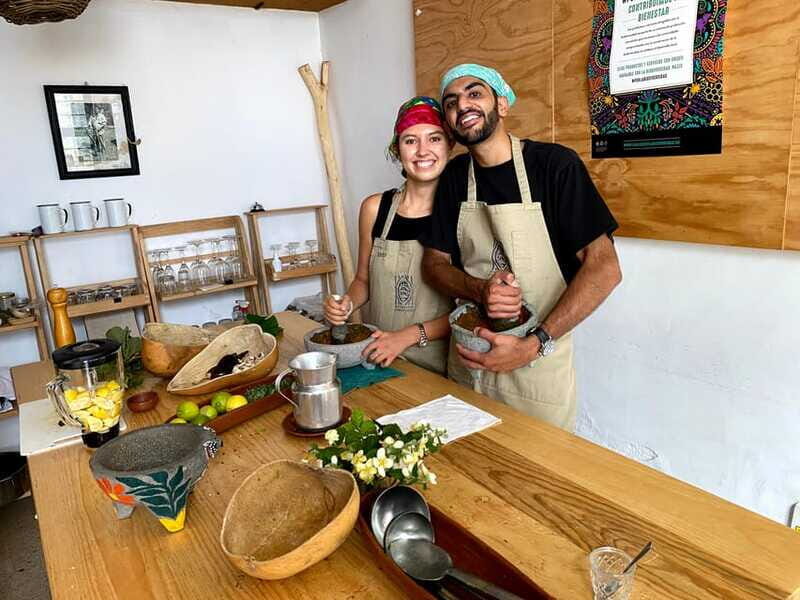
After cooking, you eat what you made as a group. This is more than a nice ending. It reinforces learning because you taste the finished dish and can ask questions in real time—what changed during simmering, why one chile blend worked better, or how to adjust flavor at home.
You’ll also get the social part without the awkwardness. Multiple reviews mention meeting international visitors during the cooking and eating time. With only up to 4 people, conversation tends to stay human-sized.
And yes, the meal is plentiful. One review directly warns to come with an empty stomach, because you’ll be cooking and eating a lot. That’s useful for your planning: don’t schedule a long post-class workout, and don’t rely on dinner right after.
Price and value: is $70 a good deal for 3.5 hours?
At $70 per person for 3.5 hours, this class can feel like a bargain if you price it like a local day out.
You’re not only paying for a recipe. You’re paying for:
- a market guide and cooking expert,
- ingredients and materials,
- instruments and aprons,
- a recipe guide (digital or printed),
- coffee or tea, fresh seasonal water,
- and wild mezcal.
Also, the small-group cap at 4 people usually means more instructor time per person than larger cooking classes. That can be the difference between learning “a general approach” and learning “how to actually do it.”
The one cost you must cover is transportation to the meeting point. If you’re staying close, you’ll likely find this price very reasonable. If you’re farther away and need taxis or rideshares, build that cost into your budget.
Who this tour suits best (and who should consider another option)
This cooking class is a strong match if you want:
- Vegetarian Oaxacan food that isn’t watered down
- a market-to-kitchen experience, not just a kitchen-only class
- a smaller setting where you can ask questions
- a day that ends with shared eating and practical takeaway recipes
It’s also a good solo-traveler option. People describe it as a friendly way to spend time with other visitors without it feeling like a crowded group tour.
You might consider a different format if you:
- need a very light food experience (this one can be a lot)
- prefer a class where everyone prepares the whole dish from scratch at every step (one participant felt tasks were split so they couldn’t follow every component closely)
Practical tips to make your day smoother
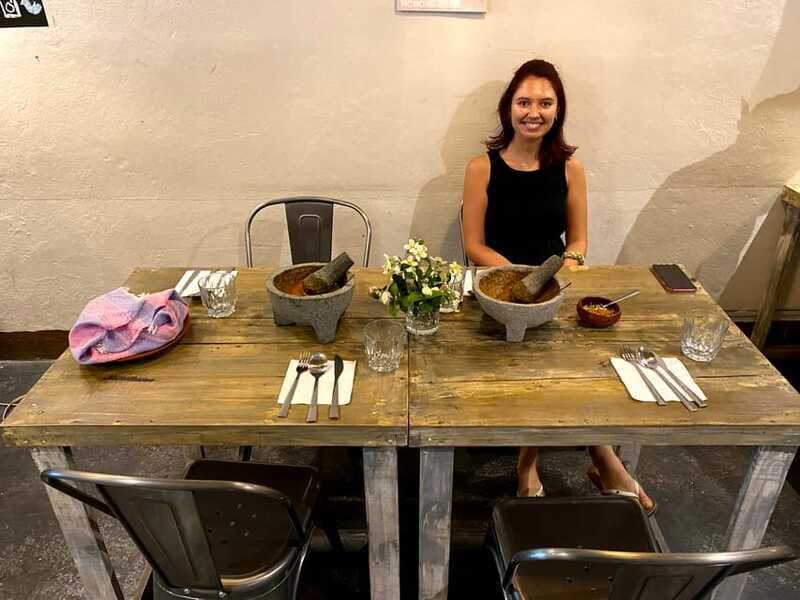
A few small things will help you get more from the experience:
- Bring a sun hat and sunscreen. The market walk is part of the learning, so you’ll want to stay comfortable.
- Wear comfortable clothes you don’t mind getting a little warm or messy.
- Start the day with a realistic plan to eat. Even people with strong appetites called out how much food you end up with.
- Ask about the recipe format during the class. The included materials include a digital or printed recipe, but one participant reported that recipes promised through a messaging app never arrived. If you care about the recipes afterward, make sure you get them before you leave.
Timing, languages, and group size you should know
The class runs 3.5 hours, and it’s guided in Spanish and English. That bilingual setup matters if your Spanish is basic—you’ll still be able to follow step-by-step cooking and explanations.
It’s also wheelchair accessible, which is a real plus if you need mobility accommodations. And because it’s a small group limited to 4 participants, the pace often feels manageable instead of rushed.
Should you book Oaxaca: Vegetarian Cooking Class?
If you want a hands-on introduction to Oaxacan vegetarian cuisine, this is an easy yes. The combination of market shopping, traditional cooking, and a group meal is exactly the formula that helps you learn something you can repeat at home. Plus, the included wild mezcal and the small-group limit make it feel like a real local experience rather than a cookie-cutter activity.
I’d say skip it—or choose carefully—if you hate eating a lot, dislike market walks in the sun, or need a more individual cooking experience where every person does every step. Otherwise, $70 for 3.5 hours with ingredients, drink, and close guiding is solid value.
FAQ
How long is the Oaxaca vegetarian cooking class?
It lasts 3.5 hours.
How much does it cost?
The price is $70 per person.
Is transportation included?
No. Transportation is not included, so you’ll need to get to the meeting point on your own.
Where do I meet for the activity?
The only instruction given is to arrive 10 minutes before the activity starts. A specific address isn’t listed in the details provided.
What’s included in the class?
You get coffee or tea, a tour guide and cooking expert, materials and ingredients, instruments and aprons, a digital or printed recipe, fresh seasonal water, and wild mezcal.
How many people are in the group?
It’s a small group limited to 4 participants.
What languages are offered?
The live guide offers Spanish and English.
Is the experience wheelchair accessible?
Yes, it’s listed as wheelchair accessible.
What should I bring?
Bring a sun hat, sunscreen, and comfortable clothes.