REVIEW · MERIDA
Mérida: Montejo Boulevard and Historic Center bike tour
Book on GetYourGuide →Operated by Flip’s Side of History Tours · Bookable on GetYourGuide
Two wheels make Mérida feel fast and friendly. This Mérida bike tour threads together Paseo Montejo palms, the historic center’s main squares, and a market drink stop without turning your vacation into a sweaty grind. The guide (Ivan is a frequent favorite) keeps the pace easy and the stories clear, in English or Spanish.
I especially like the small-group feel, where you can ask questions and actually get personal tips for where to eat and what to look for next. I also like the gentle, flat route—mostly protected bike lanes at the start—so you cover real ground without arriving worn out.
One thing to consider: if the group stretches out, it can be harder to hear the guide at the moving stops. You’ll get the most out of the tour if you stay close and regroup quickly when the guide cues it.
In This Review
- Key points before you pedal
- Getting started at Museo Palacio Cantón: bikes, helmets, and quick orientation
- Paseo Montejo by bike lanes: palms, shade, and an easy rhythm
- Monument to the Homeland: a quick guided stop that sets the tone
- Hidden gems, mansions, and the Golden Age stories you’ll actually remember
- Plaza Grande and the Cathedral area: colonial-era sights without the traffic headache
- La Plancha: the photo stop with a purpose
- Santa Anna Market refreshment: your included cold drink break
- Pace, safety, and what you should bring for Mérida weather
- Price and value: is $40 worth 2.5 hours of guided city coverage?
- Who this bike tour is best for
- Should you book the Mérida Montejo Boulevard and Historic Center bike tour?
- FAQ
- How long is the Mérida bike tour?
- How far do you ride?
- Where do you meet the guide and pick up bikes?
- What’s included in the price?
- What should I bring?
- Is the tour wheelchair accessible?
Key points before you pedal
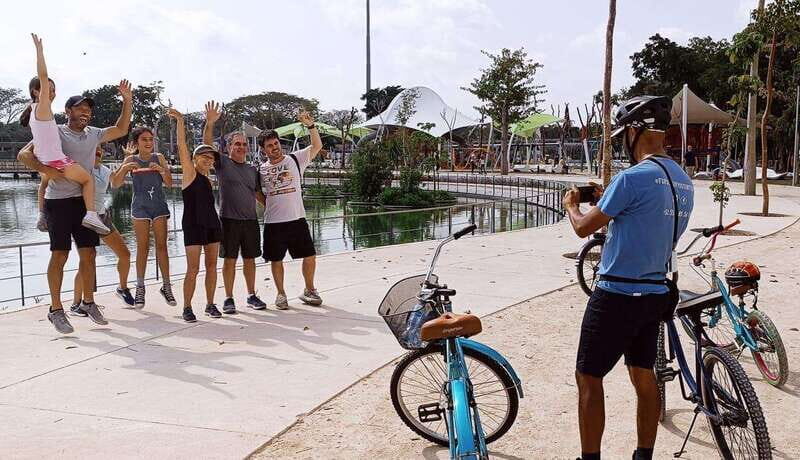
- Mostly flat riding over about 7 km (4 miles), with shade built into the route.
- Small-group time with Ivan, plus personal recommendations for cultural and food spots.
- Paseo Montejo bike lanes along trees and palms that cut the sun.
- Plaza Grande and colonial sights, including the Cathedral area and the House of the Conquistadors.
- La Plancha photo time and guided walk, with a clear reason for stopping there.
- Santa Anna Market refreshment included: a non-alcoholic cold drink of your choice.
Getting started at Museo Palacio Cantón: bikes, helmets, and quick orientation
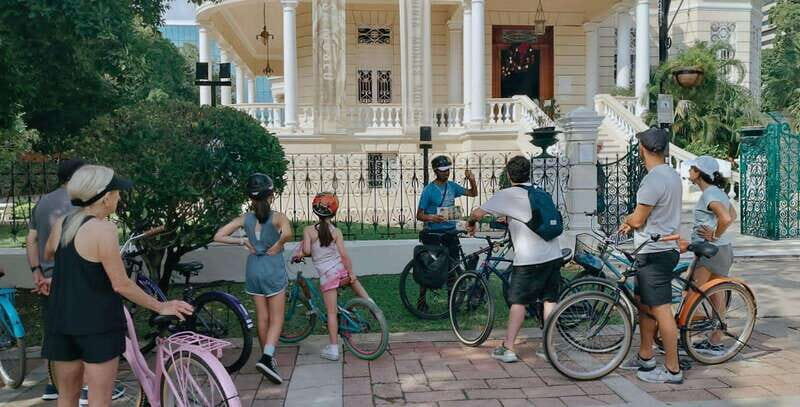
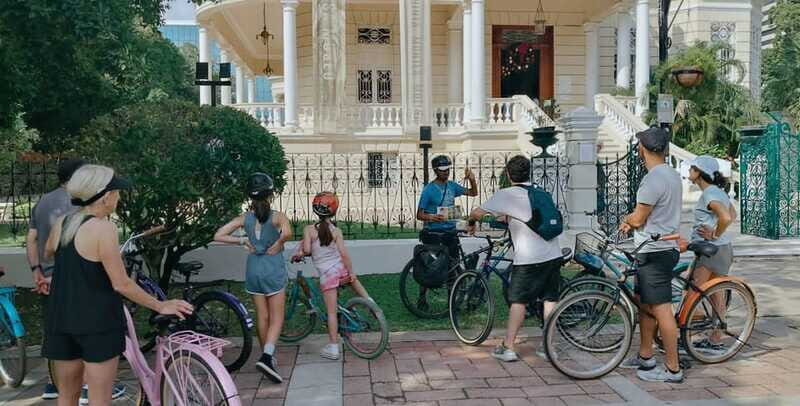
The tour starts at Museo Regional de Antropología, Palacio Cantón, right by the corner of 43 Street and Montejo Avenue. If you’re standing at the main museum spot and thinking you’ll spot bikes instantly, don’t stress—one practical tip from past riders is to wait in the corner by the museum, then walk with the guide to where the bikes are staged.
Once you’re fitted, you’ll get a helmet and a bike adjusted to your height. That matters more than it sounds. When the seat and fit feel right, the whole tour becomes relaxed instead of “pedal-and-wince.” They also have options that can work for families, including bikes for children, seats for small kids, tricycles for adults, and tandem bikes.
One caution: a couple of riders noted the bikes weren’t in great shape. That doesn’t mean the whole operation is bad, but it does mean you should take 30 seconds at pickup: check the tires, make sure the brakes feel solid, and confirm your adjustments before you roll. You’ll still enjoy the tour more if your bike feels trustworthy from the start.
You can also read our reviews of more cycling tours in Merida
Paseo Montejo by bike lanes: palms, shade, and an easy rhythm
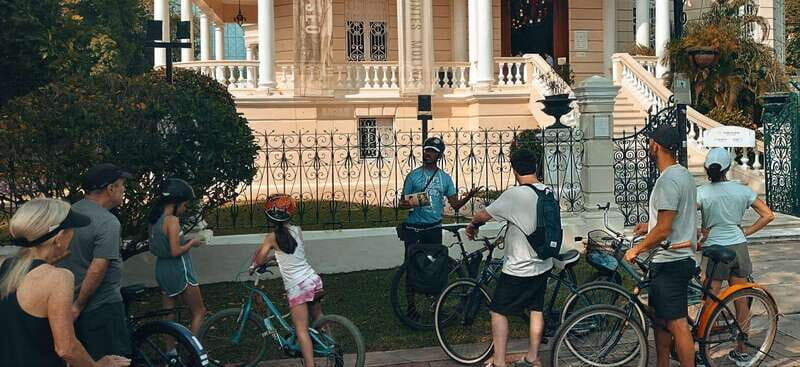
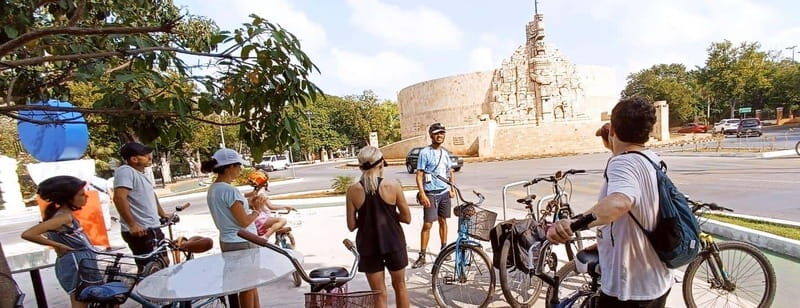
The first big win here is the way the ride is set up. You start along Paseo Montejo Boulevard and use the bike lanes on the avenue lined with trees and palms, which helps a lot in Mérida’s heat. The idea is simple: let you move efficiently without roasting while you take in a “first look” at the city.
The cycling pace is gentle. You’re covering a small distance, but more importantly, you’re not doing stop-and-go stress like you would walking. A few riders pointed out that the cycling feels manageable even when you’re not a cyclist. If you’re here for history, it’s a smarter way to get it without turning the whole afternoon into an endurance test.
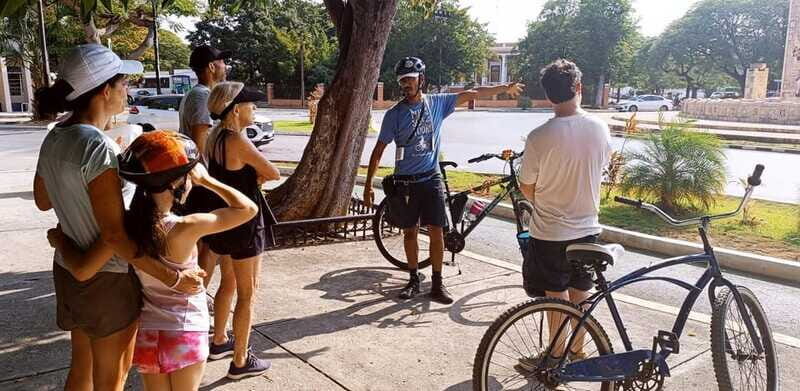
Communication is another underrated detail. The guide explains things as you ride, using a speaker while staying where the group can follow. In a couple of reviews, you’ll see mentions of a handheld laser used to point out details on buildings and monuments farther away—so you’re not just guessing what you’re looking at.
And because shade is part of the plan, you’re not constantly waiting under the sun. The tour also includes short walking moments at certain stops, but they’re brief—think “look closer” rather than “walk until your legs give up.”
Monument to the Homeland: a quick guided stop that sets the tone
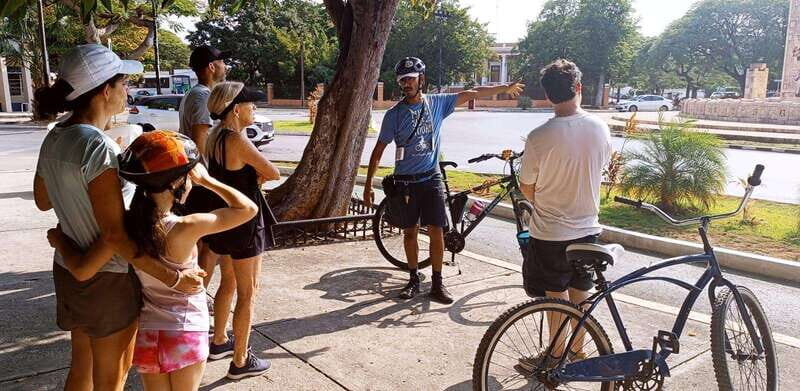
Right away, you’ll reach the Monument to the Homeland. Expect a guided explanation (about 15 minutes) and time to take photos, since it’s described as a unique space in Mexico. This is the kind of stop that helps your eyes “switch on” for what comes next: it gives context before you start reading the city through architecture and streets.
Photo time matters here. You’ll get a window to take pictures without the usual scramble. The tour timing keeps you moving, but it doesn’t treat every stop as a drive-by.
If you’re traveling with someone who likes both stories and scenery, this first anchor stop usually works well. It’s not just a landmark; it’s a perspective on what Mérida values and how that shows up in public spaces.
Hidden gems, mansions, and the Golden Age stories you’ll actually remember
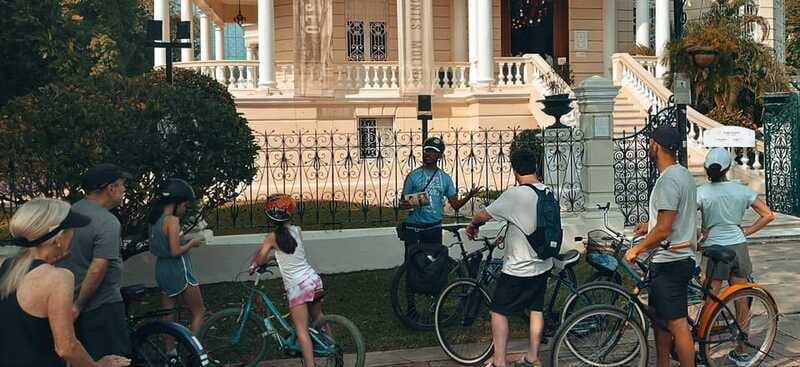
After the opening landmark, the tour heads through areas designed to feel local—not only the postcard spots. There’s also a “hidden gem” stop with a short guided talk, around 10 minutes, where the guide points out details most people miss when they’re sightseeing alone.
One of the tour’s stronger themes is the set of grand mansions along the way. You’ll stop at four different beautiful houses and learn who lived there and how their fortunes connected to the golden age of Yucatán. This is where the bike tour format pays off: you move between these buildings without fighting traffic or spending your energy on long transfers.
Here’s why I think this section is a big value: it turns “pretty buildings” into people, money, and social power. That’s what makes the city feel real. When the guide connects the architecture to the Yucatán’s rise and boom, you start noticing patterns—balconies, layouts, materials, and street position—because you understand what each choice meant.
You’ll likely also notice how the guide builds a rhythm: ride, stop briefly, listen, then move on. It keeps your attention without rushing every explanation.
Plaza Grande and the Cathedral area: colonial-era sights without the traffic headache
As you transition into the historic center, the route becomes more about careful navigation and key sights. The tour uses a safe street directly toward the main square area, where you can see buildings that define colonial Mérida.
At Plaza Grande, you’ll get a guided visit (about 15 minutes). This is where you’ll spot major landmarks around the square. The tour specifically calls out views of the Cathedral, the House of the Conquistadors dating from the colonial era, parks created in the 19th century, and the main theater seen from the outside.
Even if you’ve seen photos online, seeing these in person helps your brain lock onto the city’s layout. The square is like Mérida’s stage, and the buildings frame it with different layers of time. You’re not only looking at architecture; you’re watching how a city designed for ceremony and power still functions as a public meeting point.
The tour also includes Casa Montejo Museum (about 10 minutes). That quick stop is designed to make the stories you heard about the mansions and conquistador-era influence feel grounded in something tangible. You get a guided orientation, not just a quick look.
Then the Cathedral of Mérida is included with a short guided visit (about 5 minutes). That’s brief, but it works with the tour pacing—this day’s focus is on getting the big picture and moving efficiently between multiple highlights.
You can also read our reviews of more historical tours in Merida
La Plancha: the photo stop with a purpose
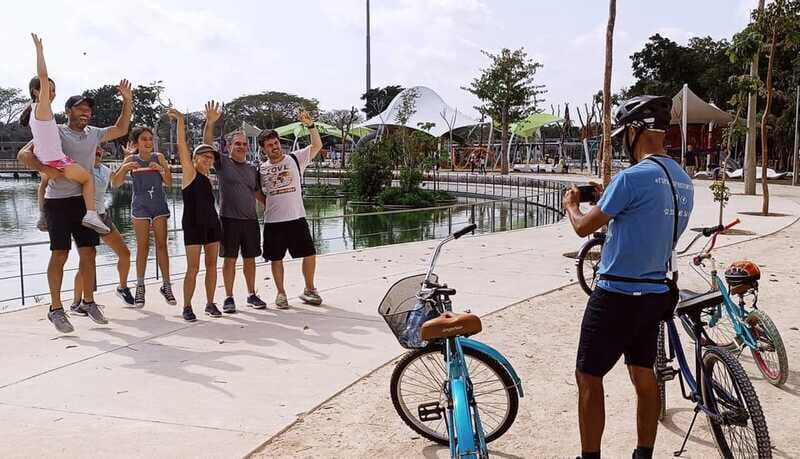
One of the best-feeling parts of the ride is the time at La Plancha, which is built as both a photo stop and an opportunity to visit and get a guided explanation. You’ll spend roughly 25 minutes here, which is long enough to slow down, take photos, and actually absorb what’s around you.
This is also the kind of stop that helps you shift from “museum mode” into “street mode.” After learning about mansions, squares, and colonial structures, La Plancha gives you a chance to see Mérida as a living city—where people gather, stroll, and take advantage of open public spaces.
If you enjoy photography, this is your moment to stop thinking about the next turn and start composing. If you don’t care about photos, you’ll still appreciate it because the guide turns the scene into a quick lesson about why this spot matters locally.
Santa Anna Market refreshment: your included cold drink break
By the end of the tour, you’ll head to Santa Anna Market to cool down and refresh. The tour includes a non-alcoholic drink—described as a fruit drink of your choice. Several riders also mention enjoying cold beverages during the ride, with some reporting things like fresh coconut included.
This timing is smart. It lands when your energy dips a bit, after you’ve covered the main sights, so you get that “okay, I can keep going” feeling. It also gives you a window into how locals handle breaks: grab something cold, relax for a moment, and keep moving.
And because it’s at a market, it’s not a generic tourist refreshment stop. Even if your drink is the main event, the setting helps you feel the city’s daily rhythm.
Pace, safety, and what you should bring for Mérida weather
This tour is designed around heat and sun. The route is totally flat, and the plan includes shade at stops, plus bike lanes for the start. On top of that, the tour notes that weather can shift the route if it’s hot or rainy—but the duration stays around 2.5 hours.
That matters for planning. You’re not committing to a long, unpredictable walking day. Instead, you’re choosing a controlled, guided route that adapts while still hitting major areas.
Bring the basics:
- comfortable clothes
- water
- a hat
The tour also has clear rules: no alcohol and no drugs. That’s part of keeping the ride comfortable and safe.
On safety, the route uses bicycle lanes and then a very safe street in the historic section. That design choice is why the experience works for people who want light exercise without biking through chaos.
Price and value: is $40 worth 2.5 hours of guided city coverage?
For about $40 per person, you’re getting:
- a provided bike (with helmet and sizing)
- a live guide speaking English or Spanish
- guided explanations at multiple stops
- a non-alcoholic drink at the market
- mostly protected riding on bike lanes, with a flat route around 7 km total
That price makes sense if you look at the whole package. You’re not just paying for movement; you’re paying for a guide who connects the dots between plazas, colonial-era buildings, mansions, and local public spaces. Several riders highlighted Ivan’s deep interest in Mérida and his ability to answer questions with context, especially around Maya and Mexico history.
You’re also paying for convenience. Bikes get you from one focal point to the next without the energy drain of walking between every stop in the heat.
If you’re on a tight schedule and want a “see the essentials with stories” day, this is a solid use of time. If you prefer total independence with no group dynamic, you might feel constrained by the pace and regrouping—but the tour is built for comfort, not speed.
Who this bike tour is best for
This tour fits best if you:
- want a light exercise option with a flat, manageable ride
- like history that’s explained through buildings and local context
- enjoy photo stops but also want guidance on what you’re seeing
- appreciate recommendations for food and cultural spots from someone who lives in the city
It’s not suitable if you can’t ride a bike, need wheelchair access, or if you have epilepsy (as stated). There are also weight limits listed for rider eligibility, so if you’re near the upper range, check with the operator before booking.
If you’re traveling as a couple, a small group of friends, or with older kids who can ride confidently, the small-group approach tends to work well.
Should you book the Mérida Montejo Boulevard and Historic Center bike tour?
I’d book it if you want a practical way to cover Mérida’s main sights with less walking, more shade, and a guide who clearly cares about the city. The route design makes it feel smoother than a walking tour, and the stop sequence helps you understand how Paseo Montejo connects to the historic center’s colonial layers.
Book it with a couple expectations: stay close so you don’t miss audio during moving sections, and do a quick bike check at pickup in case you’re sensitive to bike condition.
If you’re looking for a “half-day worth of city context” without the strain, this one delivers.
FAQ
How long is the Mérida bike tour?
It lasts about 2.5 hours.
How far do you ride?
You’ll cover about 4 miles or 7 kilometers.
Where do you meet the guide and pick up bikes?
You meet at the corner of 43 Street and Montejo Avenue, outside the Museo Palacio Cantón (Museum of Regional Anthropology).
What’s included in the price?
Bicycles are included, along with a non-alcoholic drink (either halfway or at the end in a market). The guided narration is also included.
What should I bring?
Bring comfortable clothes, water, and a hat.
Is the tour wheelchair accessible?
No. It is not suitable for wheelchair users, and it also isn’t suitable if you can’t ride a bike.