REVIEW · MEXICO CITY
Learn to Cook Mexican Salsas
Book on Viator →Operated by Mexican Salsas · Bookable on Viator
Salsa lessons beat guessing at spice. In Tacuba, you learn four ways to make salsa and how heat really works. I especially love the Tacuba Market ingredient hunt and the hands-on raw, fried, boiled, and roasted salsa practice. One thing to plan for: this runs on good weather, and since private transportation isn’t included, you’ll want to be comfortable getting yourself there.
After we shop, you head to the instructor’s place for cooking, tasting, and eating. You get unlimited jamaica agua fresca plus snacks while you work. If you want a laid-back class with real local rhythm, this is a great fit.
In This Review
- Key Highlights Worth Marking in Your Head
- First Stop: Parroquia San Gabriel Arcángel and Tacuba’s Old-School Setting
- Tacuba Market Shopping: Picking Chiles, Tomatoes, and Herbs That Actually Matter
- From Market to Kitchen: 5 Minutes Walk, Then Real Cooking Starts
- The Main Event: Four Traditional Ways to Make Salsa (and Why Each Tastes Different)
- Quesadillas with Oaxaca Cheese (Plus Vegan Choices That Don’t Feel Like an Afterthought)
- The Take-Home Jar and Recipe Cards: Why This Is Better Than a Souvenir
- Price and Timing: Is $96 Worth Two and a Half Hours of Salsa Work?
- Who Should Book This Salsa Class (and Who Might Want to Skip It)
- Making It Smooth: What to Expect on the Ground
- Should You Book Mexican Salsas in Mexico City?
- FAQ
- What types of salsa will I learn to make?
- Do we visit a market before cooking?
- What will I eat and drink during the class?
- Is there a vegan option?
- Where does the tour start?
- How long is the experience?
- Is the class offered in English?
- Will I take salsa home?
- Is this a private activity?
- What if the weather is bad or I need to cancel?
Key Highlights Worth Marking in Your Head
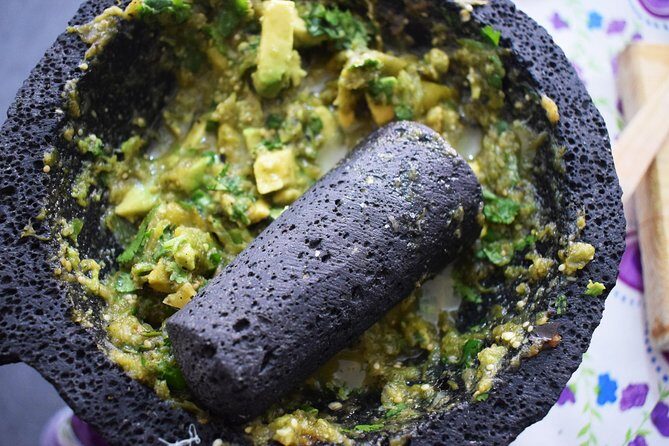
- Tacuba Market shopping first so your salsa starts with the ingredients you actually choose
- Four salsa styles (raw, fried, boiled, roasted) so you understand flavor changes, not just recipes
- Hands-on quesadillas with Oaxaca cheese, plus a vegan option with beans and nopales
- Unlimited hibiscus agua (jamaica) to cool your palate while you taste different heat levels
- Take-home jar and recipe cards so you can recreate your favorites after you’re back home
First Stop: Parroquia San Gabriel Arcángel and Tacuba’s Old-School Setting
The tour kicks off at Parroquia San Gabriel Arcángel in Tacuba. The setting matters here. Tacuba feels like one of those Mexico City neighborhoods where you’re not just walking past landmarks—you’re stepping into a long timeline. The church area gives the day a sense of place before you start cooking.
Right after meeting, you get into the simple plan of the day: shop for fresh ingredients, then cook in four traditional salsa styles. That order is one of my favorite parts. It keeps you from thinking of salsa as some mysterious sauce you buy. You see what goes in, you smell it, and you learn why certain ingredients show up in different ways of cooking.
You’ll also notice the group stays small and practical. This is a private activity, meaning it’s just your group. That matters when you have different spice comfort levels in the same class—your instructor can guide you without rushing.
You can also read our reviews of more tours and experiences in Mexico City.



Tacuba Market Shopping: Picking Chiles, Tomatoes, and Herbs That Actually Matter
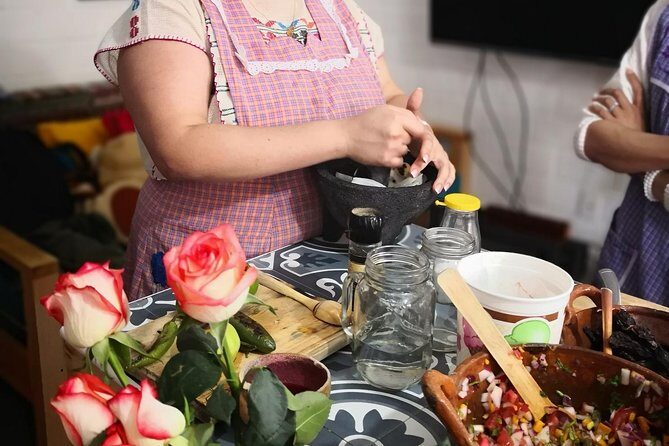
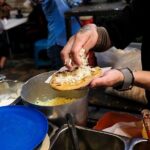
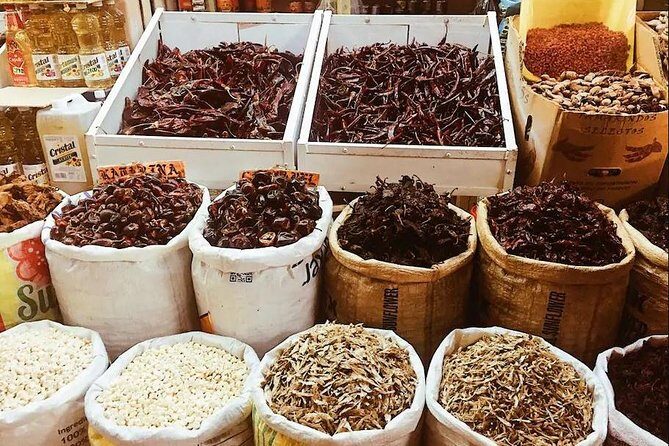
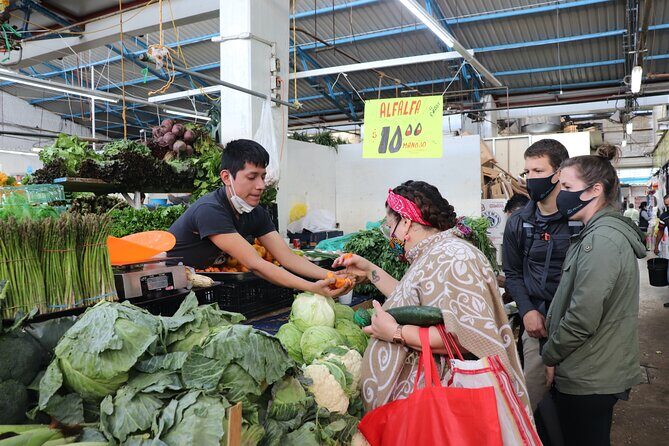
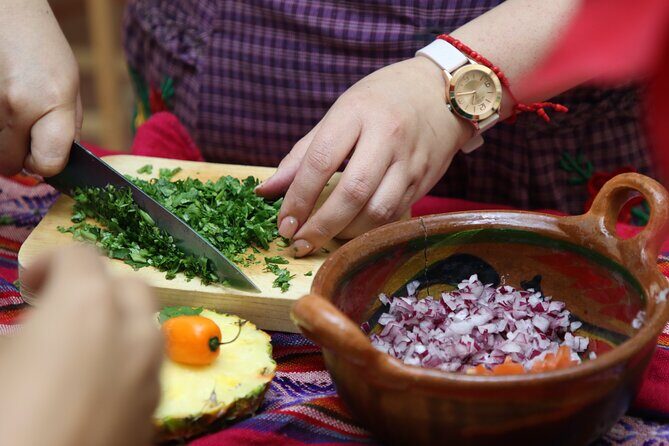
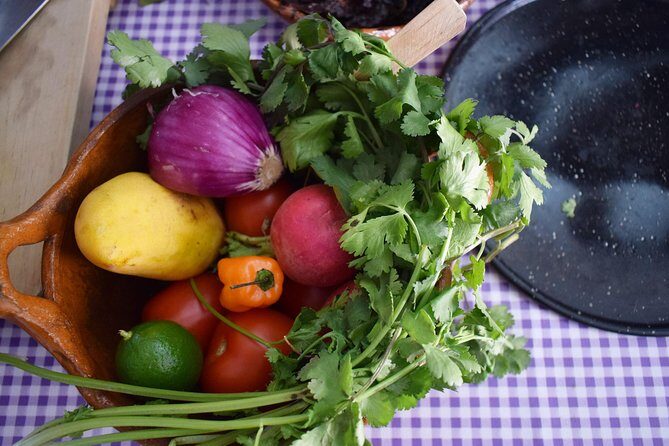
Next comes the Tacuba Market. This is where you learn to stop relying on guesswork. You’ll pick fresh produce and spices for your salsa, and you’ll start seeing how salsa begins with ingredient selection, not shortcuts.
Here’s what makes this market stop worth your time:
- You learn what to look for in fresh ingredients you’ll use in raw, roasted, boiled, and fried salsas.
- You get a chance to taste along the way, which helps your palate calibrate before cooking.
- You’re not just shopping—you’re building a salsa foundation you can recreate later.
In Mexico City, markets can feel loud and overwhelming if you’re on autopilot. Here, the market is part lesson, part prep. I like that you’re walking with a purpose. You’re choosing what becomes your flavor base—tomatoes, chiles, herbs, and the supporting cast that turns salsa from hot into tasty.
Also, this experience supports local commerce. Buying fresh ingredients locally is part of the value. You’re paying for the market guidance and the cooking time, but you’re also sending your money into the neighborhood economy.
From Market to Kitchen: 5 Minutes Walk, Then Real Cooking Starts
After the market, you walk about five minutes to the cooking location. It’s close, which keeps the class moving at a comfortable pace. You don’t spend the whole day commuting. You spend it learning salsa technique.
At the kitchen setup, you jump right in. Expect a guided, hands-on session with you doing the work—cutting, mixing, and adjusting as you go. That’s the big difference between a cooking class and a cooking performance. You’ll understand what to change when your salsa is too hot, too sharp, or not quite hitting that savory balance.
You’ll also have snacks during the process:
- Salsa and totopos (fried corn tortilla chips)
- Agua fresca made with hibiscus (jamaica), ice, and a touch of sugar
- Quesadillas to eat alongside your salsas (and yes, you’ll want more)
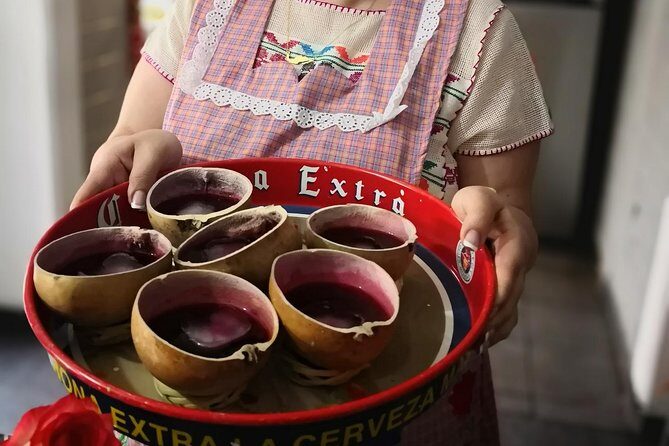
And your drink isn’t a one-time pour. The class includes unlimited jamaica water, which is ideal for tasting multiple chile intensities.
The Main Event: Four Traditional Ways to Make Salsa (and Why Each Tastes Different)
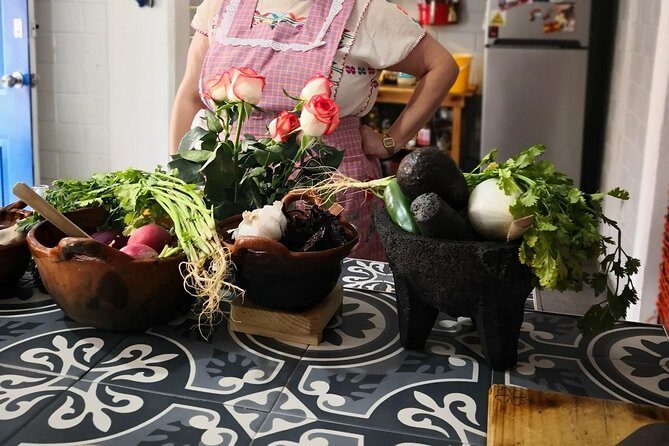
This class focuses on four salsa methods. That’s where the real learning happens. Salsa isn’t one thing—it’s a family of flavors shaped by cooking method.
You’ll make salsas in four styles:
- Raw salsa
You get brightness and punch. Raw salsas tend to taste fresher and sharper, and chiles feel more direct.
- Fried salsa
This is where you learn about depth. Frying helps mellow harsh edges and adds a warm, savory quality.
- Boiled salsa
Boiling softens ingredients and can create a rounder flavor. It’s a technique that often makes sauces taste more unified.
- Roasted salsa
Roasting brings a smoky note and changes the sweetness of ingredients. You’ll taste how heat and time shift flavor.
You’ll likely notice something important quickly: your spice level changes depending on method. Even if the chile ingredients are similar, cooking shifts the burn profile and the overall balance.
That’s why this class is so practical for real life. Once you’ve made salsa four ways, you stop thinking, I should buy salsa, and start thinking, I can cook this flavor story at home. You’ll also be able to adjust heat based on your palate rather than trusting whatever’s in a jar.
If you’re the type who normally says salsa is either too mild or too spicy, you’ll appreciate how the instructor helps you manage those differences.
Quesadillas with Oaxaca Cheese (Plus Vegan Choices That Don’t Feel Like an Afterthought)
While you cook, you also eat. That’s not just a nice extra—it’s part of learning. You taste your salsas with food so you understand how salsa performs in real use, not just on its own.
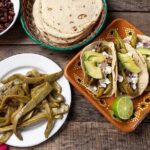
The included main is quesadillas with melted Oaxaca cheese. Oaxaca cheese is known for its melt and mild, milky flavor. It gives your salsa something to bounce off—salty cheese with tangy, spicy chile sauce.
There’s also a vegan option. The class includes a vegan version with beans and nopales. That’s useful because it keeps the meal coherent for people who don’t eat cheese. You’re still pairing salsa with a filling that makes sense, not just leaving someone with chips.
And yes, you’ll keep sipping jamaica water while tasting. Hibiscus is tart and cooling, which helps you stay focused when the heat ramps up.



The Take-Home Jar and Recipe Cards: Why This Is Better Than a Souvenir
At the end, you don’t leave empty-handed. You’ll take home a jar of salsa plus recipe cards. That’s a smart value play, because it turns your class into a lasting skill, not a memory that fades after the trip.
A jar is also a safe move. You’ll likely have at least one salsa you fall for during the class. Bringing it home means you get an immediate payoff, and you can share it with friends without waiting until you’re brave enough to cook from scratch.
The recipe cards matter because they give you a starting point. Salsa becomes much easier once you’ve made it once with guidance. After that, you can tweak it. More roasting? Less time? Different chile? You’ll have the baseline technique in your head.
In a city like Mexico City, that’s how you get value beyond the sights—taste your way into skills you can reuse.
Price and Timing: Is $96 Worth Two and a Half Hours of Salsa Work?
The price is $96 per person for about 2 hours 30 minutes. For many visitors, that sounds like a splurge. For others, it’s a fair trade because you’re paying for:
- Market guidance and time selecting ingredients
- Instruction through four salsa methods
- Food included (totopos, agua fresca, quesadillas)
- A take-home jar and recipe cards
- A private setup for your group
The best part is that your money goes into the stuff that actually takes effort: fresh ingredients and hands-on teaching. You’re not just watching someone else cook.
One more practical point: this experience is commonly booked in advance (around 20 days on average). If you’re traveling during peak periods or you want a specific time slot, plan ahead so you don’t end up with a salsa-shaped gap in your schedule.
Who Should Book This Salsa Class (and Who Might Want to Skip It)
This tour is a strong match if you want more than restaurant eating. You’ll like it if:
- You enjoy food that’s practical and learnable
- You want to understand how cooking changes chile flavor
- You like market time, not just a classroom moment
- You’d rather come home with recipes than random snacks
It’s also a great pick for families and groups, since the experience is private and your instructor can adjust how you taste and cook based on spice tolerance. And if you’re traveling with kids, it tends to land well because you’re doing real tasks and eating what you make.
You might consider skipping it if you dislike hands-on cooking or you don’t want any spicy experimentation at all. Salsa classes work best when you’re open to taste changes. If your spice comfort is low, you’ll still be able to participate, but your enjoyment will depend on how flexible you are.
Making It Smooth: What to Expect on the Ground
Here’s what I’d plan for day-of, based on how this class runs:
- You’ll start at Parroquia San Gabriel Arcángel in Tacuba, then walk a short distance to the market.
- After shopping, you move about five minutes on foot to the cooking place.
- You’ll be tasting and adjusting as you cook, and your drinks will keep you steady.
A couple of practical notes:
- Private transportation is not included, so use public transit or plan a simple local ride to reach the start point.
- The experience requires good weather. If conditions are poor, you’ll be offered a different date or a full refund.
- Service animals are allowed, and the start is near public transportation.
Also, this is offered in English, and it can be held in more than one language at the same time. If you want a specific language setup, it’s smart to check when you book.
Should You Book Mexican Salsas in Mexico City?
If you like the idea of learning salsa you can actually make—four methods, real ingredient shopping, and a take-home jar—then yes, book it. This is the kind of class that makes your Mexico City food knowledge feel useful, fast. You’ll walk away with technique, not just a meal.
I’d especially recommend it if you’re the type who always orders salsa but never feels confident making it. This class fixes that by showing how raw, fried, boiled, and roasted salsas each behave differently.
On the other hand, if your schedule is tight, you strongly dislike spicy food, or you hate market wandering, you may want to pick a different cooking option. But if you’re up for a small adventure in Tacuba and you want recipes you’ll use at home, this one earns its place on the itinerary.
FAQ
What types of salsa will I learn to make?
You’ll learn to prepare four types of Mexican salsa using different traditional methods: raw, fried, boiled, and roasted.
Do we visit a market before cooking?
Yes. You meet at the church in Tacuba and then go to the Tacuba Market to buy fresh ingredients for the salsas.
What will I eat and drink during the class?
You’ll enjoy salsa with totopos, traditional agua fresca made with hibiscus (jamaica) and ice, and quesadillas. Unlimited jamaica water is included.
Is there a vegan option?
Yes. A vegan option is available with beans and nopales.
Where does the tour start?
The meeting point is Parroquia San Gabriel Arcángel, Calz México-Tacuba S/N, Tacuba, Miguel Hidalgo, 11490 Ciudad de México, CDMX, Mexico.
How long is the experience?
The duration is about 2 hours 30 minutes.
Is the class offered in English?
Yes. The experience is offered in English, and it can be held in more than one language at the same time.
Will I take salsa home?
Yes. At the end, you’ll leave with a jar of salsa and recipe cards.
Is this a private activity?
Yes. It’s private, so only your group participates.
What if the weather is bad or I need to cancel?
The experience requires good weather. If it’s canceled due to poor weather, you’ll be offered a different date or a full refund. For cancellations, you can cancel up to 24 hours in advance for a full refund. Within 24 hours, there is no refund.