REVIEW · MEXICO CITY
La Catrina & Muralism: Diego Rivera’s Legacy & Frida Kahlo
Book on Viator →Operated by Estación México · Bookable on Viator
Murals tell Mexico’s story in full color. This guided route connects Diego Rivera’s legacy to the bigger arc of Mexican muralism, with stops that link personal history (Rivera and Frida Kahlo) to public art and the symbolism of La Catrina. You’ll move through famous cultural institutions, but the real payoff is how the guide ties each wall painting to the ideas behind it.
Two things I really like about this tour: first, it starts at a site tied to Rivera and Kahlo’s story, so the art feels human, not just historical. Second, the sequence of museums is practical—your admission tickets are included, and you’re taken from one mural-focused space to the next without having to figure out logistics in a complicated downtown. One consideration: it’s an active walk with limited built-in pauses, so bring water and expect a lot of standing time.
In This Review
- Key Things to Know Before You Go
- Why Mexican Muralism Still Hits Today
- Route Overview: San Ildefonso to Bellas Artes
- Stop 1: Antiguo Colegio de San Ildefonso and the Rivera–Kahlo Story
- Stop 2: Museo Vivo del Muralismo and How Murals Work in Space
- Stop 3: Museo Mural Diego Rivera and La Catrina in Full Story Mode
- Stop 4: Palacio de Bellas Artes and Rivera’s Controversial US Mural
- Guides and Storytelling: The Human Part of Mural Art
- Timing, Pace, and What to Bring
- Price and Value: What $66.14 Gets You in Real Terms
- Who Should Book This Muralism Tour
- Should You Book It?
- FAQ
- How long is the tour?
- What time does the tour start?
- Is the tour offered in English?
- What’s included in the price?
- Where do you meet, and where do you end?
- Is food or drinks included?
- What’s the cancellation policy for a full refund?
Key Things to Know Before You Go
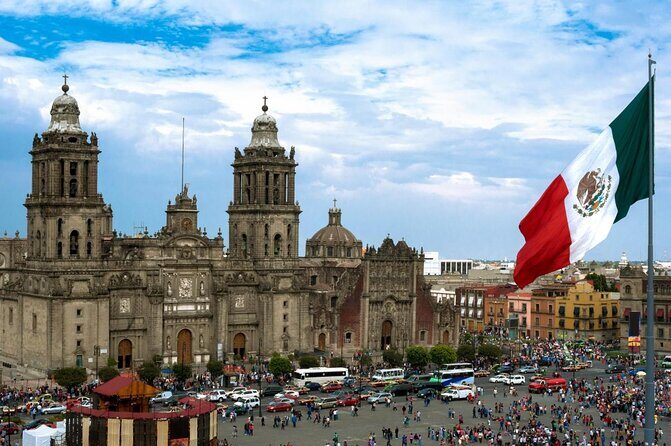
- San Ildefonso sets the Rivera–Kahlo tone right away, not as an afterthought.
- Multiple museum stops with included tickets keep this from feeling like a “look only” walking tour.
- You’ll connect La Catrina and Día de Muertos themes to Rivera’s mural language.
- Small groups (max 12) make it easier to ask questions and keep the pace human.
- The pace can be long and standing-heavy, so plan for comfort.
- The tour ends near Palacio de Bellas Artes, making it easy to continue exploring by foot.
Why Mexican Muralism Still Hits Today
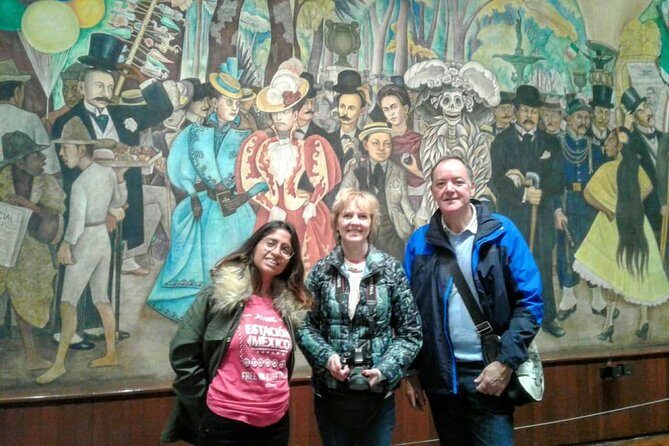
Mexican muralism isn’t just about what’s painted. It’s about who murals are for and why art belongs in public space. When I think about why this kind of tour works, it’s because it treats murals like history you can walk through—politics, identity, labor, grief, and pride all shown on walls built for everyone.
This particular theme—Diego Rivera’s legacy and his relationship to Frida Kahlo—helps you understand the emotional engine underneath the artwork. You’re not only learning names and dates. You’re seeing how a movement made art part of daily life, then watching how later audiences continue to interpret it.
And yes, the Día de Muertos connection matters here. La Catrina isn’t just a costume or a marketing icon. On murals, she often becomes a bridge between mortality and memory, mixing critique with celebration. That’s the kind of symbolism you’ll want the guide to explain as you go.
You can also read our reviews of more tours and experiences in Mexico City.


Route Overview: San Ildefonso to Bellas Artes
The tour starts at the Former College of San Ildefonso on Justo Sierra 16 in Mexico City’s Centro Histórico. The start time is 11:00 am, and the end point is near Palacio de Bellas Artes on Av. Juárez S/N (Centro Histórico). If you like finishing your experience somewhere that’s easy to snack, people-watch, and keep exploring, that matters.
Your day is built around short museum visits and walking between them. Transportation is part of the package, so you’re not stuck trying to plot tram and metro transfers mid-tour. Also, you’ll get a mobile ticket, and the tour is offered in English, which keeps the storytelling tight and consistent.
This tour also caps group size at 12 travelers, which tends to make a real difference in how much attention you get. In mural tours, that’s not just comfort—it’s how you get context instead of rushed viewing.
Stop 1: Antiguo Colegio de San Ildefonso and the Rivera–Kahlo Story
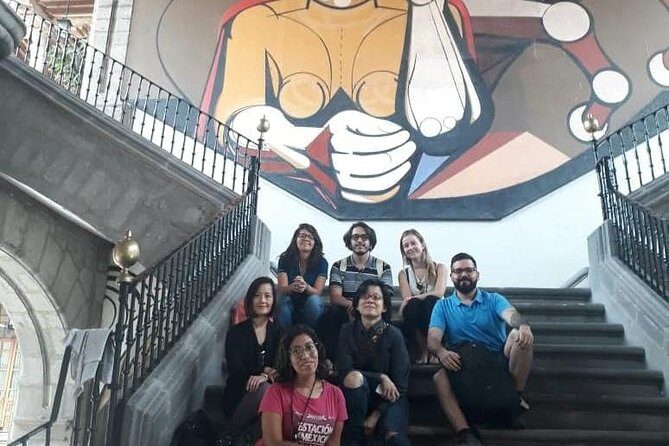
You begin at Antiguo Colegio de San Ildefonso, a major historical setting where Rivera’s early life and work intersect with the moment his love story with Frida Kahlo takes shape. That detail changes how you look at murals later. Instead of treating Rivera and Kahlo as distant “icons,” you feel the immediacy of their world—art, revolution-era ideas, and personal passion all tangled together.
This stop is about context with a museum-building backdrop, so plan to spend the full time there. The tour gives you a brief introduction first, then you’re ready to move on with a clearer mental map of what to look for in Rivera’s visual language.
One practical point: San Ildefonso is a central landmark. That’s useful if you arrive early and want a quick orientation of Centro Histórico before you meet your guide.
Stop 2: Museo Vivo del Muralismo and How Murals Work in Space
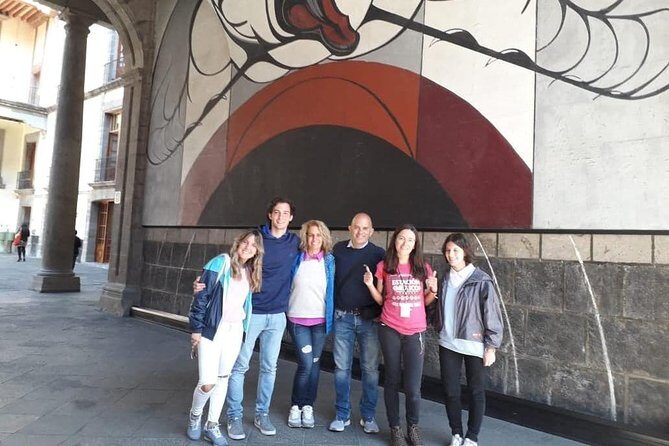
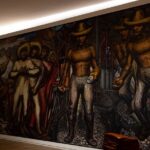
Next comes Museo Vivo del Muralismo, a mural-focused site with two courtyards and three levels. That layout is more than design—it affects how you experience public art. Courtyards create an “echo” effect for stories told across walls, while multiple levels push you to notice scale and composition.
Here, the guide’s role becomes extra important. Rivera and the muralists didn’t paint only for aesthetics. They painted for meaning, using figures, allegory, and symbolism as a kind of public language. In a space like this, you start to see how muralism changes when you move—what looks like a detail up close becomes part of a larger narrative when you step back or shift levels.
This stop also tends to reward patience. Spend a minute longer on figures and scenes rather than rushing to the biggest names. You’ll get more out of the tour when you train your eye to connect small symbolic elements to the bigger message.
Stop 3: Museo Mural Diego Rivera and La Catrina in Full Story Mode
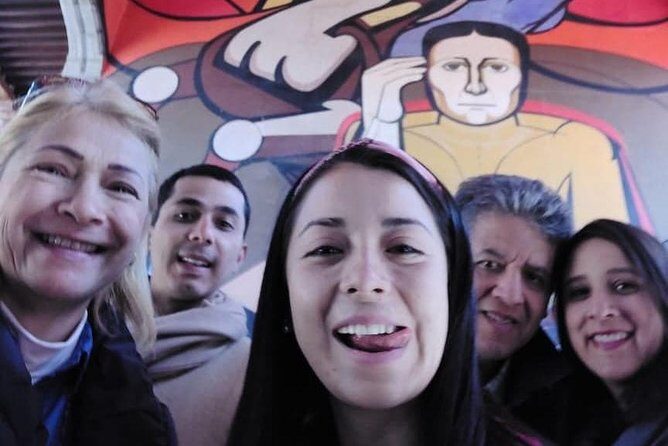
The third stop is Museo Mural Diego Rivera, where you’ll see a representative work of Mexican muralism that weaves together Día de Muertos spirit with the figure of La Catrina. This is where your learning becomes visual.
What to focus on here:
- The way figures are staged (who stands where, and what that implies).
- How Día de Muertos themes are used for social meaning, not only for celebration.
- How Catrina imagery functions as a character in a bigger argument about life, death, and memory.
A good guide will point out that La Catrina can be read in multiple ways at once: cultural tradition, social satire, and a reminder that death is shared. In mural art, that mix becomes powerful. You see how humor and mourning can live in the same scene.
This is also a great stop for questions. If you’ve been wondering why certain symbols show up again and again across muralists, this is when you’ll likely get the clearest answers.

Stop 4: Palacio de Bellas Artes and Rivera’s Controversial US Mural
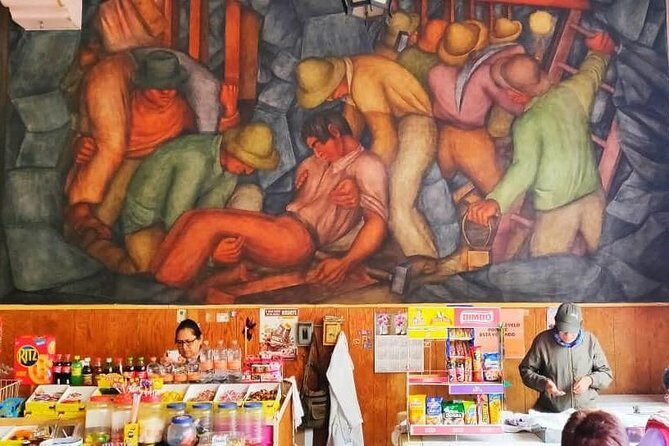
You end at Palacio de Bellas Artes, Mexico City’s most important cultural venue. The theme here is Rivera’s mural legacy carried into an international setting—your tour includes mention of a controversial mural created in the United States that is now preserved so visitors can study it.
That ending is smart for two reasons. First, it closes the loop: you started in a historic educational building tied to Rivera and Kahlo’s origin story, and you finish in the city’s major artistic stage. Second, it reminds you that muralism wasn’t isolated to Mexico in practice or impact. These ideas traveled, were challenged, and were preserved.
When you’re at Bellas Artes, take a moment to adjust your expectations. A palace is built for formal culture—museums, performances, curated viewing. But muralism is inherently public and argumentative. The contrast is part of what makes the finale interesting.
And once you’re done, you’re dropped near the palace, where the area is set up for continuing the day—walk a little, grab a drink, and let the whole mural story sink in.
Guides and Storytelling: The Human Part of Mural Art
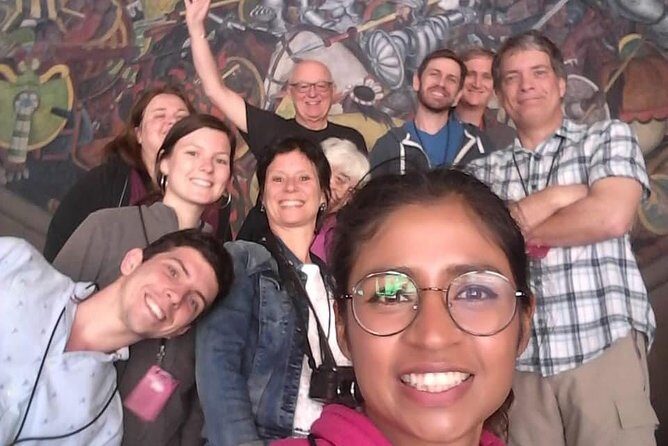
The biggest factor in mural tours is the guide. With this experience, guides bring warmth and a strong connection to both art history and how murals reflect real life. You’ll often hear clear, story-first explanations, not just art-buff cataloging.
Names that have come up in guide performance include Addy and Sofia, both noted for friendly communication and passion. Other guides mentioned include Ulysses and Guerrero, with a focus on explaining the struggles and social context murals were responding to. Erin is also cited for making the history feel tied to the nuance of each site.
Even if your guide isn’t the same person those names suggest, you can still expect a similar style: connect the mural to the world it came from, then translate the symbols in plain language as you stand in front of them.
The best guides also help you notice what you’d miss on your own: how a building’s purpose can change how you read a mural, how public art pushes back, and how recurring icons (including Catrina imagery) function like a visual sentence.
Timing, Pace, and What to Bring
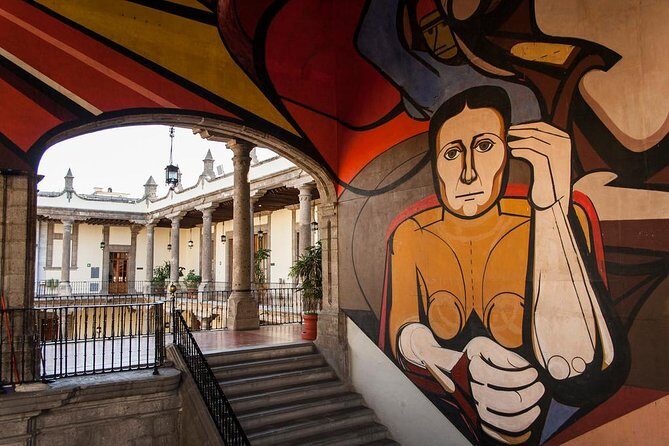
The tour is listed at about 2 hours 30 minutes, but plan for the reality that museum time can stretch. Some people report it running longer than the posted duration, and the pacing can be mostly standing.
Here’s what I’d do as your practical prep list:
- Bring water, especially if you’re sensitive to long museum periods without breaks.
- Consider light snacks, even though food and drinks aren’t included.
- Wear comfortable shoes for standing and walking in Centro Histórico.
- If you need regular bathroom breaks, build that into your day planning, because there aren’t described as scheduled stops.
Also, if you’re the type who likes to read every label, factor in extra time. If you’re more visual and prefer listening, you’ll likely keep a smooth pace with the group.
Price and Value: What $66.14 Gets You in Real Terms
At $66.14 per person for about 2.5 hours, this is positioned as a budget-friendly way to get into multiple mural-focused sites without paying each admission separately. The value is strongest because the package includes:
- Museum tickets
- Public transportation
- A host who connects the art to the story
- A one-language format in English
This matters because mural tours often become expensive when you add museum entry one by one. Here, you buy one guided experience and get the admissions handled.
You’re also paying for interpretation. Looking at murals without context is like reading a letter without knowing who wrote it. The guide’s job is to translate the symbolism—so the murals start speaking in a way you can understand quickly.
If you enjoy both art and history, and you want a structured route through places you might otherwise skip or miss, this price makes sense. If you’re only interested in one or two artworks and you like independent wandering, you might feel the cost less justified. But the multi-stop format is the point.
Who Should Book This Muralism Tour
This tour fits best if you:
- Want a guided Mexican muralism introduction focused on Rivera’s legacy and the Rivera–Kahlo story.
- Like symbolism and narrative art more than purely technical art discussion.
- Prefer a small group experience (max 12) where you can ask questions.
- Want museum admissions handled and a transit plan simplified.
It’s also a strong choice for a first-time Mexico City trip because you’re centered in an area that’s easy to return to. And if you plan to continue exploring after Bellas Artes, the ending location helps.
If you’re sensitive to standing time or you need frequent breaks, I’d still consider it—but go in prepared with water and comfort items and expect a more active route than a slow strolling tour.
Should You Book It?
Yes, if you want a clear, meaningful route through some of Mexico City’s mural landmarks and you care about understanding what you’re seeing. The included museum tickets and transportation make it good value, and the Rivera–Kahlo framing gives the art emotional context instead of just dates.
Skip it only if you want a super leisurely pace, hate standing, or you’re mainly chasing one single famous mural at the expense of learning the larger muralism movement.
In short: for most travelers who like art with a story and public meaning, this is a solid book.
FAQ
How long is the tour?
It’s about 2 hours 30 minutes (approx.).
What time does the tour start?
The start time is 11:00 am.
Is the tour offered in English?
Yes, the tour is offered in English.
What’s included in the price?
The experience includes museum tickets, public transportation, and your host/guide, with a one-language format for the tour.
Where do you meet, and where do you end?
You meet at the Former College of San Ildefonso at Justo Sierra 16, Centro Histórico. The tour ends near Palacio de Bellas Artes at Av. Juárez S/N, Centro Histórico.
Is food or drinks included?
No. Food and drinks are not included.
What’s the cancellation policy for a full refund?
You can cancel for a full refund up to 24 hours before the experience’s start time. If you cancel less than 24 hours before, the amount you paid won’t be refunded.