REVIEW · MEXICO CITY
Iztapalapa: Cable Car Tour and Urban Art From the Heights
Book on GetYourGuide →Operated by KactusMX · Bookable on GetYourGuide
Iztapalapa looks completely different from the air. I love the way this tour pairs the Cablebús ride with real urban art you can study from above, plus a guide who makes Mexico City’s transit feel less intimidating, even on day one. My only real caution is that a big chunk of your 4 hours is on the metro, so if you hate transit time, plan for that upfront.
This is also the rare tour that focuses on a neighborhood most visitors skip. You’ll spend time on the ground too, with short guided moments, photo time, and a park view that brings the volcanoes and city distance into focus. If you’re prone to motion sickness, you’ll want to take the prevention advice seriously.
In This Review
- Key Things You’ll Notice
- Why Iztapalapa From the Heights Changes Your Whole City View
- Meet at Bellas Artes and Get Ready for Transit 101
- Cablebús to Iztapalapa: The Long Ride That Turns Into a Moving Museum
- Rooftop Murals and Photo Time: Art You Can Read Like a Story
- Park Views, Volcano Distance, and the Sounds of the Neighborhood
- Tortilla Making: The Most Useful Cultural Stop You’ll Make Today
- Price and Value: $24 for Transport, Art Context, and a Hands-On Food Moment
- What to Bring (and What to Skip) for a Comfortable Cablebús Day
- Should You Book the Cablebús Iztapalapa Art Tour?
- FAQ
- How long is the tour?
- Where do I meet the guide?
- How much does the tour cost?
- What’s included in the price?
- Do I take both the metro and the cable car?
- What do we do in Iztapalapa besides the views?
- What language is the tour guide speaking?
- Is the tour suitable for young children?
- Can I cancel for a full refund?
Key Things You’ll Notice
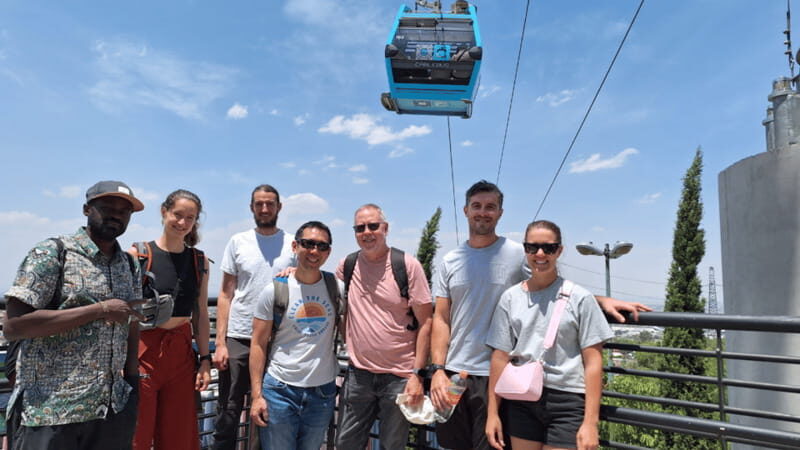
- The Cablebús ride over Iztapalapa: aerial views of streets and buildings that you simply cannot see on foot
- Murals from above and at rooftop level: stories you can read visually, not just hear about
- Metro confidence boost: guides teach you how to use the system, which pays off for the rest of your trip
- A tight group: limited to 9 participants, which helps the guide keep everyone together
- Hands-on tortilla time: one of the most practical cultural moments on the day
Why Iztapalapa From the Heights Changes Your Whole City View
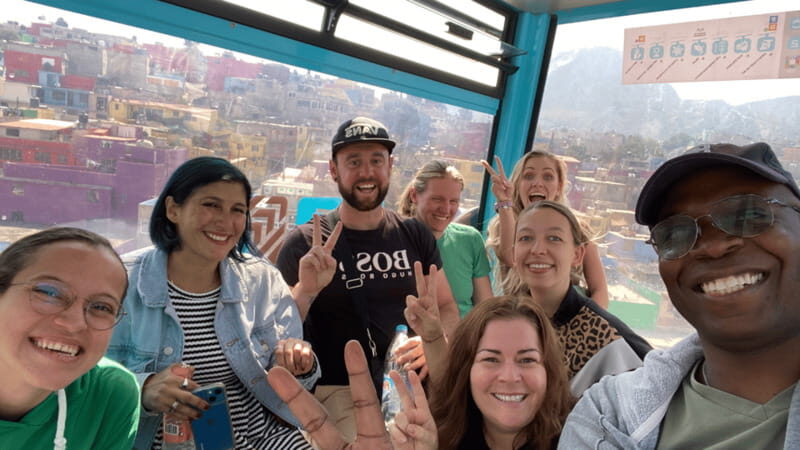
Mexico City can feel like a blur of monuments and lines on maps. This tour slows that down by showing you the city’s “everyday Mexico” from a serious altitude advantage. From the Cablebús, Iztapalapa’s architecture and street grid stretch into something you can finally understand at a glance.
What makes it special is the mix: you get big views first, then you get interpretation. Guides connect what you see—dense blocks, community-scale rooftops, and long urban walls—to why the neighborhood looks the way it does today. The payoff is that you stop thinking of Iztapalapa as a distant dot and start seeing it as a lived-in place with its own identity.
Two things I really like: the art has context, and the transit has a lesson. Eduardo, Benjamin, and Oscar (different tour dates, same idea) all emphasized how the system functions and what the art communicates, so you leave with more than photos.
One consideration: you’re not doing a high-energy walking tour. This experience runs on rides, short stops, and viewpoint time, so if you want constant movement, you may feel the pace is more relaxed than you expected.
You can also read our reviews of more tours and experiences in Mexico City.


Meet at Bellas Artes and Get Ready for Transit 101

Your day starts at the Parisian entrance of the Bellas Artes subway station, on the left side of the palace. The guides wear a green shirt and umbrella, so you’re not left guessing in a crowd.
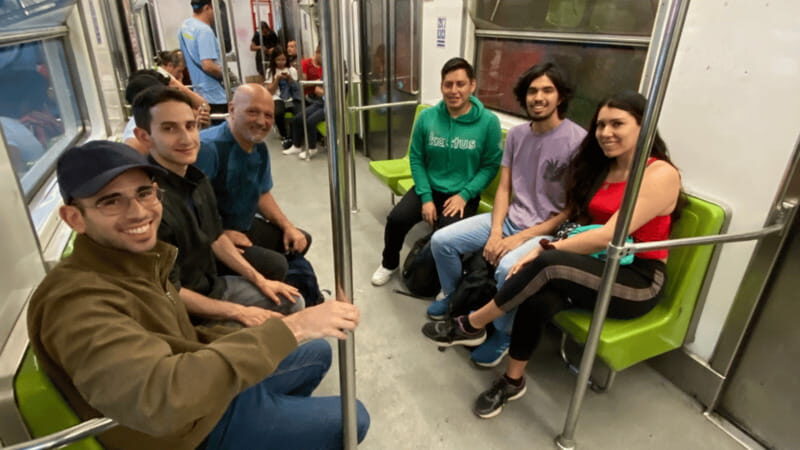
Then you head into the metro system. The trip includes about 45 minutes on the subway before the Cablebús. For many visitors, this is where the tour delivers its real value: you’re not just tagging along on transportation, you’re learning the flow of lines and how to stay oriented.
More than one guide got praised for making the metro feel doable. Benjamin and Eduardo stood out for this in particular, with people noting they would have been lost without the group structure and explanations. If Mexico City transit makes you nervous, this is the kind of “train with a pro, then go solo afterward” day that reduces stress fast.
Cablebús to Iztapalapa: The Long Ride That Turns Into a Moving Museum
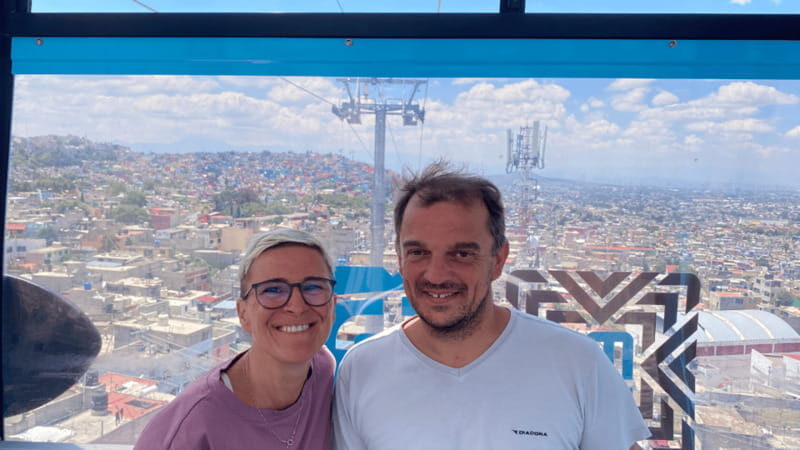
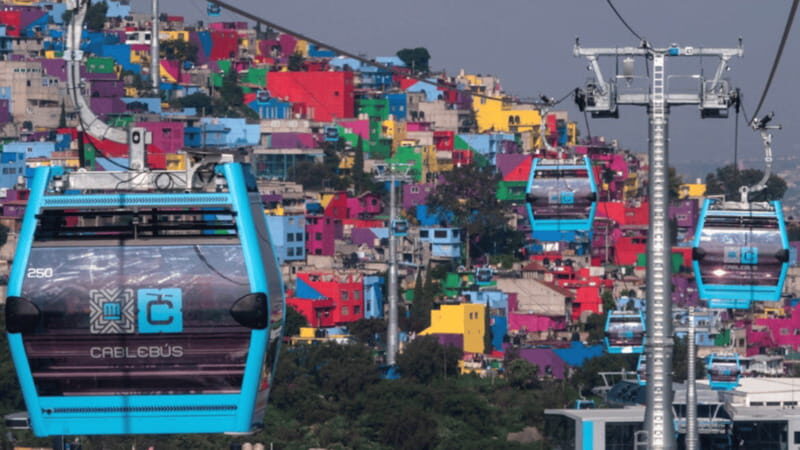
The Cablebús segment is about 40 minutes, and it’s the headline moment. This is the line described as the longest public transport cable car in the world, and the distance matters: you’re not just doing a quick photo gag, you’re crossing neighborhoods long enough to see how the city changes block by block.
From above, the neighborhood’s geometry becomes readable. You’ll notice the labyrinth-like streets and the way buildings cluster and stack. That aerial perspective also makes the murals easier to “map,” because you’re not approaching art blindly at street level—you’re seeing how it relates to rooftops, corridors, and the routes people actually take.
Guides add layers while you ride. Several people highlighted how Eduardo and Benjamin connected the view to Iztapalapa’s growth, and how that context made the ride feel like a lesson rather than a spectacle. The small-group size (up to 9) helps because the guide can keep track of who’s asking what and answer without rushing.
Practical note: this isn’t a smooth glassy gondola sightseeing fantasy. Bring motion-sickness prevention if you’re even slightly prone to it. The tour specifically flags this, and it’s smart advice.
Rooftop Murals and Photo Time: Art You Can Read Like a Story
In Iztapalapa, you get a guided introduction segment of about 20 minutes, then a 15-minute photo stop. That timing is deliberate: you’re given enough structure to understand what you’re looking at, then you get a short window to take in the details at your own speed.
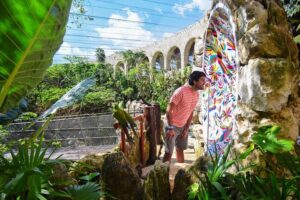
The murals and rooftop art are a core reason to choose this tour over a standard bus ride. From the heights, the artwork shows up as part of the city’s visual language, not a separate tourist attraction. You’re learning why murals matter to a community—how they communicate identity, history, and pride in plain sight.
If you’re the type who likes street art but dislikes the “look, admire, leave” pace, you’ll probably enjoy this. The short stop format keeps you from burning time hunting for the perfect angle, while still leaving room to absorb.
A minor heads-up from a logistics angle: one reviewer suggested the meeting place could be clearer at Bellas Artes. To avoid any stress, show up early and look for the green shirt and umbrella.
Park Views, Volcano Distance, and the Sounds of the Neighborhood
As the day moves forward, you’ll stop at a local park where you can see volcanoes and the city in the distance. This is a great reset moment. You’re going from overhead urban patterns to open air and wide sightlines, which makes the skyline feel real instead of theoretical.
Guides also use this part of the tour to explain what shaped Iztapalapa over time—how the neighborhood grew and worked through challenges. This is also where you’ll hear about the local musical rhythms and cultural references, including cumbia, sonidero, and urban rock.
This may not sound like a “must-see” topic on paper, but it’s one of the smartest parts of the tour because music explains social energy. It helps you understand why the neighborhood doesn’t just look different from the air; it moves differently too.
A final ride segment brings you back toward the Cablebús again. You’ll spend about 30 minutes in scenic view time on the way, then ride roughly 25 minutes on the Cablebús for the return portion.


Tortilla Making: The Most Useful Cultural Stop You’ll Make Today
Your tour includes a tortilla-making activity. In practice, this is one of those moments that feels small until you realize how many meals it explains. Tortillas are a daily staple, and you’ll get a firsthand look at why they’re not just a side dish.
The best part is that the tortilla stop fits the overall theme of the day: community, not performance. It’s not just about watching Mexico from above; it’s about understanding one of the simplest building blocks of Mexican food culture.
This is also where you may see extra local snack options. The tour notes that meals aren’t included and that gorditas cost 15 pesos (not included). So if you want a fuller bite, keep some cash handy. A few people mentioned market-style food and fruit juice, so the general vibe is “snack-friendly,” even though the tour does not promise a full meal.
If you’re a food traveler who hates vague sampling, this tortilla moment is more concrete than most add-ons.
Price and Value: $24 for Transport, Art Context, and a Hands-On Food Moment
At $24 per person for a 4-hour small-group tour, the value comes from three buckets: transport help, interpretation, and a food activity.
First, you’re paying for more than rides. You get a transport card included, plus the metro and Cablebús segments. Second, the guide time matters because it turns the aerial view into something you can understand instead of just record. People repeatedly praised guides for clarity and care, including Benjamin and Eduardo for transit explanation and Oscar and Alexia for connecting murals to the neighborhood.
Third, tortillas are included. Many tours toss in a museum photo stop. This one gives you a real food skill moment tied to daily life.
The drawback isn’t the price; it’s expectations. This isn’t a slow, full-day stroll. If you want a long walking itinerary, you may feel you’re spending more time riding than roaming.
What to Bring (and What to Skip) for a Comfortable Cablebús Day
The tour’s rules are mostly about staying safe and presentable in a community setting, and about comfort in transit. I’d plan like this:
Bring
- Comfortable shoes (closed-toe is safest)
- Cash for typical snacks, and for extras like gorditas (15 pesos)
- Motion sickness prevention if you’re prone to it
Wear and pack smart
- Dress discreetly. The guidance says to avoid sunglasses, hats, shorts, dresses, skirts, and sandals.
- Avoid oversized luggage and large bags.
Avoid
- Drones and pets (assistance dogs allowed)
- Anything that could create problems in the vehicle like smoking or alcohol
- Anything restricted by the activity rules like bright colors or sleeveless shirts
If you have vertigo or respiratory issues, or you’re prone to altitude or motion sickness, this tour may not be a fit. The tour specifically says it’s not suitable for people with vertigo and lists several health considerations.
Should You Book the Cablebús Iztapalapa Art Tour?
I’d book this if you want a first-day-friendly Mexico City experience that doesn’t lock you into the usual center-city circuit. It’s especially worth it if:
- You want a real neighborhood view with murals you can actually study
- You’re intimidated by Mexico City transit and want a guide to teach you the basics
- You like public art and culture explained in plain language
- You want a short food activity you can remember, not just taste once
I would skip it if:
- You need lots of walking and hate transit-time
- You have vertigo or strong motion-sickness risk (the tour flags both)
- You prefer a more traditional sightseeing loop with fewer rules about clothing and items
If you’re on the fence, think of it like this: you’re paying $24 not only to ride the Cablebús, but to leave with the ability to navigate the metro on your own later, and a deeper read on Iztapalapa that you couldn’t get from ground-level alone.
FAQ
How long is the tour?
The experience runs about 4 hours total.
Where do I meet the guide?
Meet at the Parisian entrance of the Bellas Artes subway station (left side of the palace). The guide will have a green shirt and umbrella.
How much does the tour cost?
It’s priced at $24 per person.
What’s included in the price?
You get a public transport card, the metro and Cablebús ride, tortillas, your expert guide, and educational resources.
Do I take both the metro and the cable car?
Yes. The tour includes metro travel and a Cablebús ride as the key part of the experience.
What do we do in Iztapalapa besides the views?
You’ll get a guided introduction, a photo stop, scenic view time, and a tortilla-making activity.
What language is the tour guide speaking?
The tour guide offers English and Spanish.
Is the tour suitable for young children?
No. It’s not suitable for children under 5.
Can I cancel for a full refund?
Yes. You can cancel up to 24 hours in advance for a full refund.