REVIEW · MEXICO CITY
Hop-on Hop-off or Night Tour Tourist Bus in Mexico City
Book on Viator →Operated by Amigo Tours · Bookable on Viator
Mexico City moves fast—this bus helps you keep up. I like the open-top double-decker for clear sightlines and that English audio commentary that keeps you oriented without staring at your phone. This is a practical way to cover a lot of ground in one day while still getting to choose what you actually want to revisit.
My favorite part is the flexibility: your ticket works for 24 hours, so you can hop off, browse, grab food, and then catch the next bus when you’re ready. One thing to plan around, though: several major stops are set for about 15 minutes, so you’ll want a game plan if you’re trying to do anything more than quick sightseeing.
In This Review
- Key Things I’d Prioritize
- Why This Hop-On Hop-Off Bus Works for Mexico City
- Meeting Point, Operating Hours, and the 24-Hour Advantage
- Riding the Open-Top Double-Decker: Views and Audio You’ll Actually Use
- From Zócalo to El Ángel: Getting Oriented in the Historic Core
- Bosque de Chapultepec: Park Time With Museum-Level Importance
- Plaza Carso and Nuevo Polanco: Modern Culture in a Quick Stop
- Polanco Side Streets: Lincoln Park and a Look Across Avenida Moliere
- Auditorio Nacional and Reforma Fountains: Big Venues and Iconic Public Art
- Santa Fe Shopping and Paseo de la Reforma Bites: Where the Tour Becomes Yours
- Timing Tips: How to Make 15 Minutes Feel Like More
- Who This Tour Suits Best (and Who Should Consider Other Options)
- Value and the 3/5 Rating Reality Check
- Should You Book This Hop-On Hop-Off Bus in Mexico City?
- FAQ
- How long is the hop-on hop-off bus tour in Mexico City?
- Is the tour offered in English?
- Is the ticket valid for more than one day?
- How often do the buses run?
- Where do I meet the tour?
- What time does the tour operate?
- Where does the tour end?
- What is the cancellation policy?
- Is there a limit on group size?
Key Things I’d Prioritize
- English audio commentary that helps you understand what you’re seeing as you pass by
- Open-top, double-decker views for classic photo angles along Reforma and the historic core
- 24-hour ticket flexibility so you can build your own pace instead of rushing
- Chapultepec and Polanco coverage that mixes big attractions with calmer breaks
- Timed stops at major landmarks that work best for quick checkoffs and photo pauses
Why This Hop-On Hop-Off Bus Works for Mexico City
Mexico City is huge, and first-timers often waste time figuring out routes, neighborhoods, and what’s closest to what. This bus is built for getting your bearings fast: you get a loop-style experience where you can see the big “you can’t miss this” landmarks, then return later if something pulls you in.
The ride itself matters. The bus is open-top and double-decker, so you’re not stuck behind glass or squeezed into the same angle over and over. Even if you only stay on the upper deck for part of the day, it’s enough to make the city feel legible. Plus, the onboard narration in English gives you context as sights slide by—history, what the place is used for, and why it’s famous.
This is also a solid “starter tour” if you plan to add museum time later. You’re not forced into a schedule of guided visits inside buildings. You can do quick stops now, then spend your best energy on the places that really match your interests.
You can also read our reviews of more city tours in Mexico City


Meeting Point, Operating Hours, and the 24-Hour Advantage

You start at Parada Capital Bus Zócalo, at C. de Monte de Piedad in the Centro Histórico area (Centro, Cuauhtémoc, 06000). The activity ends back at the meeting point, so it’s a clean, no-surprises loop.
The service runs daily from 9:15 AM to 8:00 PM (for the listed date range). That matters because it lets you do an early “orientation lap,” then come back for evening views before you’re done for the day.
The real power move is the 24-hour ticket. In practice, it means you can structure your day like this:
- Morning: ride and hop at a landmark or two to learn the city layout
- Afternoon: focus on museums, parks, or shopping stops you care about
- Evening: use the bus again to reposition without another complicated plan
The tour duration is listed as 1 to 11 hours (approx.), which matches how people actually use hop-on hop-off routes. If you only want quick photos, plan closer to the short end. If you hop often, it can stretch.
Riding the Open-Top Double-Decker: Views and Audio You’ll Actually Use
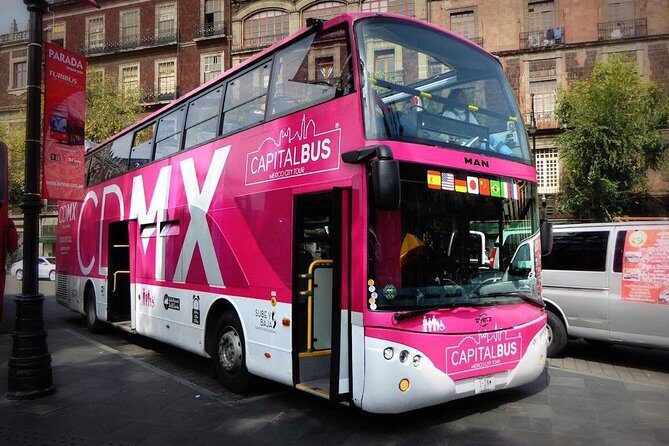
The open-top, double-decker design is one of the biggest reasons to do this. You get unobstructed views over streets and avenues, especially where the route runs through major corridors like Paseo de la Reforma and the historic center. That translates into better photos and less frustration than trying to see the same landmarks from a cramped side window.
Then there’s the audio. The bus offers English, and the narration is built around the sights you’re passing. You don’t have to guess why something matters. For example, when the bus reaches the Monumento a la Independencia (El Ángel), the narration gives you the backstory—so the landmark isn’t just a photo you snap and forget.
One small practical note: open-top rides can feel cooler or louder than you expect, depending on the day and time. If you’re sensitive to sun, wind, or noise, you might want to alternate decks and keep some layers handy.
From Zócalo to El Ángel: Getting Oriented in the Historic Core
Your day starts in the Zócalo area, and the route quickly moves into the “big, central Mexico City” zone. This is where the city feels most dramatic and easiest to understand.
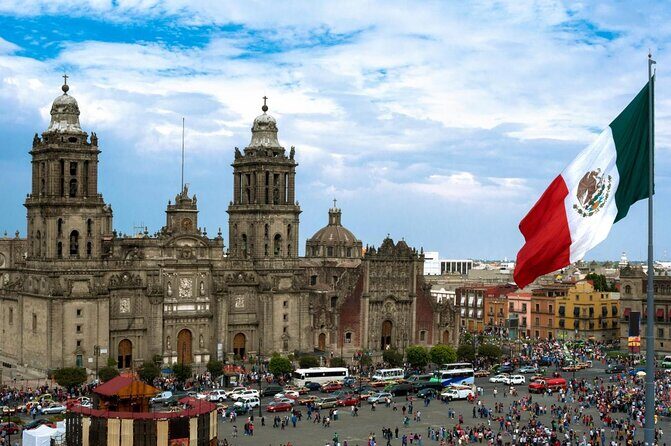
In the Zócalo area, you can’t miss the massive Mexican flag centered in the square, and the impressive National Palace nearby. This is the kind of place where you’ll immediately feel how the political and cultural story of the country connects to daily life in the city.
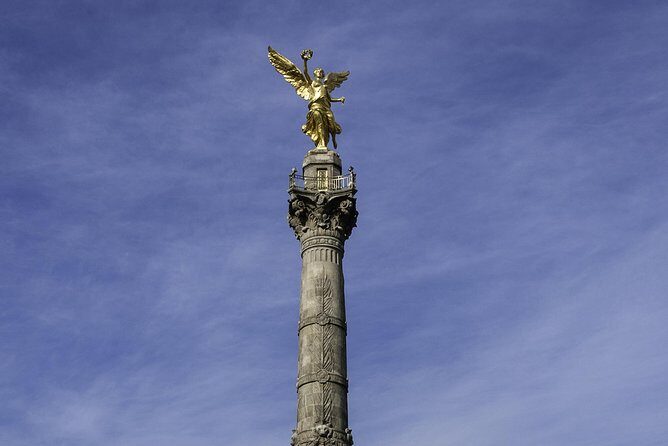
From there, the bus passes the Monumento a la Independencia, also known as El Ángel. The column was inaugurated in 1910 to commemorate the Centennial of the beginning of the Mexican War of Independence. I love this stop because it’s not just a monument—it’s a landmark built into the city’s movement. You see it from multiple angles as traffic flows around the traffic circle, which makes it a perfect “mental anchor” for where Reforma and other corridors lead.
If you’re trying to understand the layout of Mexico City, this is where your brain starts to map the city. You’ll notice how the route threads through neighborhoods, and you’ll get a sense of where you want to spend more time later.
Bosque de Chapultepec: Park Time With Museum-Level Importance
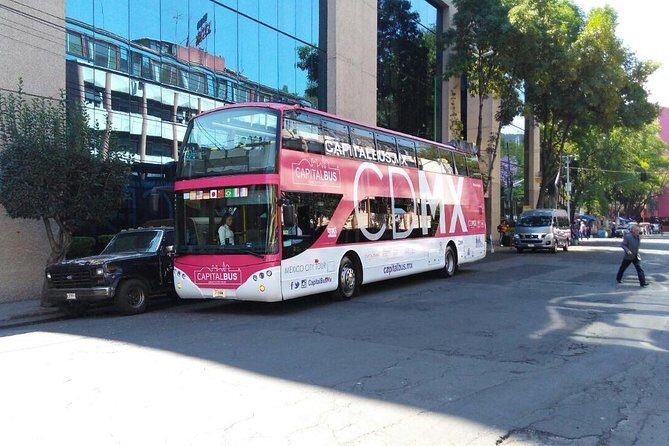
One of the most rewarding hop-offs on the route is Bosque de Chapultepec. This is described as the largest urban park in the Western Hemisphere, and it’s also loaded with key attractions—especially the National Museum of Anthropology, which is a major draw for visitors.
What makes Chapultepec more than a green break is the archaeology side. The park was declared an archaeological zone because it contains historical vestiges, and nearly 4,000 archaeological objects have been found. That means even if you’re not planning an extended museum day, the park has built-in meaning. You’re not just taking a walk in the shade—you’re moving through a place with layers of time.
The stop is listed at 15 minutes, and admission is free. That’s enough for:
- A quick reposition to take in the size and atmosphere
- A photo moment with a sense of scale
- Planning your next step if you want to spend longer later on
If you’re the type who likes to actually see museums, use this as a jump-off point. Do not assume 15 minutes lets you do deep exploration. But do assume it helps you decide what to prioritize when you return.
You can also read our reviews of more evening experiences in Mexico City





Plaza Carso and Nuevo Polanco: Modern Culture in a Quick Stop
Next up: Plaza Carso in the Nuevo Polanco area. This is a mixed-use development, and it’s described as the largest mixed-use complex in Latin America. That’s a big claim, but even without taking it on faith, it’s easy to understand why it matters. This is where modern Mexico City shows up in a concentrated, designed way.
Plaza Carso is also tied to major cultural institutions. You can find places like Museo Soumaya, Museo Jumex, and Teatro Telcel in the same orbit. Even if you don’t go inside on this stop, it’s a helpful snapshot: you’ll see where the city’s newer cultural scene clusters.
This stop is also listed as 15 minutes, with free admission. That duration makes it ideal for orientation and browsing from the outside. If you want museum time, think of this as the place you hop off to decide which museum you’ll tackle next.
For me, the value here is pacing. You get a change of scenery after the monumental historic core, and Polanco’s layout feels easier to navigate when you’ve already done a quick orientation lap.
Polanco Side Streets: Lincoln Park and a Look Across Avenida Moliere

Part of the route gives you a chance to absorb Polanco’s neighborhood feel between the bigger headline stops.
You’ll cross Avenida Moliere and pass by sites it hosts, and you’ll also get a stop at Lincoln Park, located in the southern area of Polanco (Miguel Hidalgo Mayor’s Office). This is the kind of place that works well on a bus tour because it changes the mood: less monument, more neighborhood.
Lincoln Park is noted as the first park designed for the colony, and the second is located on Horacio Avenue in front of San Agustín Parish. The area around the park includes some of the first mansions and apartments built in the neighborhood, along with modern office and apartment buildings.
This blend is useful because it shows you the city’s growth pattern—how older residential structures coexist with newer development. You’re not getting a deep architectural tour in 15 minutes, but you are getting a sense of why Polanco feels the way it does.
If you love to walk and people-watch, this is a great place to hop off briefly. Just don’t expect a long stop to turn into a full afternoon. The bus route is designed to keep things moving.
Auditorio Nacional and Reforma Fountains: Big Venues and Iconic Public Art

When the bus reaches Auditorio Nacional, you’re stepping into a major performance world. It’s described as the main presentation venue in Mexico and also one of the most important in the world, with its global status tied to the quality and quantity of artistic events—number of attendees, performances, ticket sales, and its audiovisual infrastructure.
This is one of those stops where I think the bus approach works. Even if you don’t go inside, seeing a building designed for major productions helps you understand how Mexico City supports large-scale arts and events.
This stop is listed for 15 minutes and free admission. In that time, your best use of it is:
- Take a few photos
- Read the exterior details you can see from the street
- Decide whether you want to plan a show or return for more time
Then you ride onward toward the fountains on Paseo de la Reforma, including the Fountain of Diana the Huntress. The sculpture is called the Arrow of the North Stars and represents the Ancient Greek goddess Artemis (Roman equivalent Diana). It’s the kind of public art that makes a wide avenue feel more human and story-driven.
You’ll also see the Cibeles fountain, described as a replica of the Cibeles fountain in Plaza de Cibeles, Madrid. In Mexico City, it sits at an intersection of Oaxaca, Durango, Medellín, and El Oro streets, two blocks from the Insurgentes roundabout. The fountain was installed as a symbol of brotherhood between Spanish and Mexican communities in 1980, and it was remodeled in 2011.
For a bus tour, these fountains are ideal “pause points.” They’re visible, distinct, and you don’t need a ticket to appreciate them. They also help you connect Reforma’s broad, fast-moving streets to cultural meaning rather than just traffic.
Santa Fe Shopping and Paseo de la Reforma Bites: Where the Tour Becomes Yours
At some point, you’ll want a break that isn’t another viewpoint. The route includes options like Santa Fe shopping mall and Paseo de la Reforma Avenue for meals and souvenirs.
This part is practical. When you’re in a new city, it’s hard to know where you’ll get what you need: a restroom, a quick meal, a place to sit, and a reliable shopping stop. The bus tour gives you built-in chances to handle those needs without spending your limited energy on planning.
If you want souvenirs, Santa Fe can be convenient. If you want a neighborhood feel, staying around Reforma gives you more variety because the avenue is a connector. Either way, this is where you can “turn the tour into your day” instead of just riding it.
Timing Tips: How to Make 15 Minutes Feel Like More
The route uses short stop times for several major sights—often listed as 15 minutes. That can feel tight if you expect to do a lot. But with the right approach, it actually works well for sightseeing.
Here’s what I’d do:
- Decide in advance what you want from each hop: photos, a quick walk, or setting up a return
- Use the audio as you ride, so by the time you hop off you already know what to look for
- If a museum is your goal, treat the bus stop as a location check, not a full visit
You’re not locked into every stop. You’re building a route where you can revisit areas later within the 24-hour validity. That’s why it’s better than a one-and-done guided excursion.
Also, plan around the fact that Mexico City traffic can affect schedules. Hop-on hop-off buses are convenient, but the city’s road conditions still matter. If you’re counting on reaching a specific museum close time, give yourself a buffer.
Who This Tour Suits Best (and Who Should Consider Other Options)
This bus is a strong match if you want:
- A first-timer orientation of Mexico City’s big landmarks
- English narration while you see neighborhoods from above the street
- A flexible day with multiple hop-offs rather than one fixed schedule
- A simple way to connect historic sights, parks, and more modern areas like Polanco
It can be a less ideal choice if you want deep time at museums or long walking circuits on the same day. The stops at major points are often short, so you’ll need to know what you’re willing to skip or do later.
Because the tour lists a maximum group size of 45 travelers, it also tends to feel manageable. It’s not a huge crowd situation where you feel trapped in the middle of people. That’s helpful for photos and quick moves when you hop on and off.
Value and the 3/5 Rating Reality Check
The overall rating is 3 out of 5 based on 127 reviews. That doesn’t mean the experience is bad. It usually means this type of tour is polarizing—some people want more time inside sights, while others just want an efficient way to cover distance.
So here’s the value logic I’d apply: the “good deal” is strongest if you use the bus for what it’s designed for—quick orientation, smart photo stops, and the flexibility to return later. If you treat timed stops as a replacement for museum hours, you might feel disappointed.
In other words, this tour is best as a tool. It’s not a one-stop ticket to fully experience every major attraction in one day.
Should You Book This Hop-On Hop-Off Bus in Mexico City?
Book it if you’re trying to get oriented and you want open-top views plus English audio while you build your own day. The 24-hour ticket is the big win here, especially if you’re juggling museums, parks, and shopping stops without wanting to reinvent your plan every few hours.
Skip or adjust expectations if your main goal is long, guided time in a single site. The route gives you fast looks and repositioning, not guaranteed depth at every stop.
If you want my practical advice: use the first ride to map your priorities, then spend your best time later. This bus helps you decide where your day should go next.
FAQ
How long is the hop-on hop-off bus tour in Mexico City?
The duration is listed as approximately 1 to 11 hours, depending on how long you stay on and how often you hop off.
Is the tour offered in English?
Yes. The tour is offered in English.
Is the ticket valid for more than one day?
Your ticket is valid for 24 hours, so you can hop on and off multiple times within that window.
How often do the buses run?
Buses leave regularly, which makes it easier to plan your day without waiting too long.
Where do I meet the tour?
You meet at Parada Capital Bus Zócalo, located on C. de Monte de Piedad in the Centro Histórico area of Mexico City.
What time does the tour operate?
The opening hours are listed as Monday through Sunday, 9:15 AM to 8:00 PM (for the provided date range).
Where does the tour end?
This activity ends back at the meeting point.
What is the cancellation policy?
You can cancel for free up to 24 hours in advance for a full refund.
Is there a limit on group size?
Yes. The tour has a maximum of 45 travelers.