REVIEW · MEXICO CITY
From Mexico City: Teotihuacan and Basilica of Guadalupe Tour
Book on Viator →Operated by Trekzy · Bookable on Viator
One big day, two worlds collide. This Teotihuacán and Basilica de Guadalupe tour strings together pre-Hispanic spirituality, colonial change, and the Mexico that grew from it. I like that it’s not just photo stops. You get real orientation before you hit the monuments, so the pyramids and churches make sense instead of feeling like a checklist.
I also really like the hands-on Teotihuacán time. You walk the long Avenue of the Dead, then focus on the key structures like the Pyramid of the Moon and the Temple of Quetzalcoatl. One possible drawback: the day can feel a bit long and some departures include time at shopping or meal stops, so pace can be uneven.
If you’re set up for a full day (and bring sunscreen and decent walking shoes), this is a strong value for $41. With a group capped at 30 and a professional guide, you’ll get organized transport and a guided narrative. Just expect the tour to move—this is not a slow stroll.
In This Review
- Key highlights before you go
- A single day that teaches you how Mexico got made
- The Santiago Church stop: a fast lesson in conquest and fusion
- Entering Teotihuacán: the Avenue of the Dead is the real warm-up
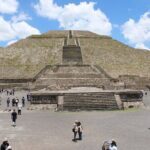
- Pyramid of the Moon and Teotihuacán’s ceremonial stage
- Quetzalpapálotl and the Temple of the Feathered Serpent
- Basilica de Santa María de Guadalupe: old and new, both worth your time
- Timing, group size, and the parts that can slow you down
- Guides matter, and the best ones make the day
- Included tequila and mezcal tasting: fun, but pace yourself
- What you get for $41: value that mostly comes from logistics
- What to wear and bring for Teotihuacán walking
- Should you book this Teotihuacán and Basilica de Guadalupe tour?
- FAQ
- How long is the Teotihuacán and Basilica of Guadalupe tour?
- What’s included in the tour price?
- Is food included?
- Do I need to buy tickets for Teotihuacán or the Basilica?
- What language is the tour offered in?
- How big is the group?
- Is the ticket mobile?
- Is there an athletic or walking requirement?
- How far in advance do people usually book?
- What is the cancellation policy?
Key highlights before you go
- A guided story from pre-Hispanic eras to mestizo Mexico, so the sites connect instead of feeling random
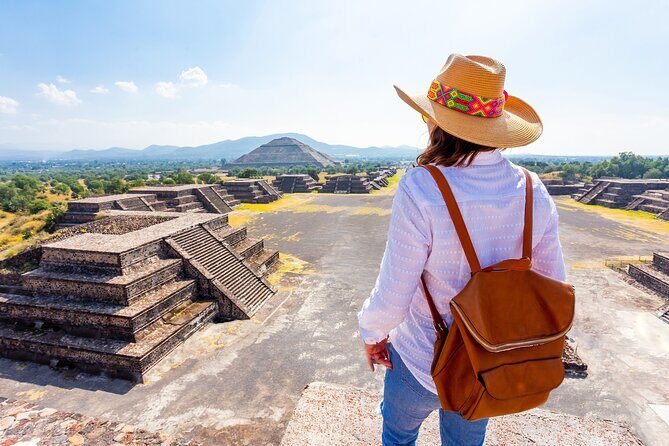
- Teotihuacán walks included, with 4 km along the Avenue of the Dead plus focused pyramid stops
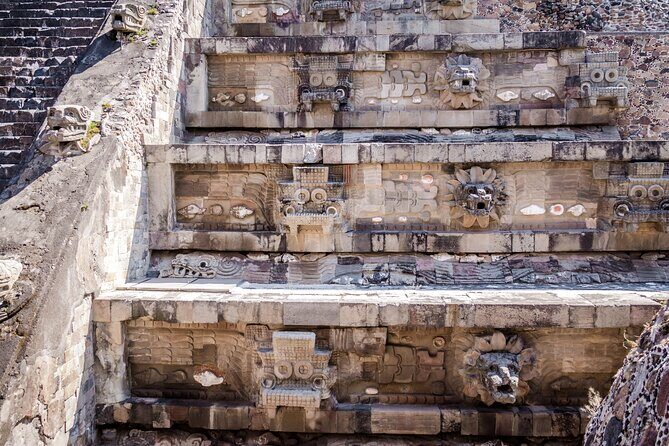
- Pyramid details you can actually spot, like Quetzalcoatl’s sculpted deities and the Temple of the Feathered Serpent
- Basilica time that works, including both the old and new basilicas with the right amount of time
- Tequila and mezcal tasting included in the package
- Small group size (max 30) for a more controlled, manageable day
A single day that teaches you how Mexico got made
The smartest thing about this tour is the way it frames the day. You start with ancient cultures and how they viewed their world—then you move into the colonial shift, and finally you land in the identity that came out of that collision. That timeline matters, because the monuments don’t sit in a vacuum. They’re part of a long story.
I like that it’s not only about what you’re seeing, but why people built and believed what they did. A guide sets you up to notice symbols, architectural choices, and the cultural blending that shaped modern Mexico. If you usually find ruins impressive but confusing, this kind of explanation turns the volume up on your experience.
And yes, it’s a long day. It runs about 8 hours. But the structure is tight enough that the time doesn’t feel wasted—most of it goes to actual sightseeing.
You can also read our reviews of more city tours in Mexico City

The Santiago Church stop: a fast lesson in conquest and fusion
Before Teotihuacán and Guadalupe, you stop at the Church of Santiago, a powerful marker of cultural blending. Built in 1522 on the ruins of an older Aztec temple, it helps you see how the conquest played out on the ground. This isn’t just church history. It’s layered history.
You’ll hear about the dramatic conquest timeline, including the Aztec Empire’s last stand against Hernán Cortés. Then the tour connects that rupture to the later emergence of independent, mestizo Mexico—how national identity formed from a mix of cultures rather than one side simply replacing the other.
This stop can be a quiet breather before the big walking day. It also gives your brain a timeline so Teotihuacán doesn’t feel like a random stop in the middle of colonial history.
Entering Teotihuacán: the Avenue of the Dead is the real warm-up
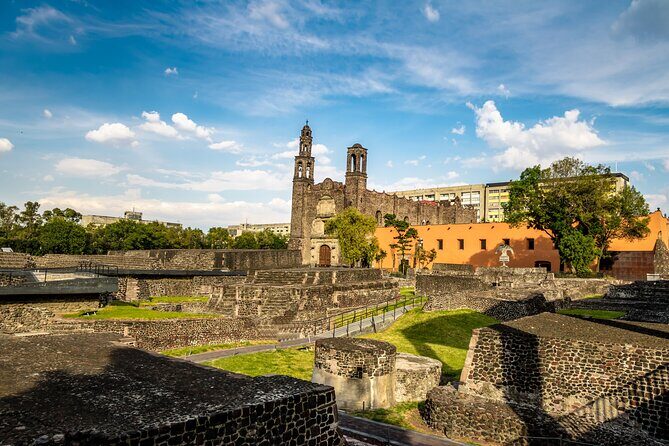
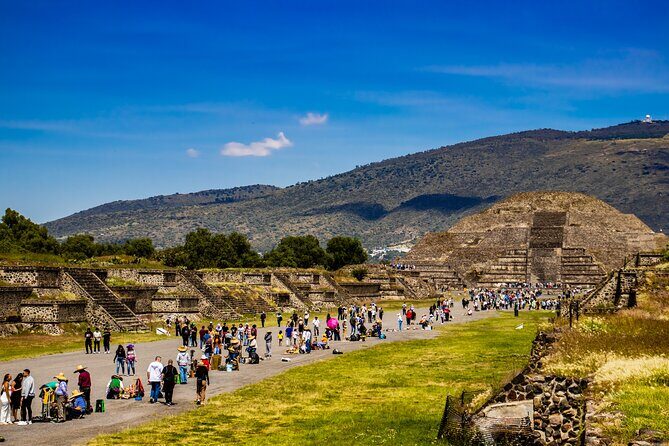
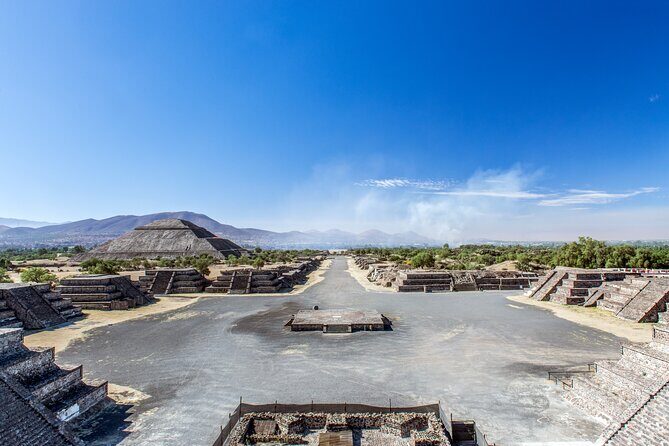
When you reach Teotihuacán, you get a built-in rhythm: walk, look, pause, then go structure-to-structure. You cover about 4 km along the Avenue of the Dead, which is one of those walks that changes how you perceive the site. From the start, you can tell this was designed to be experienced in motion.
As you walk, your guide’s job is to help you link what you see to what it meant. The Avenue isn’t just a corridor of ruins. It’s tied to ceremonies and the way people organized their world around monumental space.
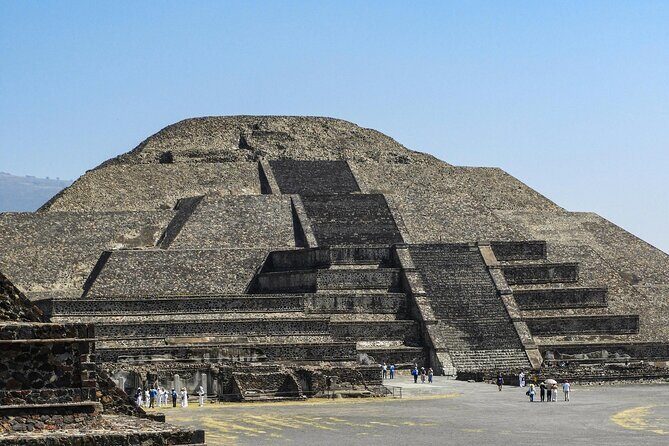
You’ll then zoom in on the major set pieces, and the guide’s explanations help you move beyond the usual Pyramid of the Moon photos. In a place this big, that matters.
Pyramid of the Moon and Teotihuacán’s ceremonial stage
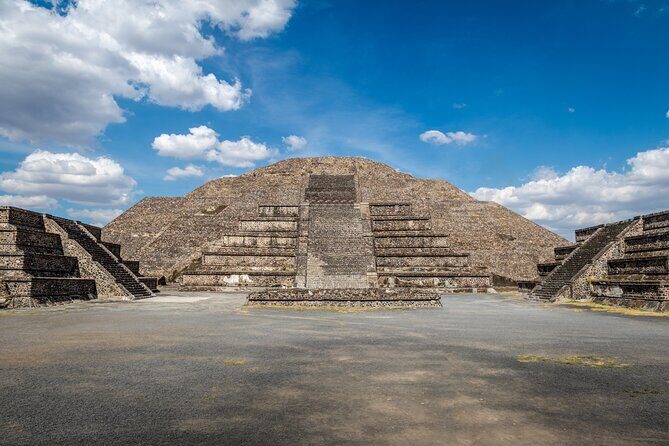
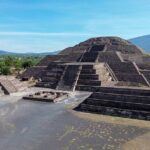
The Pyramid of the Moon is a centerpiece for a reason. On this tour, you spend time understanding its ceremonial role, with details tied to materials used in the structure. You’ll hear about decorative elements described as being inlaid with jade and obsidian—small specifics like this help you look more carefully instead of just scanning for the biggest silhouette.
If you’re the type who likes to know what you’re standing in front of, this is where the guided format pays off. You’re not repeating general facts you’d read online. You’re hearing why this mattered to the people who built and used it.
And because the tour is organized, you’re not stuck waiting around. The schedule keeps you moving through Teotihuacán’s main areas while the light and energy are still good.
Quetzalpapálotl and the Temple of the Feathered Serpent
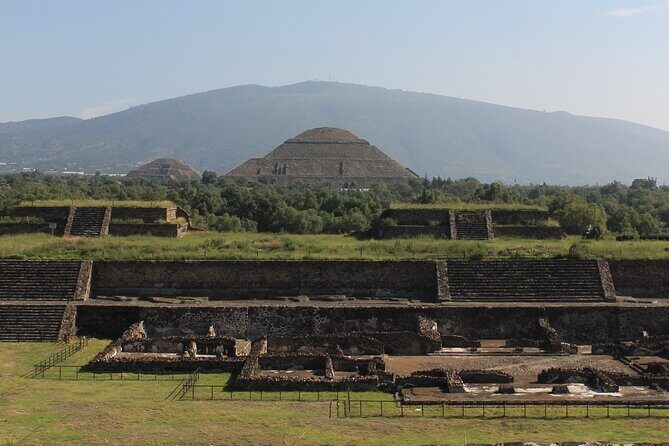
Two Teotihuacán stops that help you understand how art and religion blend: the Palace of Quetzalpapálotl and the Temple of Quetzalcoatl (also known as the Temple of the Feathered Serpent).
At Quetzalpapálotl, you’ll be able to admire pillars decorated with bird figures and ritual symbols. That’s a good reminder that Teotihuacán wasn’t only engineering and scale. It was design, meaning, and careful visual storytelling.
Then you reach the Temple of Quetzalcoatl, where detailed sculptures of deities and mythological serpents draw your attention immediately. This is one of those spots where you’ll be glad you came with context. The carvings can look like decoration until someone shows you what to search for.
I find this section to be the payoff of Teotihuacán. The architecture becomes readable.



Basilica de Santa María de Guadalupe: old and new, both worth your time
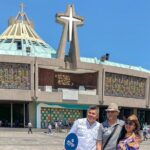
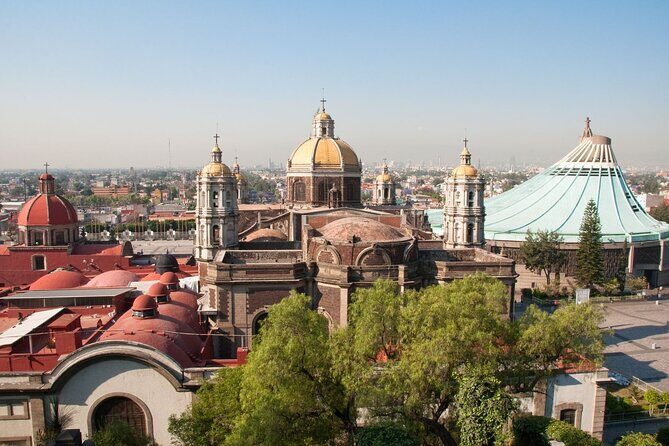
After Teotihuacán, you shift from ancient structures to one of Mexico’s most visited religious sites. At the Basilica de Santa Maria de Guadalupe, you get time to appreciate both the old and new basilicas. You’re also given a clean chunk of time—about 1 hour 30 minutes—so you can actually see and absorb instead of rushing through.
What I like here is that the tour doesn’t treat the basilica as a single building. It frames the old and new monuments as part of an ongoing devotion and an architectural evolution. That angle makes the place feel alive rather than frozen behind glass.
If Teotihuacán is about ceremonial power, the basilica is about living faith and how that faith shaped Mexico over centuries. Seeing both in one day gives your brain a wider map of what matters in Mexican culture.
Timing, group size, and the parts that can slow you down
This tour runs about 8 hours total, and you’ll be on transportation more than you might expect—especially if pickup needs to collect everyone in the area. There’s a maximum group size of 30, which usually helps keep things coordinated.
Some participants reported long pickup times and that pickup and drop-off locations may differ. One person also mentioned a big bus with an emergency bathroom, which is a practical comfort on a long day.
The main scheduling concern is the use of optional time for shopping or meals. A few people felt that time got eaten up at souvenir shops before Teotihuacán, and others described a meal stop that felt non-optional because there wasn’t much else nearby. These aren’t dealbreakers for everyone, but it’s smart to plan for the possibility.
My practical advice: eat a solid breakfast, use the toilet whenever you get a chance, and don’t book anything tight right after. This is a day trip that takes a bite out of your evening plans.
Guides matter, and the best ones make the day
The tone of the day depends heavily on your guide. The tour provider uses professional guides, and the feedback I saw named several standout guides, including Fernanda, Alex, Juan, and Salvador (also listed as Salvatore alias SAL). People praised how smoothly they managed timing and how clear their explanations felt even when the day moved fast.
There were also complaints about English being difficult to follow at times, including one mention that the guide spoke quickly and had an accent. That’s not something you can fully predict, but it’s worth noting if you prefer slower pacing or detailed phrasing.
If you’re sensitive to language speed, bring a little patience. The good news is that key site stops are still visually strong even when you miss a sentence or two.
Included tequila and mezcal tasting: fun, but pace yourself
One of the included perks is tequila and mezcal tasting. It’s a fun way to connect Mexico’s modern flavors to its longer cultural roots—especially after you’ve been walking ancient stone.
Still, don’t treat it like a party. The day includes substantial walking at Teotihuacán. If you’re serious about comfort, you’ll want to keep your tasting small and stick to water and food as needed.
This is a good inclusion because it’s part of the tour value. It also gives you something memorable that isn’t just architecture and stone.
What you get for $41: value that mostly comes from logistics
At $41 per person for an about-8-hour tour, the pricing is reasonable when you count what’s bundled: a professional guide, comfortable transportation, entrance to Teotihuacán, and the tequila/mezcal tasting. The basilica admission is listed as free as part of the tour, so you’re not paying another big ticket at the second major stop.
Where the value really shows is in the structure. You’re saving effort by having transport and guided pacing handled. In Mexico City traffic, that matters.
Could you do it on your own cheaper? Maybe, but it becomes a planning project: timing, entrances, getting everyone coordinated, and sorting out context once you’re there. This tour sells you the “already handled” part of the day, plus the story that makes the monuments click.
What to wear and bring for Teotihuacán walking
This tour expects a strong physical fitness level. Teotihuacán involves walking and standing, plus a 4 km stretch along the Avenue of the Dead. I’d treat this like a hiking day with stone steps and uneven ground.
Plan on:
- comfortable clothes and shoes you can walk in for hours
- a hat and sunscreen (this was specifically recommended in feedback)
- an easy daypack for essentials
Also, since tips are not included and food isn’t included, you’ll want cash or a card ready for anything you buy on your own. If lunch is offered at a stop, you might find it costs extra, so budget a bit.
Should you book this Teotihuacán and Basilica de Guadalupe tour?
Book it if you want a guided, well-paced day that connects pre-Hispanic, colonial, and modern Mexico in one pass. The combination of Teotihuacán’s big structures (including the Avenue of the Dead) plus time at the basilica gives you two of the most meaningful experiences in the region without needing to plan every detail.
Skip it or choose a different option if you strongly dislike shopping stops or meal situations that eat time. If you have a tight schedule later in the day, also be cautious—this runs about 8 hours, and pickup and transitions can take time.
If you’re traveling in English and you’re picky about pace and clarity, consider bringing patience and using your eyes as your backup language. The sights are dramatic enough that even a partially missed explanation still leaves you with a memorable day.
FAQ
How long is the Teotihuacán and Basilica of Guadalupe tour?
It’s listed at about 8 hours.
What’s included in the tour price?
You get a professional guide, comfortable transportation, entrance to Teotihuacán, and tequila and mezcal tasting. Basilica of Santa Maria de Guadalupe admission is listed as free.
Is food included?
No. Food and drinks are not included.
Do I need to buy tickets for Teotihuacán or the Basilica?
Teotihuacán entrance is included. Basilica de Santa Maria de Guadalupe admission is listed as free for this tour.
What language is the tour offered in?
It’s offered in English.
How big is the group?
Maximum group size is 30 travelers.
Is the ticket mobile?
Yes, the tour provides a mobile ticket.
Is there an athletic or walking requirement?
You should have a strong physical fitness level, since the day includes walking at Teotihuacán.
How far in advance do people usually book?
On average, this tour is booked 21 days in advance.
What is the cancellation policy?
Free cancellation is allowed up to 24 hours in advance of the experience start time for a full refund.