REVIEW · MEXICO CITY
Eat in a local house & access to restricted areas in Teotihuacan
Book on Viator →Operated by dePataLarga · Bookable on Viator
One early morning and your day changes pace fast. This Teotihuacan experience pairs restricted-area access with an expert guide, then finishes with a truly local home-cooked meal in Erica’s house. I like that it keeps the focus on what you’re seeing and eating, not just photo stops, and that the small group (max 12) makes the guide’s explanations land. The only real drawback to consider is that some parts of the menu lean adventurous, so if you dislike foods like huitlacoche or grasshoppers, you’ll want to think ahead.
You’ll start in Mexico City with coffee and a quick orientation, then head out in an air-conditioned vehicle. En route, you’ll get social context about areas like Indios Verdes and Ecatepec, plus a look at government efforts aimed at improving connectivity, including the hanging cable cars. Once you’re at Teotihuacan, you’ll walk through the city’s big story in four construction stages, spanning 100 B.C. to 650 A.C., and end your day with a pre-Hispanic and colonial mix at home.
In This Review
- Key highlights at a glance
- Teotihuacan access with the mural-art temple area
- Coffee mornings and the air-conditioned ride out of Mexico City
- Four stages of Teotihuacan: 100 B.C. to 650 A.C.
- The restricted temple of mural-art masters (and why INAH access is a big deal)
- Erica’s home lunch: pre-Hispanic + colonial flavors, with real dietary notes
- What you’ll likely taste
- Why this meal is strong value
- Price and value: what $90 covers for a 6-hour cultural day
- Practical pacing: how the day is structured
- Who this tour suits best (and who should think twice)
- Helpful tips so you get more from the morning
- Should you book this Teotihuacan + local home lunch tour?
- FAQ
- FAQ
- What time does the tour start?
- Is coffee included before the Teotihuacan visit?
- Do you get pickup in Mexico City?
- How long is the experience?
- How many people are in the group?
- Is the tour offered in English?
- Do you get access to restricted areas at Teotihuacan?
- What does lunch at Erica’s home include?
- Is the food suitable for vegetarian, vegan, or celiac diets?
- What’s the cancellation policy?
Key highlights at a glance
- Restricted access to a mural-art temple area that’s under INAH investigation
- Small group size (up to 12) for a more personal guide experience
- Four construction stages explained from 100 B.C. to 650 A.C.
- Erica’s home-cooked lunch with options noted for vegetarians, vegans, and celiac needs
- Coffee included before heading out, from two easy meeting spots
- Air-conditioned transport to keep the drive comfortable
Teotihuacan access with the mural-art temple area
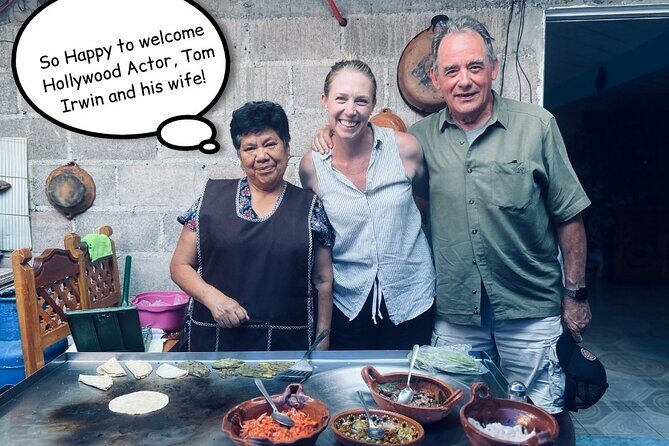
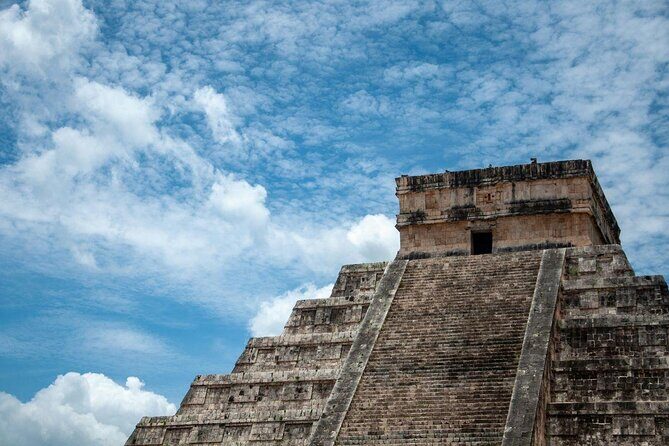
Teotihuacan is famous for big shapes and long sight lines. What makes this tour feel more special is that you’re not only walking the classic overview spots—you also get exclusive access to the temple of the ancient masters of mural art. That matters because you’re seeing Teotihuacan not just as an ancient ruin, but as a place where art, study, and technique were actively happening.
Your guide leads you through how the city was built over time, with the city’s construction framed in four stages (from 100 B.C. to 650 A.C.). This gives you a framework that’s easier to hold onto than wandering without context. You’ll also get pointed attention on cultural and commercial importance, which helps explain why Teotihuacan grew into something more than a ceremonial backdrop.
Group size is capped at 12. That’s not huge, and it changes the feel. You can ask questions without shouting, and the guide can keep the pace human—especially important in a site this spread out.
One more thing: the mural-art area is under investigation by INAH, Mexico’s national institute responsible for archaeology and restoration work. You’re not being asked to treat it like a finished museum exhibit. You’re there in the real world of research—what they know now, what they’re still studying, and why it’s valuable.
A few more Mexico City tours and experiences worth a look


Coffee mornings and the air-conditioned ride out of Mexico City
Most Teotihuacan tours start with a drive and a guess about what you’ll do when you get there. This one adds a smoother start.
You meet at either:
- 8:00 am at Almanegra café in Roma Norte
- 8:30 am at 1401 café in Col Juárez
Specialty brewed coffee is included as part of the morning pickup. It’s a small detail, but it works. You get a jolt of caffeine before the long day, and you also get to settle in with your group before you head out.
Transport is via an air-conditioned vehicle. In Mexico City traffic, that comfort matters more than you’d think—especially if you’re leaving early.
On the drive, you’ll pick up social context along the way. You’ll hear about social dynamics across districts like Indios Verdes and Ecatepec, and you’ll get references to government initiatives aimed at improving connectivity to the city, including hanging cable cars. That portion won’t replace your guidebook, but it adds a modern layer: you see how cities evolve and how infrastructure shapes daily life.
Four stages of Teotihuacan: 100 B.C. to 650 A.C.
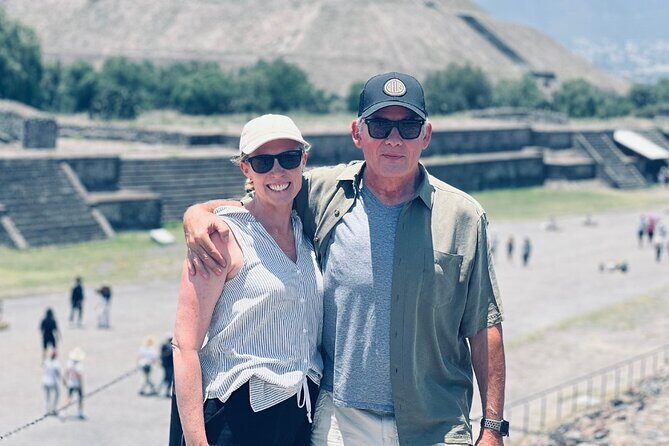
Teotihuacan can feel like one long archaeological walk until someone gives you a timeline you can carry. This tour does that by guiding you through the city’s construction across four stages covering 100 B.C. to 650 A.C.
Here’s why that storytelling format helps you as a visitor:
- It turns what could be confusing structures into a progression.
- You start to notice change over time, instead of treating every mound as equal.
- It gives you a reason behind what you’re seeing, especially when the guide links it to cultural and commercial significance.
Instead of just pointing upward, the guide places the site into a larger picture. Teotihuacan wasn’t only ritual space. It was also a hub connected to trade and influence. When your guide keeps reminding you of that “why,” your walk gets meaning, not just movement.
Expect about an hour for the Teotihuacan portion once you arrive. That’s a practical pacing choice. The city is too big to “fully cover” in one morning for most humans. This tour prioritizes guided understanding, plus the extra access.
Comfort note: since the plan is early and the walking can add up, I’d plan on steady walking shoes and a hat or sun protection. You’ll be outside.
The restricted temple of mural-art masters (and why INAH access is a big deal)
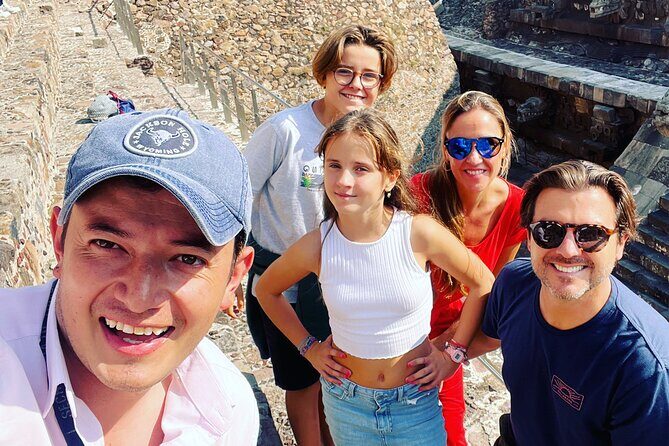
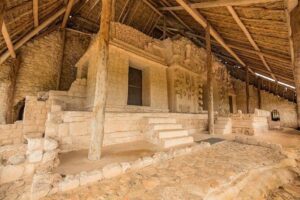
The most distinctive part of the visit is your exclusive access to a zone called the temple of the ancient masters of mural art. The key detail is that it’s under investigation by INAH and described as an area once used for art study and exploration.
That’s a rare angle for many visitors. Usually, you see the end product—what was made—and you infer the process. Here, you’re pushed toward the idea that art wasn’t just decoration. It was a craft with methods, testing, and training.
The tour also mentions specific techniques linked to mural work, including cochineal painting. Cochineal matters because it ties you to a real, material process. It’s not a vague “ancient pigments” reference; it’s a named technique tied to how color was achieved.
So when you’re inside this restricted-access area, I’d encourage you to slow down and watch for what the guide emphasizes. This kind of access tends to be brief and sensitive. Treat it as a learning moment, not a sightseeing checklist.
Also, being under INAH investigation changes the vibe. You’re learning alongside the reality that archaeology isn’t always finished. There’s careful work happening, and the visitor experience is shaped by that. It’s one of those travel moments where you feel closer to how knowledge is built.
Erica’s home lunch: pre-Hispanic + colonial flavors, with real dietary notes
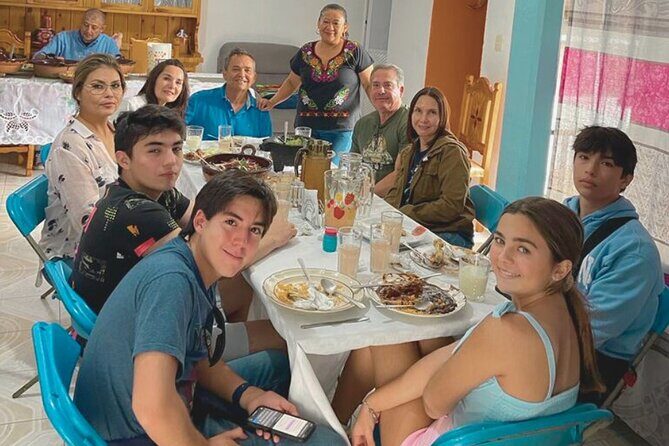
The second half of your day is the part that turns the experience into something you’ll remember long after the photos fade: lunch in Erica’s home.
The drive from Teotihuacan to her house is short—about ten minutes. That matters because it keeps the day from stretching. You’re not sitting in a car for another long stretch right after walking a major site.
The meal is described as local cuisine blending pre-Hispanic and colonial ingredients and techniques. That blend is what makes the lunch feel more like a living tradition than a reenactment. It’s not just “Mexican food in general.” It’s anchored to specific ingredients and methods, and the menu includes both familiar and challenging items.



What you’ll likely taste
The menu highlights include:
- Starter: Homemade quesadillas
- Includes options featuring Oaxacan cheese, huitlacoche, mushrooms, and nopal (cactus)
- Main: A standout mole course
- Chicken with mole, guacamole, plus items such as grasshoppers, maguey worms, pork rinds in green sauce, rice and beans
- Dessert: A pre-Hispanic dessert
- Xoconostle fruit with cinnamon
If you’re a food traveler, this is the part you’ll probably brag about later. If insects aren’t your thing, you can still approach it as a guided cultural meal—just decide how you want to handle the adventurous components. The tour does state that the experience is suitable for vegetarians, vegans, or people with celiac disease, which is a major plus. Still, if you have a strict diet, it’s smart to plan for communication during booking so expectations match your needs.
Why this meal is strong value
A lot of tours stop at a generic restaurant. This one places you in a home setting, with food that’s tied to local technique. That changes the tone: you’re not treated like a customer rushing in and out. You’re treated like a visitor invited to share a table.
And because it’s part of a 6-hour day, you also avoid the trap of “great lunch but you lose the rest of the day.” This tour keeps the balance.
Price and value: what $90 covers for a 6-hour cultural day
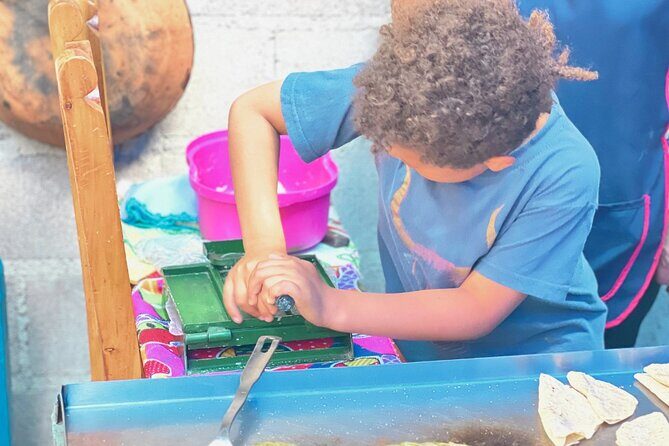
At $90 per person for about 6 hours, the value comes from the mix of three things:
- Guided Teotihuacan time, including access to the restricted mural-art temple area.
- Air-conditioned transportation from Mexico City, with added en-route context.
- Lunch in a local home, plus specialty brewed coffee in the morning.
If you were to build this day yourself, the hardest parts to recreate are the restricted access and the home meal. Even when you can find transport and entry tickets, it’s the tailored experience—small group, expert guide, and a structured food stop—that makes the pricing feel reasonable.
Also, the tour is offered in English, with a maximum of 12 travelers. For many visitors, that language + small-group combination is where the real cost savings show up. You spend less time figuring out what you’re looking at, and more time understanding it.
Practical pacing: how the day is structured

Here’s the rhythm you can expect:
- Morning coffee at a set meeting point (8:00 or 8:30)
- Travel to Teotihuacan (with context en route)
- Guided Teotihuacan visit with focus on four construction stages
- Exclusive mural-art temple access
- Short drive to Erica’s home
- Local lunch with a pre-Hispanic and colonial flavor blend
- Return to Mexico City in about an hour
This pacing matters because it keeps you from feeling rushed at the wrong moments. You have guided time for the site, and you have enough time at the home meal to actually taste and talk about what you’re eating.
If you’re prone to travel fatigue, the schedule also keeps decision fatigue low. You don’t spend your morning guessing what to do next.
Who this tour suits best (and who should think twice)
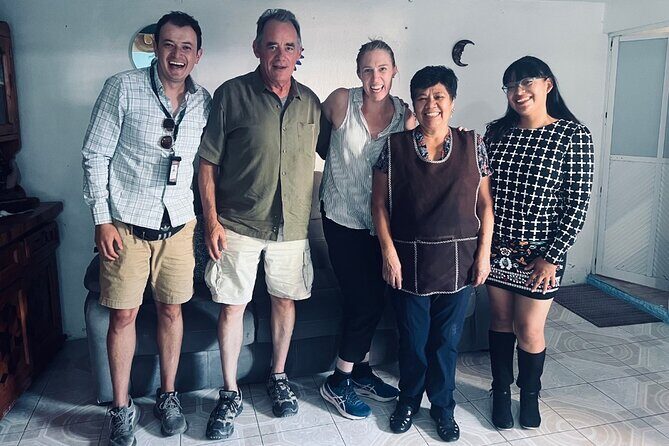
This is a strong fit if you want:
- One focused Teotihuacan experience with extra access, not just a quick loop
- A guide who can explain the city’s timeline (100 B.C. through 650 A.D.)
- A meaningful food stop that goes beyond a standard restaurant meal
- A smaller group setting (max 12)
- The ability to find a menu fit for vegetarians, vegans, or celiac disease needs
It may be less ideal if you:
- Strongly dislike or avoid insect-based dishes. The meal includes items like grasshoppers and maguey worms as part of the main experience.
- Prefer a purely “big monument from a distance” sightseeing style. This tour is explanation-led and access-led, so it’s less about wandering for hours on your own.
Helpful tips so you get more from the morning
A few small things can help you make the day smoother:
- Plan to arrive a few minutes early at the coffee meeting points so your start stays calm.
- Dress for sun and walking. Even with a guided pace, Teotihuacan is still an outdoor archaeology site.
- Come hungry and ready to taste. The lunch is the culinary center of the experience.
- If you’re managing a dietary need, treat this as a meal-first tour. Make sure your food requirement is clearly understood when you book.
Should you book this Teotihuacan + local home lunch tour?
If your goal is to see Teotihuacan with context, plus get one genuinely local meal in a home setting, I’d say yes. The combination of restricted-area access to the mural-art temple and a guided timeline across four construction stages is the rare pairing that turns a day trip into a story you can tell.
Book it if you value small-group pacing, English guidance, and a food experience that’s more than a checkbox lunch. Think twice only if your comfort zone for food is narrow, since the menu includes adventurous regional items.
FAQ
FAQ
What time does the tour start?
It starts either at 8:00 am from Almanegra café in Roma Norte or at 8:30 am from 1401 café in Col Juárez.
Is coffee included before the Teotihuacan visit?
Yes. Specialty brewed coffee is included at the morning meeting points.
Do you get pickup in Mexico City?
Pickup is offered, and you’ll meet at one of the listed coffee shops for the morning start.
How long is the experience?
The tour lasts about 6 hours in total (approx.).
How many people are in the group?
The tour has a maximum of 12 travelers.
Is the tour offered in English?
Yes, it is offered in English.
Do you get access to restricted areas at Teotihuacan?
Yes. The tour includes exclusive access to the temple of the ancient masters of mural art, an area under investigation by INAH.
What does lunch at Erica’s home include?
The menu includes homemade quesadillas (with ingredients like huitlacoche, mushrooms, and nopal), a main with mole and several traditional additions, and a pre-Hispanic dessert with xoconostle fruit and cinnamon.
Is the food suitable for vegetarian, vegan, or celiac diets?
The tour states it is suitable for vegetarians, vegans, or people with celiac disease.
What’s the cancellation policy?
Free cancellation is available. You can cancel up to 24 hours in advance of the experience start time for a full refund.