REVIEW · COSTA MAYA
Discovery Scuba Dive.
Book on Viator →Operated by Doctor Dive Costa Maya · Bookable on Viator
First-time scuba feels less scary here than you’d think. In Costa Maya, this beginner-only experience guides you step by step with all gear included and slow skill-building—starting with a short, safety-focused theory session and ending with a real reef swim around 30–40 minutes deep to about 40 ft. One key catch: since you’re not certified, you can’t bring your own camera or recording device for safety reasons.
You’ll be working with a PADI-trained instructor plus an English-speaking guide who brings you into shallow water from shore to practice the core skills before you head out on the boat. The small group size (up to 16) keeps things calm and personal, and you’ll have an underwater guide right alongside you during the reef time.
In This Review
- Key Things You’ll Notice Right Away
- First-Time Scuba in Costa Maya: What You’re Really Buying
- Check-In, Safety Talk, and Gear That’s Ready for You
- Shore Practice: The Skills That Build Confidence Fast
- The Boat Ride and the Reef Swim to About 40 ft
- What You’ll See Underwater: Coral, Fish, and Those Small Surprises
- Instructor Time and Group Size: Why the Ratio Feels Better
- Gear, Rentals, and the Camera/Recording Rule for First-Timers
- Price and Value: How $100 Adds Up for Beginners
- Getting There From Costa Maya Port: Plan for the Taxi
- Who Should Book This Experience (And Who Might Want to Wait)
- Should You Book This Beginner Scuba Session in Costa Maya?
- FAQ
- Is this scuba experience only for beginners?
- What’s included in the price?
- How deep will we go and how long is the underwater portion?
- How long does the whole activity take?
- Is the tour offered in English?
- What size is the group?
- Can I bring my own camera or recording device?
- What if the reef conditions are unsafe due to weather?
Key Things You’ll Notice Right Away
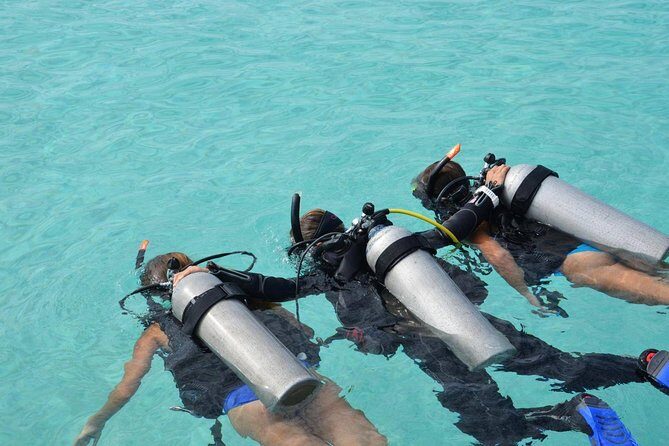
- Beginner-only pace with skills practiced in shallow water before any deeper reef time
- All equipment included (and rentals are available on-site if you need them)
- Boat-to-reef, not a far trip: the reef is close to shore for a smoother first outing
- Small groups (max 16) so instructions stay clear and you’re not rushed
- Underwater guidance the whole time, designed to keep first-timers comfortable
First-Time Scuba in Costa Maya: What You’re Really Buying
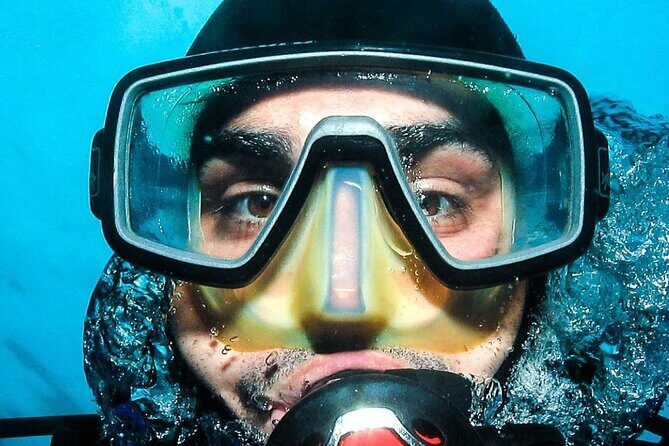
For $100, you’re not just paying to see fish. You’re paying for a structured beginner course that turns scuba from a movie fantasy into a set of doable skills. The whole experience runs about 3 hours, and it’s built for people with no experience or certification.
The value is in the flow. You start with a brief lesson, you practice in shallow water from shore, and only after you show you can handle the basics do you go out for your one-tank reef swim. That slow progression matters because it turns nerves into muscle memory.
You can also read our reviews of more scuba diving tours in Costa Maya
Check-In, Safety Talk, and Gear That’s Ready for You
Your day starts at the Doctor Dive Costa Mayacoronado y martillo meeting point (Doctor Dive Costa Mayacoronado y martillo, Carr. a Mahahual Manzana 12 Lote 2-local 1, 77976 Mahahual, Q.R., Mexico). You get a mobile ticket, and confirmation comes within 48 hours based on availability.
Then it’s straight into the essentials: you’ll be checked in, and your PADI-trained instructor will walk you through equipment and safety instructions before you ever get near open water. This is the kind of setup that pays off later, because you’ll know what you’re doing when the gear goes on your body.
One practical note: you should have a moderate physical fitness level. That doesn’t mean you need to be an athlete—it means you’ll do better if you can comfortably move in and out of the water and manage basic exertion without panicking.
Shore Practice: The Skills That Build Confidence Fast
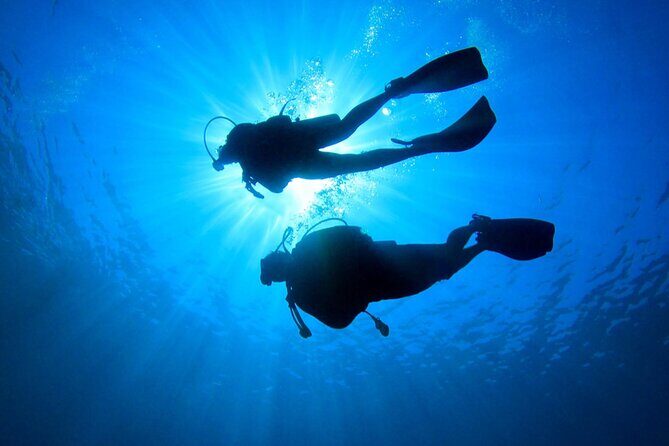
The heart of a beginner scuba course is what happens before you go deeper. After you meet your English-speaking guide, you head to shallow water from shore and run the skills you’ll need underwater.
In plain terms, you’ll practice the fundamentals—mask handling and regulator use—until they feel normal. One diver described it as being taught to clear the mask and find the regulator in a way that removes the shock of doing it for the first time. That early repetition is exactly what you want, especially if you’re the type who gets anxious when you’re put on the spot.
What really stands out in the real-world experience is how patient instructors can be. People have credited guides like Lucas, Cesar, Antonio, Tony, Charlie, and Pablo for clear, direct coaching and for taking things one step at a time. If you struggle with buoyancy (and many first-timers do), you’ll get hands-on help and guidance during the practice phase—so the reef time doesn’t feel like a test.
The Boat Ride and the Reef Swim to About 40 ft
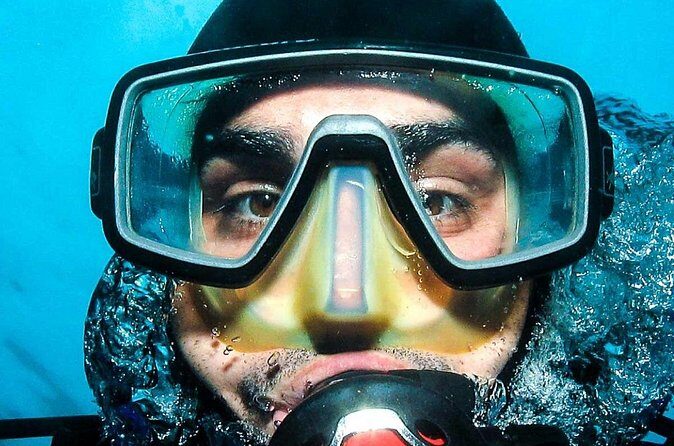
Once you pass the skills in the shallows, you move to the next phase. You’ll go out on a boat to the coral reef area, which is close enough to shore that the trip isn’t a big production. When the captain ties off, your underwater guide helps you get geared up and follows you down.
Your underwater session is approximately 30–40 minutes, with a maximum depth of about 40 ft. The guide stays at your side the entire time, which is a big comfort boost for first-timers. You’re not left to figure things out on your own.
This is also where Costa Maya does its job. You should expect to see colorful tropical fish and coral formations. Several first-timers specifically called out how different it felt from snorkeling—because you’re breathing underwater and seeing living coral at a real depth, not just from the surface.
What You’ll See Underwater: Coral, Fish, and Those Small Surprises
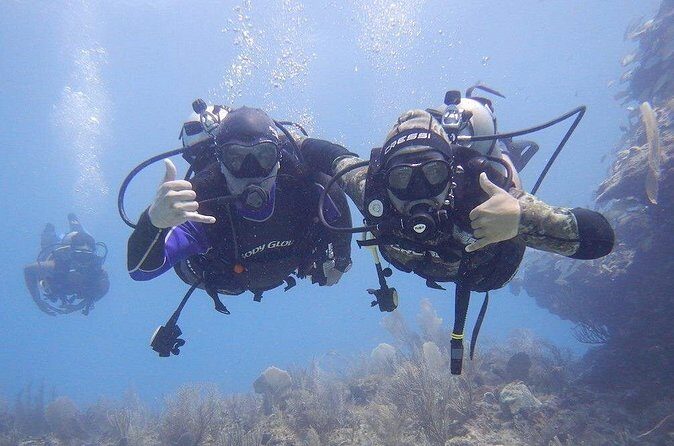
Beginner scuba is often judged by one thing: did you feel amazed without feeling overwhelmed? In Costa Maya, the reefs delivered that for a lot of people.
Expect coral formations and a steady stream of fish, plus the kind of critters that don’t show up in beach-level snorkeling. One guide, Cesar, was praised for pointing out creatures crawling and hiding on the ocean floor. That matters because it gives your brain something to do besides worrying about your breathing.
If you’re wondering whether it’s worth it compared to snorkeling: scuba turns your attention from looking down occasionally to actually moving through the water column. For first-timers, that change alone can feel like a whole new world.


Instructor Time and Group Size: Why the Ratio Feels Better
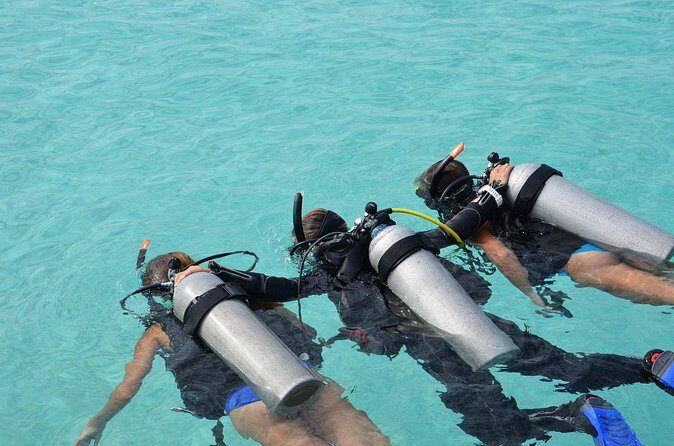
This isn’t a huge cattle-car operation. The maximum group size is 16, and in practice the team uses a tight ratio approach. One review described it as about 1 instructor or dive leader for every 2 people, which is exactly the kind of support that helps when you’re still learning buoyancy and basic control.
Even if you’re nervous, the structure helps. The course is designed for beginners only, and the team runs the session so you can keep up without rushing. People specifically praised the staff for being thorough and patient, even when guests were already certified—so you’ll likely feel extra supported even as a first-timer.
Gear, Rentals, and the Camera/Recording Rule for First-Timers
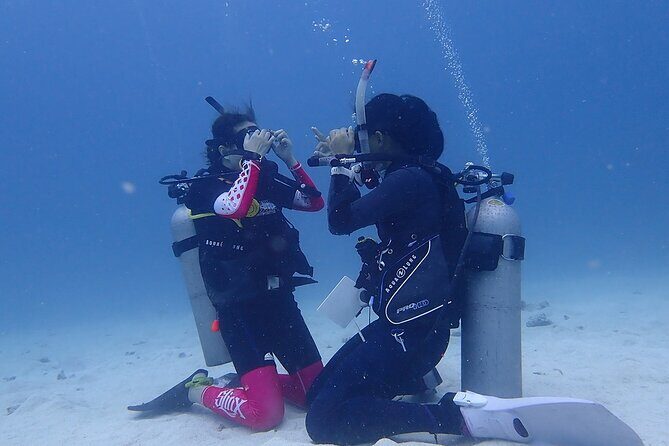
All scuba gear is included, which is one of the simplest value wins in this whole experience. That takes the pressure off packing and reduces the chance you show up underprepared.
If you do need rental gear, the shop offers scuba diving equipment rental for $25 USD. (This can matter if you prefer a particular fit or you want to reduce the chance of irritation from unfamiliar equipment.)
Now the big heads-up: for safety reasons, noncertified divers aren’t allowed to take cameras or recording devices. That means no GoPro setup. You’ll need to rely on whatever photo options the shop offers for purchase, and you’ll have to keep your own belongings secured on land.
And if you’re the type who hates carrying a lot, plan for it. One person wished there were lockers at the shop, so if you want storage, ask what’s available before you bring extra items.
Price and Value: How $100 Adds Up for Beginners
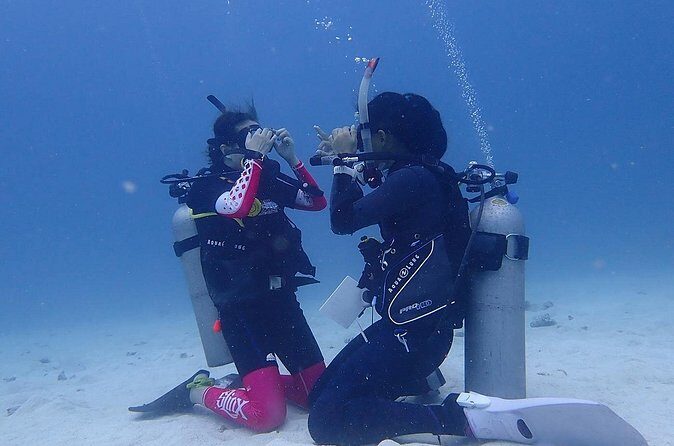
Let’s talk value without the fluff. At $100 per person, you’re getting:
- instruction (including theory and safety guidance)
- all necessary scuba equipment
- shallow-water skills practice
- a guided reef session with your max depth set for beginners
- a group experience that keeps things manageable (max 16)
Even if you compare it to doing everything separately—gear rental, instruction time, and a guided reef outing—the bundled format makes sense. And since this is beginner-only, the instructors aren’t building the day around experienced divers who move faster than you do.
One more value angle: the staff works to prevent mistakes early. If you can handle buoyancy and regulator use comfortably, your reef time feels calmer and more rewarding. That’s not just safety—it’s enjoyment.
Getting There From Costa Maya Port: Plan for the Taxi
If you’re arriving by cruise, don’t count on the dock area feeling easy. One experience described the Costa Maya port terminal as a zoo and noted that it took around 20 minutes to get from the ship to the taxi stand.
The good news: taxis are easy to arrange. A common route shared in real feedback is a short taxi ride (around $5 per person) to the Malecon downtown area, then a couple blocks’ walk to the Yaya Beach area where the shop is located. The exact route will vary by where you land, but the pattern is useful: budget time, grab a taxi early, and keep your walk expectations flexible.
Your meeting point address is clearly set, so once you have the taxi to the general Malecon/Yaya Beach area, you can follow the final blocks on foot.
Who Should Book This Experience (And Who Might Want to Wait)
This is a great fit if:
- you’re a complete beginner with no scuba experience or certification
- you want a structured introduction instead of freestyle experimentation
- you like clear instructions and a calm pace
- you’re willing to accept the no personal camera rule
It may not be ideal if:
- you absolutely need to bring a camera or recording device
- you’re dealing with health issues that could flare up under light stress (for example, one person had a leg cramp and decided not to continue to full depth, even though the team kept things safe)
If you’re worried about cramps, hydration, and comfort, take it seriously before you go. The lesson from that situation is simple: tell the instructor early if anything feels off, and don’t force it.
Should You Book This Beginner Scuba Session in Costa Maya?
If you’re the kind of traveler who wants to try scuba but doesn’t want chaos, I think this is a strong choice. The biggest reason: the experience is built around beginner confidence—shallow practice first, instructor support throughout, and a controlled reef swim to about 40 ft.
Book it if you want a real underwater look at coral and tropical fish without needing prior training. I’d especially recommend it to people who feel nervous about equipment or buoyancy, because the team’s coaching style (including support for buoyancy issues) shows up again and again in real feedback.
Pass or choose a different option if taking your own underwater camera is non-negotiable. Otherwise, for $100 with gear included and a small group setup, this is a practical way to turn a bucket-list idea into a skills-based experience you can actually feel good about.
FAQ
Is this scuba experience only for beginners?
Yes. This is a beginner-only course for people with no experience and no scuba certification.
What’s included in the price?
You get all necessary scuba equipment included, plus instruction, shallow-water practice, and a guided reef session.
How deep will we go and how long is the underwater portion?
The maximum depth is about 40 ft, and your time underwater is approximately 30–40 minutes.
How long does the whole activity take?
The total experience is about 3 hours.
Is the tour offered in English?
Yes, it’s offered in English.
What size is the group?
The experience has a maximum of 16 travelers.
Can I bring my own camera or recording device?
No. For safety reasons, noncertified divers aren’t allowed to take cameras or recording devices.
What if the reef conditions are unsafe due to weather?
This experience requires good weather. If it’s canceled due to poor weather, you’ll be offered another date or a full refund.