REVIEW · MEXICO CITY
Ciudad de Mexico: Historia y vida moderna en la capital
Book on GetYourGuide →Operated by Camina la ciudad · Bookable on GetYourGuide
Mexico City can feel like a lot on day one, so this Centro-focused walk is a smart way to get your bearings fast by tying the big monuments to the story of the neighborhoods. You’ll move through layers of the city, from prehispanic remains to colonial power centers and modern-day life, with stops that feel iconic but not all cookie-cutter.
Two things I really like: the chance to see the Aztec remains at Templo Mayor and learn how the past still shapes the layout around the Zócalo. And I appreciate the way the tour builds in a food and drink break so you don’t just stare at buildings the whole time.
One possible drawback: it’s a short, packed walk, and some museum entrances may require extra payment if you want to go deeper than what’s included. So plan on bringing cash or a card for optional upgrades, and wear shoes you trust.
In This Review
- Key highlights you’ll actually feel during the walk
- Entering Mexico City through its center streets
- Starting at Jesús Nazareno and the city’s everyday rhythm
- Zócalo and the Cathedral: where Mexico City shows its official face
- Plaza Santo Domingo and Templo Mayor: the story turns prehispanic
- Plaza Manuel Tolsá, Casa de los Azulejos, and the taste of the city
- Palacio de Bellas Artes and the finale near the city’s historic core
- The value: why the $37 price feels fair for this route
- Who this tour is best for (and who might want something else)
- A quick note on guides: Martin (and when Regina steps in)
- Practical tips so you stay comfortable and get good photos
- Should you book this Mexico City Centro history and modern-life tour?
- FAQ
- How long is the tour?
- How much does it cost?
- Where do I meet the guide?
- What languages are offered?
- How big is the group?
- What’s included in the tour?
- What should I bring?
- Is the tour wheelchair accessible?
Key highlights you’ll actually feel during the walk
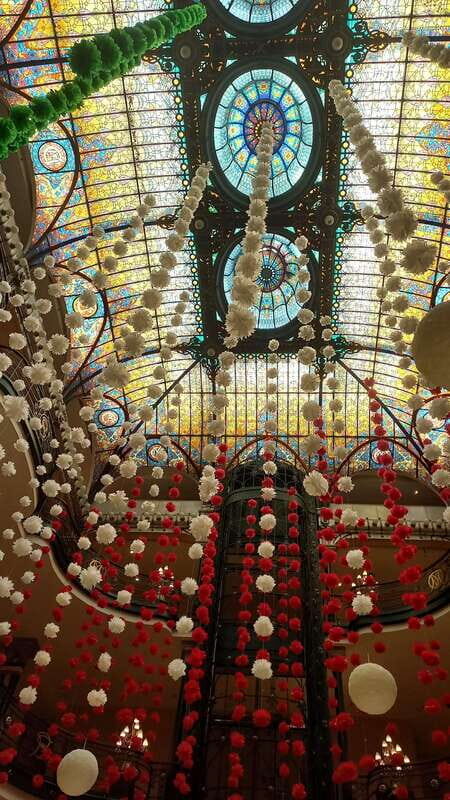
- Templo Mayor: prehispanic ruins explained in plain language, right in the heart of the city
- Catedral Metropolitana and Zócalo area: big civic Mexico, with context on how the city grew
- Hospital de Jesús: a less-obvious stop that adds depth beyond the usual landmark list
- Plaza Manuel Tolsá break: a timed pause for food tasting so the pace stays human
- Small group of up to 10: easier questions, easier photos, less wandering alone
Entering Mexico City through its center streets
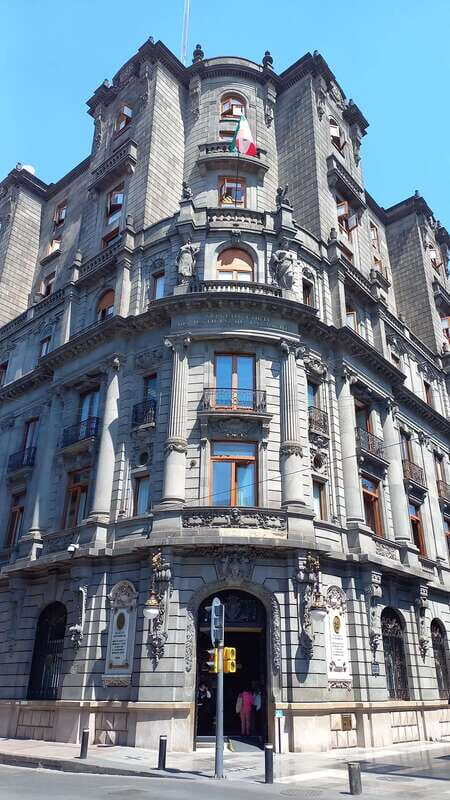
This tour is built for orientation. Instead of treating Mexico City like a checklist, it connects places you already recognize with the neighborhoods and ideas that created them. The route centers on the Centro historico, where layers of time sit close together, and where you can understand modern Mexico City by looking at older foundations.
You’ll also be walking with an expert guide who has studied fields like art, history, and anthropology. That matters because Mexico City’s architecture isn’t just decoration. It’s evidence: of power, religion, survival, trade, and change. In a city this large, having someone turn random landmarks into a story makes your days ahead easier.
Group size is limited to 10 people. That keeps things from turning into a hurried stampede and makes it more realistic to ask questions when something grabs your attention, like why certain styles appear side by side.
You can also read our reviews of more tours and experiences in Mexico City.


Starting at Jesús Nazareno and the city’s everyday rhythm
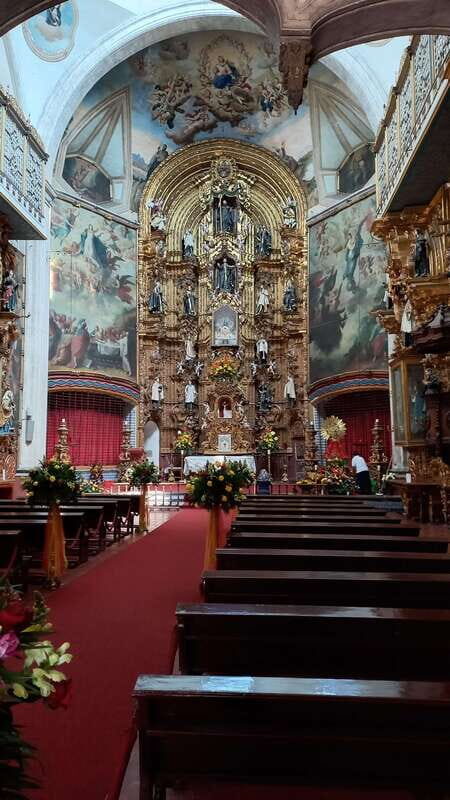
The tour begins at Rcda. de Jesús 548, then you head to Hospital de Jesús Nazareno. This stop is brief on paper, but that’s part of why it works: it gives you a fast, memorable entry point into how this neighborhood evolved. You’ll get a guided walk through the space for about 20 minutes, which is long enough to notice details instead of just passing by.
Next comes the Museo de la Ciudad de México, with a guided visit that’s short (around 10 minutes). Even in limited time, this kind of stop helps you understand what you’re about to see in the street. Think of it like a quick translator for the rest of the day: you start recognizing why certain buildings face certain squares, and why some areas feel more civic while others feel more local.
And then you transition into foot travel through downtown streets, with small stretches built into the schedule. That’s key in Mexico City. The best insights often happen when you’re walking and looking at street-level details, not when you’re trapped indoors.
Practical note: you’ll want water and comfortable shoes. The route stays central, but it’s still a real walking day.
Zócalo and the Cathedral: where Mexico City shows its official face
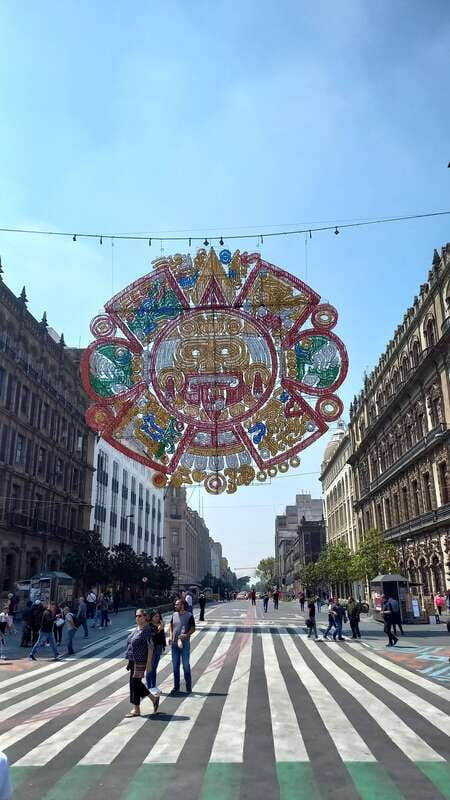
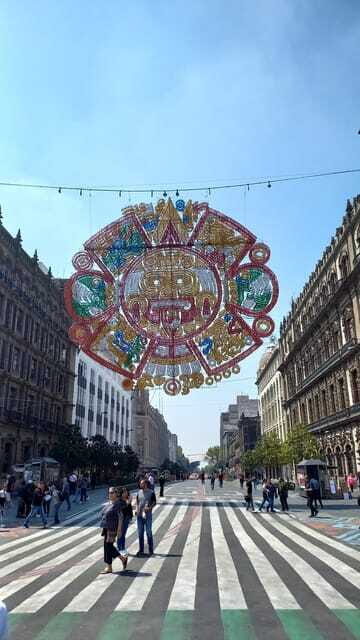
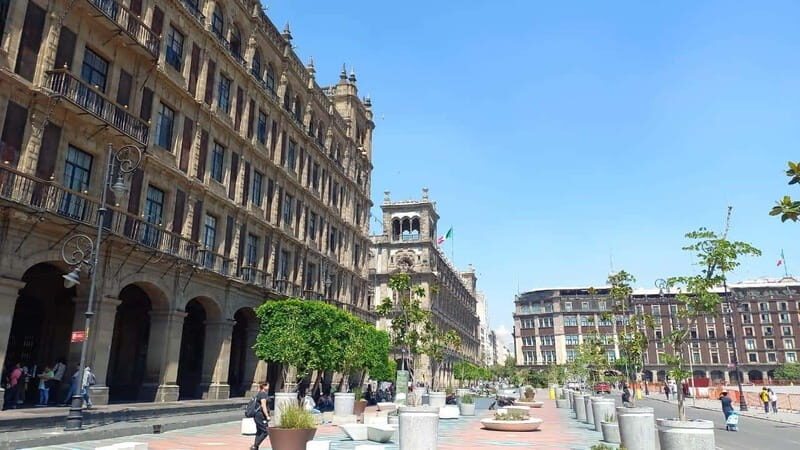
You’ll spend time at Zócalo, starting with a photo stop plus guided context (about 30 minutes). The Zócalo isn’t only a square. It’s a symbol and a stage. Here, you can see how the city organizes space around public life, and how that public life has changed over centuries.
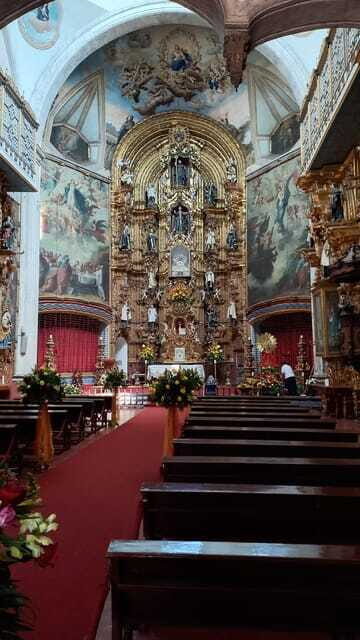
From there, it’s a stop at the Catedral Metropolitana de México. You’ll have another photo stop and a guided visit (about 30 minutes). The Cathedral area can overwhelm you if you just look. With a guide, you learn to look for patterns: how different eras and influences show up in the overall design, and how the building’s presence shaped what came next around it.
One thing I like about this pairing is that it’s not only about beauty. It’s about understanding how the city used religious and civic power as a way to structure daily life. Even if you’re not into architecture, you’ll walk away with a clearer sense of why this area keeps mattering.
If you’re sensitive to crowds, plan to move carefully. This zone can be busy, and your guide will help you keep the flow moving without losing the key points.
Plaza Santo Domingo and Templo Mayor: the story turns prehispanic
After the Cathedral area, you’ll reach Plaza de Santo Domingo for a photo stop and guided time (about 20 minutes). It’s a good moment to slow down and reset. Downtown Mexico City can feel like a straight line from one monument to the next; this plaza adds a different mood and helps you keep the day organized.
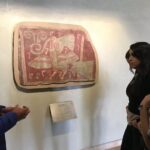
Then comes one of the most important stops: Templo Mayor de México-Tenochtitlan. You’ll have a photo stop and guided visit (around 20 minutes), followed by a short walking segment.
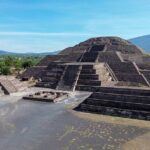
This is where the tour’s theme becomes obvious: the city you see didn’t replace the earlier city; it grew on top of it. Templo Mayor is the best example in the route, and it’s the stop that tends to stick. When the guide explains what you’re looking at, you stop treating the ruins like isolated artifacts and start seeing them as part of an urban system—where religion, politics, and daily life were all linked.
Also, it’s a strong contrast with the Cathedral. You go from prehispanic ceremonial space to colonial-era religious power in a single day, with time to compare how each era made meaning using architecture and public space.
Plaza Manuel Tolsá, Casa de los Azulejos, and the taste of the city
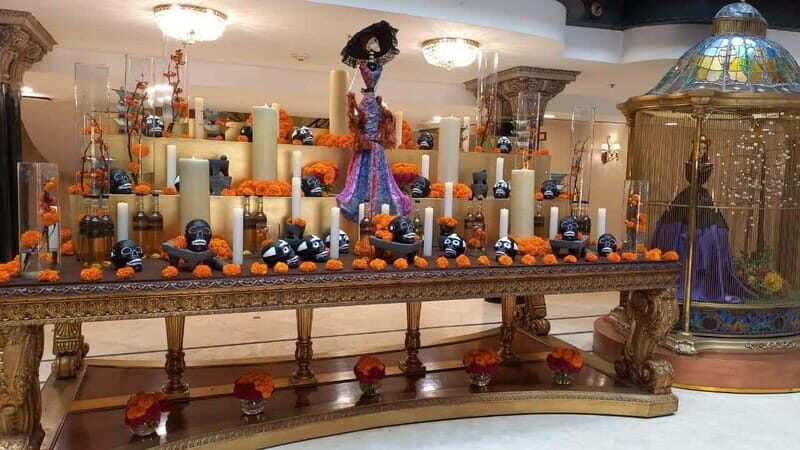
A smart part of the pacing is the break time at Plaza Manuel Tolsá. You’ll get about 30 minutes for food tasting there. This isn’t just a break from walking; it’s a chance to sample what people actually eat and drink in the area, and to keep your energy steady for the final stretch.
After that, you’ll head toward Casa de los Azulejos. You’ll stop for photos and get a guided visit (about 10 minutes). This place stands out because it represents the kind of beauty Mexico City is famous for: ornate design that shows up not only in churches but in everyday urban prestige.
Then you’ll walk by Jugos Canada for a quick stop (about 10 minutes). It’s a small, practical addition: a chance for a cold break and a reminder that downtown isn’t only museums. It’s also where people shop, sip, and live.
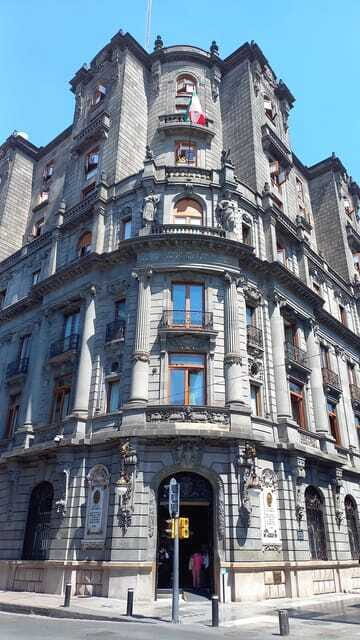
Next up: Palacio de Correos de México. You’ll have a photo stop plus a guided visit (about 15 minutes). Post offices don’t sound glamorous, but here it’s about architecture and ambition. The guide helps you see the building as a statement about connectivity—how messages, commerce, and modern infrastructure became part of the city’s identity.

Palacio de Bellas Artes and the finale near the city’s historic core
The last major landmark is the Palace of Fine Arts, Mexico City. You’ll have a photo stop and guided visit (about 15 minutes). It’s a fitting close because it represents another kind of power: cultural prestige. By this point in the tour, you’ve already seen religious and civic authority; now you get the artistic lens.
The tour finishes near CVP4+9C Ciudad de México, CDMX, México, with you in a good position to keep exploring nearby on your own.
If you want a smooth next step, stay close to Centro that day. The tour gives you the framework to wander without feeling lost, and the streets you walked become more meaningful once you understand how they connect.
The value: why the $37 price feels fair for this route
A price around $37 per person for a 3.5-hour, small-group walk is strong value in a city where guided time often costs more. What makes it feel fair is the mix of stops: you get major landmarks like the Cathedral and Templo Mayor, plus supporting stops like Hospital de Jesús and Plaza Santo Domingo that add depth without turning the day into an endless marathon.
You also get at least some guided access inside major sites, and you’ll have included entrance support for museums, churches, historical temples, and historical buildings. Not everything is guaranteed inside every stop, so if you’re the type who wants to spend extra time buying tickets or exploring additional sections, keep that in mind.
And don’t underestimate the included refreshment. The tour includes a traditional fresh juice or a taste of a typical Mexican snack, plus the tasting break at Plaza Manuel Tolsá. In a walking tour, food and drink isn’t a small extra; it’s part of whether you enjoy the day or just survive it.
Who this tour is best for (and who might want something else)
This tour fits best if it’s your first day in Mexico City and you want an organized introduction to the downtown core. It’s also a good pick if you like structure: a guide, a route, and time stamps that keep you from constantly checking maps.
You’ll likely enjoy it if you care about the city as a story: architecture, food, history, and how daily life is shaped by what came before. The guide’s subject mix—art, history, anthropology—helps bring all those angles together instead of making it only dates and names.
If you hate walking or you want a slow, museum-heavy day, this may feel a bit fast. It’s designed for orientation and highlights, not for deep, hours-long immersion in every site.
A quick note on guides: Martin (and when Regina steps in)
The name that shows up in the guide feedback most often is Martín. People consistently praise how clearly he explains Mexican art, history, and culture, and how he connects past and present influences.
There’s also a useful detail to know: if Martín isn’t available, Regina has stepped in and still kept the tour flexible. In that situation, she’s been described as adaptable and friendly, even adding extra time for nearby interests—like a coffee and enchiladas stop and pointing to an area associated with a James Bond filming location.
So the big takeaway is this: you’re not just buying a route. You’re buying an explanation style that’s been adjusted to real people’s interests.
Practical tips so you stay comfortable and get good photos
- Wear comfortable shoes. This is a walking route through downtown streets and large complexes.
- Bring water. There’s a refreshment break, but you’ll still want your own bottle.
- Expect outdoor time between monuments. Check the weather before you go.
- Don’t plan to bring alcohol or drugs, and avoid bare feet.
- If you want great photos, keep your camera ready during photo stops, but also listen while you’re there. The guided context makes the photos more meaningful later.
Because the tour includes time at several high-profile places, you may face brief crowd moments. Your guide keeps the timing organized so you can see what matters without turning it into a stress test.
Should you book this Mexico City Centro history and modern-life tour?
Book it if you want a first-day hit of Mexico City that balances big icons with context. You’ll come away understanding why Templo Mayor, the Cathedral, and the surrounding squares matter, and you’ll get enough food and refreshment to keep the day enjoyable.
Skip it if you’re traveling with a low tolerance for walking or you already plan to spend several days inside museums. This tour is a smart primer, not a full replacement for longer museum time.
My honest recommendation: if you have only a few hours and you want to feel oriented instead of overwhelmed, this is a strong choice. It turns downtown into a clear, connected story instead of a pile of landmarks.
FAQ
How long is the tour?
The duration is 3.5 hours.
How much does it cost?
It’s priced at $37 per person.
Where do I meet the guide?
The meeting point is in the square in front of the Museo de la Ciudad de Mexico.
What languages are offered?
The live guide speaks English and Spanish.
How big is the group?
It’s a small group limited to 10 participants.
What’s included in the tour?
You get an expert guide and entrance support for museums, churches, historical temples, and historical buildings. The experience also includes a traditional fresh juice or a taste of a typical Mexican snack.
What should I bring?
Bring comfortable shoes and water.
Is the tour wheelchair accessible?
Yes, it’s wheelchair accessible.