REVIEW · MEXICO CITY
Azcapotzalco: Mexico City’s Culinary Kaleidoscope
Book on Viator →Operated by Culinary Backstreets Walks · Bookable on Viator
Azcapotzalco turns a simple meal into a map of Mexico City. This is a 6-hour, small-group food walk that mixes breakfast classics, street-style bites, and quiet history markers, all tied to one neighborhood’s story.
I especially love the way the tour stacks multiple styles of Mexican food back to back, from huevos and enchiladas to offal tacos, so you leave with a fuller sense of what local eating looks like day to day. I also like that the guide, Liz, brings the area’s food and history into the same conversation, not as a lecture.
One heads-up: it’s a lot of food and a lot of walking. If you’re sensitive or prone to stomach trouble, go in planning to take things slowly and pace your sips and bites.
In This Review
- Key things that make this tour worth it
- Azcapotzalco: the Mexico City neighborhood most people skip
- Start at Arbol de la Noche Triste and get the story straight
- Cafe de olla breakfast and the first round of real favorites
- Offal tacos, tortilleria craft, and why technique matters
- Aztec-root drinks and a 110-year cantina finish
- Price and logistics: where the $140 goes
- Walking pace and your stomach: how to handle this day
- Who this Azcapotzalco food tour suits best
- Should you book Culinary Backstreets in Azcapotzalco?
- FAQ
- What time does the tour start?
- How long is the Azcapotzalco food tour?
- How many people are in the group?
- Is the tour in English?
- Where do we meet and where does it end?
- Do I get a mobile ticket?
- Is service available for people with medical or mobility needs?
- What’s the cancellation policy?
Key things that make this tour worth it
- Small group size (max 7) keeps the pace friendly and the stops feel personal
- Breakfast-to-cantina flow means you taste across meal types, not just one kind of food
- Liz’s storytelling connects what you eat to the neighborhood’s layered past
- Aztec-root drink samples add a cultural thread you can’t get from a menu
- A 110-year Italian-founded cantina gives you a rare Mexican-European flavor mix
- Offal tacos + tortilleria stop push you past tourist defaults and into real technique
Azcapotzalco: the Mexico City neighborhood most people skip
If Mexico City has “famous” districts, Azcapotzalco is the one that quietly does its own thing. The best part of this tour is how it uses food as your way in. You’re not just eating random dishes. You’re moving through a neighborhood with visible reminders of older eras, plus the lived-in energy of places that still feed locals.
This matters because Mexico City food can feel overwhelming. One day you’re chasing tacos, the next you’re trying to decode menus, and the next you’re wondering what’s worth ordering. A guided walk like this gets you oriented fast: you’ll hit classic plates, street favorites, and some more adventurous items, all with context.
You’ll start at Plaza de el Arbol de la Noche Triste in Popotla (11400 Ciudad de México). The tour ends back at the same meeting point, so you’re not stuck figuring out a new route at the end.
You can also read our reviews of more city tours in Mexico City



Start at Arbol de la Noche Triste and get the story straight
The meeting point sets the tone. The tour begins at Plaza de el Arbol de la Noche Triste, then moves from there through the part of Azcapotzalco that most visitors don’t have on their radar.
In the first stretch, you’ll taste a contrast of styles: more sophisticated huevos at a destination restaurant and iconic street tacos that keep things grounded and real. You’ll also get the big-picture idea that Azcapotzalco’s identity is layered, and that the neighborhood’s food reflects that layering.
Practical takeaway: this first hour is a good warm-up. You’ll get your bearings for the walking pace, and you’ll learn what “mode” the day is in. Expect to be on your feet, but it doesn’t feel like you’re rushing through checklists.
Cafe de olla breakfast and the first round of real favorites
After the start, the tour shifts into breakfast mode in a very Azcapotzalco way. You begin with cafe de olla, the spiced coffee that tastes like comfort with attitude, plus a piece of sweet bread.
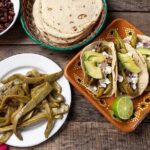
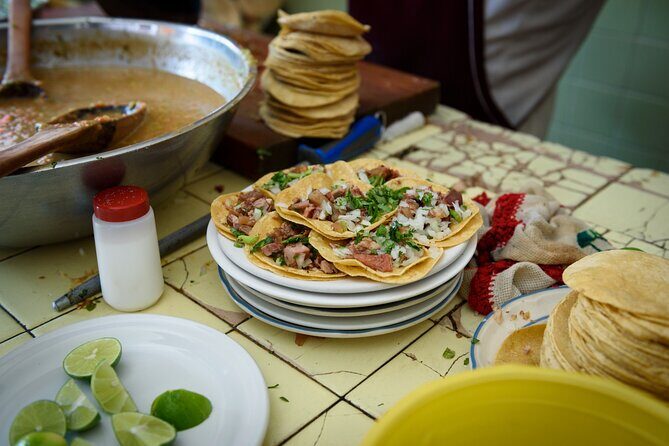
Then comes the heavier breakfast spread at a family-run backstreet restaurant. You’ll sample huevos encamisados and enchiladas, plus freshly-made juices and other treats. The point isn’t just variety. It’s that these dishes show different ways eggs, tortillas, sauces, and fillings work together in everyday cooking.
What I like about this segment for you: breakfast is often the easiest meal to enjoy while you’re adjusting to a new food neighborhood. Coffee, eggs, and tortillas are familiar enough that you can actually taste the differences, not just survive the day.
Small note: because it’s breakfast plus a lot of later stops, you’ll want to pace yourself here. Don’t force it. If you’re hungry, great. If not, take a smaller bite and keep moving.
Offal tacos, tortilleria craft, and why technique matters
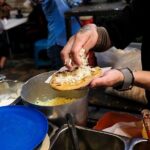
Next you’ll move into the kind of food that makes this tour feel “local” instead of “tour-browsed.” Offal tacos show up as a reminder of slaughterhouses that were once located in the area. It’s not just shock value. It’s part of how neighborhoods change and what food history leaves behind.
Then you stop into an artisanal tortilleria. This is the sort of detail that can be easy to skip on your own, because it’s not flashy on a map. But tortillas are the foundation of a huge chunk of Mexico City eating. When you see (and taste) tortillas made with care, you start understanding why some tacos taste right even before you get to the filling.
If you’re wondering whether the day is too much: this is where offal and tortilleria stops matter. They’re not random add-ons. They’re the “why it tastes that way” moments.
Consideration: if you’re new to offal, you can treat this as a sampling moment rather than a commitment. Order smaller portions when offered, and trust your palate more than your curiosity pressure.
Aztec-root drinks and a 110-year cantina finish
One of the more unusual stops is a drink sample that traces roots to Aztec times. That gives the day a historical thread you can actually taste. Instead of only hearing about older eras, you’ll be drinking something with a past.
Finally, you end in a cantina opened about 110 years ago by a family from Italy. Yes, you get the Mexican cantina vibe, but with European influence built into the setup. You’ll try the house cocktail plus small dishes that reflect both classic Mexican traditions and the founders’ Italian roots.
Why this ending works: after a day of breakfast plates, street bites, and tortilleria texture, a cantina finish gives your energy a new shape. It’s also a nice moment to slow down. You can step back, compare tastes, and start noticing what you liked most.
Also, if you’re the kind of person who enjoys the social side of food, a historic cantina stop is a bonus. It’s not just about flavor; it’s about atmosphere and the way the place is used.





Price and logistics: where the $140 goes
At $140 per person for about 6 hours, you’re paying for three things at once: guidance, access, and structure.
- Guidance: A good guide helps you understand what you’re seeing and tasting, especially in a district most visitors don’t plan. Liz’s storytelling is specifically called out, and it’s the kind of value you feel in real time.
- Access: You’re sampling across multiple small food stops, including a family-run restaurant, a tortilleria, and an old cantina. This is harder to copy solo without local know-how.
- Structure: The day is built as a flow: breakfast start, more iconic plates, more texture-focused stops, then a cantina finish. That sequence makes the day easier to follow.
The tour is offered in English, uses a mobile ticket, and runs with a maximum group size of 7. That small cap matters. It keeps the pace manageable, helps with questions, and makes stops feel less chaotic.
One more practical point: the tour needs good weather. If it’s canceled due to weather, you’ll be offered a different date or a full refund.
Walking pace and your stomach: how to handle this day
The itinerary is designed for you to be on your feet. You’re moving through the neighborhood from stop to stop, and the day stacks several food moments. The positive reviews call out lots of walking paired with lots of food, and that matches what the structure suggests.
Here’s the balanced advice: if you have a sensitive stomach, don’t try to prove toughness. Go in assuming this is a heavy food day.
- Take smaller bites.
- Sip slowly.
- Use bathroom breaks when you need them.
The good news is that this kind of guided route typically includes stops where bathrooms are available. The trick is timing and pacing, not denial.
If you’re planning around other activities that require energy, consider placing this tour where you don’t need to sprint the next day.
Who this Azcapotzalco food tour suits best
This tour is a strong match if you want:
- a neighborhood-led food experience rather than only famous landmarks
- breakfast-to-cantina variety (coffee, eggs, enchiladas, tacos, drinks)
- a guide who ties food choices to the area’s story
- smaller group energy (max 7) so the day feels human
It may be less ideal if:
- you prefer very light food days
- you hate offal or you know you react badly to unfamiliar dishes
- you want a mostly seated experience
For many people, the sweet spot is a first or second day in Mexico City when you want orientation. But you can also love it later, especially if you’ve already eaten street tacos and want to deepen the story behind the flavors.
Should you book Culinary Backstreets in Azcapotzalco?
I think you should book it if you want real Mexico City flavor in one cohesive day and you’re happy to walk and sample rather than just taste one or two iconic bites. The mix is smart: cafe de olla breakfast, huevos and enchiladas, offal tacos, tortilleria craft, Aztec-root drinks, then a 110-year cantina with Italian influence. That’s a full spectrum day.
I’d hesitate only if you know you’re prone to food-sensitivity problems. In that case, go in with a pacing strategy and be ready to take smaller portions.
If you want a guided day that turns Azcapotzalco from an unknown name into a place with tastes you remember, this is exactly that kind of tour.
FAQ
What time does the tour start?
It starts at 10:00 am.
How long is the Azcapotzalco food tour?
It runs for about 6 hours.
How many people are in the group?
The group is limited to a maximum of 7 travelers.
Is the tour in English?
Yes, the tour is offered in English.
Where do we meet and where does it end?
You meet at Plaza de el Arbol de la Noche Triste, Popotla, 11400 Ciudad de México, CDMX, Mexico, and the tour ends back at the meeting point.
Do I get a mobile ticket?
Yes, it includes a mobile ticket.
Is service available for people with medical or mobility needs?
Service animals are allowed. The tour is also described as near public transportation.
What’s the cancellation policy?
You can cancel for free up to 24 hours in advance for a full refund. If you cancel within 24 hours of the start time, the amount you paid is not refunded.
—
If you’d like, tell me your travel dates and any foods you avoid (especially offal), and I’ll help you decide whether to schedule it on a low-pressure day or how to plan around pacing.