REVIEW · CABO SAN LUCAS
3-Tank Scuba in Marine Reserve and Corridor for Certified Divers
Book on Viator →Operated by Manta Scuba Diving · Bookable on Viator
Three tanks, two ecosystems, one morning plan. This 6-hour Cabo San Lucas scuba outing links Cabo San Lucas Marine Park with The Corridor, so you get very different underwater scenery without losing a whole day. With a local scuba guide and a max group size of 6, it’s built for certified divers who want variety fast.
I like the combo because you’ll see more than one habitat in a single outing, and the boat setup tends to keep things organized between tanks. One thing to plan for: the $40 gear rental fee is not included, so if you don’t bring your own setup, you’ll pay that at check-in.
In This Review
- Key things to know before you go
- Why this 3-tank Marine Park + Corridor plan works in Cabo San Lucas
- Price and what you actually get for $210
- 7:30 am logistics: meeting point, parking, and getting suited up
- Underwater stops: Marine Park vs The Corridor (and the kinds of sites you might hit)
- Marine Park side: canyon and protected-feeling structure
- Corridor side: current, bigger movement, and roaming marine life
- Third tank: Lands’ End and Pelican Rock-style action
- Wildlife and sightings: what to keep your eyes on
- Current, visibility, and temperature: how to judge the day fast
- Gear setup and comfort: weights on a belt, salt-heavy conditions
- Guides and small-group vibe: safety that still feels relaxed
- Who should book this and who should skip it
- Should you book the 3-tank Cabo combo?
- FAQ
- How long is the 3-tank scuba trip?
- What time does the tour start?
- Where is the meeting point?
- Do I need scuba certification to participate?
- What is the minimum age?
- How many people are on the tour?
- What’s included in the price, and what costs extra?
- Is the guide English-speaking?
- Do I need a certain fitness level?
- Is there a rule about alcohol before the trip?
Key things to know before you go
- 3-tank format: three separate boat sessions with tanks (and weights) included in the base price
- Marine Park + The Corridor: two very different ecosystems in one day, with a third tank added based on conditions
- Max 6 divers: small-group feel, with guide attention you can actually use
- English support: the tour is offered in English, and you can choose an English-speaking or Spanish-speaking guide
- Gear rental costs extra: $40 paid at check-in if you rent equipment
- Morning start (7:30 am): you’re back at the meeting point by the end of the day, so it’s easy to plan the rest of your trip
Why this 3-tank Marine Park + Corridor plan works in Cabo San Lucas
If your time in Cabo is short, this format makes a lot of sense. Three tanks means more underwater time than the usual one- or two-tank half-day, and the plan is specifically set up to cover two zones: the Marine Park area and The Corridor.
That matters because Cabo’s underwater life isn’t all the same. In one part of the day you can get more classic protected-park reef energy. Later, you’re often dealing with open-water movement and bigger “roamers” on the radar. The Corridor side can feel more current-driven and less predictable—in a good way.
The other big win is simple: you don’t have to choose between ecosystems. With this itinerary, you can sample both, then use the third tank to capitalize on what the water is doing that day.
You can also read our reviews of more scuba diving tours in Cabo San Lucas
Price and what you actually get for $210
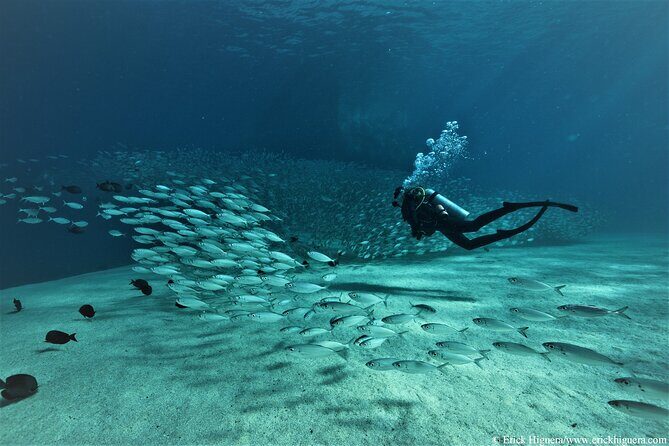
At $210 per person (6 hours, approx.), this is priced like a full morning scuba program rather than a quick add-on. What’s included on the listing side is the big stuff: a professional guide, 3 boat sessions, tanks and weights, bottled water, local taxes, and sandwiches.
What’s not included is the $40 gear rental fee at check-in. That’s the key line item to watch. If you bring your own gear, the base price should feel straightforward. If you rent, budget for that extra cost so you don’t get surprised right when you’re signing in.
A small note from how divers describe the equipment: rental weights can be on a belt rather than integrated into the BCD. That’s not automatically bad—just different from some people’s home setup. If you’ve got a weight system you love, bringing your own can make the day feel smoother.
7:30 am logistics: meeting point, parking, and getting suited up
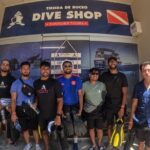
This trip starts at 7:30 am. The meeting point is the Manta shop area on Blvd. Paseo de la Marina 7D, Centro, Marina, 23450 Cabo San Lucas, B.C.S. Mexico, and it ends back at the same spot.
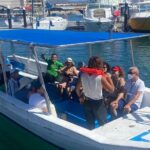
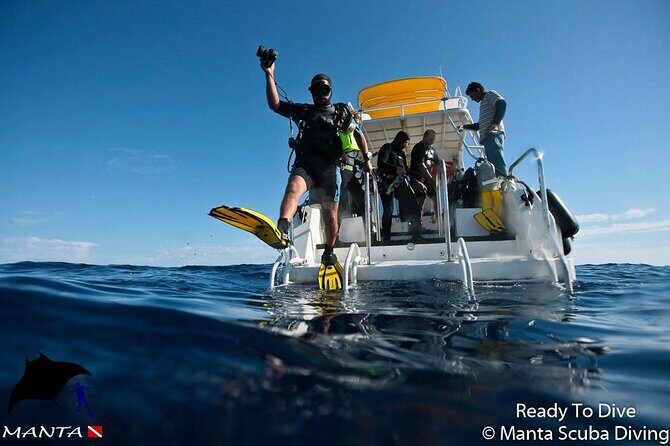
Most days, the flow is built to be efficient: check-in is described as smooth, there’s usually a short walk to the boat, and the crew helps move equipment for you. One diver even noted easy parking right in front of the shop (charged hourly in pesos). If you’re driving yourself, that’s a real convenience in Cabo.
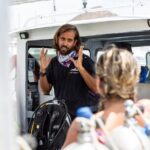
Between tanks, you’re not stuck scrambling. The better day is when your guide and boat crew keep you organized: gear rinse, tank swaps, and mask prep tend to happen while you’re on the surface. Several guides are praised for doing exactly that without making you feel like extra work.
Underwater stops: Marine Park vs The Corridor (and the kinds of sites you might hit)
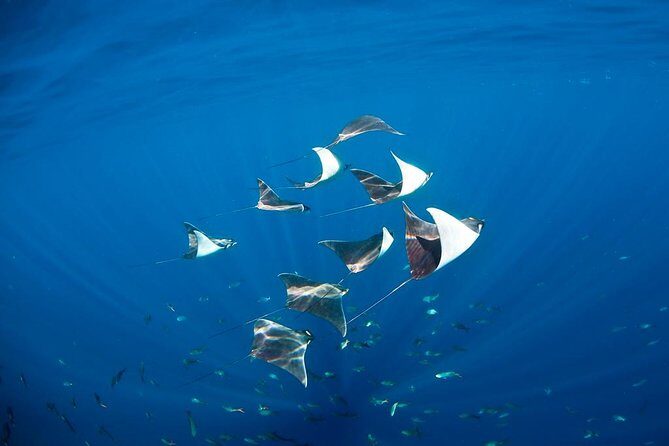
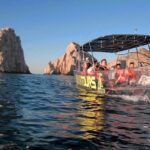
The itinerary is designed to cover both Cabo’s Marine Park area and The Corridor in one day. You’ll do three boat sessions, and the plan is set up so you experience two distinct ecosystems across that rotation. The third tank is often the flex point—chosen by the captain and instructor based on site conditions and safety.
Marine Park side: canyon and protected-feeling structure
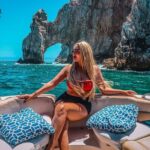
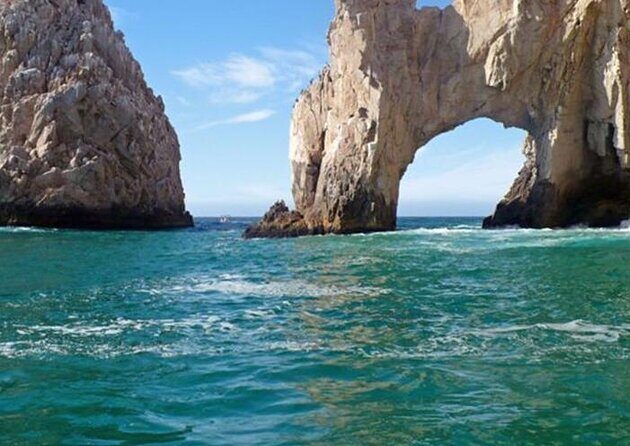
On the Marine Park side, divers describe sites with structure like canyons and rock features. Names that show up in past schedules include Neptune’s Finger and the Arch of Cabo San Lucas. The canyon-style terrain is the sort of place where you might descend with a “through-the-walls” feeling, watching how fish behave around openings and ledges.
One diver reported temperature dropping noticeably once they got down around the 40-foot mark, but still finding the water comfortable with a 7mm wetsuit. That kind of thermocline is exactly why you should bring the right exposure protection for your certification level and time of year.



Corridor side: current, bigger movement, and roaming marine life
The Corridor component is where you can feel the ocean behave more like open water. That means current can matter, and visibility can swing depending on wind and surface chop.
If your schedule includes a site called Whale’s Head or Chileno, you’re likely in the “watch your depth and let the guide do their thing” category. One diver noted significant current that made it harder to get close to a corral area they were briefed to approach. Translation: you may see plenty, but you’ll also adapt your expectations when water movement is strong.
Third tank: Lands’ End and Pelican Rock-style action
The third tank is often where the day gets its best story. Past divers mention Lands’ End and Pelican Rock as standout sites. At Pelican Rock, one diver described seeing sand falls—and also rays and starfish—under busy boat traffic overhead. Even with noise above, the seabed action can still be the star.
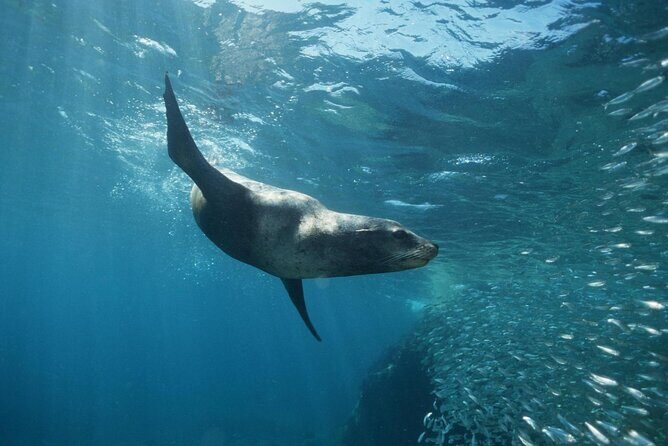
At Lands’ End, the animal list can get exciting: seals, sharks, eels, turtles, diving birds, and more have all shown up in reported wildlife sightings. If your goal is “more than just fish on a reef,” this is the part of the day that tends to deliver.
Wildlife and sightings: what to keep your eyes on
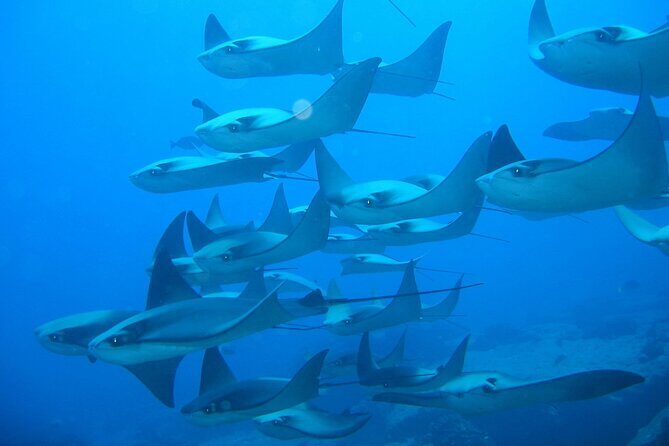
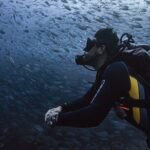
Cabo can be a “good luck meets good planning” kind of place. The most common theme in feedback is that guides help you spot life across the water column—not just what’s directly in front of you.
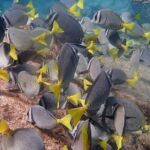
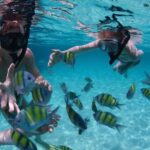
Here are examples of what people report seeing in this type of 3-tank combo:
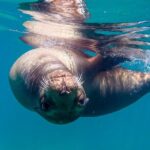
- Manta rays and sea lions
- Sharks (including a baby shark spotted in a crevice)
- Rays (including eagle rays)
- Turtles, eels, octopus, and stonefish
- Reef fish like pufferfish and needlefish
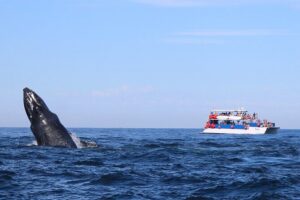
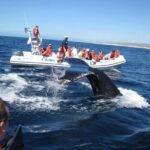
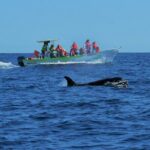
- Whales spotted from the boat during the surface interval, including humpbacks breaching
One bonus scenario that comes up: if whales show up near the boat between tanks, the crew may adjust briefly to watch them. You can’t bank on it, but it’s part of why doing a full-day schedule can beat a rushed short outing.
Current, visibility, and temperature: how to judge the day fast
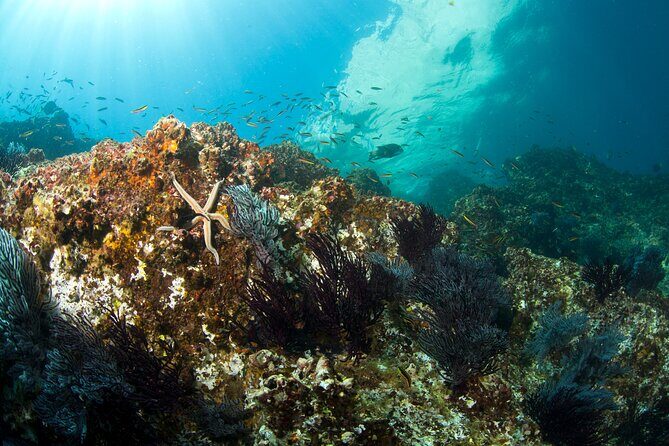
I love it when a trip tells you the hard truth. Here, you’ll want to read conditions because they can change what you experience.
- Water can get murky depending on wind and surface conditions. One diver called out murkiness due to wind. That’s not a failure of the guide—it’s just optics.
- Current can be significant, especially on open-water sides like the Corridor. If you feel the pull, trust the plan: your guide is choosing where to set you so you stay safe.
- Temperature can drop with depth. Even in warm surface conditions (one diver reported around 85°F), temps can cool fast once you’re deeper.
A practical way to handle this: tighten your expectations about bottom time. Depth and duration aren’t fixed for every day, and guides will adjust based on current and group pacing. One diver had shorter third-tank time because of speed of current, which is exactly the kind of reality check you should remember.
Gear setup and comfort: weights on a belt, salt-heavy conditions
If you rent gear, expect a setup style that may differ from what you’re used to. Multiple comments mention weights on a belt rather than integrated into the BCD. For many divers, that’s fine—but it changes how you manage trim and comfort.
Also, saltwater can mean you need extra weight compared to freshwater or some home dive habits. One diver reported adding 2 extra pounds after the first tank to compensate for how salty the water felt. That’s a reminder to treat your weighting as adjustable, not automatic.
What I like in the feedback is that guides actively help with these adjustments. Crew members are described as assisting with switching gear, proper weight, and keeping your system working smoothly between sessions.
And don’t ignore your comfort routine. If you use the “tighten my abs and manage body position” approach during boarding, it can reduce lower-back strain during gear transitions.
Guides and small-group vibe: safety that still feels relaxed
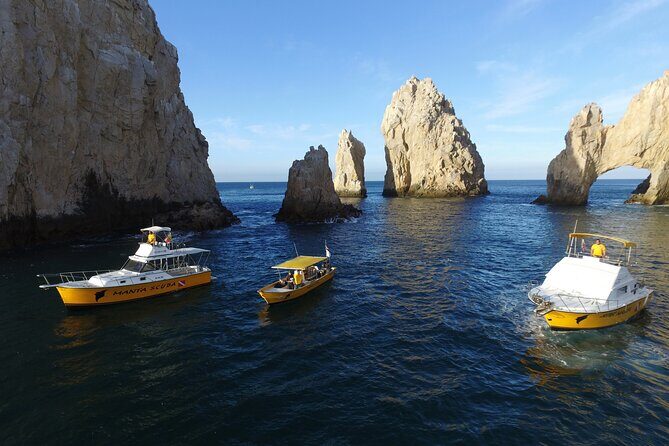
The biggest consistent praise in the experience is the human part. Guides get credited for being professional, organized, and supportive across all three tanks. Names that come up include Polo, Costas, Angela, Brandon, Baptiste, Lois, and Mercedes, along with Cesar and Eduardo.
What that points to is a pattern: your guide isn’t just there to count bubbles. They spot wildlife, keep you safe, and handle the operational stuff on the boat. Several reports mention attention to detail like rinsing gear after sessions, tank changes, and preparing masks.
Small-group size is part of the comfort equation. The trip caps at 6 travelers, and some divers mention the boat experience feeling organized even if multiple groups are present on the same day. Translation: you might share the schedule with others, but your guide and your group shouldn’t feel like a chaotic mob.
Who should book this and who should skip it
This is a strong match if:
- You’re a certified diver (proof of certification is required)
- You want to fit serious variety into limited time
- You prefer a guided day with help for equipment setup and weighting
- You’re comfortable with early mornings and a full 6-hour outing
You might rethink it if:
- You’re not comfortable with water conditions changing day to day (current and visibility can affect how close you get to targets)
- You don’t want to handle rental timing and the $40 gear rental fee
- Your health or mobility needs are beyond the trip’s “moderate physical fitness” expectation
Also, alcohol isn’t recommended at least 12 hours before diving, so plan your Cabo nightlife accordingly.
Should you book the 3-tank Cabo combo?
I’d book it if you want one of the most efficient ways to experience Cabo underwater: three air tanks, guided support, and the deliberate push to cover both the Marine Park and The Corridor. At $210, the value makes sense because the big costs—guide time and boat sessions—are already baked in, and you’re not paying extra per tank.
If you do rent gear, make sure you plan for the $40 fee and the likely belt-weight setup. And if you’re the type who hates surprises, remember that conditions can shift. Still, the way guides are described suggests the crew adapts without panicking—and that’s what you want when the ocean decides to change its mind.
FAQ
How long is the 3-tank scuba trip?
It’s about 6 hours (approx.).
What time does the tour start?
The start time is 7:30 am.
Where is the meeting point?
You meet at Manta Scuba Diving, Blvrd. Paseo de la Marina 7D, Centro, Marina, 23450 Cabo San Lucas, B.C.S., Mexico. The activity ends back at the meeting point.
Do I need scuba certification to participate?
Yes. Evidence of dive certification is required for all divers.
What is the minimum age?
The minimum age is 10 years.
How many people are on the tour?
The tour has a maximum of 6 travelers.
What’s included in the price, and what costs extra?
Included: professional dive guide, 3 boat dives, tanks and weights, bottled water, local taxes, and sandwiches. Not included: a $40 diving gear rental fee paid at check-in.
Is the guide English-speaking?
The tour is offered in English, and there is also an option to choose an English-speaking or Spanish-speaking guide.
Do I need a certain fitness level?
You should have a moderate physical fitness level.
Is there a rule about alcohol before the trip?
Yes. Drinking alcohol is not recommended for at least 12 hours before diving.