REVIEW · CANCUN
Scuba Diving Under Water Museum and Reef for beginners
Book on Viator →Operated by Coconut Divers · Bookable on Viator
First-timers get real coaching, not chaos. This Cancun experience pairs PADI-led hands-on training with two warm-water open-water tank sessions—one at the Museo Subacuatico de Arte (MUSA) with 500+ sculptures, and one at Manchones Reef for colorful coral and fish. It’s a classic beginner setup that makes the underwater world feel possible.
I especially like the pacing: you start with a relaxed pool practice and a theory class, then move to the ocean only after you’ve got the basics down. I also like the small-group feel (up to 16), which matters when you’re learning buoyancy, breathing, and how to clear your mask. One consideration: you should budget for extra day-of fees (like the national marine park fee and possibly a pool fee), so the final cost may run higher than the headline price.
In This Review
- How the day actually flows
- Key points I’d base my decision on
- Why MUSA + Manchones Reef makes sense for first-time scuba
- The 8:00 am start at Coconut Divers Cancun (and how to prepare)
- Pool practice + theory class: learning the basics without rushing
- Stop 1: MUSA (Museo Subacuatico de Arte) and what you’ll actually do there
- Stop 2: heading toward Isla Mujeres and your second open-water tank session
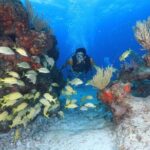
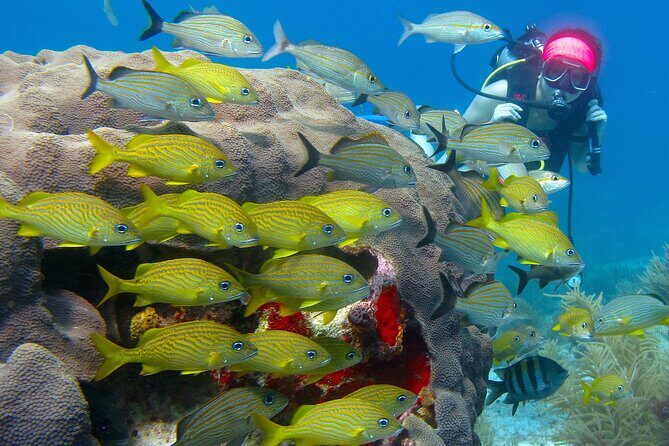
- Manchones Reef: coral, fish, and why this stop feels magical
- Instructors and small-group support: the difference between nervous and comfortable
- Price and extra costs: what the $119 covers, and what might be added
- Who should book this, and who should think twice
- Should you book this beginner scuba day in Cancun?
How the day actually flows
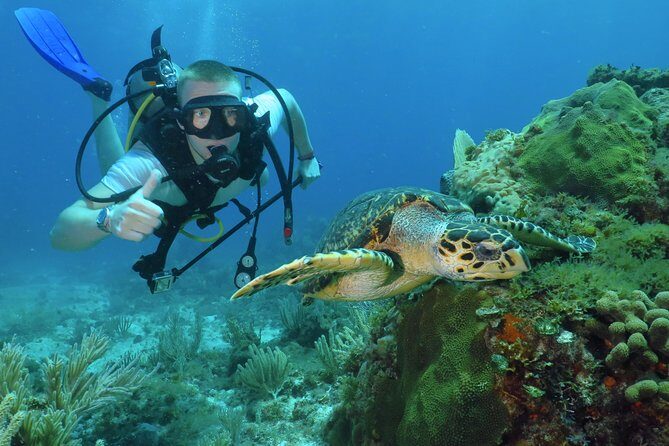
Your morning starts at Coconut Divers Cancun (Hotel and marina Sotavento, Blvd. Kukulcan Km 4.0) at 8:00 am, and it runs about 5 hours total. Expect scuba gear included, purified drinking water, and English instruction. You’ll also be dealing with real ocean conditions—if you’re sensitive to motion sickness or sound-speed from boats, plan for that.
If you’re hoping for lots of pool time, note that some people felt the practice felt short on their day. The good news: the safest experiences I’ve seen tend to come from strong instructor support, and this one is designed for one-on-one guidance once you’re in the water.
Key points I’d base my decision on
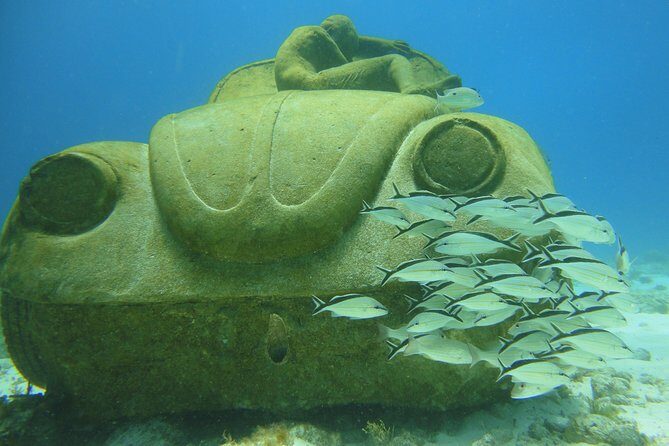
- PADI certified instruction for a no-cert needed start through a Discover Scuba format
- Two open-water tank sessions: MUSA’s sculptures and Manchones Reef’s marine life
- Small groups up to 16, which helps your questions get answered
- Safety-first training with pool practice plus a theory class
- Real extra fees may apply on the day (marine park fee, pool fee, wetsuit rental)
You can also read our reviews of more museum experiences in Cancun
Why MUSA + Manchones Reef makes sense for first-time scuba
If you’re new, you don’t just want to see fish—you want to feel in control. This combo helps because MUSA and the reef teach different kinds of attention.
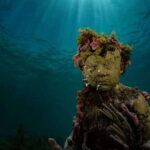
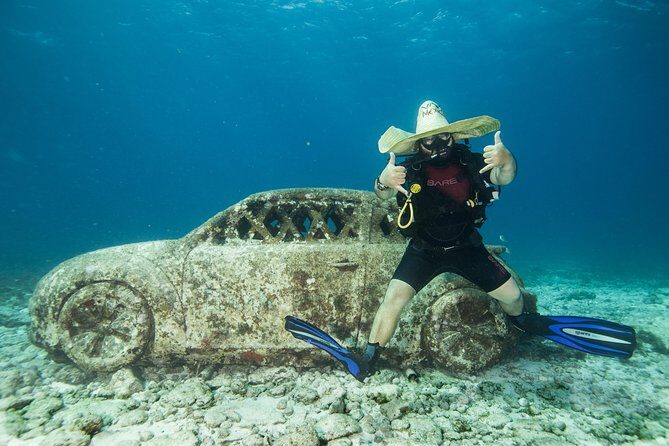
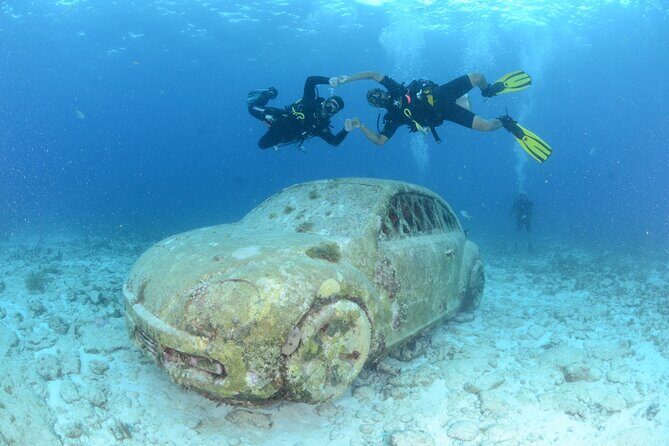
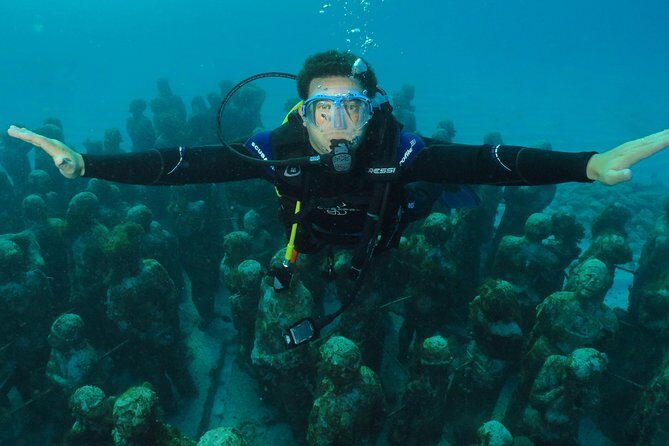
At MUSA, you’re surrounded by an underwater art gallery: 500+ sculptures create clear landmarks. That’s helpful when you’re learning buoyancy and staying calm. It’s easier to look at something specific than to float around wondering what you’re supposed to notice.
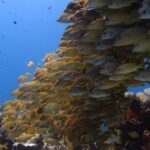
Then Manchones Reef delivers what most people imagine when they picture the Caribbean: coral structure and lots of marine life. That reef setting is a strong match for a beginner because there’s plenty to watch without needing advanced skills. In practice, it’s where your confidence clicks—your job becomes breathing smoothly and staying relaxed while the reef does its thing.
And yes, the warm Mexican Caribbean water helps. It means less battling the cold and more focus on learning the basics.
The 8:00 am start at Coconut Divers Cancun (and how to prepare)
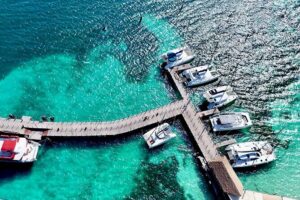
This outing starts at 8:00 am at Coconut Divers Cancun, right by the marina at Hotel and marina Sotavento. The activity ends back at the same meeting point, so you’re not scrambling across town afterward.
A couple practical points you’ll thank yourself for:
- Show up early enough to check in, because you’ll want your gear sorted before the theory/pool portion.
- Plan your transportation. The location is near public transit, and you’ll likely need to get yourself there (there isn’t an included pickup listed).
One more thing that affects comfort: this is an ocean day, so bring what you’d bring for a morning at sea—sunscreen, a simple cover-up for the dock time, and something secure for your phone/camera.
Also, most people book this ahead (it’s commonly reserved about 17 days in advance on average), so if your dates are firm, don’t wait until the last minute.
Pool practice + theory class: learning the basics without rushing
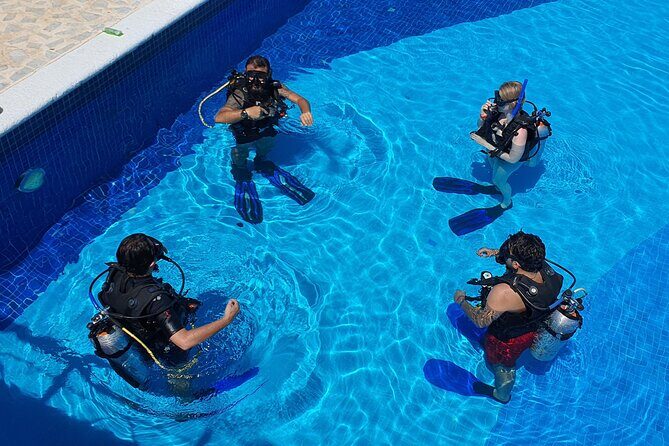
The program is built as a Discover Scuba-style experience, meaning you don’t need certification to participate. You’ll get:
- A theory class (included)
- A pool session to learn the basics safely before going into open water
- An instructor-led plan for breathing and underwater control
In real-world terms, this pool-and-class combo is where beginners often gain the confidence that keeps the ocean part enjoyable instead of stressful. You practice core skills like breathing through the regulator and managing basic movements.
That said, two things to keep in mind:
- The pool portion may feel shorter than you expect. Some people reported limited time in the pool for practice, so if you’re the type who needs repetition, be ready to ask questions right away.
- There may be a separate pool class fee of $20 per person. Even though the experience is described as starting with a relaxed pool session, the pricing details list a pool fee as not included—so it’s smart to plan for it.
If you get nervous easily, you’ll benefit from communicating that early. Strong instruction is part of the value here, and you’ll get the best day when your instructor knows where you’re at.
Stop 1: MUSA (Museo Subacuatico de Arte) and what you’ll actually do there
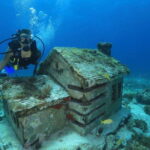
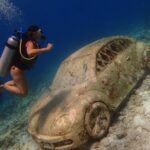
Your first major underwater stop is Museo Subacuatico de Arte (MUSA). This is the big underwater art museum with 500+ sculptures, and it’s one of the reasons first-timers like this itinerary.
Why MUSA works for beginners:
- The sculptures give you natural “places to look,” so you don’t have to invent things to focus on.
- The environment is visually structured, which helps when you’re learning how to move slowly and stay buoyant.
- It’s an easy setting to take photos because there’s always something interesting nearby.
You’ll be learning how to:
- breathe steadily,
- keep your buoyancy under control,
- and follow your instructor’s guidance without feeling rushed.
One small reality check: photo results depend on conditions. If the day is overcast, images can come out less dramatic. Still, even flat light can be stunning underwater because the sculptures create shape and depth.
You can also read our reviews of more scuba diving tours in Cancun
Stop 2: heading toward Isla Mujeres and your second open-water tank session
Your schedule includes Isla Mujeres as part of the day. Practically, this usually means you’ll spend time on the water (boat ride plus getting set for the next underwater location).
For many beginners, the boat time is where nerves can either rise or settle. If you’re prone to seasickness, plan ahead—this is open water and you may feel motion.
Timing can also vary. Some people experienced more time underwater than the headline “about 30 minutes each” format suggests. Others found there was a noticeable gap between pool practice and getting underway for the ocean—so expect some waiting around while the team gets tanks and the boat ready.
If you’re hungry or cold easily, bring the mindset that this is a morning out, not a quick lunchtime snack-and-go.
Manchones Reef: coral, fish, and why this stop feels magical
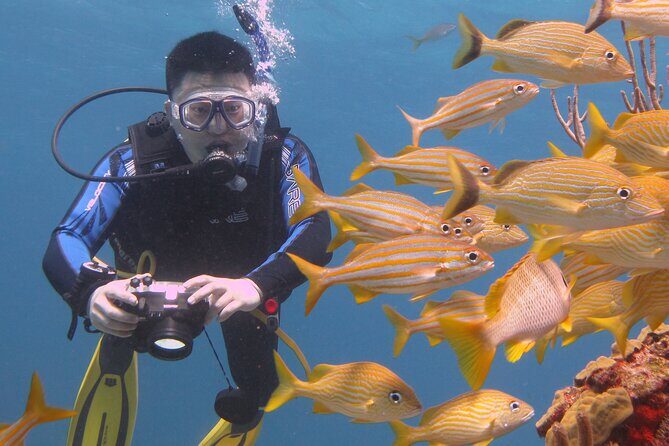
Your second underwater location is Manchones Reef, described as a vibrant coral reef full of marine life—perfect for first-timers.
This is where you shift from “learning tasks” to “just noticing stuff,” like:
- schools of fish,
- bigger coral shapes,
- and the occasional surprise animal.
From firsthand stories connected to this experience, people have spotted things like a sting ray and even an octopus. You also might see lobsters or turtles. None of that is guaranteed, but the reef setting is the right kind of environment for variety.
What matters most for a beginner isn’t a checklist—it’s staying calm:
- breathe slowly,
- keep your head up,
- and let the instructor guide your spacing and movement.
When you do that, the reef usually feels friendly instead of intimidating. You’ll finish the day tired in a good way, because learning something new takes real focus.
Instructors and small-group support: the difference between nervous and comfortable
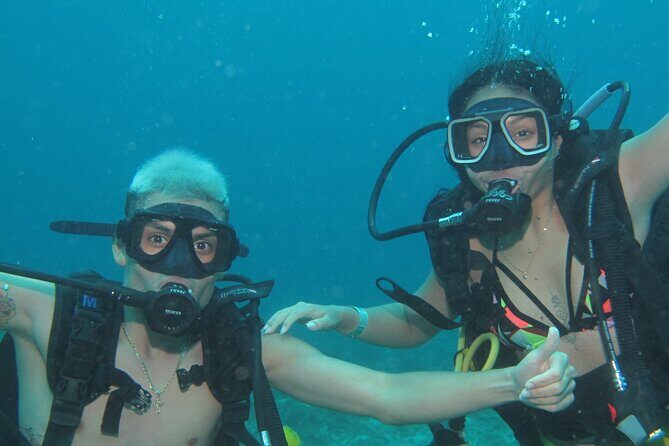
This experience leans hard on one-on-one training with certified PADI instructors, and the small-group cap (max 16) helps keep the day from feeling like a conveyor belt.
In the recent instructor lineup connected with this operation, names that came up include:
- Alex (often praised for making emergency situations feel manageable)
- Arthur (stepping in when an instructor couldn’t make the day)
- Gonzalo (reassuring and detailed)
- Ulysses (professional, helpful, calm during both pool and open water)
- Poncho (helpful with first-time nerves, plus photo support mentioned)
- Ricardo (the captain, mentioned as supportive during rough moments)
- Ayer and Ganzado (also mentioned in positive experiences)
What I love about this pattern is simple: when instructors teach slowly enough, beginners feel like learning is allowed. When someone is patient and keeps explaining the next step, your brain stops trying to panic and starts cooperating.
One practical caution: if you have a language barrier, you should know English is offered, but the overall day could still involve additional communication. If you don’t speak Spanish, plan to rely on clear gestures and make your needs obvious early.
Price and extra costs: what the $119 covers, and what might be added
The listed price is $119 per person, and it includes:
- scuba gear
- 2 open-water tank sessions
- purified drinking water bottles
- a PADI Scuba Instructor
- theory class
That’s a solid base for a guided beginner underwater day. The value here is the instruction time—pool + theory + two structured ocean sessions.
But don’t ignore the not-included items listed for the day:
- National marine park entrance fee: $20 per person
- Pool class fee: $20 per person
- Wetsuit rental: $10 per person
If you’re budgeting conservatively, a common “add-on” scenario could look like:
- $119 base + $20 marine park = $139 minimum
- plus pool fee and wetsuit could bring you closer to the $160–$170 range
Also, one diver reported seeing an extra charge around $43 per person on arrival. Since that number could blend multiple fees, use it as a reminder to be financially ready for day-of charges, not as a promise.
My advice: treat the published price as your starting point, then budget for the listed extras so you’re not surprised when you check in.
Who should book this, and who should think twice
This is a great fit if you:
- have never done scuba before and want a structured, instructor-led start,
- want to see MUSA and a reef in one morning plan,
- prefer small groups and safety-focused training,
- are traveling as a couple, friends group, or even families with older teens.
This also can be a turning point. Some people left with enough confidence to pursue certification afterward.
You should think twice (or at least plan carefully) if you:
- get seasick easily—boat motion can ruin the day fast,
- expect long pool practice with lots of repeating the skills,
- have kids and need to confirm what medical paperwork is required; a note in this set of experiences says you should bring a medical permit to dive with children.
Bottom line: this works best when you arrive ready to learn and willing to follow an instructor’s pace.
Should you book this beginner scuba day in Cancun?
If you’re new to scuba and want a well-supported intro, I’d book this. The combination of MUSA sculptures and Manchones Reef gives you visual payoffs plus a reef that’s naturally beginner-friendly. Add in small-group limits and PADI-led coaching, and it’s the kind of outing that turns first-timers into repeat divers—or at least into underwater fans.
Book it if:
- you want real instruction (pool + theory + ocean),
- you’re comfortable paying the likely extra fees so your day stays smooth,
- you want warm-water first-tank experiences with strong safety attention.
Skip it if:
- you require lots of pool repetition and can’t do shorter practice blocks,
- you know seasickness will be an issue and you haven’t got a plan.
If you do book: show up early, be honest with your instructor about nerves, and keep your expectations aligned with a first-timer day—your goal is calm control and good buoyancy, not racing through it. That mindset is what makes MUSA and the reef feel truly special.