REVIEW · COZUMEL
Night Snorkeling – Observation of octopus and other species
Book on Viator →Bookable on Viator
Night water changes everything. I love how this trip stays shallow and controlled, with a max depth around 2.5 meters, so you’re not fighting fear while you look for wildlife. I also like that you’re not just tossed in the sea—each person gets a flashlight, and the guide keeps you moving as a team so you can actually spot the camouflage masters like octopus and squid.
There is one real consideration: equipment quality can be a mixed bag. If you’re picky about snorkel fit, bring your own if you have it, and be ready to swap on the spot if something feels off.
In This Review
- Quick hits I’d plan around
- What happens at 7:30 pm: your actual night snorkeling flow
- Money Bar Beach Club: easy meeting, right vibe for night water
- Small-group size (up to 4): why you feel safe and not rushed
- Gear that makes sense: snorkeling kit, lamps, and a flashlight you can control
- The heart of it: shallow water search for octopus and squid
- How you move at night: team spacing and no-contact observing
- Wildlife you can reasonably expect (and what makes it special)
- The video perk: it helps you remember without reliving the glare
- How long you’ll be swimming, and what fitness level really means
- Price and value: what $77.67 buys in real terms
- Weather reality: how cancellations affect your planning
- Who should book this night octopus snorkel, and who should pause
- Should you book Night Snorkeling for octopus watching?
- FAQ
- Where does the night snorkeling tour meet?
- What time does the tour start?
- How long is the experience?
- How many people are in a group?
- Is snorkeling gear provided?
- Do I get a flashlight or other lighting?
- Can I get a life jacket?
- What kinds of animals are the focus at night?
- Is the tour fully refundable if weather cancels it?
Quick hits I’d plan around
- Maximum of 4 people keeps the pace calm and makes it easier to hear instructions
- Per-person flashlights and diving lamps help you search without blinding the water
- Small area, safe depth (around 2 basketball courts, 2.5 m max) makes it practical for first-timers
- Video included so you’re not stuck only watching through a phone screen
- No-contact rules and safe distance help you see behavior without bothering animals
- Weather can cancel the tour, but you’ll be offered another date or a refund
What happens at 7:30 pm: your actual night snorkeling flow
This tour runs in the evening, starting at 7:30 pm from Money Bar Beach Club on the south side of Cozumel (Carr. Costera Sur Km 6.5-Sur). The whole point is simple: you’re stepping into a shallow, guided snorkeling zone after dark to observe nocturnal sea life.
Plan on about 1 hour 30 minutes total, with roughly 1 hour in the water. You’ll be swimming consistently (not just floating and waiting), so you get real chances to watch animals hunt, hide, and move—then regroup when it’s time to reposition.
You can also read our reviews of more evening experiences in Cozumel
Money Bar Beach Club: easy meeting, right vibe for night water
I like the meeting setup because it’s straightforward and it’s at a recognizable beach club area—Money Bar Beach Club. From there, you walk from shore into the water, and you’re not dealing with a long swim just to reach a snorkel zone.
Night trips can feel chaotic when people are unsure where to stand. Here, your group is small, and the guide runs the flow. That matters because once it’s dark, you want your bearings fast: where you’re supposed to put your head, how you’re moving with your partner, and where you’ll turn back.
Small-group size (up to 4): why you feel safe and not rushed
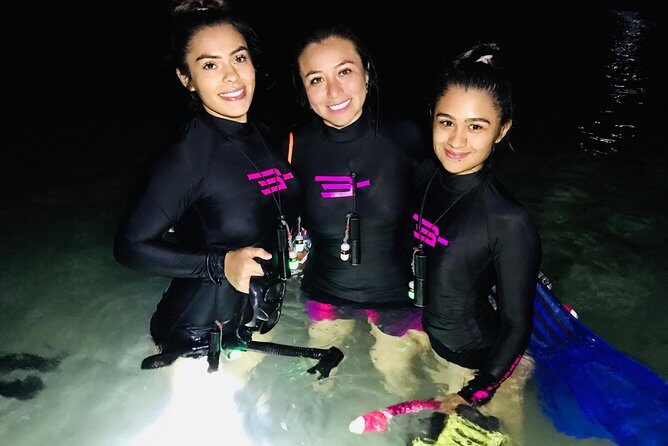
With a maximum of 4 travelers, you get a lot more personal attention than you would on larger boats. That shows up in two ways.
First, you get clearer coaching on how to move in the water at night. Second, your guide can keep an eye on everyone’s spacing—important when you’re watching animals that blend into sand, rock, and shadow.
If you’re nervous about ocean swimming in the dark, this group size helps. It’s easier to ask questions, and you’re less likely to get separated in the shuffle.
Gear that makes sense: snorkeling kit, lamps, and a flashlight you can control
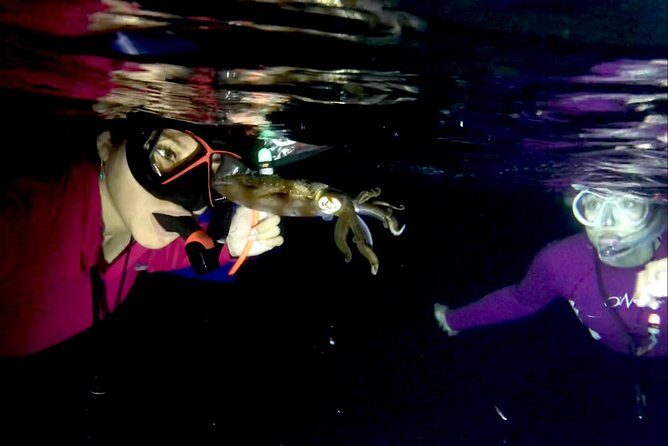
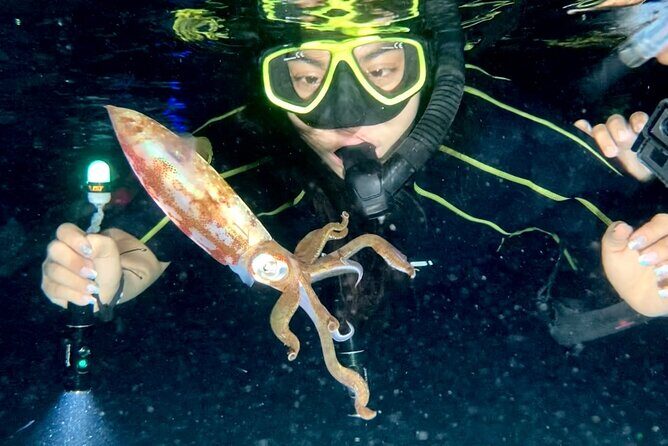
Included gear covers snorkeling equipment, plus diving lamps and experience videos. Every person also has a flashlight, and that’s not a gimmick. In night snorkeling, lighting is how you notice motion first—tiny shifts, glints, and the quick “was that a fish?” moments.
One thing to keep in mind: your flashlight technique matters. If you sweep too wide or too fast, you’ll spook animals and lose what you’re trying to watch. The guide’s job is to keep your light use purposeful—enough to see, not so much that you’re blasting the water.
If you think you need it, you can be provided a life jacket. That’s a smart comfort option, especially if you’re more comfortable standing than swimming.
The heart of it: shallow water search for octopus and squid
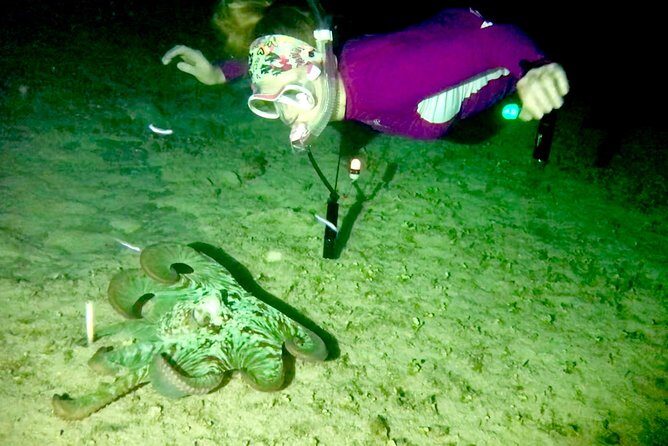
This tour stays in a privileged area where nocturnal creatures hunt. The magic idea is that you’re not going for a random wildlife encounter—you’re going at a time when different animals show up.
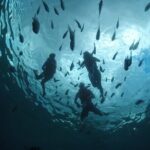
You’ll walk from shore to the water and swim around an area no bigger than about two basketball courts, with a maximum depth around 2.5 meters. That’s important because it keeps your experience practical. You can manage your position, you can stand or adjust if you need a breath, and you’re not committing to a deep, oxygen-focused outing.
The real challenge is camouflage. Octopus are experts at it, and the tour leans into that with a team approach—your guide explains how to move and where to look without stomping through the scene.
You can also read our reviews of more snorkeling tours in Cozumel


How you move at night: team spacing and no-contact observing
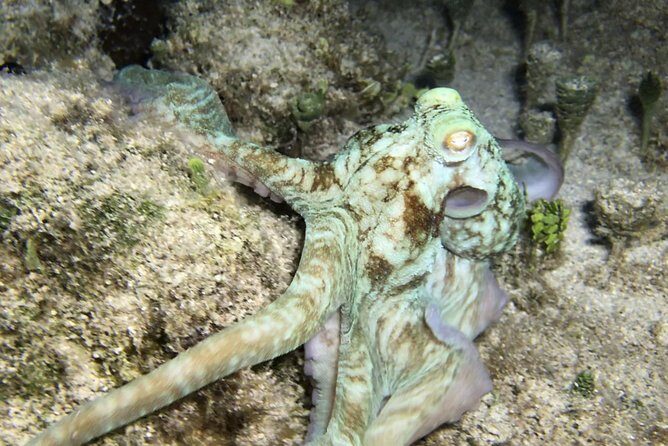
Night water is where rules become safety tools, not lectures. The guide will explain how to move even if you can’t swim, and they’ll also explain how to communicate in the water.
Here’s what that means for you in practice:
- You’ll stay at a safe distance from animals.
- You won’t encourage direct contact with sea life.
- You’ll coordinate as a group so you don’t crowd or shine lights randomly.
This no-contact style isn’t just about etiquette. It keeps you from turning observation into interference. Octopus and squid already have enough to do—hunting, hiding, and changing position fast. If you rush them, you usually lose the behavior you came for.
Wildlife you can reasonably expect (and what makes it special)
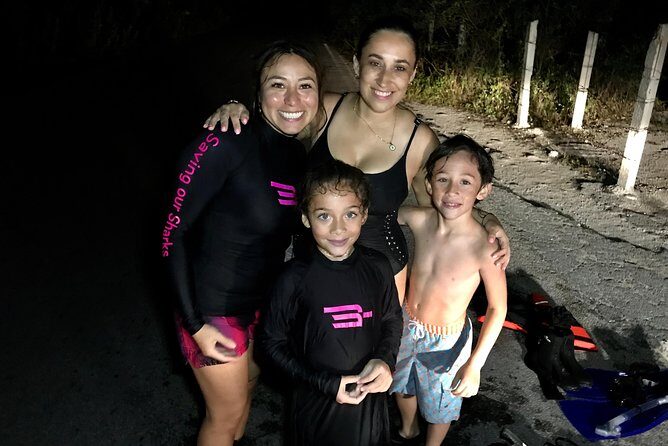
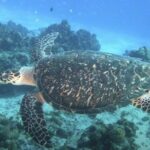
You should go in expecting variety. Night snorkeling often feels like the ocean’s behind-the-scenes footage. In this Cozumel setup, people commonly mention sightings such as:
- Octopus and squid (often the headline)
- Eels and moray eels
- Stingrays
- Puffer fish
- Crabs, including king crab fishing-type action
- Lobsters (spiny lobster and other types may show up)
- Jellyfish in small numbers
- Bioluminescence (people mention plankton fluorescence)
- Extra critters like sea urchins, sea cucumbers, and starfish
One detail I especially like from the reports: octopus behavior can be dramatic in low light. People describe seeing them change colors and shapes, which is hard to appreciate in daytime snorkeling when the background is bright and you’re focused on general reef life.
Also, don’t underestimate “second-order” sightings. Seeing a ray glide differently at night—or watching an eel reposition—can be just as memorable as the big headline animal.
The video perk: it helps you remember without reliving the glare
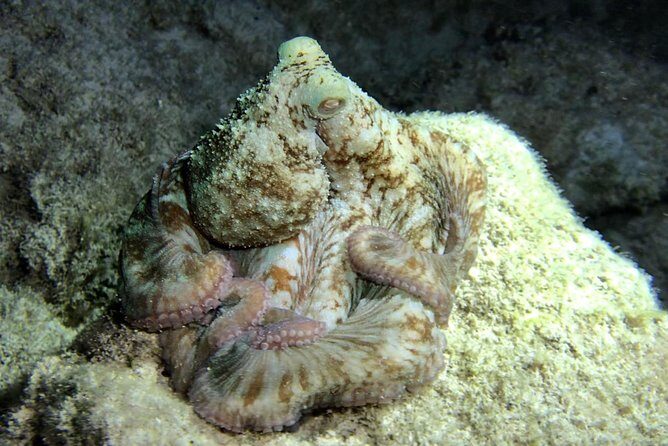
Experience videos are included, and multiple guides in the operation also capture footage when possible. That’s a huge help because night snorkeling is not the best setting for perfect photos.
I like the idea that you’re looking at wildlife with your eyes first, then you get video so you can process what you saw later. It’s also useful for groups, since everyone experiences things from a slightly different angle.
That said, one booking reported not receiving promised videos and photos. So if video is a priority, I’d set your expectation as: video is included, and you should confirm timing and delivery method ahead of time (or right at check-in) so you’re not waiting later.
How long you’ll be swimming, and what fitness level really means
The tour includes about 1 hour swimming constantly. That doesn’t mean it’s an Olympic workout, but you’re moving enough that your legs and breathing matter. You’ll also be in light pressure from night conditions: you’re paying attention, not drifting.
The activity notes moderate physical fitness. If you’re comfortable snorkeling in daytime and you can handle short swims, you’re likely fine. If you’re newer, the guide’s help with movement and options like a life jacket can make it much more manageable.
If you hate getting cold, remember it’s nighttime in the water. Bring a plan for after—something dry and comfortable for when you’re back at the beach club.
Price and value: what $77.67 buys in real terms
At $77.67 per person, the value comes from more than the wildlife pitch. You’re paying for a setup that reduces risk and increases the chance you actually see things:
- Shallow, controlled area (max depth about 2.5 meters)
- Small group of up to 4
- Per-person flashlight and diving lamps
- Snorkeling equipment included
- Experience videos included
- A guide actively managing spacing and light use
If you’ve done day snorkeling tours where you mostly drift and hope, this is different. The “you’re moving constantly” part, plus the spotlighting-and-team approach, tends to make sightings feel more consistent.
The only cost you may still pay separately: you’ll handle ferry, taxi to the meeting point, and taxi back to your hotel on your own. So budget those extras if they apply to your lodging.
Weather reality: how cancellations affect your planning
This is one of those experiences that depends on conditions. The operation requires good weather, and there are real cases of stormy cancellations (heavy winds and rough water can shut it down).
The good news is that if the tour is canceled due to weather, you’ll get offered another date or a full refund. I still recommend building this into your trip like a flexible evening slot, not the only must-do plan in your schedule.
Who should book this night octopus snorkel, and who should pause
This tour is a great fit if you:
- Love wildlife and want more than daytime reef snorkeling
- Enjoy learning behavior, not just collecting fish sightings
- Want a guided experience in shallow water
- Appreciate safety rules and structured movement
- Prefer smaller groups (max 4)
You might want to think twice if:
- You’re uncomfortable in the dark water even with a life jacket option
- Your snorkeling gear is very specific and you’re worried about fit
- You’re on a tight schedule where a weather cancellation would ruin your night
Should you book Night Snorkeling for octopus watching?
I’d book it if you’re excited by the idea of night behavior: hunting, camouflage, and the slower, secretive rhythm of creatures that hide by day. The shallow depth, small group size, and flashlight-guided search make it feel doable, even if nighttime snorkeling sounds a little intimidating.
If you’re considering it, do two things to improve your odds: pack or plan for good snorkel comfort, and arrive ready to follow the guide’s spacing and lighting rules. When you do that, night snorkeling in Cozumel can turn into one of those rare trips you talk about later because it felt different from everything else.
FAQ
Where does the night snorkeling tour meet?
It starts at Money Bar Beach Club, Carr. Costera Sur Km 6.5-Sur, Zona Hotelera Nte., 77675 Cozumel, Q.R., Mexico.
What time does the tour start?
The start time is 7:30 pm.
How long is the experience?
The duration is about 1 hour 30 minutes.
How many people are in a group?
The maximum is 4 travelers.
Is snorkeling gear provided?
Yes. Snorkeling equipment is included.
Do I get a flashlight or other lighting?
Yes. Each person gets a flashlight, and diving lamps are included.
Can I get a life jacket?
If you think you need one, the tour can provide a life jacket.
What kinds of animals are the focus at night?
The tour focuses on observing nocturnal species, including octopus and squid, plus other sea life that comes out at night.
Is the tour fully refundable if weather cancels it?
If it’s canceled due to poor weather, you’ll be offered a different date or a full refund. Also, free cancellation is available up to 24 hours in advance for a full refund.